Exterior washing guidance · Greater New Orleans
Marks after washing.
Build a fair comparison.
A line or pale patch noticed after washing can lead to an immediate conclusion about what happened. A photograph by itself rarely supplies the full sequence. The useful starting point is to record the concern, preserve the earlier information and compare the same part of the surface under reasonably similar conditions. This guide addresses that after-work review. It does not diagnose etching from a picture, assign responsibility to a contractor or prescribe a repair. Its aim is to make a reported appearance change specific enough for a useful response.
Your property. Your priorities. A clearly defined scope.
Create a location record before adding an explanation
Keep this task separate from planning a fresh concrete wash. The pre-work risk guide explains how to document finishes and test a proposed process before a larger scope is approved. Once a concern already exists, the priority is preserving what is known: where the mark is, when it was noticed, what records are available and what changed before or after the photograph. A careful comparison can support the next conversation without replacing an assessment by an appropriate material professional.
Give the concern a precise place on the property: the second driveway panel beside the garage, the walk outside a named entrance or a section beside a loading door. Take an overview showing that location and a closer image of the mark. Include a fixed feature that will remain visible in later photographs. The first report becomes easier to understand when the recipient does not have to infer which corner or concrete pour is being discussed.
Describe the appearance using words that another person can check. You may see a curved band, several parallel lines, a rough-looking strip or a difference in sheen. Keep the description separate from a proposed cause. Saying that a mark was noticed after a visit establishes a sequence; it does not, by itself, prove the mechanism that created it. This distinction allows the report to be specific without asking the owner to make a technical judgment beyond the available evidence.
Keep the original photographs and their sequence
Retain the earliest images you have, including any estimate photographs, listing pictures or maintenance records that show the same area. Keep original files rather than relying only on screenshots with annotations. Create a working copy when adding arrows or location labels. The original may contain useful context outside the marked area, and it gives a reviewer a way to see the full photograph rather than a crop chosen after the concern arose.
Write down when each photograph was taken and when the mark was first noticed. If the date is approximate, say so. Distinguish a photograph taken before the visit from one merely found in an older message thread. Include any gap in the record openly. A clear sequence with a few honest uncertainties is more useful than a timeline that supplies exact times the owner cannot support. Preserve relevant messages alongside the images so the conversation remains connected to the record.
Compare conditions before comparing color
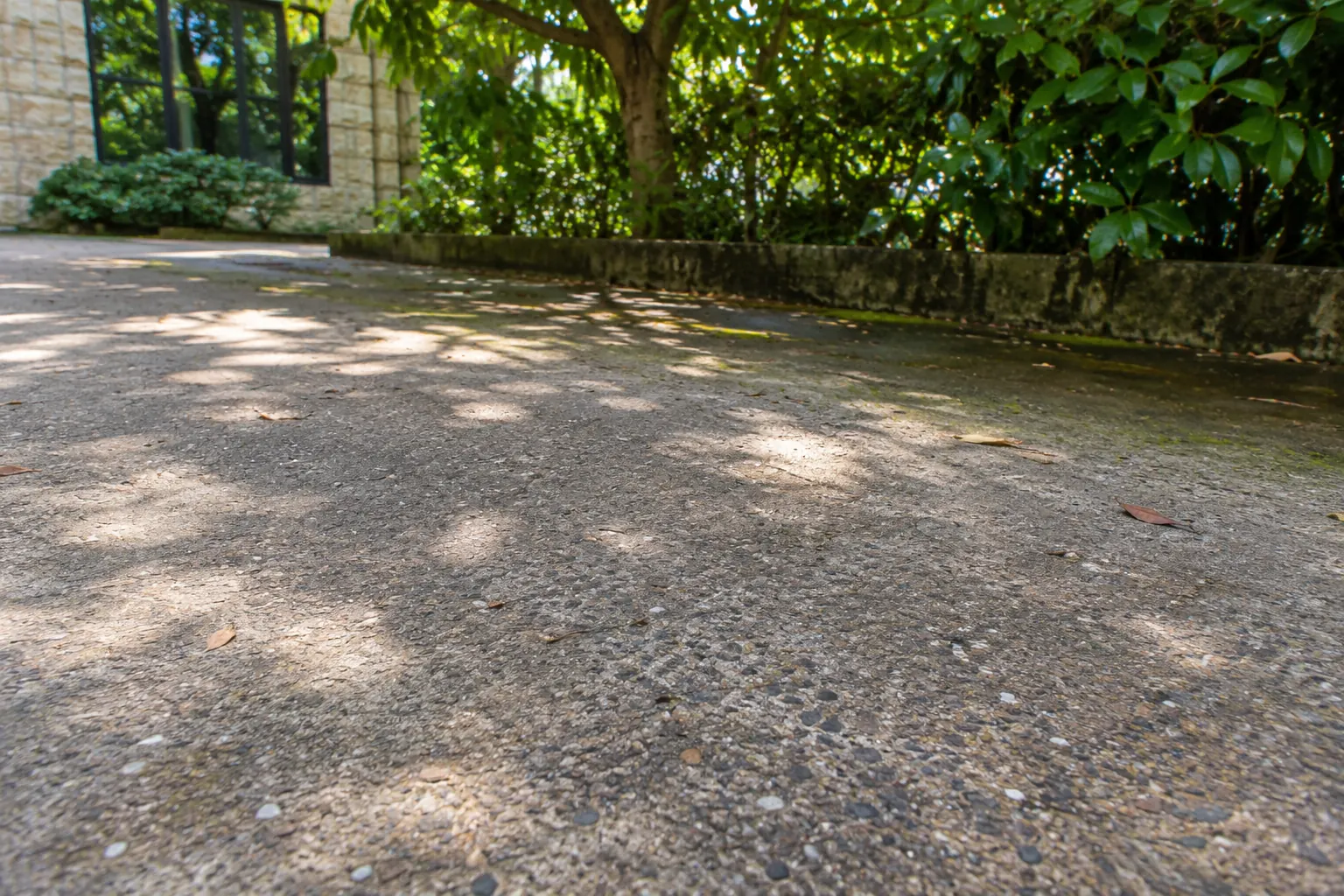
Note whether the surface was wet or dry in each image, whether direct sun or shade crossed it and whether the camera angle changed substantially. Try to obtain a later comparison from the same safe standing position. You do not need to reproduce every photographic variable perfectly. You do need to identify obvious differences that could make one picture look unlike another. Treat a single dramatic close-up as one piece of the record rather than the entire comparison.
PROSOCO's concrete-cleaning guidance distinguishes cleaning results from worn protection and calls for evaluating the dry surface. That is a useful reason to compare conditions before drawing conclusions from appearance alone. It is not a remote test for etching or an assurance that the surface is undamaged. If the concern involves texture, coating condition or a persistent difference, ask which further observations or specialist assessment would help answer the actual question.
Describe the pattern and its boundaries
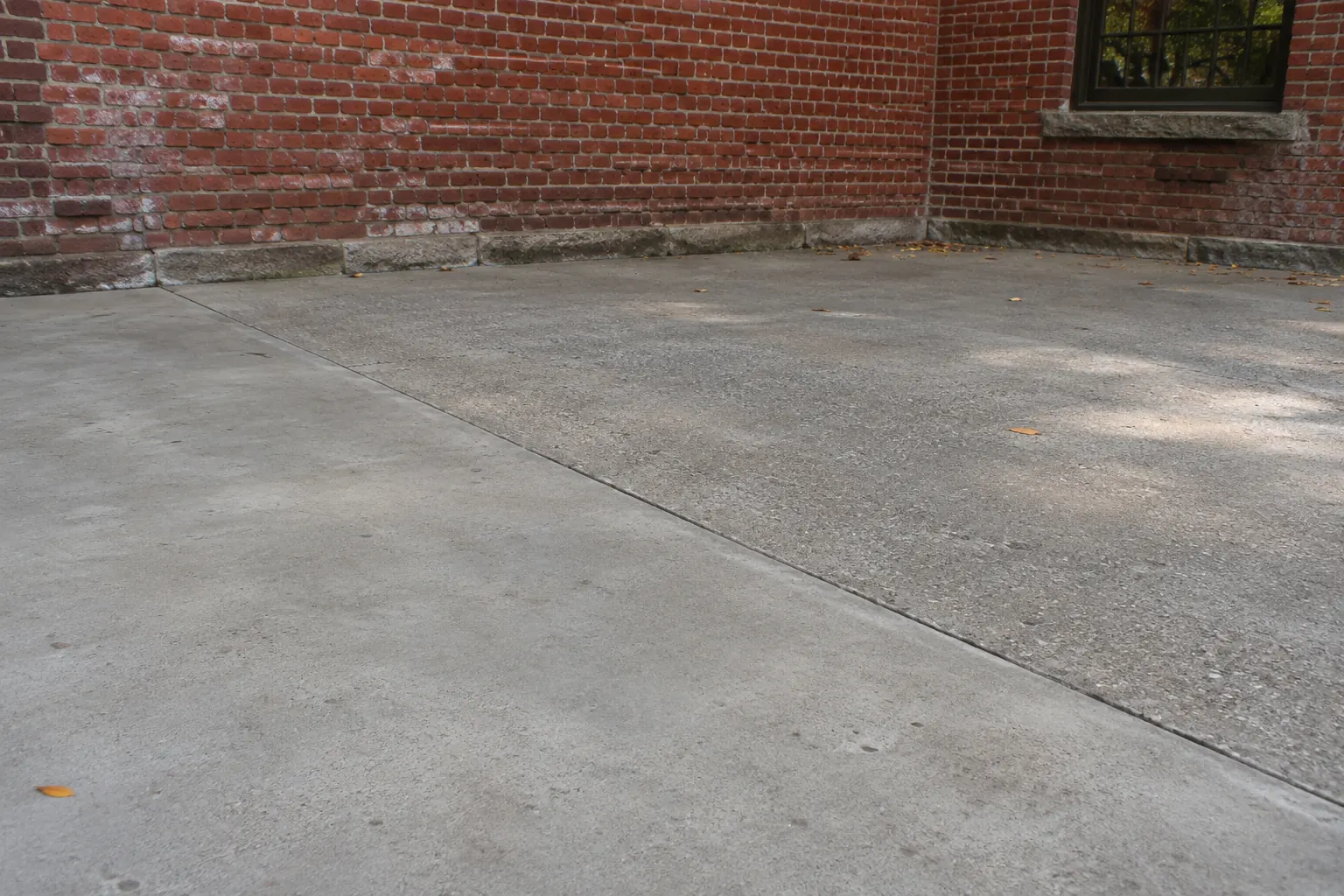
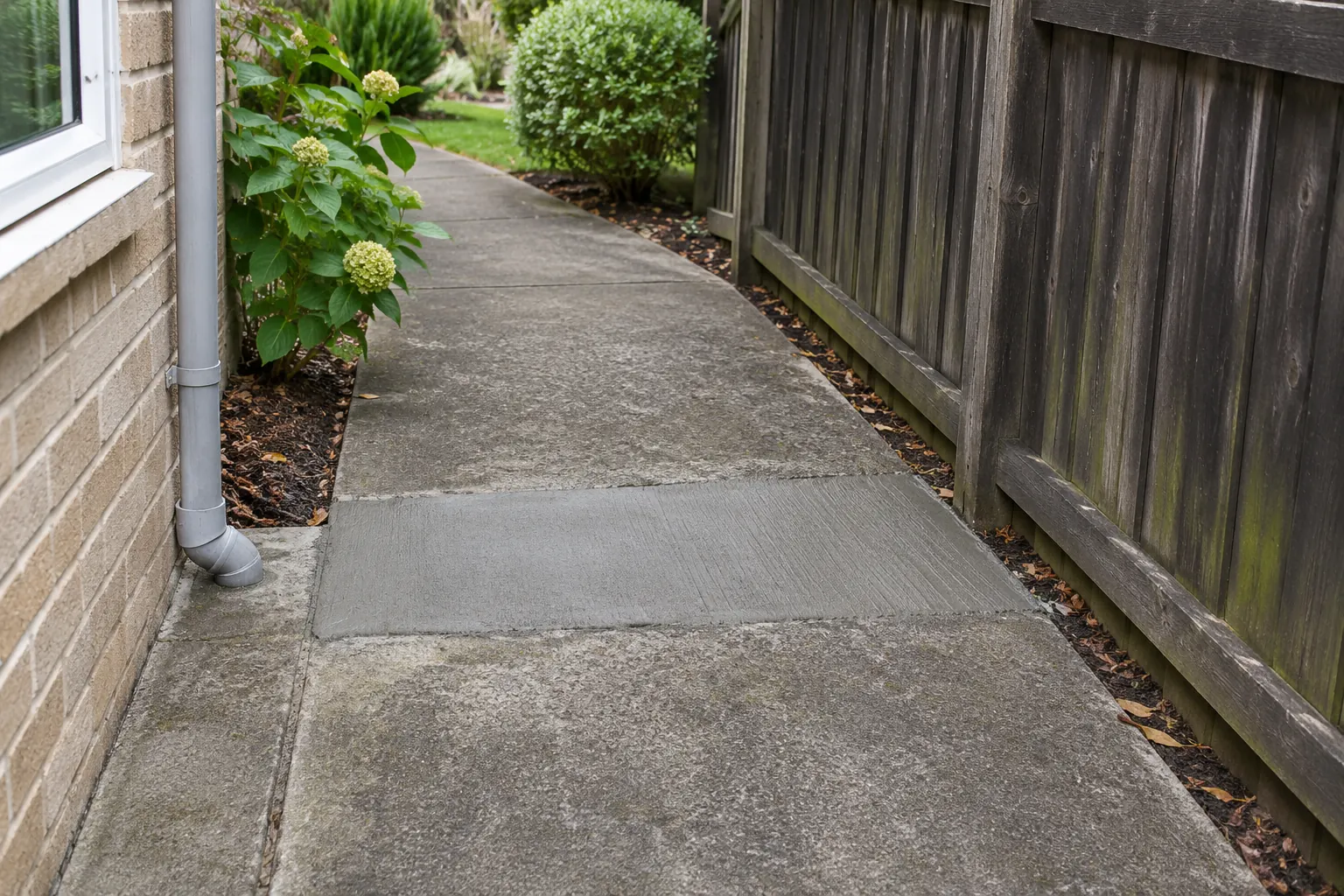
Record where the visible change begins and ends. Does it stop at a construction joint, continue across separate pours or appear only within an older patch? Is it visible from several ordinary viewing positions or only from one angle? These are observations a property owner can document without choosing a cause. Place the answers on the location sketch so a reviewer can connect the shape of the concern with the physical layout of the pavement.
Include a neighboring comparison area when it can be photographed safely. Avoid claiming that the neighboring area is an exact control unless its finish and history are known to be comparable. A section sheltered by a roof may have a different history from an open vehicle lane. The purpose of the comparison is to show what is visible around the concern, not to manufacture a scientific test from two surfaces that only happen to be close together.
Assemble records of finishes and prior work
Look for documents identifying sealers, stains, coatings, repairs or earlier washing. Match each record to the part of the property it actually covers. A receipt for a patio treatment does not automatically explain the driveway. If the owner inherited the surface without product information, record that fact. A reviewer can then distinguish a confirmed finish from an assumption based on color or shine, and ask focused questions about the areas that remain uncertain.
Include relevant activity between the comparison photographs: a spill, vehicle work, landscaping, construction access or a repair may belong in the chronology if it actually occurred. Do not add speculative events merely because they could explain a mark. Identify whether an item is documented, remembered or reported by someone else. That approach gives the reviewer usable context while keeping the report grounded in the owner's real observations and available records.
Have the property photos?
Let’s define the next step.
Send the address, requested surfaces and the contact who can confirm access.
Send a concern report that can be answered
Organize the first message around the location, observation and requested response. For example, identify the panel, attach an overview and close image, state when the difference was noticed and ask for a review of that area. Include the relevant estimate or work date if available. A focused report is easier to answer than several messages that alternate between a photograph, an accusation and an unrelated request for additional cleaning.
Ask the recipient to explain which information they can review and whether an in-person assessment or another professional is needed. Keep their response with the original record. If more images are requested, use the existing location labels so the new pictures do not create another identification problem. A response about possible causes should be distinguished from a confirmed finding, and any proposed next step should say what question it is intended to resolve.
Keep assessment separate from a proposed remedy
Do not let a desire for a quick fix erase the evidence needed to understand the concern. Before agreeing to another treatment, ask what change it is intended to make, what limitations apply and how the result would be reviewed. A new wash, coating removal, sealing or repair is a separate scope decision. The fact that someone has suggested a remedy does not establish the original cause or determine who is responsible for the condition.
Where responsibility, an insurance issue or a product warranty is disputed, retain the relevant records and use the appropriate review process. This guide does not decide those matters. A contractor's explanation of an appearance condition and a material professional's assessment may serve different purposes. Clarify which kind of review is being offered instead of assuming that any additional visit will produce a formal finding, repair specification or guarantee.
Close the record with clear outcomes and open questions
After the review, note what was actually agreed. The record might show that a comparison needs better photographs, that a product record remains missing, that a separate professional will assess an area or that a defined follow-up task has been authorized. Record who owns the next action. Avoid changing an unresolved question into a closed conclusion simply because the discussion has paused or the person handling the property has changed.
Keep the final photographs beside the original inquiry and the written response. If a later cleaning project is planned, identify which concerns remain excluded from that new estimate. CoKo's normal inquiry route can begin a discussion about an exterior surface, but a photograph-based conversation should not be mistaken for a technical damage determination. For future work, return to the pre-wash risk guide and establish the finish, test and approval record before the wider cleaning scope is chosen.
A practical start.
Three useful steps.
Show the surfaces
Send wide photos and close views. Label the buildings and the areas that matter now.
Set the boundaries
Explain materials, access, preparation and the work window your property can support.
Review the scope
Confirm included surfaces, responsibilities and the next step before scheduling.
Understanding Concrete Etching and Surface Damage.
Your questions, answered.
Your next exterior project.
Start with a clearer scope.
Text your address and the priority exterior photos. For a larger project, send the full property details.
Send your address. Show us what needs cleaning.
Text your address, a wide photo and a close-up of the buildup. We’ll review the surfaces and discuss your cleaning options.
Text photos for an estimate Start an online quoteCoKo’s Pressure Washing · (504) 296-9696