
Start with the condition you can actually see
Photograph the overflowing location, the downspout and the nearby ground area from a safe position. Say whether water spills at one corner or runs over a longer section.
Define the work before choosing a date
A blockage, loose connection, incorrect slope and roof runoff are different problems. Ask whether the proposal covers debris removal, downspout checks or only exterior gutter-face washing.
Make the decision for your property
Observe overflow from a safe location and explain what happens during rain. Water spilling near a downspout, along an entire run or at a disconnected joint may point to different concerns. Do not reach into gutters or attempt a roof-level inspection just to gather estimate information. Ask whether the service includes internal debris, downspout assessment and disposal or only exterior appearance cleaning. If the gutter is loose, damaged or incorrectly draining, clarify who will assess repair needs. A clear request helps avoid booking exterior gutter-face washing when the real concern is drainage.
Name the gutter problem precisely
Exterior staining on the gutter face is different from leaves inside the channel, a blocked downspout or a joint that leaks. Photograph the visible concern from the ground and describe what happens during rain. Do not select exterior washing when the real concern is drainage or a damaged connection. Cleaning may address debris or appearance, while installation or repair concerns require a separate assessment. CoKo's reviews gutter work as part of a broader project or as a substantial standalone scope.
Separate washing, debris removal and repair
Ask whether the proposal includes gutter-face washing, internal debris removal, downspout checks and disposal. Do not assume those tasks are interchangeable. A gutter may be clean on the outside and still contain debris, or empty inside and still have a slope or joint problem. State the symptoms before discussing the service name. Cleaning does not automatically correct sagging, failed fasteners, damaged seals or a poorly positioned discharge point, so keep repair responsibilities clear.
Show height and access safely
Take ground-level wide photographs of each affected side and show trees, patio covers, additions and other access limitations. Explain the number of stories and which downspouts are involved. There is no need to climb a ladder or reach from an upper window for estimate pictures. A difficult rear elevation can affect setup even when the front gutter looks easy to reach. If the important area cannot be photographed safely, describe it and ask what additional assessment is appropriate.
Look at the details
A closer view. A clearer request.
Show the material transitions, existing wear and access around the area you want washed. Include a wide view and a close-up so the request has useful context.

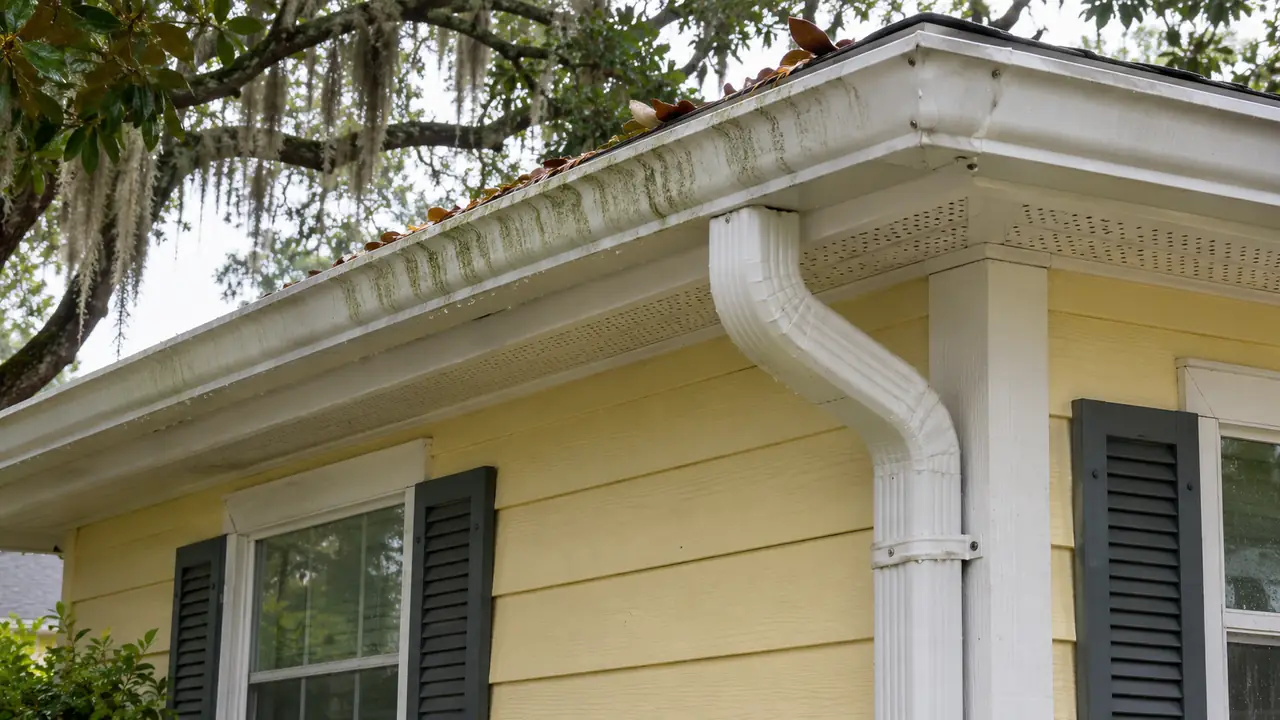
Gutter outer face and painted fascia above a porch window.
Identify staining sources and finish condition
Some gutter-face marks respond differently from ordinary organic buildup. Mention oxidation, a chalky coating, previous paint or a mark that repeatedly appears below a particular roof edge. Cleaning should be appropriate to the finish and should not be mistaken for repainting. Ask what a test area can establish and whether all discoloration is expected to disappear. Existing coating wear can remain visible after cleaning, and a stronger treatment is not automatically a safe way to remove it.
Include the discharge area in the plan
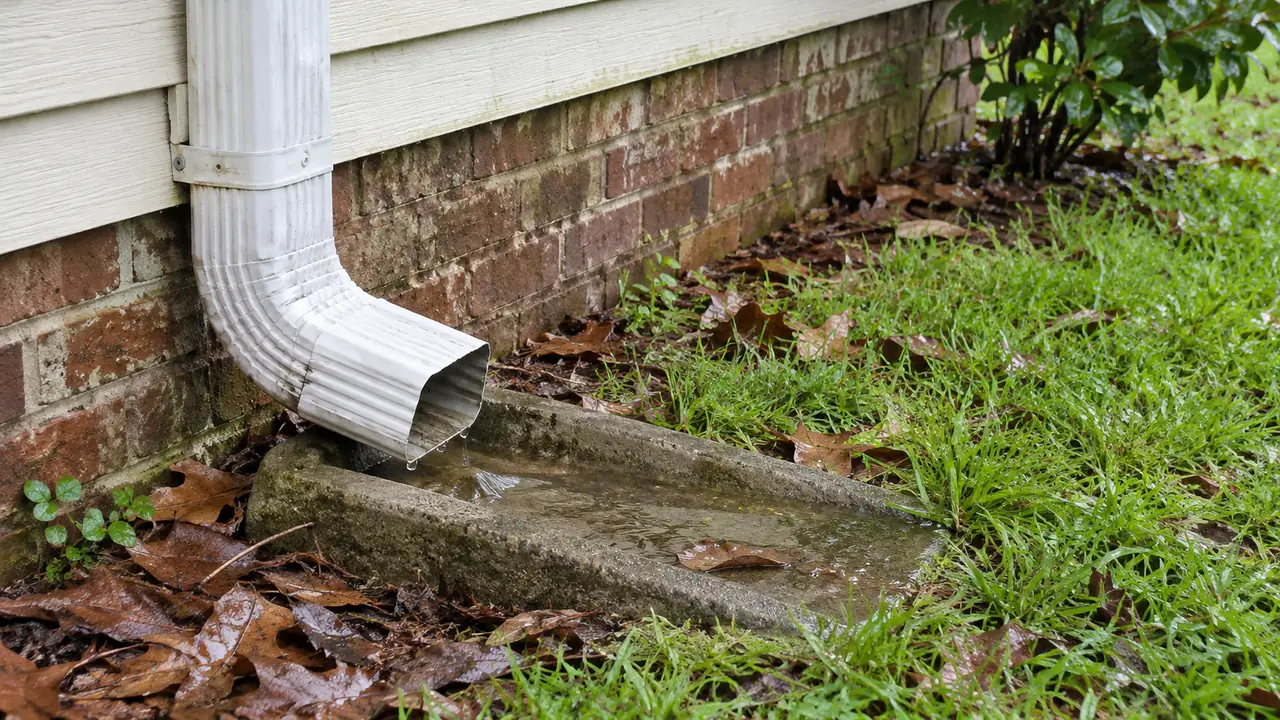
Point out where downspouts release and what lies underneath: planting beds, walkways, collection containers or adjoining property. Those locations matter for access, debris handling and runoff planning. Describe any repeated pooling or erosion separately from surface staining. A cleaning request should not silently expand into drainage redesign. If another contractor is addressing the discharge or gutter installation, coordinate the order so cleaning does not conceal an unresolved maintenance problem.
Bundle related exterior work deliberately
If house washing, roof maintenance or concrete cleaning is also needed, list each task and ask which can sensibly be reviewed together. A bundle should still identify its included surfaces and exclusions. CoKo's does not promote small standalone gutter or window visits as a main service; substantial projects can be reviewed case by case. Explain the complete property need at the start rather than adding several unspecified tasks after a date and price have already been discussed.
Review what changed after the service
Check the components that were included in the accepted scope, using the original ground-level photos where possible. Appearance, debris removal and drainage symptoms are separate review points. If overflow continues, identify the gutter section, downspout and weather conditions involved instead of assuming that another face wash is the remedy. A repair or installation issue may remain outside the cleaning scope. Ask which further assessment is appropriate without climbing to inspect a potentially unsafe area yourself.
Use observations to plan maintenance
Keep notes on which sides collect leaves, which areas are shaded and whether nearby trees deposit debris throughout the year. After storms, assess the property from safe positions and distinguish loose debris from damaged components. Do not set a maintenance interval solely by copying a neighbor's schedule. Share the actual symptoms and previous work details with the provider. Those observations help decide whether the next request should concern exterior appearance, internal debris or a separate repair discussion.
Describe when the overflow happens
A useful request describes an observation instead of declaring a repair diagnosis. Say whether you noticed water at one corner, along a long run or near a downspout, and whether that was during ordinary rain or an unusually heavy event. Note when you first saw it and whether the pattern has changed. Take photos only from a safe place on the ground; do not stand beneath falling debris or climb to investigate. A short description of the location can be more helpful than a close-up without any building context. Washing an outer gutter face is different from clearing internal debris or correcting a drainage defect. Ask which part of your concern the proposed service actually addresses.
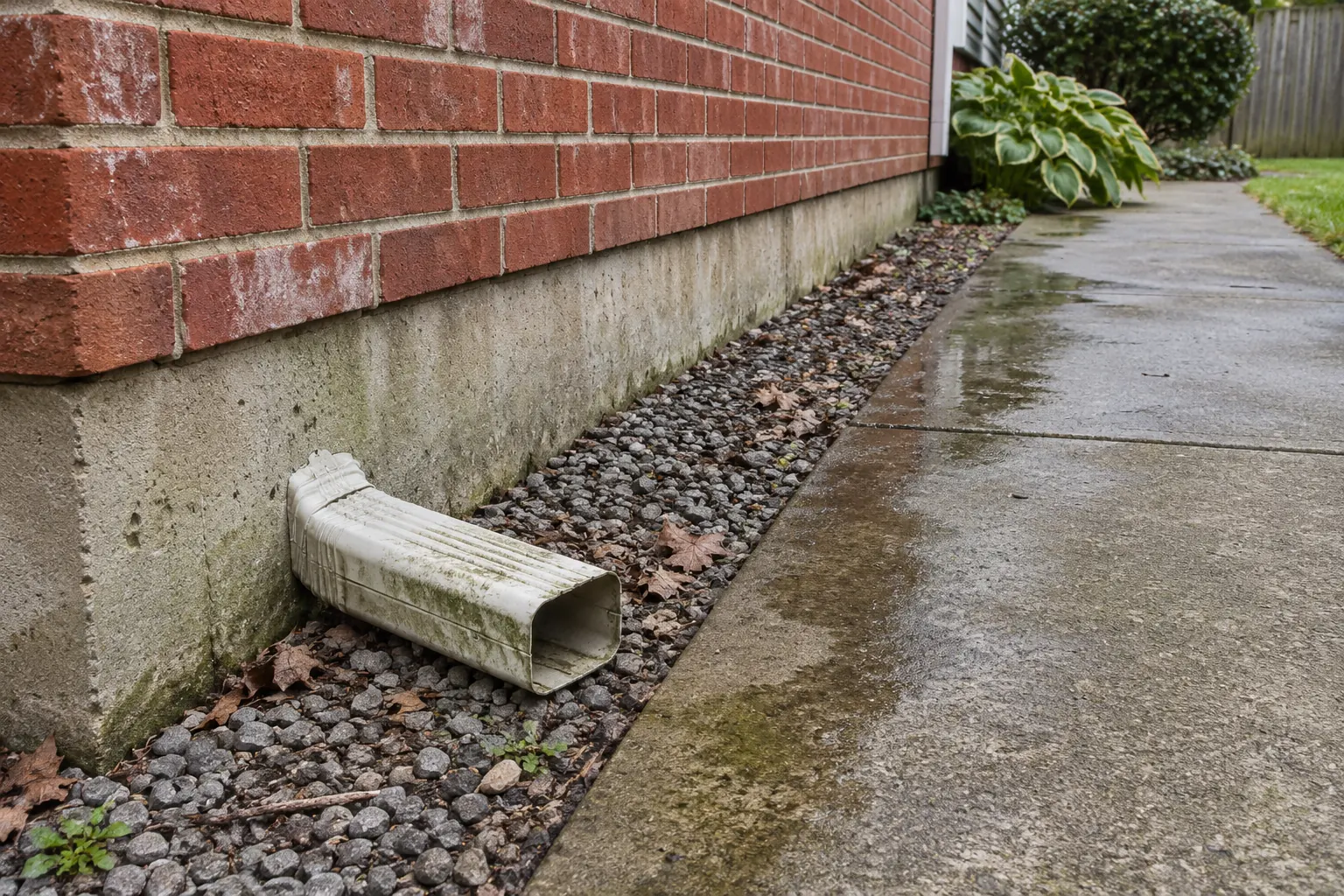
Loose downspout extension beside a gravel strip and concrete path.
Show the outside face and the ground separately
Send a wide view of the gutter line and a separate view of the downspout’s lower end, nearby paving and surrounding soil. These photos answer different questions. Outer-face discoloration concerns the visible finish, while ground-level observations show where water arrives and whether there are access or drainage constraints. Mention a splash block, buried connection or discharge point if you know it exists, without assuming a photo proves that the whole route is clear. Keep doors, electrical equipment and neighboring property in the description where they affect the work. Do not disconnect a component or move a heavy cover just to obtain an estimate photograph. Describe anything you cannot safely show.
Ask for a clearly bounded proposal
When you receive a proposed scope, check the words used for the task. Does it describe visible gutter-face washing, debris removal, a separate assessment or something else? Ask which elevations, downspouts and access areas are included, and whether the concern needs another trade. Existing leaks, loose fasteners, failing paint and changes in slope deserve disclosure before work is approved. Cleaning should not be sold as proof that damaged drainage components are repaired. If the requested work is outside CoKo’s offered scope for that property, clarify that before arranging an appointment. The important outcome is a request with the correct service boundary, realistic access expectations and an identified next step.
Keep a useful observation record
Save a dated wide photo showing the affected corner and make a brief note of what happened during the rain. A later photo taken from the same safe position is easier to compare than a new close-up of an unrelated section. Record any work another contractor performs so the next conversation does not confuse washing with a repair. If water is reaching an occupied area or affecting electrical equipment, prioritize an appropriate site assessment rather than waiting for cosmetic cleaning. Do not test the system by climbing or improvising a roof-level water setup. Send CoKo’s the address, the specific visible concern and the access details, then confirm whether exterior cleaning is a suitable part of the response.
Keep the request focused on the visible concern
Name the affected corner or elevation, attach a ground-level overview and explain the water pattern you observed. Include a separate view of the discharge area when it can be photographed safely. State whether your request is about appearance, debris or a suspected defect, and ask which service is appropriate rather than assuming these are interchangeable. Mention any previous repair and the date of the observation. An accurate message helps avoid booking cosmetic washing when the real question needs a different assessment. Confirm the included work and access arrangements before assuming the concern has a cleaning solution.
Choose your next step
Review the related service and scope, check our service areas, or start your quote. Send the address and confirm availability for the actual property.
Questions about this project
Send your address. Show us what needs cleaning.
Text your address, a wide photo and a close-up of the buildup. We’ll review the surfaces and discuss your cleaning options.
Text photos for an estimate Start an online quoteCoKo’s Pressure Washing · (504) 296-9696