Commercial exteriors · Greater New Orleans
Your post-storm exterior.
Review before cosmetic washing.
Identify the surfaces, operating needs and access questions before reviewing the washing scope for your property.
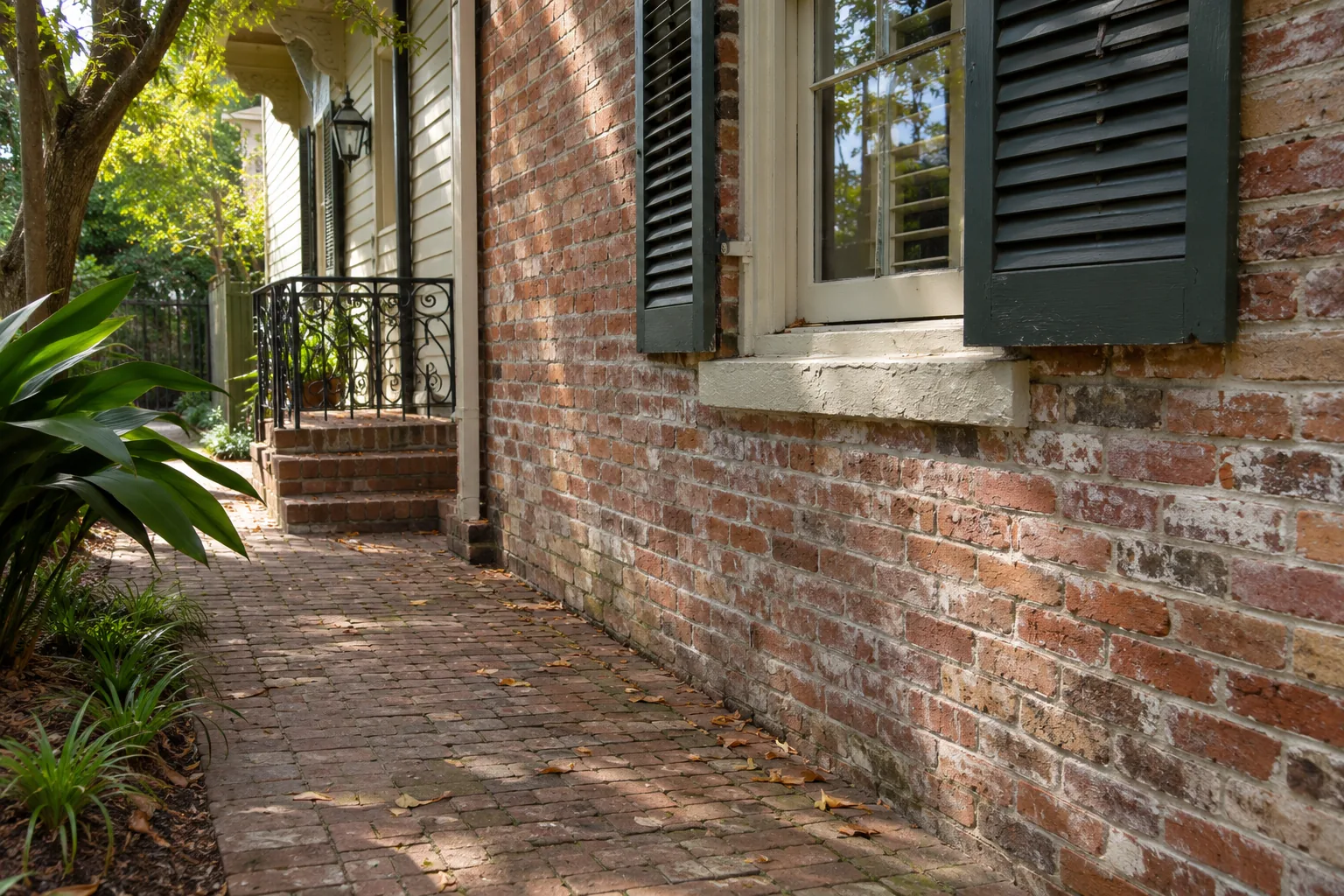
Your property. Your priorities. A clearly defined scope.
Begin with permission and the present condition
After a storm, follow local authorities' return and access guidance before considering cosmetic exterior washing. Do not enter floodwater or approach downed lines, unstable structures or other hazards to inspect or clean a surface. Ordinary washing is separate from emergency response, contaminated-water cleanup, mold remediation, structural assessment and repairs. Where insurance may be involved, contact the insurer and document conditions from a safe location before cosmetic washing changes the appearance. Only discuss a later washing estimate once the responsible parties have addressed access and identified an appropriate, safely accessible scope.
A later cosmetic washing request should begin with the present circumstances of the property, rather than a general instruction to remove everything a storm left behind. Identify who is responsible for access and whether the requested areas are actually available for review. Follow official return guidance and the directions of the relevant responsible parties. Photographs for an estimate do not establish that a building or approach is safe to enter. If the condition is still uncertain, describe that uncertainty instead of treating the request for a cleaning quote as a way to resolve it.
Keep the first project message short and factual. State the address, the areas you are asking about and what has changed since any earlier conversation. Explain whether other providers are assessing the building or carrying out repairs. The reviewer needs to understand which parts of the request concern possible future washing and which matters are being handled elsewhere. That initial separation can prevent a cosmetic cleaning discussion from becoming an accidental promise to inspect damage, provide emergency assistance or decide when a property is suitable for ordinary use.
Keep hazardous and specialist recovery work separate
Do not describe floodwater, unstable components, damaged electrical equipment or suspected contamination as ordinary dirt to be washed away. Record those concerns in the project conversation and leave their assessment and handling to the appropriate responsible parties. The existence of an exterior washing service does not establish that it offers every activity commonly described as storm cleanup. A clear request identifies the later cosmetic work being considered without quietly adding hazardous-material handling, structural work, remediation or debris hauling to the proposed washing task.
Ask what remains outside the request after those concerns have been addressed. A ground-level wall with ordinary residue may become a different discussion from the building's interiors, roof repairs or contaminated areas. Keep those boundaries visible in the written description, including places that are unavailable or awaiting specialist review. This is particularly useful when several people are coordinating recovery tasks. The person collecting washing estimates should not have to infer from a general photograph that another provider has completed a separate task or that permission has been granted for an additional area.
Preserve a factual condition record before cosmetic changes
Where insurance may be involved, contact the insurer about the circumstances and follow the appropriate documentation process. Collect photographs only from locations that are safe and permitted to access. For the washing discussion, distinguish the original condition record from later images showing the area being proposed for cosmetic work. Keep dates and location labels with both sets. A photograph can describe what was visible at a particular time; it should not be presented as a professional determination of the cause, extent or coverage of a loss.
Avoid editing the project story to make the area look easier to clean. If a surface has visible damage, a repair patch or a remaining concern, include that context with the photographs. Explain which images show the same location and what work has happened between them. A useful record lets the provider understand the washing question without interpreting an insurance claim or reconstructing events from an unlabeled collection of close-ups. It also keeps cosmetic cleaning from being confused with an agreement that every visible change is a removable deposit.
Identify the ordinary exterior residue being discussed
Once the responsible parties have established an appropriate basis for considering later washing, describe the actual surface concern. Identify the wall, entrance or paving area and explain what is visible without guessing its composition or cause. A light deposit, a water mark and a coating that has changed appearance may lead to different questions. Show the wider area and a closer view so the reviewer can understand both the location and the visible condition. Say when the material or the nature of the residue is unknown.
Keep damage and removable soil as separate items in the description. Washing cannot be assumed to return every affected material to its earlier appearance, particularly when repairs, coatings or changes to the surface are also involved. Ask which areas can reasonably be reviewed for cleaning and what uncertainties remain. Where another provider needs to resolve a concern first, record that dependency. A realistic cosmetic request does not need to promise an outcome in advance; it needs to give the reviewer a coherent picture of the area and the questions still requiring an answer.
Recheck the practical approach and available utilities
Conditions used for an earlier estimate may no longer describe the property. Explain whether the ordinary approach is available, who can discuss access and whether the requested working areas have changed. Report uncertainty about utilities or exterior fixtures instead of assuming that they can be used. This information belongs in the review before an appointment is organized. It should not require the owner to operate damaged equipment, cross an unavailable route or enter an area simply to provide details for a cosmetic washing estimate.
For a commercial or managed property, list the contacts involved in the later work. The person arranging access may differ from the person overseeing repairs, handling documentation or deciding how the property will operate. Clarify who can answer each question and which arrangements are still provisional. A concise project record can identify a main contact while preserving those responsibilities. That is more useful than a broad assurance that the site is ready, because it keeps the washing discussion connected to the actual surfaces and the specific access arrangements under consideration.
Have the property photos?
Let’s define the next step.
Send the address, requested surfaces and the contact who can confirm access.
Coordinate with repairs without merging the scopes
Describe any repair or replacement work affecting the requested exterior areas. Note whether it is planned, under way or complete, and identify the surfaces that remain unavailable for cleaning review. A newly repaired wall section and an older adjacent section may not have the same appearance or condition. The washing proposal should be able to acknowledge that difference without promising that cleaning will make all surfaces look identical. Keep the repair provider's work and the requested cosmetic washing identifiable in the project notes.
If the sequence changes, return the revised information to the washing discussion. Moving another contractor's equipment, opening an additional area or adding a surface should not be treated as an invisible part of the original request. Explain the change and ask how it affects the proposed scope and appointment. This is especially valuable where multiple elevations or buildings are involved. Clear records help prevent a provider from arriving with assumptions based on an earlier photograph while the property manager is expecting a different set of areas to be included.
Agree what the later washing handover will describe
Before the cosmetic work is agreed, identify the areas being considered, the concerns being discussed and any conditions that may limit the result. Ask how remaining visible marks or existing deterioration will be described in the project record. Keep the handover tied to the washing work itself. A completed cosmetic cleaning task does not determine insurance coverage, settle a repair issue or certify that a building can reopen. Those decisions remain with the appropriate parties and their own processes.
Keep later photographs connected to the agreed areas rather than presenting them as proof that every storm-related issue has been resolved. A frontage image can show the appearance of that frontage after the defined work; it does not establish the condition of concealed assemblies or unrelated parts of the property. Note any deferred areas and who will review them. This makes the handover useful to a manager coordinating several tasks while preserving an honest distinction between the cosmetic washing record and the wider recovery decisions for the property.
Request review of a later cosmetic washing scope
After appropriate access and hazard concerns have been addressed, send the address, safely taken current photographs and the specific exterior areas you want considered. Explain pending repairs and identify the person who can discuss the proposed working arrangements. Use the online quote route or text the details so the record stays attached to the correct property. Ask for the offered scope and exclusions to be clear before an appointment is confirmed. If conditions change again, provide an update instead of assuming that an earlier estimate still describes the requested work.
A practical start.
Three useful steps.
Show the surfaces
Send wide photos and close views. Label the buildings and the areas that matter now.
Set the boundaries
Explain materials, access, preparation and the work window your property can support.
Review the scope
Confirm included surfaces, responsibilities and the next step before scheduling.
Post Storm Exterior Cleanup Checklist.
Your questions, answered.
Your next exterior project.
Start with a clearer scope.
Text your address and the priority exterior photos. For a larger project, send the full property details.
Send your address. Show us what needs cleaning.
Text your address, a wide photo and a close-up of the buildup. We’ll review the surfaces and discuss your cleaning options.
Text photos for an estimate Start an online quoteCoKo’s Pressure Washing · (504) 296-9696