
Commercial exteriors · Greater New Orleans
Your operating hours.
A coordinated washing window.
Identify the surfaces, operating needs and access questions before reviewing the washing scope for your property.
Your property. Your priorities. A clearly defined scope.
Start with the reason for requesting a different window
A commercial property may be busiest during the day, but an evening or early-morning appointment is not automatically simpler. Staff, deliveries, security arrangements and neighboring occupants may still depend on the same entrance or service lane. Darkness can also change what can be assessed and photographed. Treat off-hour washing as a scheduling request that needs confirmation for the actual property. This guide helps a manager assemble that request; it does not advertise round-the-clock availability or promise that cleaning can take place at any hour without operational restrictions.
Explain the specific conflict with ordinary operating hours. A restaurant may need its entrance available during service, a shop may have a narrow approach that cannot accommodate customer queues and equipment together, or an office property may have early arrivals that differ from its public opening time. State the problem rather than requesting night work as a default upgrade. The provider needs to understand what the timing is meant to achieve before assessing whether a proposed appointment would actually resolve the conflict.
Compare a fully closed period with other possible arrangements, such as a smaller phase outside a busy interval. More hours on the calendar do not necessarily create a better working window. The period must include practical access, preparation and handover, not just time when a door is locked. Ask the provider what scheduling options can be reviewed and which remain unconfirmed. Do not announce an appointment to tenants, employees or customers until the actual scope and available window have been agreed.
Build the timeline from real movements at the property
Identify the last customer activity, closing tasks, staff departures, deliveries, waste collection and the first arrivals for the following day. Include separate tenants and contractors with their own schedules. A property can look empty from the street while people still use a side passage or loading entrance. Mark the movements that intersect the proposed work area and name who can verify them. Avoid assuming that a published business closing time covers every activity taking place behind the frontage.
Work backward from the time the property needs to resume ordinary use. Discuss preparation, equipment removal, review and any remaining restrictions as parts of the appointment. Do not treat the scheduled washing period as if every surrounding task takes no time. If the window is tight, ask whether the requested area should be reduced or divided rather than expecting the provider to promise faster work. A smaller clearly defined phase can be easier to coordinate than an unrealistic whole-property request squeezed between two occupied periods.
Arrange access without circulating private security information
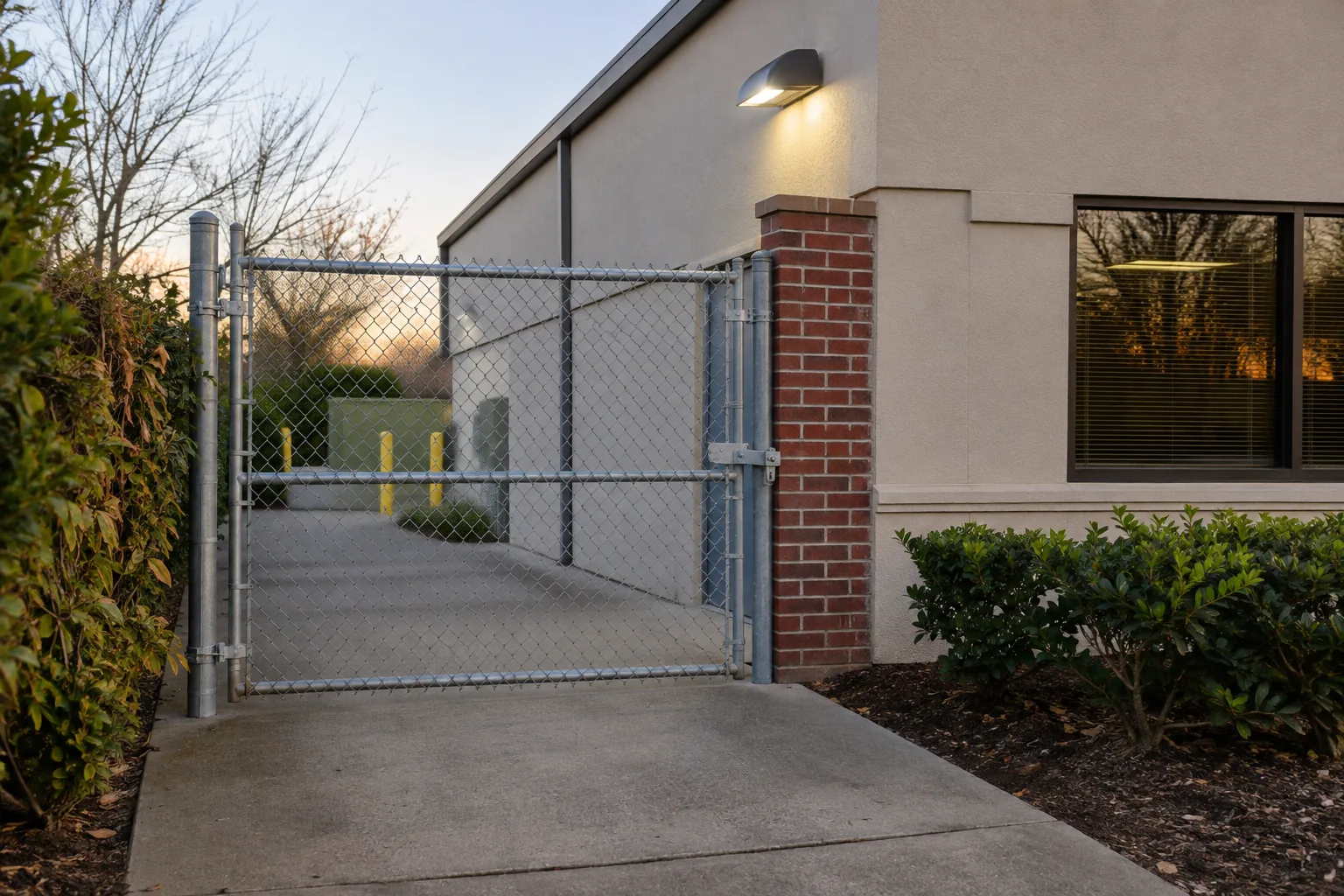
Name the person who will admit the crew, identify the agreed entrance and confirm which areas are accessible. Explain whether gates, locked service spaces or another tenant's property affect the route. Share only the information needed through the agreed private channel. Public photographs and broadly distributed notices should not contain alarm codes, key locations or access credentials. An estimate package can identify that controlled access exists without exposing the means of entering the property to everyone who receives a copy.
Ask who remains reachable during the appointment and who has authority if access differs from the plan. A message left with a daytime employee may be unhelpful when a gate is locked after hours. Establish what happens if the crew cannot enter the agreed zone or a required contact is unavailable. Do not assume that the provider will bypass a lock, use a neighboring property or wait indefinitely. Those situations need a decision process before arrival, with security duties kept distinct from the washing service.
Review visibility at the surfaces and along the routes
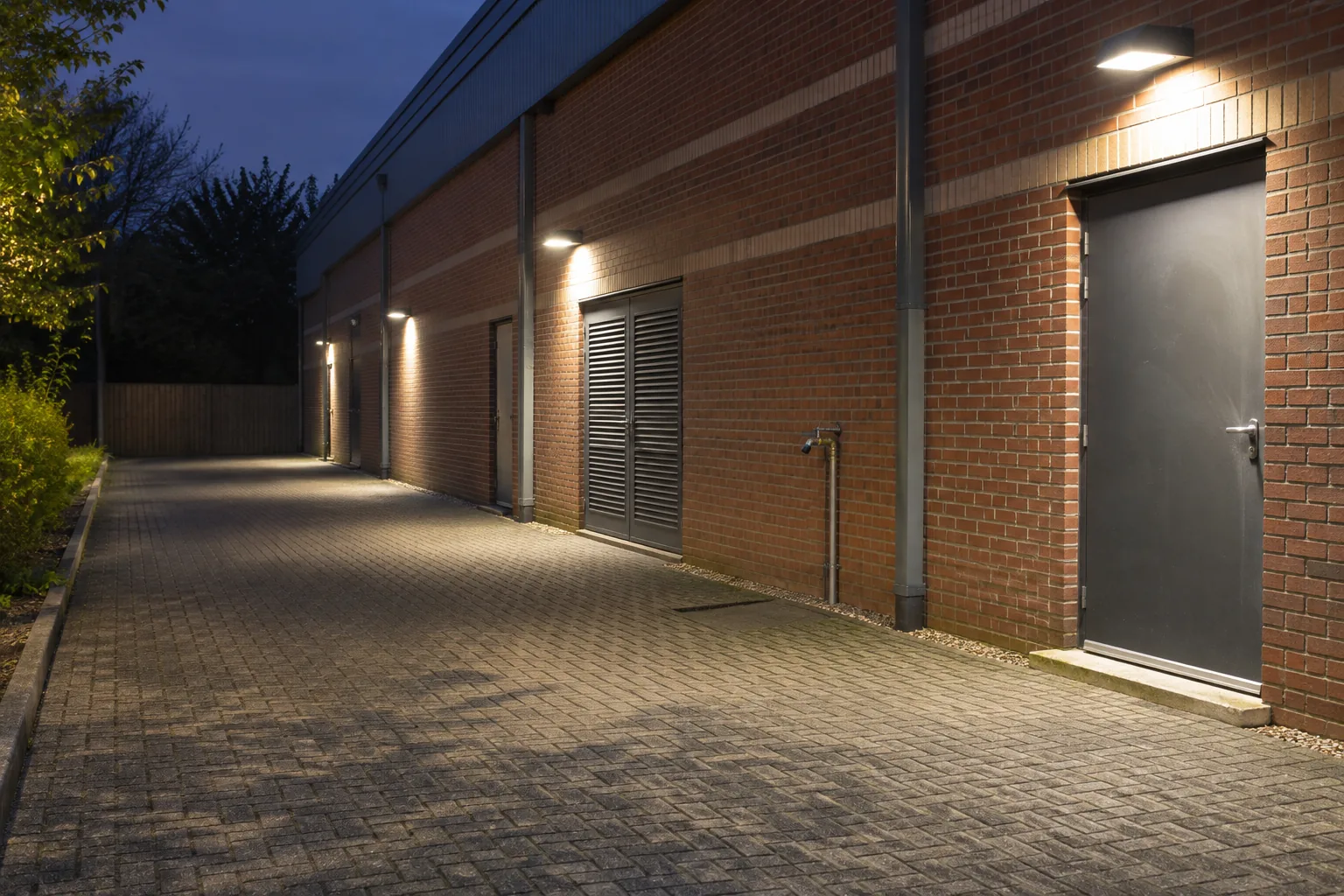
Describe existing exterior lighting and where it leaves dark areas, glare or deep shadows. Photographs taken during the proposed period can help show those conditions, while daylight pictures remain useful for material assessment. A bright entrance sign does not establish adequate visibility at a stair, drain, wall detail or equipment route. Ask how the provider will review the actual working conditions. Lighting supplied by the property or another party should be confirmed as an arrangement rather than listed as something that will somehow be available.
Keep lighting questions separate from promises about speed or finish quality. OSHA guidance on fatigue prevention includes considering schedules, rest opportunities and environmental conditions such as lighting. This planning page is not a staffing or fatigue-management program and supplies no universal shift length. It flags why an unusual appointment needs an honest operational review. If the provider cannot adequately assess or work within the available conditions, a different window or phase is a sensible outcome rather than a failure to meet an assumed night-service promise.
Consider the neighbors who remain when the business closes
Identify homes, guest rooms, other tenants and occupied spaces near the proposed equipment location. Tell the estimator about known property rules or management restrictions and identify the person who can confirm them. A commercial address does not establish that surrounding properties are unoccupied or unaffected by evening activity. Do not infer permission from an earlier contractor's schedule. Current arrangements should be checked for this project and recorded in the scope discussion, particularly where several owners or managers share the same access space.
Describe sensitive equipment locations and nearby openings without suggesting that machinery should be placed indoors to reduce its visibility or sound. The provider must assess appropriate equipment arrangements for the actual site. This guide does not state local noise hours or claim that any particular appointment is authorized. Where a rule, approval or neighbor-related condition is uncertain, ask the responsible property contact to resolve it. A request for a quiet window should not turn into an unsupported guarantee that the operation will be silent.
Have the property photos?
Let’s define the next step.
Send the address, requested surfaces and the contact who can confirm access.
Make off-hour preparations explicit and checkable
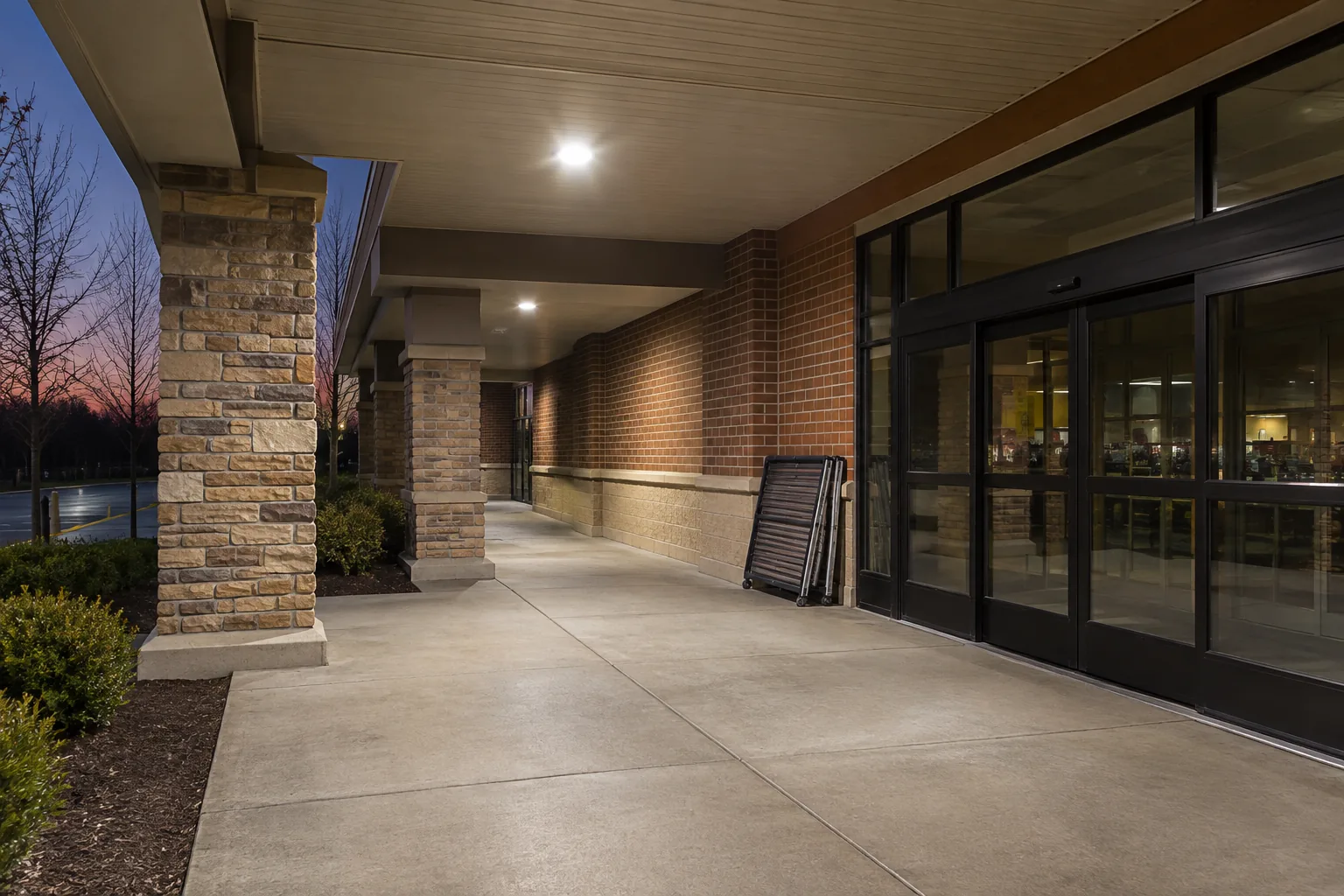
List the agreed tasks that must be complete before the crew arrives. Examples include clearing a specified parking bay, moving a display from a named entrance or making a water-access point available after closing. Assign each task to a person who can actually perform it during that period. A preparation list written for daytime work may fail if the relevant staff member has already left. Avoid sending everyone the same broad instruction to clear the exterior when only one phase has been approved.
Confirm how readiness will be checked and what information the provider should receive if something changes. A late delivery, an employee vehicle left in place or an event running long can affect a narrowly timed appointment. The agreed response may be a scope adjustment or rescheduling, not a rushed workaround. Keep any preparation outside the washing contract, such as heavy lifting or security attendance, assigned to the appropriate party. The request should not rely on the crew silently taking on extra tasks to preserve a timetable.
Define handover before the next opening or shift
Agree on who reviews the phase when work is complete and how the next staff shift receives its status. Where an immediate daylight comparison is unavailable, decide how observations or questions will be recorded and followed up without promising an unqualified result from a night photograph. Label completed and excluded zones clearly. A manager arriving later should know which surfaces were included, where equipment has been removed and whether any access issue still needs attention before ordinary operations resume.
Do not set an automatic reopening or dry-surface guarantee simply because the business needs to open at a certain time. Materials, conditions and the actual handover need review. Washing also does not repair a damaged threshold, defective lighting or a persistent drainage problem. Record those separately so the next shift does not mistake an unresolved property issue for completed cleaning work. A useful handover communicates facts about this appointment and identifies a contact for follow-up rather than making a general statement that everything outside is ready.
For an appointment that may cross midnight, identify the calendar dates as well as the intended arrival and handover times. A notice saying Tuesday night can mean different things to a closing manager and an early Wednesday employee. Use one consistent written window so access attendance, preparation and next-shift instructions refer to the same proposed visit.
Send a scheduling request that can be evaluated
Provide CoKo's with the address, requested surfaces, daylight condition pictures and the reason for the preferred window. Add the actual closing and arrival sequence, access contact, lighting limitations and known property restrictions. Ask whether an available appointment and workable phase can be agreed for those conditions. If the timing is a preference rather than a fixed requirement, say so. That gives the provider room to discuss options without assuming that every request requires a late-night operation or a complete business closure.
Keep service selection tied to the surfaces. Roof washing, soft washing and heated pressure washing are not chosen simply because a job is planned outside normal hours. The materials, condition and practical site arrangements still require review. Use the ordinary free quote route to begin the discussion, then confirm the final scope and appointment directly. This guide offers an estimate-preparation framework, not a standing promise of emergency response, unrestricted night work, silent equipment or a guaranteed opening time after an unreviewed cleaning request.
A practical start.
Three useful steps.
Show the surfaces
Send wide photos and close views. Label the buildings and the areas that matter now.
Set the boundaries
Explain materials, access, preparation and the work window your property can support.
Review the scope
Confirm included surfaces, responsibilities and the next step before scheduling.
Night and Off Hour Commercial Cleaning.
Your questions, answered.
Your next exterior project.
Start with a clearer scope.
Text your address and the priority exterior photos. For a larger project, send the full property details.
Send your address. Show us what needs cleaning.
Text your address, a wide photo and a close-up of the buildup. We’ll review the surfaces and discuss your cleaning options.
Text photos for an estimate Start an online quoteCoKo’s Pressure Washing · (504) 296-9696