
Commercial exteriors · Greater New Orleans
Ticket Booth and Box Office Exterior Washing.
Define the admissions building and the waiting area.
Text clear property photographs, the requested surfaces and available access window. Let’s define the exterior washing scope.
Your property. Your priorities. A clearly defined scope.
Identify the admissions structure and its outside faces
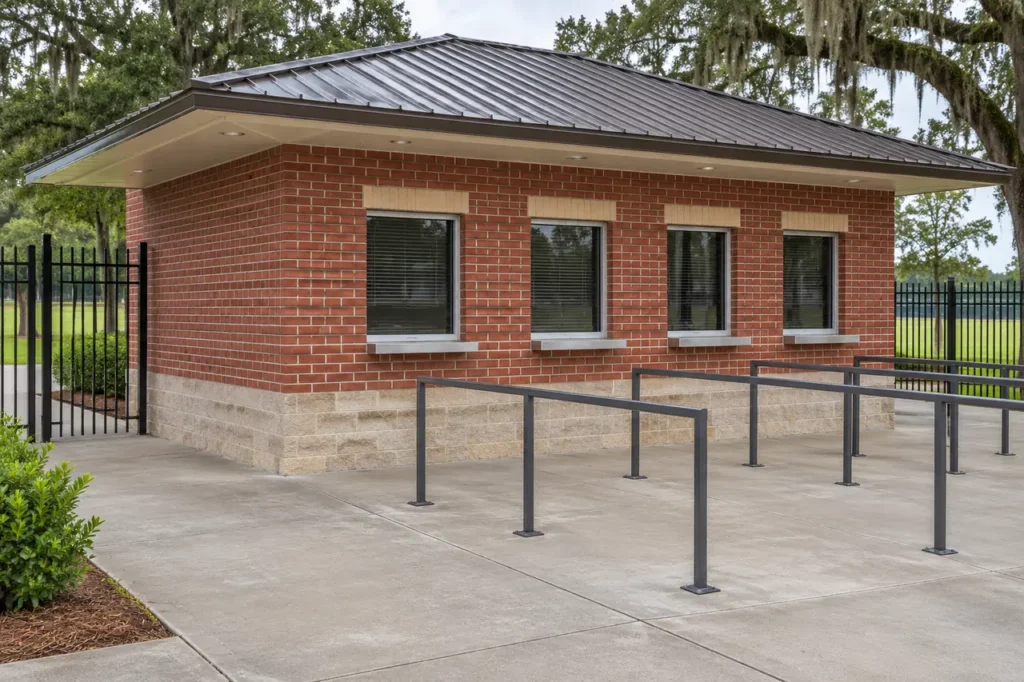
An admissions office has an exterior that customers approach closely, often before the rest of a venue is open. The roof, closed service windows, outside walls and waiting pavement form a small but complicated washing area. CoKo’s reviews ticket-booth and box-office building surfaces around Greater New Orleans and the Westbank as a defined exterior project. Start with the structure and its surrounding approach, rather than requesting cleaning of ticket equipment or the entire attraction.
Begin with a photograph showing the booth from the customer approach. Explain whether it is a freestanding building, an opening in a larger building or one of several small offices. Those arrangements create different boundaries. A freestanding booth can have four outside elevations and its own roof; an attached ticket window may have only a limited wall frontage within a much larger venue. Mark the particular building on a property image if the site has several entrances.
List the exterior components you want reviewed in everyday terms: wall faces, roof surfaces, trim and the exposed landing. Describe what the building is made from if known. Do not assume that a compact structure has a single material or that a short frontage requires little preparation. Windows, mounted signs and narrow passages can limit access even when the overall booth is small. Keep a temporary tent or movable ticket desk outside the building request unless it has been separately discussed.
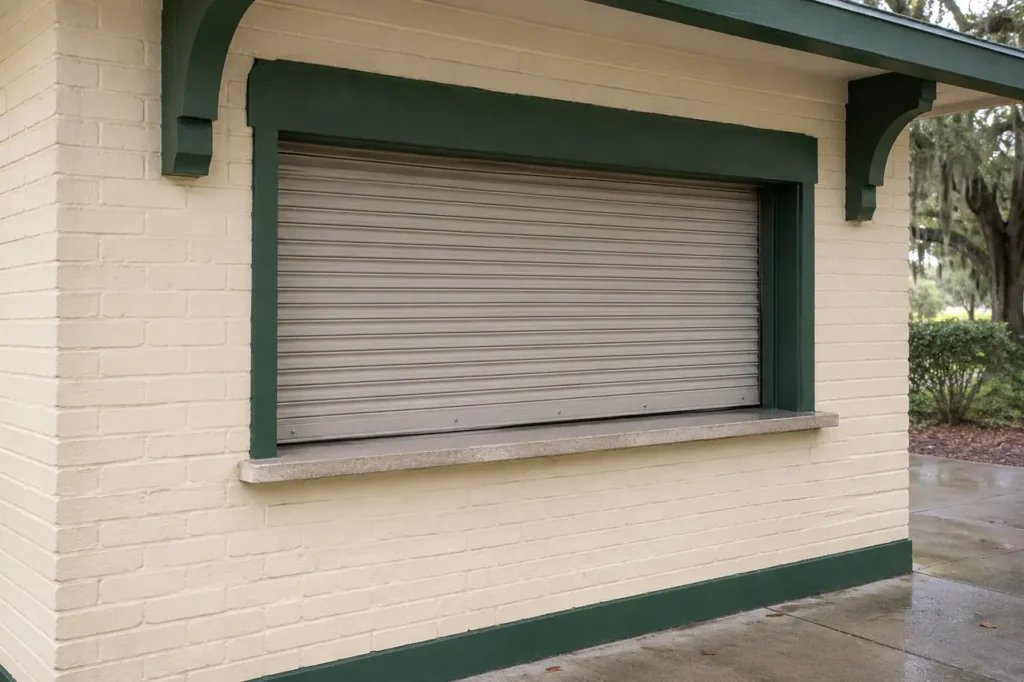
Show the service window in its closed condition
Photograph each admissions opening with the window or shutter closed. Include the outer frame and sill in the image, then indicate whether the requested area stops at the frame or also includes adjacent wall finishes. A counter that projects outdoors is a different component from the wall underneath it. The cashier’s internal workstation and the exterior face of a window should not be combined into an undefined request to clean the counter.
Tell CoKo’s about known leakage, loose seals, damaged trim or a closure that does not shut properly. These are conditions to review before washing, rather than details to discover while the booth is in use. Do not send photographs of cash drawers, customer transactions or payment information. A washing estimate does not require admission-system credentials. Card readers, scanners, intercoms and ticket printers are equipment belonging to the operator’s separate preparation plan; their presence does not mean that servicing them is included.
Distinguish an attached overhang from a separate shelter
A roof above a ticket window might belong to the booth, to a much larger entrance canopy or to a separate queue shelter. Provide a side view that makes that connection visible. Name the roof or overhead face that matters, and show its relationship to the waiting area. A small window request should not be interpreted as permission to wash an entire entrance roof simply because the two meet above the same line of customers.
Where visible from the ground, photograph the roof edge, supports and underside without climbing onto the structure. Mention detached gutters, deteriorated paint or recent roof work. Cleaning is not a repair to flashing, an evaluation of structural supports or a correction to existing water entry. If the overhead area cannot be clearly identified from the supplied photographs, leave its extent open for further review. A defined frontage and a separately assessed canopy are easier to understand than one vague description of the entrance.
Separate the waiting apron from the admission controls
Draw a boundary around the pavement you want considered. Include the start of the customer approach and the point where it meets another walkway or entrance. A ticket queue can extend far beyond the booth itself. State whether you are asking about a small landing, a marked waiting zone or a longer route through the property. The included pavement should be identifiable even when no queue is present.
Describe removable rails or signs that ordinarily occupy the area and identify who can move them. Turnstiles, powered gates, access readers and barriers are not simply another part of the concrete. Those systems remain outside an ordinary surface-washing request unless a specifically suitable arrangement has been established. Do not promise that a venue will remain open through a work zone before the actual route has been reviewed. The operator should identify where guests may be directed while the proposed surface is unavailable.
Record finishes beneath signs and around mounted items
A booth can combine painted panels, masonry, exposed metal and applied advertising in a very short frontage. Supply a close image of each finish that concerns you, accompanied by a wider view showing its location. Point out lettering, films, vinyl graphics or an older coating where you know they are present. A general wall photograph may not reveal the difference between deposited dirt and deterioration in the finish itself.
Signs and mounted devices can conceal parts of the wall or make edges difficult to reach. Identify those areas without assuming that fixtures will be removed for washing. A cleaning proposal does not include taking down advertising, rewiring lights or restoring faded graphics. If old paint, loose facing material or an unknown surface treatment is present, note it before discussing an expected result. The written scope can then distinguish a surface that can be reviewed for washing from a separate maintenance issue that needs its own decision.
Have the property photos?
Let’s define the next step.
Send the address, requested surfaces and the contact who can confirm access.
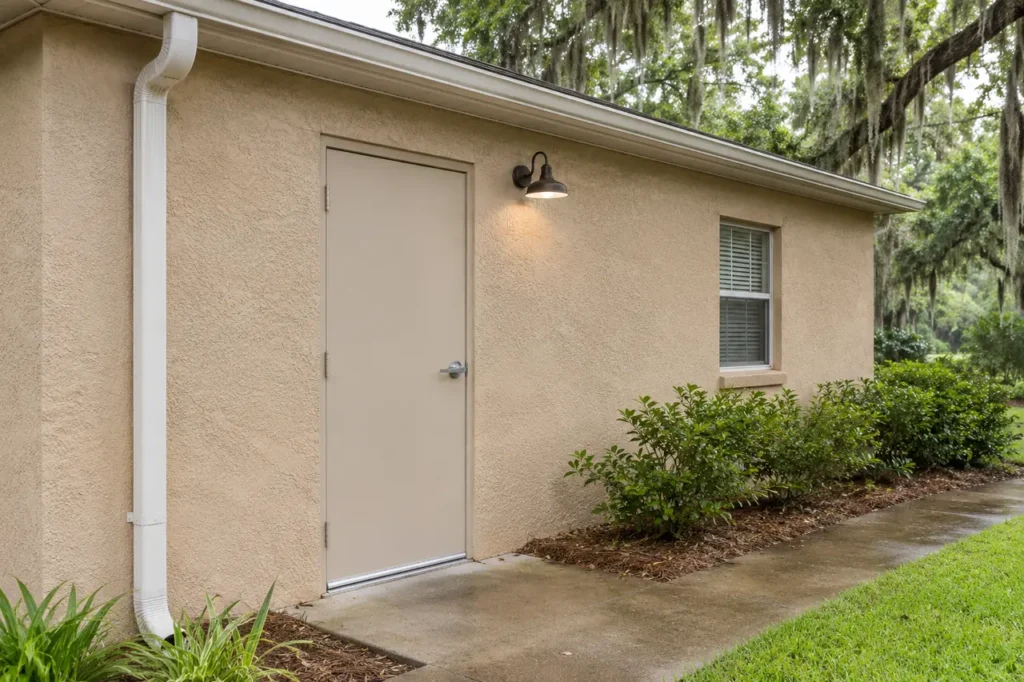
Include the rear door and staff approach deliberately
The public frontage may be the priority, but the rear of a small ticket office can have a different access problem. Show the staff door, the route used to reach it and any fence or nearby structure restricting that route. A photograph from the front does not establish that the rear wall is accessible. Explain whether the requested work includes that elevation or whether it is being supplied only as context.
Identify a route that staff still need to use and any scheduled deliveries to the office. Loose storage, movable furniture and temporary signs should have an assigned person responsible for their preparation. An exterior-washing request does not include clearing private office contents or relocating fixed equipment. If the rear wall is part of a secured area, name the person coordinating entry without sharing sensitive access information in the initial photo set. These details help keep the actual building request separate from wider venue operations.
Plan around the admissions timetable and setup period
A booth’s quiet period may fall before opening, between events or after admissions have ended. Tell CoKo’s which window the property can actually make available. Include the time staff begin setup, rather than supplying only the advertised public opening. Cashier preparation, signs being placed and gates being opened can occupy the area before the first guest arrives. Availability should be confirmed by the venue contact who understands those activities.
For a multi-entrance site, identify each booth separately and explain whether the buildings can be reviewed together or must be scheduled as different areas. A proposal for one office does not automatically extend to every admissions point. If event arrangements change after a quote is discussed, explain what changed before work is scheduled. CoKo’s can review the new circumstances; a previous conversation should not be treated as an assurance that any deadline or operating arrangement can be accommodated.
Make the requested result and exclusions easy to compare
Tell CoKo’s what prompted the request: visible buildup on a wall face, weathered-looking exterior surfaces or a waiting apron needing review. Keep that concern separate from a diagnosis of the material. A photograph cannot establish that every mark can be removed, and washing does not repair damaged finishes. Ask which areas are included, what preparation the venue must arrange and which conditions still need a closer look.
When comparing proposals, check that they describe the same booth, roof extent, exterior faces and pavement boundary. One price may concern the public frontage while another includes the rear access and a detached shelter. Begin the conversation with the address, labeled photographs and your available access window. Text those details to CoKo’s or use the commercial project form. The next step is a review of a clearly described exterior request, with payment systems, security equipment and interior office work kept outside that ordinary building-washing scope.
A practical start.
Three useful steps.
Show the surfaces
Send wide photos and close views. Label the buildings and the areas that matter now.
Set the boundaries
Explain materials, access, preparation and the work window your property can support.
Review the scope
Confirm included surfaces, responsibilities and the next step before scheduling.
Ticket Booth and Box Office Exterior Washing.
Your questions, answered.
Your next exterior project.
Start with a clearer scope.
Text your address and the priority exterior photos. For a larger project, send the full property details.
Send your address. Show us what needs cleaning.
Text your address, a wide photo and a close-up of the buildup. We’ll review the surfaces and discuss your cleaning options.
Text photos for an estimate Start an online quoteCoKo’s Pressure Washing · (504) 296-9696