
Commercial exteriors · Greater New Orleans
Commercial stucco washing.
The finish. The openings. A defined wall scope.
Text the marked elevations, finish records and known concerns. Let’s review the actual wall surface.
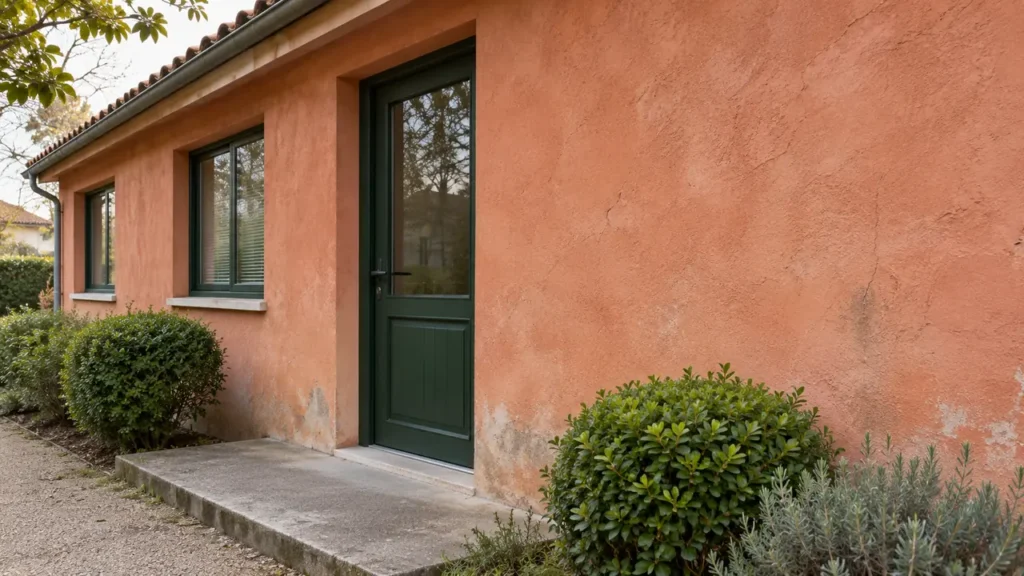
Your property. Your priorities. A clearly defined scope.
Establish which wall system you actually have
CoKo’s reviews commercial stucco exterior-washing requests in Greater New Orleans and the Westbank. Start with the wall system, its existing finish and the elevations you want considered. Stucco work needs a surface-specific conversation: the visible texture does not establish what is behind it, whether a coating is sound or which treatment a particular wall can accept.
Send ground-level photographs of the building, closer views of the finish and any available maintenance records. This page concerns a defined washing request for commercial stucco surfaces. The broader facade page helps organize mixed materials; the stucco knowledge guide addresses general background. Repairs, waterproofing, recoating and specialist building-envelope investigations are different work.
The word stucco is often used loosely when a property changes hands. A leasing brochure may describe a textured wall without identifying its construction. Ask the owner, facility team or original contractor for the installed system name, finish product and relevant maintenance instructions. Include the date of any later painting or resurfacing when that information is available.
A distant photograph cannot reliably distinguish every cement-based render, insulated finish assembly, patch or coating. Do not scrape, puncture or remove trim to obtain that information for an estimate. If the records are missing, say so. The washing review should retain that uncertainty until someone qualified can establish an appropriate limit.
Different portions of a commercial building may also have been constructed at different times. A newer addition can resemble the original wall while using another assembly. Mark the boundary on a photograph rather than combining both areas under one material label. That is especially useful where an entrance tower, rear extension or repaired corner has a matching color.
Let the finish instructions shape the cleaning review
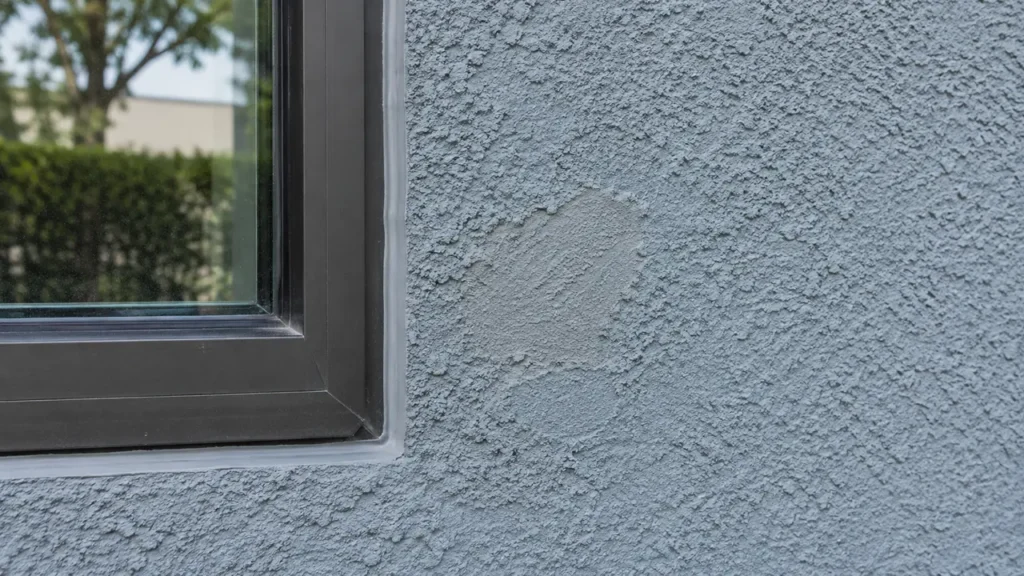
Provide the actual manufacturer’s care sheet whenever it can be found. Product instructions matter more than a general request for a stronger wash. Sto’s EIFS maintenance guide calls for an inconspicuous test and cautions against excessive pressure, abrasion and high-temperature methods on that assembly. Its guidance does not identify an unknown wall as a Sto system or authorize one method for every textured exterior.
A proposed approach therefore needs to match the established material and present condition. CoKo’s can discuss suitable washing scope after that review without promising steam cleaning, aggressive stripping or a universal pressure setting for stucco. If the finish supplier or repair contractor has additional restrictions, send them with the request.
A small reviewed test area may help establish whether the proposed treatment gives an acceptable appearance. Identify who can authorize it and what result will be considered reasonable. A test is part of a surface discussion; it does not certify the wall assembly or replace the manufacturer’s requirements.
Mark cracks, patches and exposed finish edges
Record visible cracks, open joints, loose-looking edges and impact marks before discussing washing. Show each concern in a close photograph and in a wider view that locates it on the elevation. There is no need to press against a wall, pull at an edge or climb to inspect an upper section yourself.
Patches are particularly relevant on stucco. A repair may have a different texture, absorb moisture differently or retain another color even when surrounding dirt is removed. Tell CoKo’s which patches are old, which are recent and whether a repair provider has specified a waiting period or cleaning restriction.
Washing is not a crack repair or a new finish coat. Areas with unresolved damage may need exclusion or another provider’s assessment before cleaning can be accepted. Keep those decisions in writing so that an appearance request does not quietly become an unsupported promise to stabilize, seal or rebuild the wall.
Separate removable buildup from the finish itself
Textured walls create small ridges and recesses that can look different in direct sun and shade. Take photographs under ordinary daylight and describe the concern plainly: a dark band beneath a ledge, green discoloration beside planting or uneven marks near an irrigation head. Do not assume that every darker area is the same substance.
Include previous cleaning attempts, coatings and known spills. A light patch could be an earlier repair or finish change rather than a dirty area that needs more force. Similarly, rust-colored streaks below attached metal and pale mineral marks may call for separate evaluation instead of inclusion in an ordinary wall wash.
The practical goal is an agreed improvement to removable surface buildup within the finish’s limitations. Existing color differences, weathering and repairs can remain visible. Compare the result after the surface has dried under similar lighting, and avoid using an edited photograph or another building’s new coating as the promised standard.
Treat openings and attachments as separate details
Stucco elevations frequently meet window frames, doors, lighting, sign brackets and service penetrations. Show those interruptions in the wall photographs. Note known water entry, damaged sealant or a recently replaced window so that the washing discussion includes the actual condition around the requested area.
The owner or responsible trade should decide whether an opening needs repair before work proceeds. Lower water pressure does not make a leaking perimeter watertight. Do not remove electrical covers, disconnect fixtures or ask a tenant to improvise protection for equipment they do not control.
Identify whether the requested work stops at the wall face or includes specific exterior trim. Glass treatment, sign servicing and sealant replacement should be listed separately when relevant. A clearly marked boundary is more useful than the phrase “clean everything,” particularly where several tenants have installed their own signs, lights or access devices.
Have the property photos?
Let’s define the next step.
Send the address, requested surfaces and the contact who can confirm access.
Plan the elevation around occupied commercial space
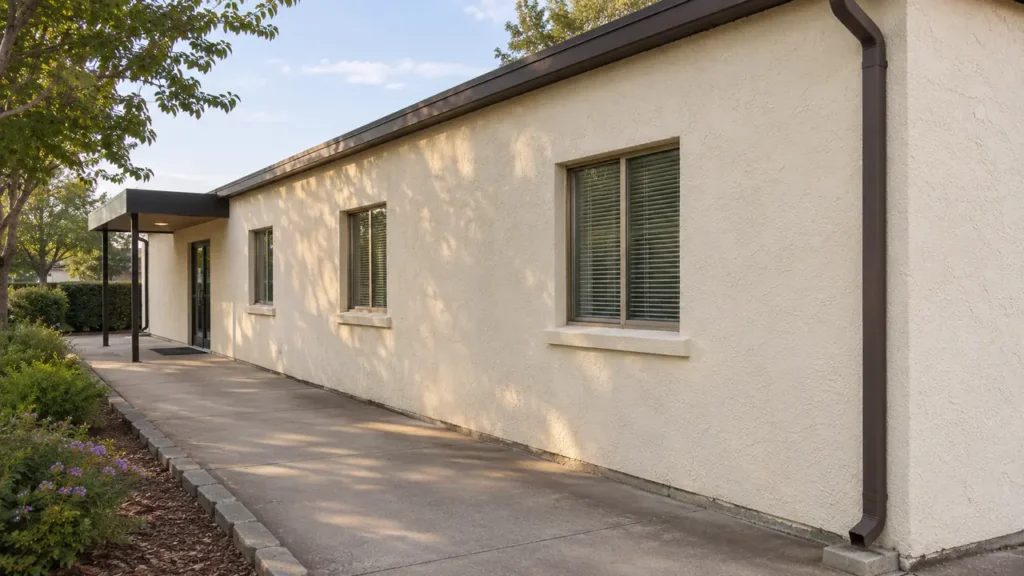
A stucco wall beside a restaurant patio, office entrance or hotel walkway needs an access plan that reflects its use. Show the full area below the requested elevation, including furniture, parked vehicles and the path people use to reach the door. Identify who can authorize temporary relocation of property.
Explain whether windows open into the work area and whether a tenant depends on a door during the proposed window. Notices should describe the affected section and the contact handling access questions. A property manager may prefer one elevation at a time; that can be discussed without assuming every building can stay fully open beside active washing.
Upper walls introduce a separate reach question. Provide reliable height information or drawings if available, plus ground photographs showing setbacks, canopies and overhead obstructions. A quote inquiry does not require anyone to climb. Specialized access equipment and restricted setup positions must be reviewed rather than inferred from the fact that the wall is stucco.
Include the wall base, planting and water arrangements
Photograph the lower wall and the ground beside it. Landscaping, mulch, exposed equipment, low windows and adjoining pavement may affect preparation and the working boundary. Point out vegetation touching the finish without assuming that trimming or landscape work is included in a washing proposal.
Identify the authorized water connection and any facility procedures that apply to its use. Show visible drains, low spots and neighboring property boundaries. Existing pooling or water entering a doorway is relevant information; it should not be left for a crew to discover after a date is agreed.
The site contact should clarify appropriate wash-water arrangements for the actual property. A nearby grate does not by itself establish an acceptable route. Drain repair, leak investigation and specialized disposal are separate questions. Unresolved restrictions should be addressed before a scope is accepted, rather than concealed inside a general promise of exterior cleaning.
Request a stucco scope that can be reviewed later
Send the property address, marked elevation photographs, finish records, known defects and the authorized contact. Explain whether the priority is one stained panel, a full elevation or several stucco areas around the building. Include timing dependencies such as tenant events, ongoing repairs or a planned coating project.
Review the proposal for included wall sections, excluded damaged areas, access assumptions and reasonable appearance limits. If repainting or repair is also planned, coordinate the sequence with that provider and share their requirements. The washing request should not silently take responsibility for adhesion, waterproofing or the performance of a future coating.
Keep the accepted scope, reference photographs and any tested-area observations with the property records. Later maintenance can then focus on actual changes in the same wall sections. There is no universal interval or promise that discoloration will never return; the useful next decision comes from the identified finish, its condition and the owner’s priorities.
A practical start.
Three useful steps.
Show the surfaces
Send wide photos and close views. Label the buildings and the areas that matter now.
Set the boundaries
Explain materials, access, preparation and the work window your property can support.
Review the scope
Confirm included surfaces, responsibilities and the next step before scheduling.
Commercial Stucco Exterior Washing.
Your questions, answered.
Your next exterior project.
Start with a clearer scope.
Text your address and the priority exterior photos. For a larger project, send the full property details.
Send your address. Show us what needs cleaning.
Text your address, a wide photo and a close-up of the buildup. We’ll review the surfaces and discuss your cleaning options.
Text photos for an estimate Start an online quoteCoKo’s Pressure Washing · (504) 296-9696