Commercial exteriors · Greater New Orleans
Your community.
An agreed washing plan.
Identify the surfaces, operating needs and access questions before reviewing the washing scope for your property.

Your property. Your priorities. A clearly defined scope.
Start with the decision the association needs
An association washing project should begin with a defined maintenance question. The board may be considering an entrance monument, shared paths, clubhouse approaches or several building exteriors, but those are different scopes. Describe the actual problem and the areas being considered before asking for a community-wide price. A short marked plan is more useful than a general request to clean the neighborhood. It helps people compare the same work without assuming that every visible surface is part of one contract.
Name the contact who will gather information, the person who can answer site questions and the process used to approve work. Those roles may be shared, but they should not be left implicit. Confirm responsibilities using the association's current records and appropriate advice where needed. This guide does not interpret governing documents, determine ownership or establish who has legal authority. It helps the authorized participants assemble a practical washing request once those responsibilities have been checked.
Map common areas and separate owner requests
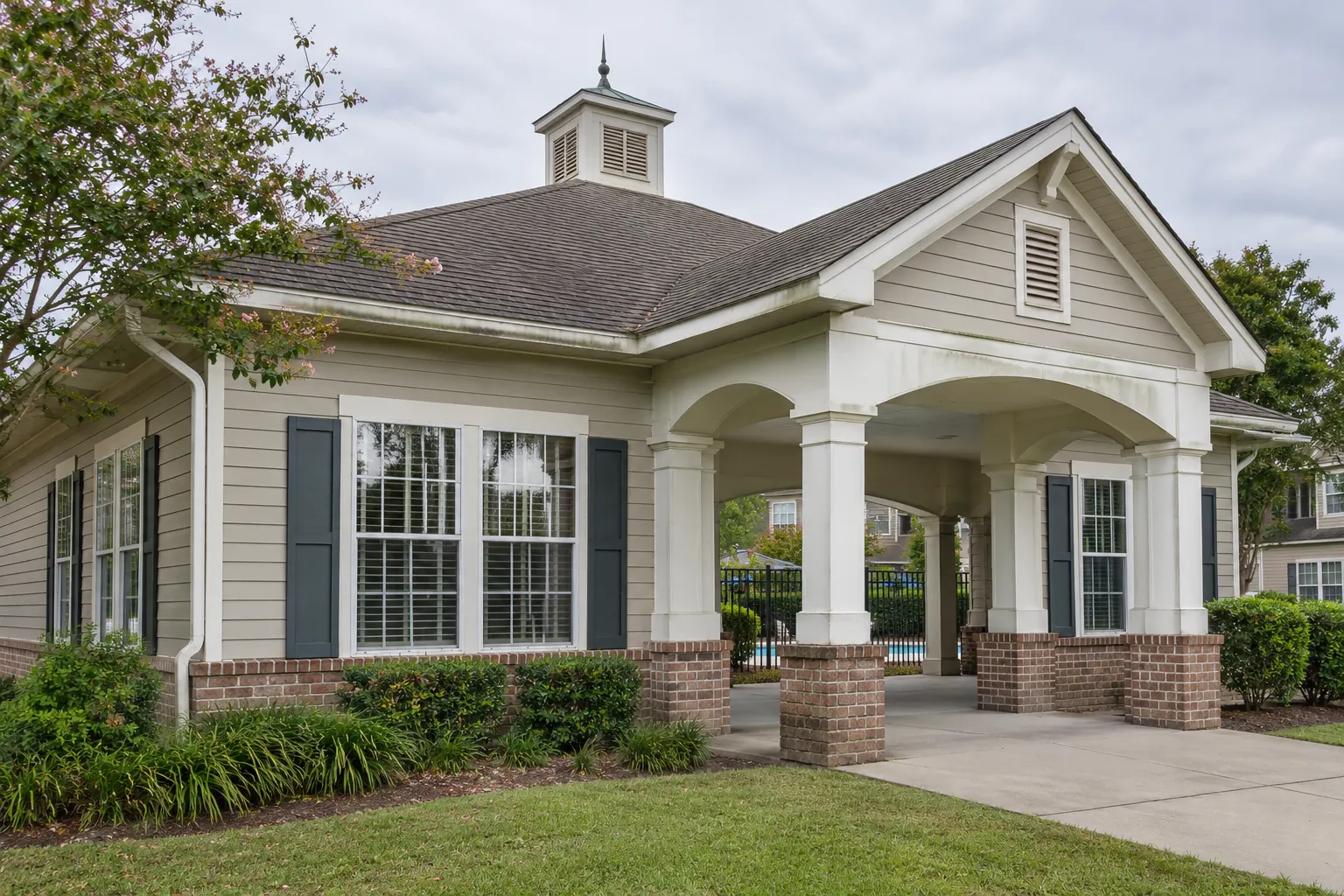
Mark the requested common-area boundaries on a simple site plan. Identify entrance features, paths, parking, amenity approaches and the sides of buildings being considered. A community name alone does not establish whether a driveway, wall or courtyard is shared or privately maintained. Give ambiguous areas a review label rather than quietly including them. That makes it easier to obtain a quote for the agreed work while keeping unresolved responsibility questions out of the contractor's on-site decisions.
Provide a separate route for individual homeowners who want additional washing. Their work should not be assumed to share the association's authorization, invoice or access arrangements. Ask residents to submit their own address and requested surfaces through the appropriate quote channel. If optional work might be coordinated, agree on how requests will be reviewed and scheduled without promising a community discount or a price before assessment. Clear separation prevents a resident's extra request from changing the association's approved scope.
Create a condition record that supports a useful estimate
Photograph each proposed work zone from a ground-level overview and add closer views of representative buildup. Include a lightly affected section as well as the darkest area. Label the photographs with the same place names used on the plan, such as west entrance path or clubhouse rear approach. Avoid a collection of unnamed close-ups. The estimator needs to understand the extent, surfaces and access, not simply see that some parts of the community look dirty.
Record known loose masonry, failing paint, damaged seals, repaired surfaces and sensitive fixtures before scheduling. Where product information exists for a coating, roof or siding, make it available for review. Washing cannot repair defects or establish the remaining life of a finish. The scope should distinguish appearance improvement from repairs the association may need to arrange separately. Keep homeowner information and unrelated private records out of the estimate package; photographs should serve the maintenance decision rather than document residents' personal lives.
Compare a base scope and clearly separated options
Choose a base scope that can be described consistently to each provider. List the included zones, surface types and access assumptions, then identify any optional areas separately. Options might change project size or sequence, but they should not blur which work the association is actually approving. A proposal is easier to discuss when everyone can see the difference between the essential entrance paths and an additional building group. Avoid asking providers to invent their own interpretation of a whole-community cleaning plan.
Compare the written inclusions and exclusions before comparing totals. Check whether preparation, equipment access, restricted areas and resident coordination have been treated the same way. Ask how uncertain deposits or inaccessible areas will be handled before approval. Do not assume that a lower price includes the same surfaces or that a broader promise of spotless results is more reliable. Record the chosen scope with its marked plan so the later work order reflects the decision participants actually made.
Write notices residents can act on
Resident communication should answer practical questions: which area, what preparation, when access may change and whom to contact. Use familiar building or street labels and a simple zone map when useful. Tell residents about agreed vehicle relocation, movable items, pets or temporary routes without adding instructions the contractor has not reviewed. A notice should distinguish association work from private-home work. Residents should not have to guess whether their porch or driveway is included merely because crews will be nearby.
Decide who sends updates if weather or site conditions change the plan. Keep the contact and message consistent across email, posted notices and a management portal. Avoid promising a reopening time that has not been confirmed. Consider people who may need an alternative route or extra time to prepare, and discuss those arrangements through the association's normal contact process. Good notice reduces confusion, but someone must still check actual conditions before a work zone is released to the crew.
Have the property photos?
Let’s define the next step.
Send the address, requested surfaces and the contact who can confirm access.
Phase work around routes and shared amenities
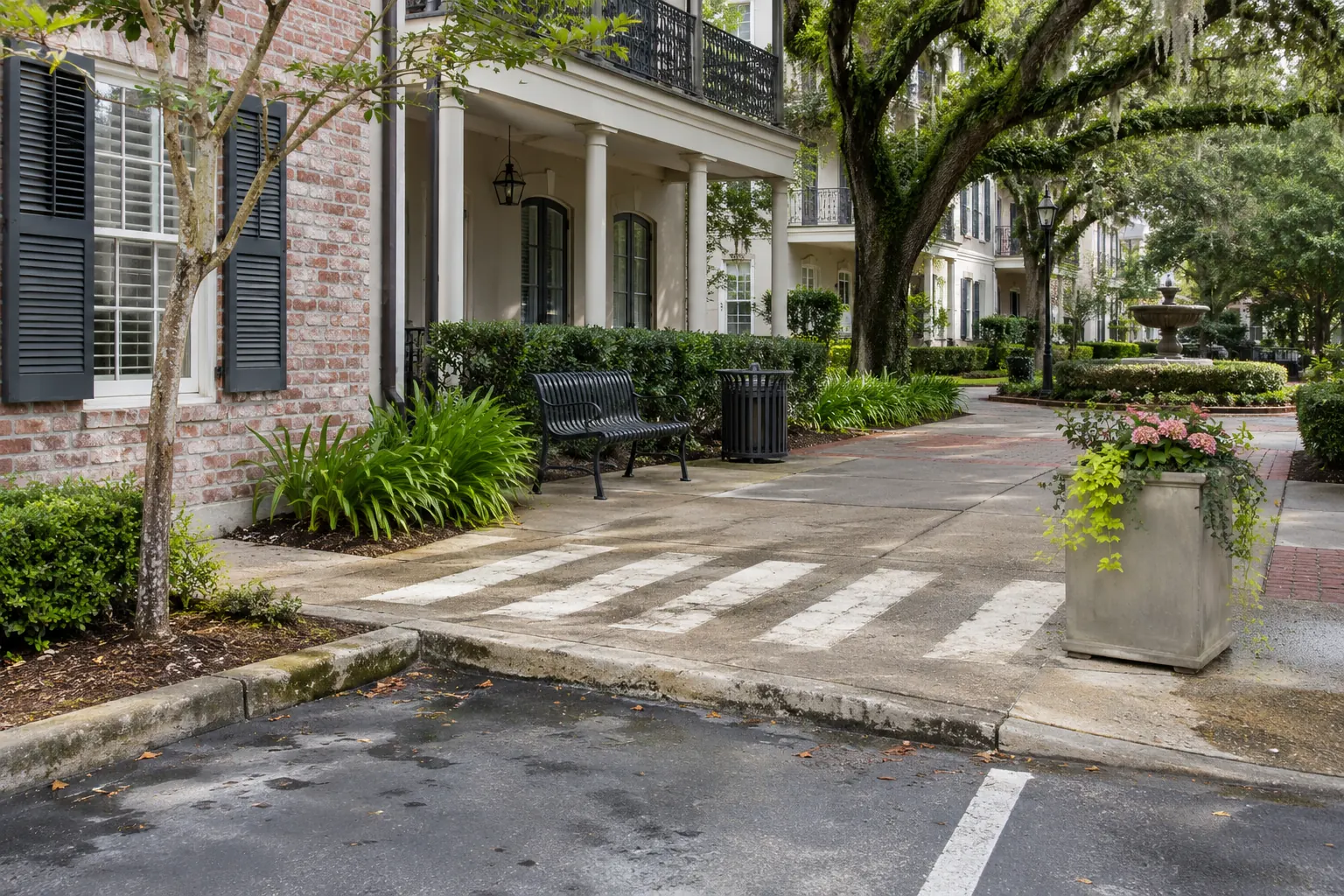
Review the routes residents use to reach homes, parking, mail areas and shared facilities. The most obvious path on a site drawing may not be the route people actually follow. Discuss how hoses, equipment, spray and wet surfaces would affect those movements. A workable phase should have clear boundaries and a practical access arrangement. The association should identify site restrictions rather than expect a washing provider to discover them while residents are already attempting to pass through the work area.
Coordinate amenity schedules, waste collection, deliveries, landscaping and other maintenance providers. Washing a clubhouse approach on the same morning as a scheduled gathering can create a conflict even when the work area is small. Identify water access and any gates or service points requiring a key. Show drainage features and discuss site-specific washwater controls before the visit. Do not assume an open drain, pond edge or shared landscaped area is an acceptable destination for water and loosened material.
Use a clear change and concern process
Agree on who may approve a change when a surface, access restriction or resident request differs from the written scope. A passing conversation with a committee member should not automatically expand the project. The provider needs a reliable contact who can pause the affected area and resolve the question. Keep a short record of approved changes, including any revised boundaries. This protects the clarity of the association's decision without requiring the crew to interpret internal management or payment arrangements.
Set an appearance objective grounded in the material's condition. Shading, aging, oxidation, repaired patches and permanent marks may remain after removable buildup is cleaned. A concern should identify the zone and surface, with a photograph where useful. Do not treat a request for stronger pressure as the default response. If the issue involves a failing coating, leak or repair need, record it separately and direct it to the appropriate review rather than assuming another wash will correct it.
Close the project with records for the next review
Choose a representative to review completed zones against the approved plan. Keep a list of exclusions, unresolved access items and appearance concerns that require follow-up. Compare similar photographs under useful conditions rather than relying only on a wet surface immediately after work. The handover record should make clear what was washed and what was not. It should not be described as a roof, structural, drainage or safety certification simply because the shared areas have been cleaned.
Retain the final scope, notice template and practical lessons for the next maintenance discussion. Track areas that collect buildup sooner instead of assuming the whole community needs one fixed interval. For a CoKo's estimate, send the address, marked common-area plan and representative photos through the quote route or text 504.296.9696. Keep private-home requests separate. The objective is an understandable association project with clear boundaries, realistic expectations and enough information for the provider to review the actual work.
For a change in board or management company, preserve the approved scope and unresolved items in a form the next contact can understand. Give photographs stable zone names and keep the final version of the plan with the estimate. A new contact should not have to infer the boundaries from old emails or residents' recollections. Before a repeat visit, ask whether surfaces, access or maintenance responsibilities have changed. Reusing a previous document is a useful starting point, but it is not confirmation that the old assumptions still apply.
A practical start.
Three useful steps.
Show the surfaces
Send wide photos and close views. Label the buildings and the areas that matter now.
Set the boundaries
Explain materials, access, preparation and the work window your property can support.
Review the scope
Confirm included surfaces, responsibilities and the next step before scheduling.
HOA Pressure Washing Planning Guide.
Your questions, answered.
Your next exterior project.
Start with a clearer scope.
Text your address and the priority exterior photos. For a larger project, send the full property details.
Send your address. Show us what needs cleaning.
Text your address, a wide photo and a close-up of the buildup. We’ll review the surfaces and discuss your cleaning options.
Text photos for an estimate Start an online quoteCoKo’s Pressure Washing · (504) 296-9696