Practical answer
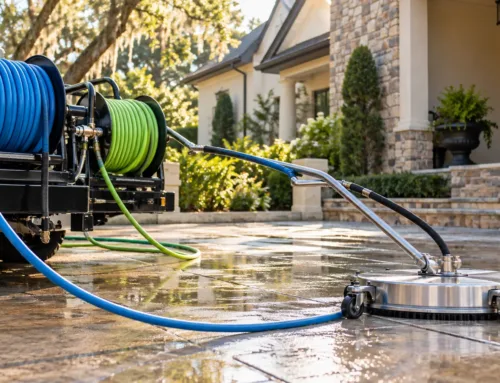
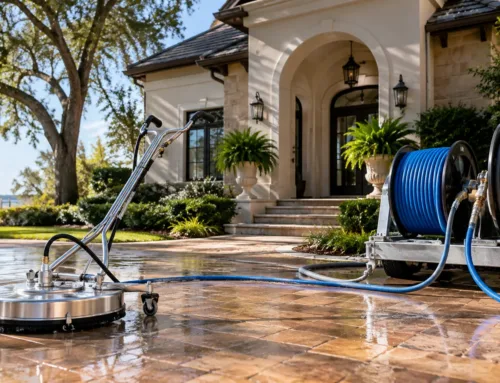
James Hardie’s siding-care FAQ warns that a pressure washer can damage Hardie siding and recommends a garden-hose spray with a soft, nonmetallic cleaning brush for ordinary dirt and debris. A general description such as low-to-moderate pressure does not replace those product instructions. Calling a service soft washing also does not, by itself, establish that it follows the requirements for a particular siding and finish.
Before requesting work, gather the product name, finish information and available care documents. Explain whether the surface has a factory finish, a later repaint or repaired sections, rather than assuming every wall has the same treatment history. Send ground-level overview and condition photos and ask how the applicable instructions affect the scope. Cleaning is separate from coating repairs, product identification and warranty decisions. Do not treat this guide or an estimate as a promise that coverage, appearance or an undamaged result is guaranteed.

Identify the product and its finish history
Fiber cement describes a material category, not a complete maintenance instruction. When you request cleaning, distinguish confirmed James Hardie siding from a wall that merely resembles it. Find any installation paperwork, product label or purchase record you already have, and explain when the manufacturer is unknown. The finish deserves its own description: factory finished, painted after installation, repainted later, or uncertain. Those histories should not be collapsed into one assumption about what the exterior can tolerate.
James Hardie's current FAQ warns that a pressure washer can damage its siding and describes gentler routine cleaning. A washing proposal should respect the instructions for the actual product rather than relying on a general claim about low or moderate pressure. Ask the provider to explain the proposed scope in relation to those instructions. A brand name on a page does not establish manufacturer approval of a business, a cleaning method or a particular existing installation.
Build a useful record of repainting and touch-up areas
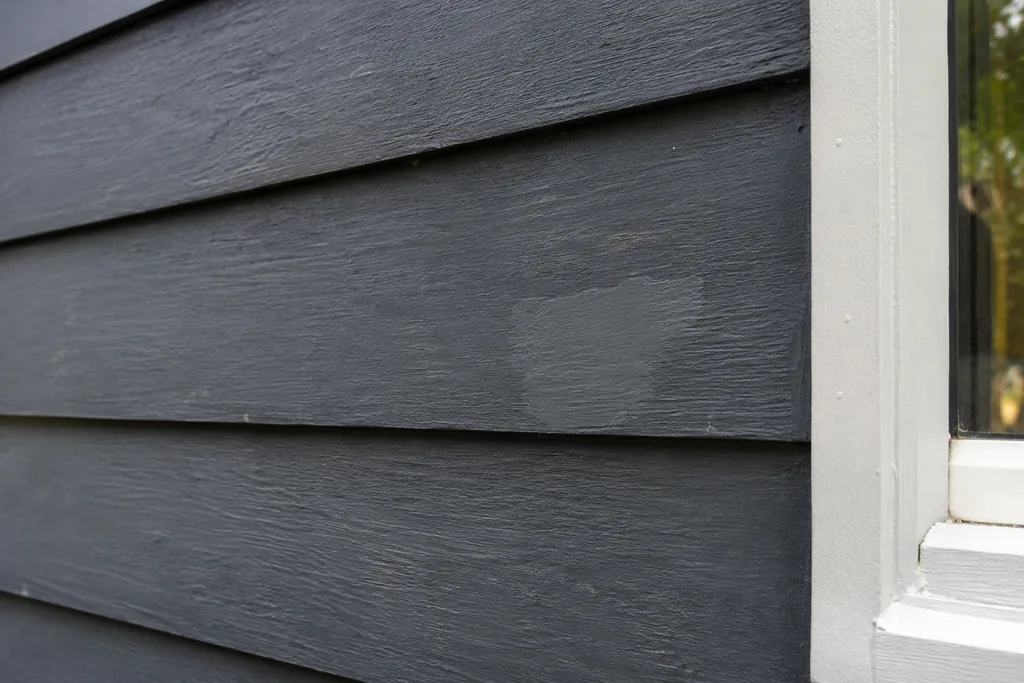
If the siding has been repainted, collect the coating information that is readily available. A paint can label, invoice or written maintenance instruction can be more useful than guessing the color from a photograph. Describe different paint ages where you know them, such as a recently repaired rear elevation beside older original boards. Do not scrape a surface or perform an improvised chemical test to supply information for an estimate.
Point out visible touch-ups and replacement boards using an overview followed by a detail view. Explain what you know and leave unknown dates or products unknown. Cleaning, paint preparation, coating repair and repainting are different decisions. If your real objective is a future painting project, state that at the beginning so that a maintenance-washing request does not become an accidental substitute for the painter's preparation requirements.
Organize the wall by boards, trim and transitions
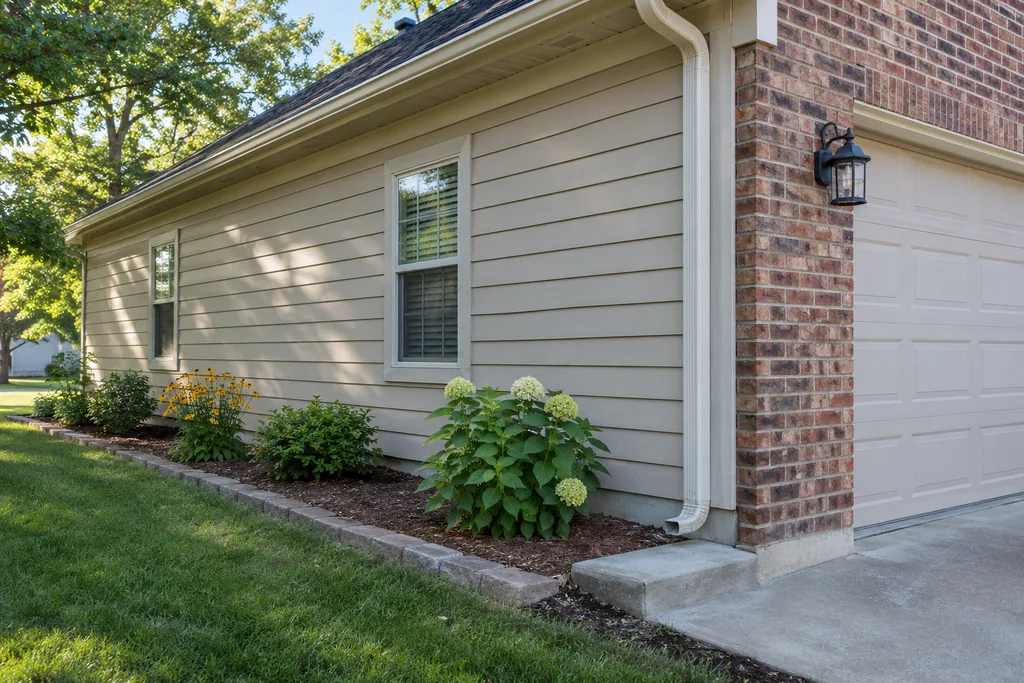
A fiber cement exterior can include lap boards, panel sections, decorative shingles and trim of different materials. Identify the areas you want considered rather than requesting an undefined treatment for everything outside. Note transitions to brick, stucco, wood or metal. Include soffits, porch ceilings and painted posts only when they belong in your request, and ask whether their material or finish needs separate review.
Use consistent elevation labels in photographs and written notes. A front overview can show the relationship between a panel section, a porch and an adjacent painted detail more clearly than several disconnected close-ups. This makes it easier to state the intended boundary of the work. It also prevents the size of an accessible lower section from being mistaken for the full scope of a tall or complicated elevation.
Record damage and moisture concerns before discussing cleaning
Describe cracked boards, chipped edges, loose pieces and areas where you have previously noticed water entering the building. A washing quote is not a concealed-condition inspection, and photographs do not establish the cause of a crack or stain. Keep observations factual: where the concern is located, when you first noticed it, and whether anyone has already assessed or repaired it. Share an existing professional report if it is relevant and you are authorized to do so.
Ask how the proposal addresses those concerns before a work date is agreed. Some areas may need a separate repair discussion or remain excluded pending review. Cleaning should not be described as replacing failed caulk, restoring broken boards or resolving the source of a leak. A clear boundary protects your ability to arrange the appropriate work rather than treating a cleaner appearance as evidence that an underlying problem has been corrected.
Distinguish ordinary buildup from a finish problem
Describe the visible issue without committing to a diagnosis. You might see dirt along a lower course, darker areas near an overhang, isolated marks or an uneven appearance around older touch-ups. Each observation should be connected to an elevation and a photograph. Avoid using an edited image that makes a subtle finish difference look like a completely different condition. A useful request preserves uncertainty where the cause is not established.
Ask what the proposed cleaning is intended to address and what remains outside the expected result. A provider should not promise that washing will make mismatched paint, weathered finishes or repaired boards look identical. If the concern appears to involve coating performance, ask whether a coating or siding professional should review it separately. Keeping the maintenance objective limited and explicit is more practical than choosing a method on the strength of a broad before-and-after claim.
Describe the surface. Clarify the request.
Describe access without assuming high-reach capability
Show porches, narrow side passages, changes in ground level and landscaping that affect the route to the requested elevation. Identify upper sections as upper sections; do not assume that every area visible in a photograph is reachable with the same setup. Ask how access will be evaluated and what remains conditional. Sending ground-level views is an appropriate starting point even when they cannot show every detail.
For occupied buildings, explain entries, deliveries and shared routes that need coordination. A homeowner can identify pets and gates; a property manager can identify the authorized site contact and ordinary occupancy pattern. These notes help define the planning problem. They do not establish an equipment inventory, a guaranteed work window or permission to use adjoining property. Keep those matters as explicit questions until the provider confirms an actual plan.
Compare an estimate with the maintenance objective
Read a proposal for included elevations, boards and trim rather than relying on the phrase house washing. Check that finish information and known concerns have reached the person describing the work. If one offer includes porch details and another excludes them, the totals do not describe the same request. Separate optional additions so that you can understand the base scope before deciding whether to expand it.
Ask how the proposal follows applicable care guidance and how unexpected conditions will be handled. Do not interpret a warranty reference as a new warranty issued by the washing provider. Manufacturer coverage, installation questions and coating warranties belong to their actual documents and responsible parties. The estimate should describe an offered service and its limits, not replace those documents with an assurance that any technique will preserve every form of coverage.
Keep a finish-aware record through completion
Retain the product and coating information with the agreed scope. Use the original elevation names when reviewing completion, and distinguish the requested maintenance work from exclusions or repairs that were identified beforehand. If an appearance concern remains, compare it with the expectation that was discussed. A change in light or a wet wall can complicate an informal comparison, so avoid treating a single photograph as a technical finding.
To begin a CoKo's quote request, send the address, requested siding sections and accessible overview photos. Include the known product and finish history, and say plainly when either is unknown. Mention repainting plans or an existing defect before agreeing to a date. This gives the conversation a useful starting point while keeping cleaning, coating restoration, board repair and warranty interpretation as separate responsibilities that require their own evidence.
Questions about this material
1. Identify the surface
Use existing product and finish records.
2. Show the condition
Connect accessible close-ups with an overview.
3. Agree the limits
Resolve scope and responsibilities before work.
Start with your property information
Send your address. Show us what needs cleaning.
Text your address, a wide photo and a close-up of the buildup. We’ll review the surfaces and discuss your cleaning options.
Text photos for an estimate Start an online quoteCoKo’s Pressure Washing · (504) 296-9696