
COKOS ELITE QUICK ANSWER
QUICK ANSWER
What to Know About Banks and Financial Centers Exterior Cleaning
Banks and Financial Centers Exterior Cleaning should be planned around the surface, the buildup, access, drainage, and the result the property needs. CoKo’s reviews those conditions first, then recommends soft washing, controlled pressure, heated cleaning, specialty treatment, or a combination.
A Practical Plan for This Property
Every exterior-cleaning project combines a surface, a type of contamination, a desired result, and real operating conditions. A useful plan begins by identifying those factors before pressure, heat, or chemistry is selected. CoKo’s reviews what the material can safely tolerate, how the area drains, who uses it, what must remain open, and whether nearby plants, vehicles, doors, electrical components, coatings, or signs require special attention. This prevents a one-setting-fits-all approach and supports a clearer written scope.
Why Professional Exterior Cleaning Matters
Exterior cleaning affects more than curb appeal. Organic buildup can make walkways slippery, grime can hide developing maintenance problems, and neglected entrances can influence customers, tenants, residents, inspectors, and visitors before they enter the building. A documented maintenance approach can support presentation, safer access, tenant satisfaction, brand standards, property inspections, and predictable budgeting. The best scope focuses first on the surfaces that carry the greatest visual, safety, or operational impact.
Soft Washing, Pressure Washing, and Heat
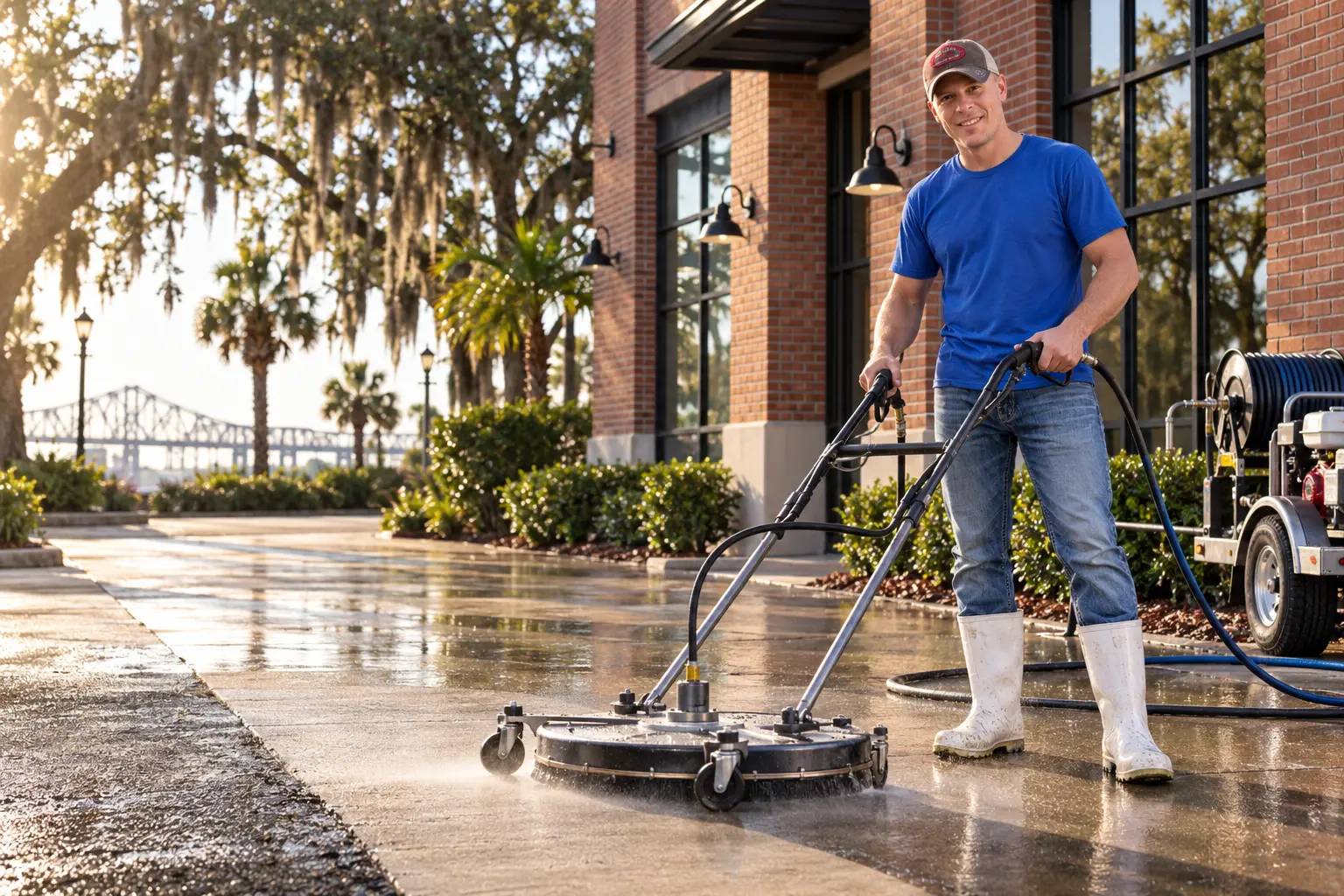
Soft washing uses controlled low pressure and suitable cleaning solutions to loosen organic buildup on surfaces that should not be blasted. Pressure washing provides mechanical action for sound, durable concrete and masonry. Heated pressure washing adds temperature to help release grease, gum, food residue, oily film, and stubborn commercial soil. Rust, oxidation, efflorescence, paint transfer, irrigation stains, and petroleum shadows may require separate specialty treatment. The correct method is the least aggressive effective method for that material and problem.
Surface Safety and Existing Conditions
Concrete, brick, stucco, vinyl, fiber cement, metal panels, asphalt shingles, flat-roof membranes, wood, pavers, and painted coatings have different limits. Too much pressure can etch concrete, scar wood, weaken mortar, disturb paint, or force water into openings. Older materials can have hidden weakness or previous damage. Cleaning cannot repair cracks, failed coatings, deep chemical damage, or permanent color change. We use test areas when appropriate and explain conditions that may improve without disappearing.
Greater New Orleans Conditions
Southeast Louisiana combines long humid seasons, frequent rain, shade, pollen, live-oak debris, traffic film, storm residue, and warm temperatures that encourage algae and mildew. North-facing walls and shaded pavement often stay damp. Busy corridors collect gum and vehicle residue. Waterfront and industrial locations may add salt, soot, dust, or equipment grime. A local maintenance plan should reflect real exposure, the speed at which buildup returns, and the areas most important to safety and presentation rather than relying on a generic national interval.
Preparing the Site
Homes may need vehicles moved, gates unlocked, windows and doors closed, pets secured, and fragile outdoor items relocated. Commercial and public properties may need cones, alternate paths, tenant or resident notices, delivery coordination, escorts, or work outside normal operating hours. Accurate preparation reduces setup delays and helps protect the schedule. Customers should identify known leaks, weak paint, recent repairs, access codes, water limitations, alarm procedures, and areas that must remain open before the crew arrives.
Work-Zone Protection and Runoff
Professional cleaning requires control of hoses, spray, loosened debris, active equipment, and temporarily wet walking surfaces. The crew reviews pedestrian routes, nearby vehicles, landscaping, electrical equipment, open doors, cameras, signs, and drainage paths. Commercial and government work may also require site-specific wastewater procedures, containment planning, or coordination with facility representatives. Clear work zones and logical sequencing protect visitors, employees, residents, neighboring property, and the cleaned surface itself.
Scheduling and Communication
Good cleaning includes logistics. A property may be completed in one visit or divided into phases so entrances, loading areas, customer paths, resident access, or business operations remain usable. We prioritize text messages because the address, photos, arrival window, access notes, questions, approvals, and follow-up remain together in writing. Calls are welcome, and callback and full contact forms remain available, but texting is usually the fastest way to start planning and avoid missed-phone-call delays.
Pricing and Realistic Estimates
Square footage matters, but it is only one pricing factor. Surface type, soil level, stain depth, height, setup distance, water access, drainage, traffic control, containment, operating hours, mobilization, and specialty treatment can change the work required. A useful estimate names the included zones, method, major exclusions, access assumptions, and conditions that could affect the outcome. Clear photos can start many estimates; tall, complex, multi-building, industrial, government, or heavily stained properties may require an on-site review.
Maintenance After Cleaning
Not every area needs the same service frequency. Entrances, shaded sidewalks, dumpster pads, loading zones, food-service pavement, pool decks, and high-traffic concrete may need attention sooner than upper walls or lightly used surfaces. Keep drainage paths open, correct irrigation overspray, trim vegetation that traps moisture against walls, and address fresh spills promptly. A rotating plan can maintain a consistent appearance and control cost better than waiting until every part of the property becomes heavily stained.
Why Choose CoKo’s
CoKo’s Soft & Heated Pressure Washing is a local, insured exterior-cleaning company serving Greater New Orleans and Southeast Louisiana. We combine soft washing for sensitive materials, controlled pressure for suitable hard surfaces, heated cleaning for stubborn commercial soil, and specialty treatment when ordinary washing is not enough. The goal is practical improvement, honest expectations, straightforward communication, and a scope built around the property rather than an oversized promise.
Related Services and Next Steps
Many properties involve several surfaces and methods. Explore pressure washing, soft washing, heated pressure washing, commercial exterior cleaning, government services, specialized cleaning, local service areas, and the CoKo’s Knowledge Center. Customers do not have to diagnose the service themselves. Text the address, a short description, and several clear photographs to 504-296-9696, or use the written quote and callback forms. We will help organize the request and recommend the most useful next step.