COKO’S • GREATER NEW ORLEANS
What Does Power Washing Mean?
A guide to describing your surface, understanding the method and requesting a defined scope.
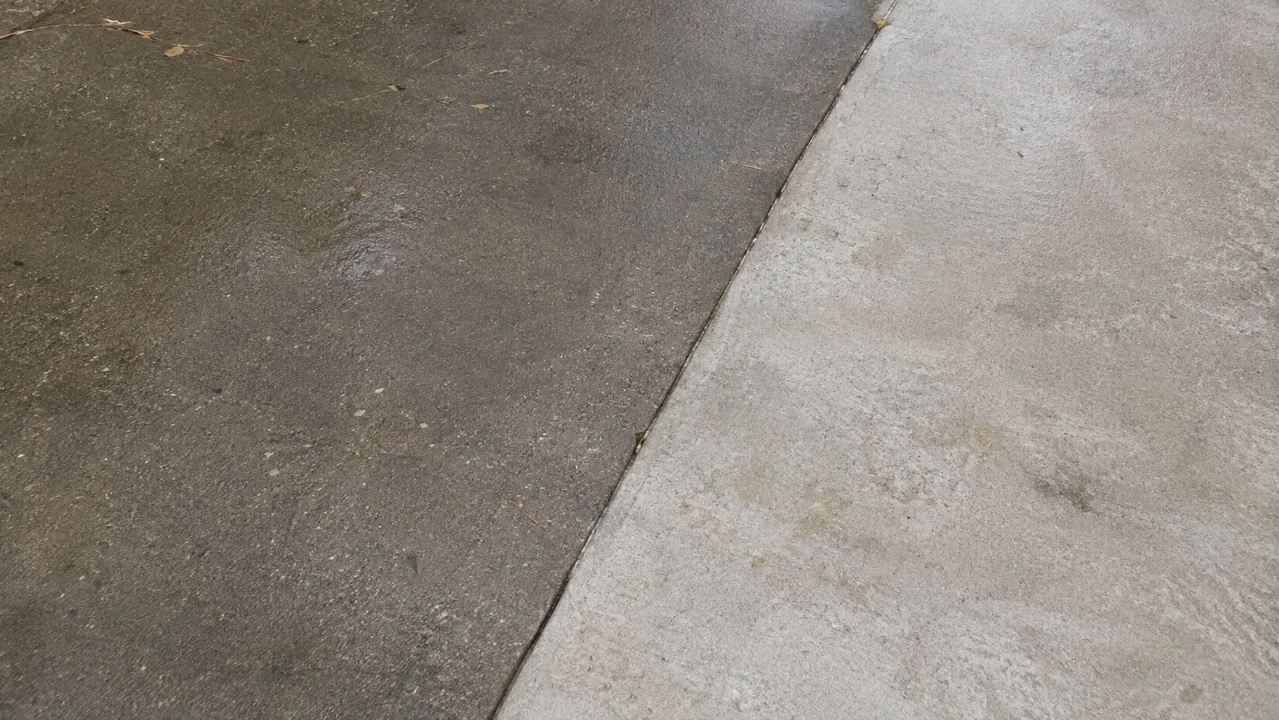
Power washing is a familiar phrase, but it is not a complete specification. Before comparing an estimate or requesting heat, establish what the provider means by the term. The equipment’s energy source, the water temperature and the force applied to a surface are different pieces of information. This guide helps a customer ask clearer questions without prescribing operating settings. Existing heated-washing service pages remain the place to discuss whether a particular commercial or residential area is a suitable request.
Ask what the word power means in this proposal
In everyday conversation, people use power washing and pressure washing in overlapping ways. A heading on an advertisement cannot settle exactly what a particular provider includes. One customer may use the phrase for any exterior washing, while another is specifically asking about heated water. Start by describing the area and then ask whether the proposed service actually includes heat. That short clarification is more useful than comparing two estimates that happen to use the same label.
Kärcher’s own product language includes the term power washers for gasoline-powered pressure washers, illustrating why the everyday wording should not be treated as proof of heated water. The practical lesson is to read the actual scope, not infer a process from one word. A proposal should identify the work being offered clearly enough that you can distinguish its included surfaces and limitations from the assumptions you brought to the conversation.
For example, a customer may write, “I am using power washing to describe the paved service approach; please clarify whether your proposal includes heat.” That message separates the everyday name from the actual method question. It also leaves room for the provider to explain a limitation. The example is a planning illustration, not an assertion that heated work is suitable for that entrance or that CoKo’s has performed a particular job there.
Keep three equipment questions separate
The energy source answers what runs a machine. Water temperature is a different question, and the mechanical action directed at the surface is another. A gasoline engine does not, by its name alone, say that the water is being heated. Likewise, describing a process as heated does not specify every other part of the approach. Treating these terms as interchangeable can make an equipment description sound more informative than it really is.
A customer does not need to choose the machine or write an operating procedure to ask for clarity. Ask whether the estimate is for heated or unheated washing and which surfaces that statement covers. If the answer depends on a closer review, keep that question open in the proposal. Avoid converting a brief equipment description into a guarantee that a particular mark will be removed or that a finish can tolerate any available method.
Heat is a suitability question, not an automatic upgrade
A request involving greasy-looking pavement often prompts a question about heated washing. That can be a useful discussion, but it still begins with the actual material, its finish and the condition of the area. A general wish for stronger cleaning does not establish whether heat is appropriate. Describe the buildup and ask the provider to address the suitability question rather than prescribing a temperature based on an unrelated example.
Keep different surfaces separate when heat is being discussed. An uncoated paved work area, a painted adjacent wall and a coated threshold should not silently become one treatment category. The requested work may have boundaries or exceptions. A useful explanation connects the proposed approach to those identifiable areas and acknowledges uncertainty where the finish or history is unknown. The presence of a heating capability is not, by itself, a reason to use it everywhere.
A greasy appearance and an oil shadow are not identical
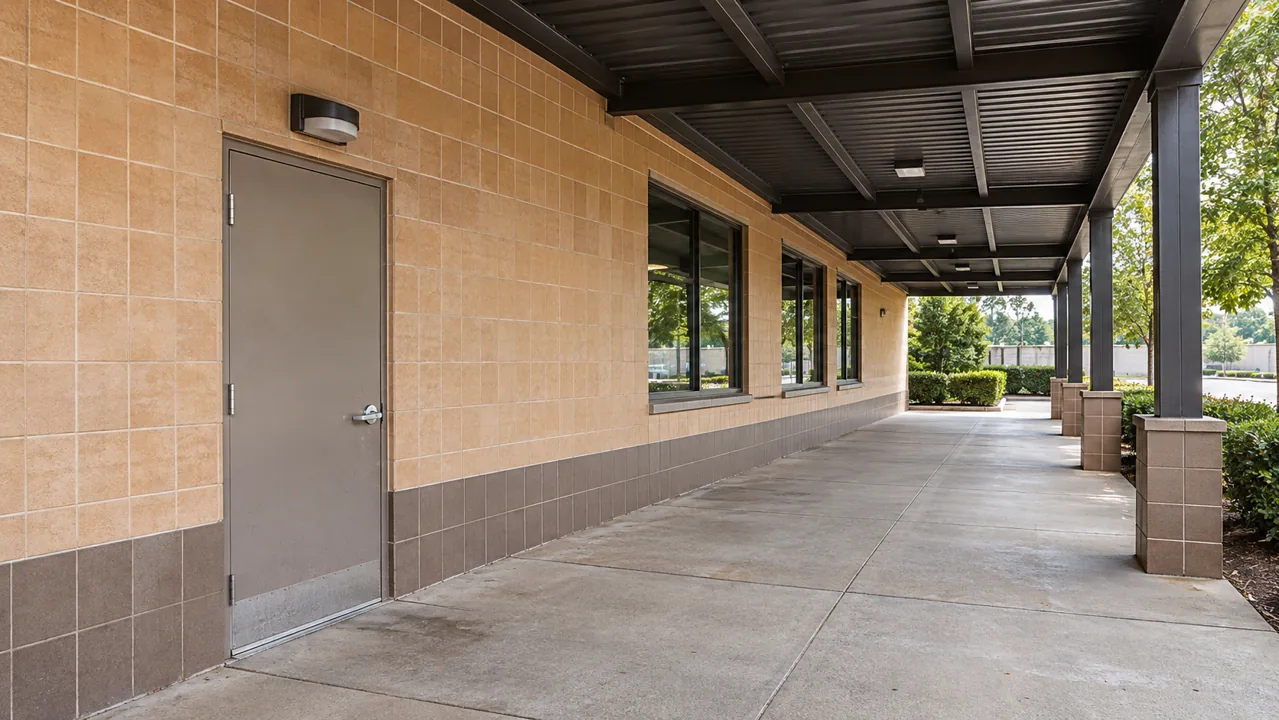
A pavement photograph can show a visible film, a dark patch or a contrasting vehicle space, but it cannot establish the full history of the mark. Tell the provider what you already know: where it appeared, whether the area has been washed before and whether a coating is present. Use descriptive language when the cause is uncertain. That keeps the request grounded in an observation rather than a promise to remove something that has not been assessed.
An estimate for washing the surrounding area should be distinguished from a commitment concerning an individual stain. Oil shadows, tire marks and permanent discoloration may remain as limitations of the appearance result. Ask how those marks are addressed in the written scope. Do not assume that adding the word heated converts an area-cleaning proposal into unrestricted stain restoration. A more precise agreement separates the general washing area from the particular marks that require their own expectations.
The exposed finish remains part of the decision
An owner may know that the ground is concrete without knowing whether it has a sealer or coating. Include that uncertainty with the request. Product paperwork or a previous maintenance record can be more useful than a guess based on shine. Photograph the edge where the finish changes and note any areas that already look worn. That gives the provider a clearer question than a single image that makes the entire slab appear uniform.
Equipment compatibility is also specific. Kärcher lists different limitations for different surface-cleaner models, including models described for cold water. That is a reason to consult the actual equipment instructions, not to assume that an accessory is suitable for heated use because it connects to a washer. This customer guide does not identify the provider’s equipment or prescribe its operation. The estimate should address the property’s request without relying on an unsupported universal compatibility claim.
Keep washing, stripping and restoration distinct
An owner asking for cleaner pavement may intend to keep its existing finish. Another may be planning a separately specified coating project. Those are different objectives, even if both conversations mention power washing. State which result you are seeking. Washing visible buildup should not be assumed to include removing a sealer, stripping paint, repairing concrete or preparing a substrate to an unnamed coating manufacturer’s requirements.
If another contractor or a written project specification sets preparation requirements, provide that information before the washing scope is agreed. The washing proposal can then identify its own part of the work and any exclusions. Without that distinction, the word clean can conceal several different expectations. Keep the appearance objective, any separate restoration work and the responsibility for accepting a future finish understandable. A service label alone does not resolve those project boundaries.
Compare listed areas before comparing the headline price
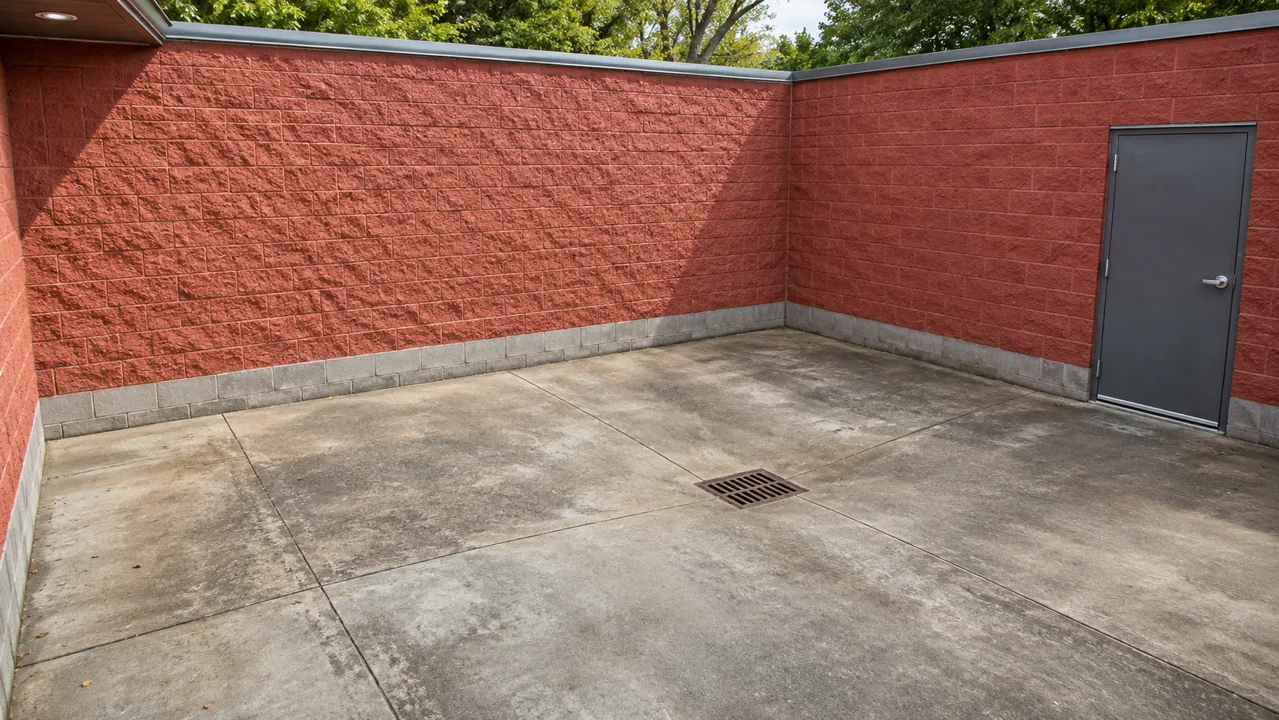
Two washing estimates can appear to differ only in heat while covering different amounts of work. Compare their named areas first. One might include a delivery approach and another only the walking strip beside it. Edges, steps, vertical faces and specific marks may be described separately. An estimate becomes easier to assess when you can align its written areas with the same photographs rather than comparing a pair of broad service names.
Then review the limitations and unresolved questions. Is the finish known? Does a particular stain have a separate qualification? Is the work area occupied during the proposed period? A price comparison is more useful after those differences are visible. This is not a claim that a particular process will cost more or deliver a fixed result. It is a way to establish whether the estimates answer the same request before selecting one.
Bring a defined question to the heated-washing service page
The existing heated pressure-washing guides explain the service discussion in more detail, including separate commercial and residential contexts. Use them when your question is about a particular area rather than vocabulary. This article does not create another heated-washing service category. Its purpose is to help you stop an ambiguous word from standing in for an actual explanation of the work being considered.
To request a CoKo’s review, identify the location, the paved or exterior areas, any known finish and the marks that concern you. Include a broad photograph showing access as well as a closer view. Mention whether you are asking about heat or simply using power washing as an everyday name. Start a free online quote at cokospressurewashing.com/quote or text 504.296.9696. Ask for the proposed scope and limitations before treating equipment terminology as a promised result.
Existing washing comparison
These retained comparison photographs illustrate the existing website example; they do not document the anonymous properties shown in this guide.


Questions about this washing request
Send your address. Show us what needs cleaning.
Text your address, a wide photo and a close-up of the buildup. We’ll review the surfaces and discuss your cleaning options.
Text photos for an estimate Start an online quoteCoKo’s Pressure Washing · (504) 296-9696