
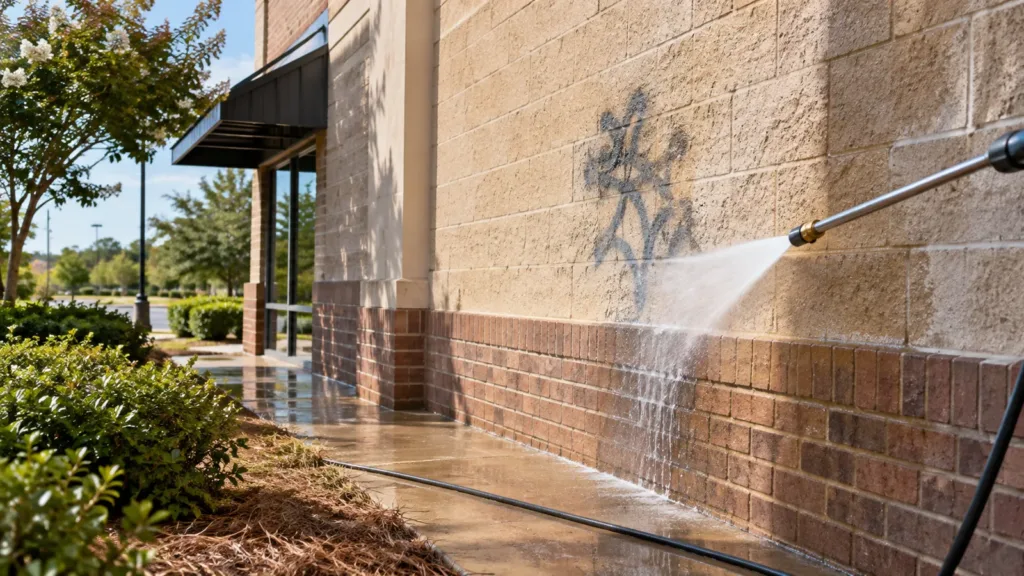
Safe and Effective Graffiti Removal
Are you tired of seeing graffiti defacing your property? Our professional graffiti removal team is here to help. We understand the frustration and damage that graffiti can cause, and we’re committed to restoring your property to its original state quickly and efficiently. Here’s how we solve your problem:
Why Choose Us for Your Graffiti Removal Needs?
At CoKo’s Pressure Washing, we understand the importance of quality and professionalism in every aspect of our work. Here are just a few reasons why you should choose us for your graffiti removal needs:
Don’t let graffiti ruin the appearance of your property. Contact us today for a free quote and to learn more about our expert graffiti removal services.
#graffitiremoval #propertyrestoration #professionalcleaning #cleaningcompany #restorationexperts #safecleaningtechniques
A Better Plan for Professional Graffiti Removal Services
A professional exterior-cleaning plan begins with the surface, the contamination, the property’s condition, and the result expected. CoKo’s does not treat every material with the same pressure or chemical process. Concrete, brick, stucco, vinyl, fiber cement, metal, asphalt shingles, flat-roof membranes, wood, pavers, and painted coatings have different limits. The safest approach is the least aggressive method that can produce the desired reasonable result.
Soft washing uses controlled low pressure and suitable cleaning solutions for many delicate materials and organic growth. Pressure washing adds mechanical force for sound, durable hard surfaces. Heated pressure washing can improve removal of grease, gum, oily film, food residue, and stubborn commercial soil. Rust, oxidation, efflorescence, irrigation deposits, paint transfer, and petroleum shadows may require specialty chemistry, additional dwell time, testing, and realistic expectations.
Greater New Orleans properties face long humid seasons, frequent rain, shade, pollen, live-oak debris, traffic residue, storm exposure, and warm temperatures that encourage algae and mildew. North-facing walls and shaded pavement often remain damp longer. Commercial corridors collect gum and vehicle film. Waterfront and industrial sites may add salt, soot, dust, or equipment grime. A useful cleaning schedule follows the property’s real exposure instead of a generic national calendar.
Before Service
Move vehicles and movable items, close doors and windows, secure pets, unlock gates, and identify known leaks, weak paint, recent repairs, coatings, or fragile materials. Businesses and public facilities should share delivery windows, customer peaks, security procedures, water-access details, and areas that cannot close. Accurate preparation reduces setup time and helps protect the schedule.
During Service
The crew reviews landscaping, electrical fixtures, signs, cameras, open doors, parked vehicles, drainage routes, and pedestrian access. Hoses, spray, loosened debris, active equipment, and wet walking surfaces are managed through clear work zones and logical sequencing. Larger sites can be phased so important entrances, resident paths, loading zones, or business operations remain usable.
Honest Results and Pricing Factors
Cleaning removes contamination but cannot repair cracks, failed paint, weak mortar, etching, deep chemical damage, or permanent color change. Oil and rust can migrate below the visible surface. Oxidized siding may reveal uneven color. Older concrete can contain a weak surface layer from finishing, weathering, or previous aggressive washing. A credible estimate distinguishes removable soil from damage and explains when a test area is appropriate.
Square footage matters, but setup distance, height, soil level, stain depth, water access, drainage, traffic control, containment, operating hours, mobilization, and specialty treatment also affect price and duration. A useful proposal identifies included zones, methods, exclusions, access assumptions, preparation, and known limitations. Text the address, wide and close photos, desired timing, and access information to 504-296-9696 for the most efficient starting point.
Maintenance After Cleaning
Not every exterior area needs the same frequency. Entrances, shaded sidewalks, dumpster pads, loading zones, food-service pavement, pool decks, and high-traffic concrete may need attention sooner than upper walls or lightly used surfaces. Keep drainage paths open, correct irrigation overspray, trim vegetation that traps moisture against walls, and address fresh spills promptly. A rotating maintenance plan can support a consistent appearance and responsible budget without repeating the entire project each visit.
Frequently Asked Questions
Why Surface Identification Matters
Graffiti-removal planning starts with the coating, masonry, metal, concrete, or painted finish beneath the marking. Heat, pressure, dwell time, and specialty treatment can affect those materials differently, especially on older New Orleans-area buildings. Send close photos, a wider view of the affected wall, the approximate dimensions, and any known information about the surface or paint. CoKo’s can then evaluate access, runoff, nearby landscaping, pedestrian exposure, and whether a test area should be included. Clear information at the start helps protect the substrate and produces a more useful scope than treating every marking with the same process.
Planning the work for your property
Use these details to define the work before approving an estimate. Include the items relevant to your property when you text photos to CoKo’s.
Surface, access and completion details
Start with a decision rather than a service label
Describe the result you need: an entrance ready for guests, a rental ready for a new tenant, a clearer maintenance budget or a proposal that a board can approve. Then identify the surfaces involved. Cleaning, debris removal, repairs and refinishing are different tasks. Naming the decision helps avoid asking several providers for estimates that cover different work. Keep the request specific enough that a contractor can explain the next step without guessing which part of the property matters most.
Create a short property record
Keep the address, contact person, relevant photos, approximate measurements and known material or repair information together. Label the images so a close-up can be matched to a wide view. Mark any area that belongs to a neighbor or is excluded from the request. For several buildings, use a simple building or zone label consistently. A useful record is brief and accurate; there is no need to compile an elaborate inventory if it does not help define the actual work.
Choose priorities before asking for options
Separate the essential area from optional improvements. An entrance path may be the first priority, with a patio or side wall as an additional option. Ask for those choices to be identified rather than hiding a reduced scope inside a single lower price. If the timing is more important than cleaning every area, explain the reason. This gives the contractor a way to propose a manageable phase while preserving a clear list of work that would remain for later.
Record the limits of the initial estimate
Photographs can support an initial review, but they may not reveal every coating, access restriction or drainage problem. State which measurements are approximate and which surfaces cannot be shown safely. Ask whether a site visit is needed before the scope is finalized. An estimate request is not an appointment confirmation. Keep the approved work, price assumptions and available date separate from the first message so neither side mistakes an early discussion for a complete booking.
Coordinate related contractors and responsibilities
If painting, sealing, roofing, landscaping or repair work is also planned, share that sequence with everyone involved. Ask the provider of the next treatment which preparation and drying conditions they require. Agree on who moves portable items, supplies access, secures pets and approves changes. Several small misunderstandings can create more delay than the cleaning itself. A simple written responsibility list is particularly helpful when a property manager or family member cannot be present for the visit.
Compare exclusions as carefully as inclusions
Look for the difference between washing a surface and treating an embedded stain, restoring a finish or repairing a defect. Ask which components and faces are included, what preparation is required and what conditions may change the work. A written exclusion can be useful when it prevents a false expectation. If a proposal is unclear, name the specific area and question instead of assuming that a broad phrase such as full exterior cleaning covers every feature of the property.
Check completion against the original request
Use the same wide views and close-up locations to compare the result. Review materials after drying where appearance is affected by moisture. Check that agreed zones were completed and that exclusions or residual permanent staining are documented. A different patch color may reflect an older repair rather than remaining dirt. If something needs discussion, identify its exact location and the expected result from the accepted scope. That gives the provider a concrete concern to evaluate.
Keep useful notes for the next visit
Retain the accepted scope, completion photos and any information about coatings, vulnerable areas or access. Add observations when buildup returns rather than relying only on memory months later. If the property changes owners, managers or tenants, those notes can prevent the next request from starting over. Maintenance planning is most useful when it responds to changing exposure and use. There is no need to buy a larger recurring scope merely because the previous invoice listed the whole property.
More questions before you book
What information helps with a graffiti-removal estimate?
Send the property address, a wide photo, a close-up of the marked surface and the material if known. Describe previous coatings and the approximate age of the mark when available.
Can graffiti removal affect an existing finish?
The substrate, coating and mark need assessment together. Ask about realistic results, any test area and possible finish limitations before approving treatment of painted or delicate surfaces.
Does graffiti cleaning include repainting or masonry repairs?
Do not assume repairs or repainting are included. Confirm the cleaning scope and discuss any finish-restoration or repair work as a separate requirement.
How should historic or vulnerable masonry be handled in the request?
Identify older mortar, fragile finishes, previous repairs and any preservation guidance. Ask whether further assessment or specialist advice is appropriate before a cleaning method is selected.
Send your address. Show us what needs cleaning.
Text your address, a wide photo and a close-up of the buildup. We’ll review the surfaces and discuss your cleaning options.
Text photos for an estimate Start an online quoteCoKo’s Pressure Washing · (504) 296-9696
Find your service
Keep exploring.
Start a conversation
Text your project.
Your name, address and a few property photos. Add the surfaces you want washed and your preferred timing.
Prefer to start online?
Get an estimate.
Enter the address, choose the surfaces and review the proposed price. We’ll confirm the details before scheduling.