
Practice coordination · Defined exterior surfaces
Veterinary clinic exteriors.
Coordinate around care.
Review suitable clinic walls, entrance surrounds and exterior approaches in Greater New Orleans and the Westbank. Text photos and practice-access requirements for a defined washing scope.
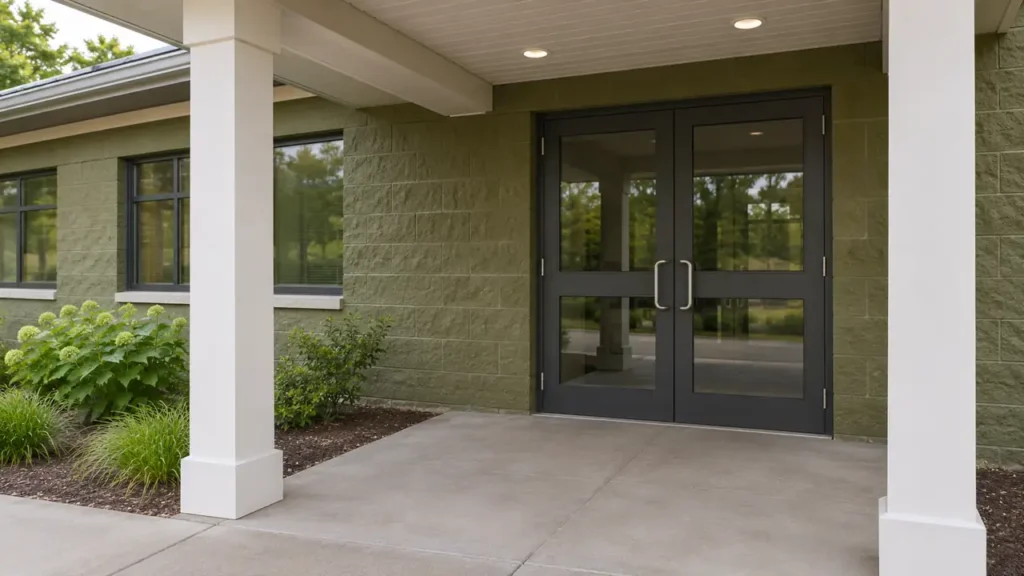
Original clinic illustration; no customer or completed project claimed.
Define the building exterior separately from clinical work
A veterinary practice may need an entrance surround, a weathered wall elevation or a defined strip of exterior approach pavement reviewed. That request should identify the actual built surfaces rather than describing the whole clinic as a single washing area. Mark the proposed work on wide photographs and distinguish the public arrival side, staff entrance, receiving door and any separate boarding wing. A clear boundary helps the practice decide whether an ordinary exterior-washing visit is appropriate.
CoKo’s reviews suitable commercial building exteriors in Greater New Orleans and the Westbank. This page concerns a defined property-maintenance request, with the practice retaining control of patient care and clinical requirements. Examination rooms, treatment spaces, animal housing, outdoor relief areas and contaminated zones are not included in this routine scope. If one property has several operating uses, list them individually so a limited exterior request does not become an unsupported promise to clean or sanitize the entire facility.
Map arrivals, collections and practice-controlled routes
The front door may be used for appointments, patient drop-off, collections and unexpected arrivals. Ask the practice manager which exterior areas can actually be made unavailable and for how long. Include the routes used by people carrying animals in carriers, owners walking with pets and staff assisting a transfer. Those details belong in the preparation discussion even when the entrance landing is a small part of the requested surface area.
Identify an authorized practice contact who can approve a temporary route or pause the work if circumstances change. Do not assume that a quiet appointment period means every entrance can close, or that an after-hours visit automatically fits the clinic’s operation. The washing provider does not direct patient transfers or decide whether care can be interrupted. A workable proposal needs the practice’s own access decisions before promising a sequence, availability window or completion date.
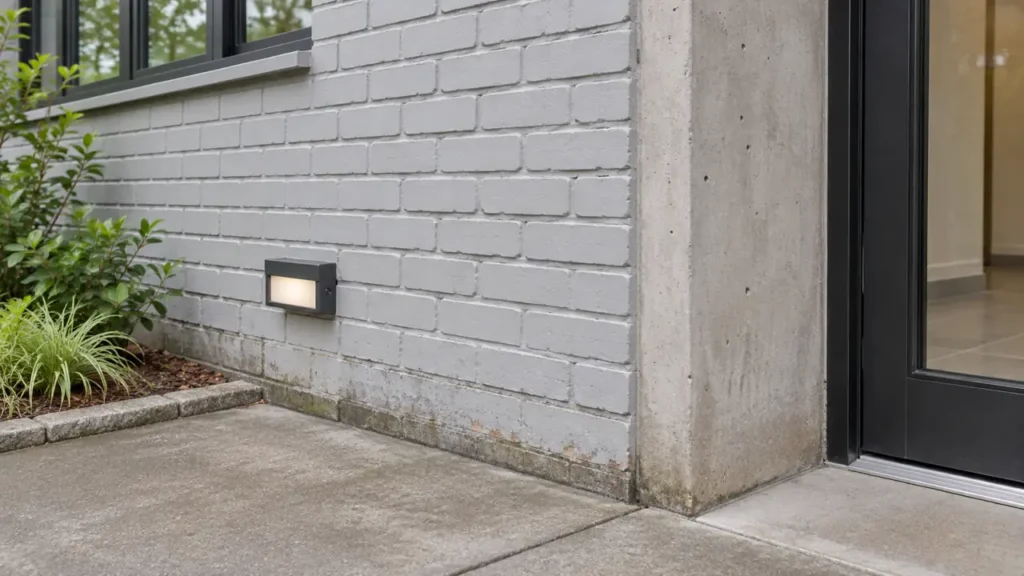
Review wall finishes, door surrounds and paving individually
Photograph each requested material closely enough to show its condition. A clinic exterior can combine painted masonry, exposed brick, metal trim, glazing, concrete and a different finish at the entrance threshold. Note repaired areas, existing cracks, loose sealant, damaged coatings and known leaks. An overall frontage photo rarely explains every material change, especially around doors, service penetrations and low wall sections that receive repeated weather exposure.
Approach selection should follow the material, its condition and the practice’s restrictions. A request for exterior cleaning does not mean high pressure will be used on every surface. Roofs require a separate material and access review, while damaged seals, failed finishes and drainage defects may require another trade. Cleaning also does not certify slip resistance, repair an entrance landing or establish accessibility compliance. Describe those concerns so they remain visible in the proposal rather than being mistaken for promised cleaning outcomes.
Keep sanitation and animal-contact treatment outside the routine quote
Visible exterior buildup and clinical sanitation are different objectives. AAHA’s infection-control resources distinguish cleaning from disinfection and address protocols for veterinary teams. An ordinary building-exterior proposal should not be presented as proof that a practice’s infection-control requirements have been met. If the manager identifies a space as animal-contact, isolation-related or otherwise controlled by a clinical protocol, disclose that boundary before a method or schedule is proposed.
CoKo’s does not use this page to offer infectious-disease treatment, enclosure disinfection, odor remediation or animal-waste decontamination. Do not describe a suspected contaminated area as ordinary dirt to obtain a general washing quote. The practice should determine the appropriate specialist and protocol for those concerns. Routine exterior work may need to be excluded, deferred or limited to a different elevation when the requested area cannot be separated from clinical activity under the practice’s requirements.
Discuss noise, openings and nearby activity with the practice
Show doors, windows, vents, waiting-area glazing and any nearby outdoor animal-use space in the scope photos. Tell the practice contact where washing activity would occur so they can identify restrictions and decide what operating changes are appropriate. A solid wall on the site plan may be immediately beside a treatment area or a route staff need throughout the day. Its location can matter as much as its material.
Ask who will confirm that the agreed area is available before work starts. The practice controls animal handling, any patient relocation and decisions about sensitive activity inside the building. Do not rely on a universal claim that one product, sound level or washing method is suitable around every animal. If the clinical team cannot approve the proposed boundary or operating window, the request needs revision. A property-maintenance appointment should not override the practice’s own patient-care decisions.
Primary resources: AAHA infection-control resources for veterinary teams, EPA stormwater background and SWBNO local resources. These do not establish CoKo’s clinical qualifications or authorize a project discharge.
Separate receiving and staff access from the main entrance
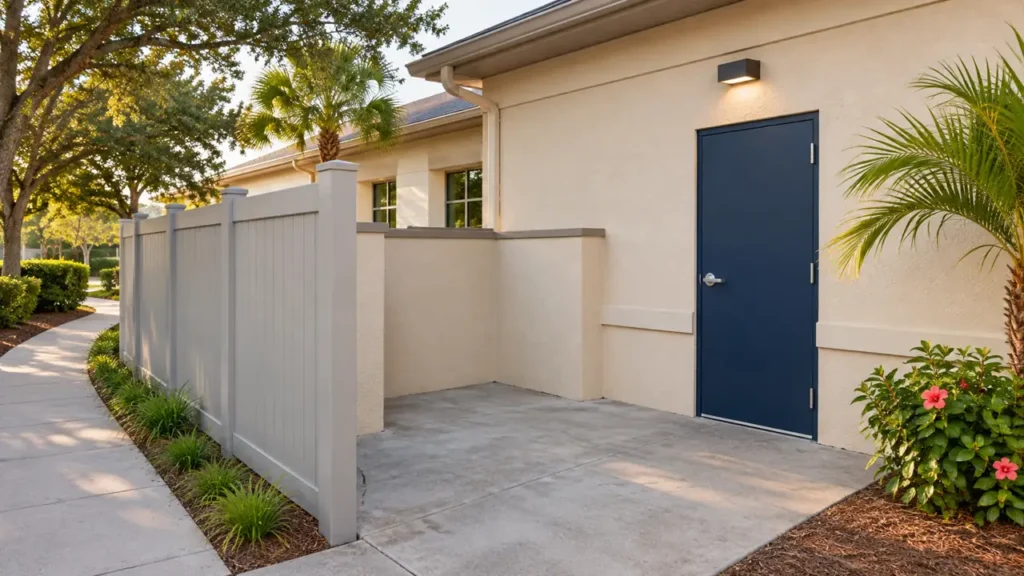
Some exterior requests concern a side door, supply receiving apron or staff approach rather than the public entrance. Mark those areas separately and explain delivery times, door-use patterns and which utility or service features must remain untouched. A rear approach that looks empty in a photograph may still be needed for scheduled supplies or routine staff movement. The site contact should confirm its actual availability instead of assuming it is an unrestricted work area.
Identify items that the practice will remove and the limits around fixed equipment. Moving medical supplies, handling regulated waste, servicing utility systems and entering storage or treatment spaces are not automatically part of an exterior-washing visit. The proposal should state which built surfaces are included and which doors or enclosures remain closed to the work. This distinction also makes it easier to compare a service-side request with an unrelated front-entry or wall-cleaning request.
Have the exterior photos?
Let’s define the next step.
Send the address, requested surfaces and authorized site contact.
Resolve water and drainage before choosing the work boundary
Include nearby drains, sloped pavement, low points and landscaped edges in the photographs. Explain where the owner believes water travels and identify any site-specific restrictions that need verification. EPA’s stormwater resources describe how water crossing hard surfaces can carry pollutants toward drains and waterways. That is a reason to resolve the washing arrangement before mobilization, rather than assuming the closest drain is an acceptable destination.
Applicable requirements and project-specific arrangements need review with the property owner and appropriate local authority. This page does not grant discharge permission or promise a particular collection, treatment or disposal system. Areas involving animal waste, clinical residues, suspected contamination or regulated materials remain outside the ordinary building-exterior scope described here. The practice should disclose those conditions so the request can be limited appropriately or directed to a separate qualified service.
Use the lease and management structure to clarify approval
A veterinary practice in a shared retail or office property may control its operating hours without controlling every exterior surface. Identify the building owner or property manager when the request involves common pavement, shared entrances, upper elevations or work that affects neighboring tenants. The practice manager and property manager may need to coordinate different parts of the proposal. One person’s appointment request should not be mistaken for approval of the entire premises.
Share any relevant exterior-maintenance rules, permitted work windows and notification requirements before scheduling is discussed. The washing provider should know who can approve the scope and who can authorize a change on the day. If several businesses use a common approach, explain how the owner intends to manage temporary restrictions. A clear approval route helps keep the proposal focused on agreed surfaces and responsibilities without inventing access rights, lease permissions or uninterrupted operation for neighboring practices.
Compare scope, preparation and closeout expectations
Provide the same marked photographs and practice restrictions when comparing exterior-washing proposals. Ask each provider to identify the included walls or pavement, preparation responsibilities, intended access window, water arrangements and exclusions. State which materials or existing marks need particular review. A lower price attached to a smaller or less clearly described area is not a useful comparison with a proposal that includes different surfaces and operating constraints.
Agree who will review the washing area before normal use resumes and what photographs or notes the practice wants for its maintenance records. Closeout documentation should describe the work performed and any remaining conditions; it should not imply clinical clearance, disease prevention, accreditation or a warranty against future buildup. Follow-up maintenance should depend on observed property conditions and the practice’s priorities. A recurring calendar alone does not establish that the same scope or operating arrangement will remain suitable.
Send an exterior request with the practice boundaries attached
Text the address, a wide view of the requested elevation or approach and close photos of the material and buildup. Include the main entrance, relevant side doors, nearby drainage and the limits of any animal-use or restricted area. You do not need to send patient information or clinical records. The useful information is the exterior surface, the practice’s access requirements and the name of the person authorized to discuss the property.
Explain whether the request is for a wall, an entrance surround, a defined pavement zone or several separate surfaces. Share operating hours and any deadline without assuming a particular service window is available. CoKo’s can review those details and identify what else is needed for a written exterior-washing scope. Keeping patient care, clinical sanitation and animal handling under the practice’s control makes the inquiry clearer and avoids presenting ordinary exterior maintenance as a veterinary service.
Veterinary exterior washing.
Your questions, answered.
A defined exterior scope.
Coordinate with the practice.
Send the address, material details, surface photos and access restrictions for your property.
Send your address. Show us what needs cleaning.
Text your address, a wide photo and a close-up of the buildup. We’ll review the surfaces and discuss your cleaning options.
Text photos for an estimate Start an online quoteCoKo’s Pressure Washing · (504) 296-9696