
Commercial exteriors · Greater New Orleans
Tennis and pickleball court washing.
The finish. The lines. A defined court scope.
Text the court photos, finish information and reservation window. Let’s review a suitable washing scope.
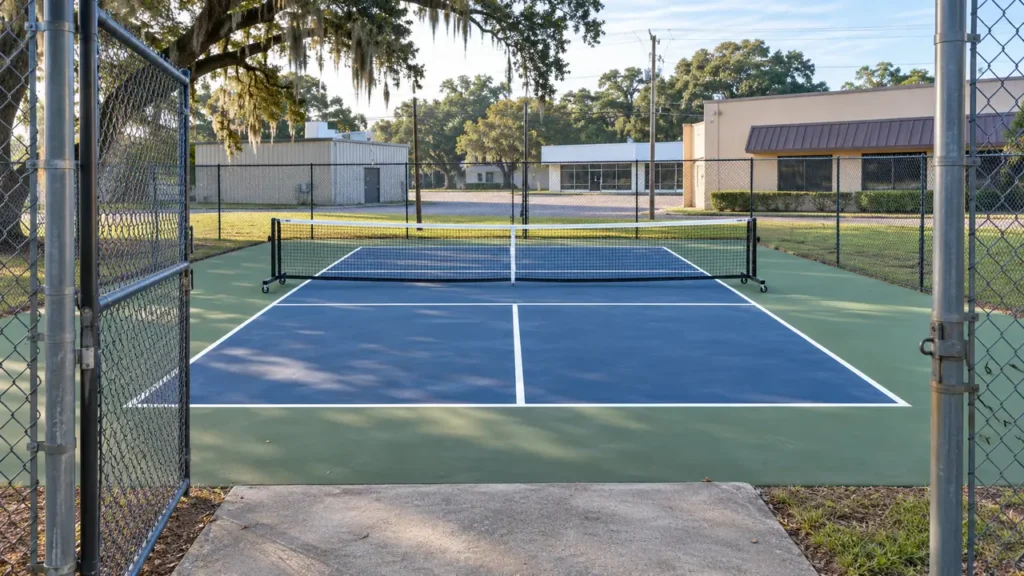
Your property. Your priorities. A clearly defined scope.
Identify the playing surface before choosing a method
A court can look like ordinary pavement from the parking lot and turn out to have a very different finish underfoot. The blue or green playing surface, painted lines, net hardware and surrounding concrete should not become one undifferentiated pressure-washing job. For a tennis club, apartment community, school or recreation property, the useful first step is identifying which components actually need cleaning and who can confirm the court coating.
Text CoKo’s the address, complete court photographs and close views of the buildup. Include the number of courts and the property contact who controls reservations. We can review a defined exterior washing request in Greater New Orleans and the Westbank. Coating condition and maintenance instructions determine whether the requested cleaning is suitable; sending photos does not commit either party to a method that could harm the playing surface.
A painted hard court, a cushioned acrylic system and a modular sports floor are not interchangeable. Neither is a clay tennis court a painted slab. Tell us what the facility has, even if your answer is only a resurfacing invoice or the installer’s name. Existing product information is more useful than guessing from the surface color. Where the finish cannot be established, the cleaning scope needs further review before approval.
SportMaster’s maintenance guidance for its acrylic surfaces cautions against excessive washing and aggressive treatment that can wear the coating. That is a reason to obtain the actual finish instructions, not a reason to apply one manufacturer’s advice to every court. We do not quote resurfacing, line painting, crack repair or a restored competition rating as part of a washing request. Those are separate decisions for the owner and an appropriate court-surface specialist.
Map the court rectangle, runoffs and surrounding paths
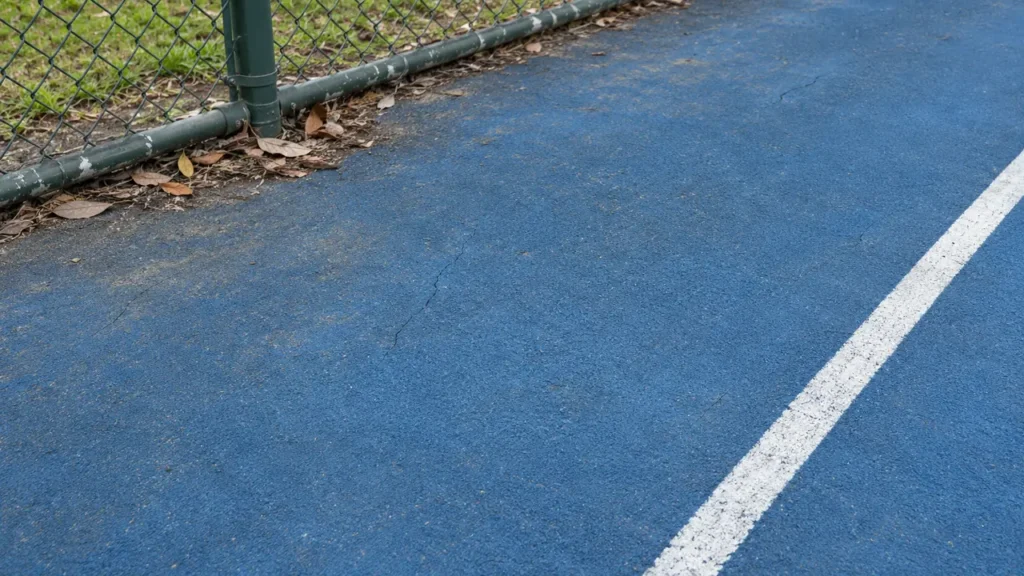
Photograph more than the net and the central playing rectangle. The shaded runoffs near a fence may carry different buildup from the area where players stand. Entry corners, benches, the strip behind a windscreen and the outside concrete path also need separate identification. A simple marked photograph can show whether you want one court, an entire fenced enclosure or selected areas outside the playing surface.
For combined tennis and pickleball layouts, explain which lines and nets belong to the present setup. Include portable equipment that the property will remove and fixed hardware that must stay. Do not assume a quote for the colored floor includes fence fabric, windscreens, drinking fountains or seating. Naming each included component makes the estimate easier to compare and gives the facility contact a practical checklist for the workday.
Separate deposited buildup from a worn finish
Take close photographs where the court looks darkest, and take another view in even light. Leaves and accumulated debris at a fence line are a different issue from a worn baseline, missing color or old repair patches. Mark known cracks, loose finish, peeling line paint and prior repairs before cleaning is proposed. This record helps both sides avoid treating an existing surface defect as an ordinary stain.
Washing cannot fill a low spot, restore missing texture or make two generations of resurfacing match. A cleaner surface may make an older patch more noticeable. Discuss that possibility before scheduling around a tournament or opening event. If the main concern is worn color or deteriorating material rather than removable buildup, ask the court installer about repair or resurfacing first. An unsuitable cleaning job should not be used as a substitute for that assessment.
Build a reservation plan that actually closes the court
Court access often depends on more than a gate key. A property may have standing lessons, league reservations, resident booking software and informal drop-in play. Name one authorized person who can close the requested courts and communicate the closure. A cone at the entrance does not resolve an active reservation made by someone who has not seen the notice.
Decide whether the full enclosure can be closed or whether work would need separate visits. Adjacent courts may share gates, runoffs or fence openings; treating them as independent spaces can be impractical. Keep players away from the active washing area and its access route. Reopening should follow the agreed site conditions, finish requirements and facility review rather than an advertised universal number of minutes. Rain or unresolved standing water can change the planned availability.
Review gates, equipment movement and water routes
A narrow pedestrian gate can control how equipment reaches the surface. Send a photograph with the gate fully open and describe steps, latches or tight turns between the parking area and the enclosure. Keep emergency and routine building access in mind when identifying a place for equipment. Hoses should not be routed across an occupied court simply because the nearest faucet happens to be on the opposite side.
The facility contact should identify the approved water connection and explain how water normally leaves the enclosure. Show low edges, drain openings and neighboring areas that must stay protected. We review the proposed water route and any property-specific restrictions before agreeing to the work. No permission to send wash water into a particular drain is implied by the presence of a grate. Unexpected ponding or an unclear outlet needs a practical resolution, not a stronger promise in the quote.
Have the property photos?
Let’s define the next step.
Send the address, requested surfaces and the contact who can confirm access.
Keep court accessories and electrical items in their own scope
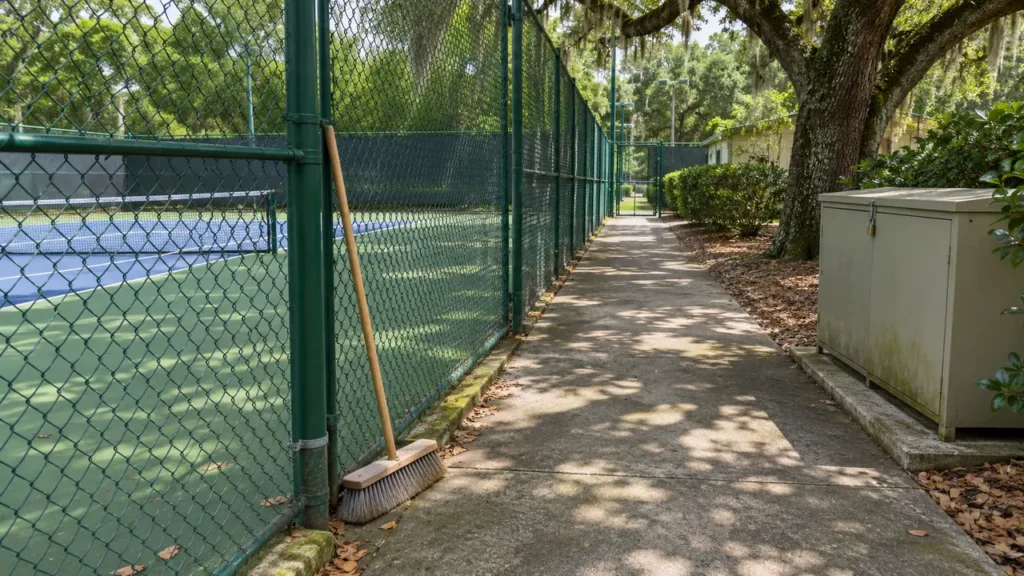
Portable ball baskets, scoreboards, seating cushions and player belongings should be addressed before arrival. Tell us which items the facility will move and who can put them back. Nets and posts may have adjustment mechanisms or aged hardware; removing or retensioning them is not automatically included in floor washing. Windscreens can also obstruct access to the perimeter where debris collects.
Photograph lights, powered scoreboards, gate controls and nearby outlets without opening their enclosures. Identify anything known to leak or malfunction. Electrical servicing is outside this washing scope, and a cleaning request should not conceal an equipment problem. If you want the perimeter paths or sound bench surfaces reviewed alongside the court, list them separately. That allows a useful combined request without applying the same cleaning approach to every material within the fence.
Compare estimates by included area and finish assumptions
A count of courts is a starting point, not a complete measurement. A one-court enclosure with broad runoffs and long access may differ substantially from a compact playing rectangle beside a convenient gate. Tell us whether the dimensions include the area behind the baselines and outside the sidelines. If you have a facility plan, highlight the requested boundary instead of sending an unmarked drawing.
A useful written estimate should identify the finish information relied upon, the included areas, equipment and accessory assumptions, and any work that remains excluded. Ask how changed conditions will be handled if a coating is loose or access is different from the photographs. Do not compare an estimate for outside concrete paths with one that includes a coated playing surface as if they represent the same service. Clear boundaries protect the budget and make the eventual walkthrough meaningful.
Start with a small, complete photo set
Begin with a wide view from each end of the enclosure, then show a representative close view of the finish and the specific buildup. Add the entrance, water connection and the edge where water leaves the court. Name the finish or attach available maintenance records. Photos should be taken from ordinary accessible positions; no one needs to climb a fence or open locked equipment for a cleaning request.
Tell us the desired reservation window, facility decision-maker and any other contractor already scheduled to repair or resurface the court. CoKo’s can review the washing portion and clarify what additional information is needed before a suitable scope is offered. Related bleacher washing or sports-building work can be discussed as separate components. The goal is a clear court-cleaning decision supported by the actual material and operating conditions, with an honest distinction between removable buildup and the work of repairing a sports surface.
A practical start.
Three useful steps.
Show the surfaces
Send wide photos and close views. Label the buildings and the areas that matter now.
Set the boundaries
Explain materials, access, preparation and the work window your property can support.
Review the scope
Confirm included surfaces, responsibilities and the next step before scheduling.
Tennis and Pickleball Court Washing.
Your questions, answered.
Your next exterior project.
Start with a clearer scope.
Text your address and the priority exterior photos. For a larger project, send the full property details.
Send your address. Show us what needs cleaning.
Text your address, a wide photo and a close-up of the buildup. We’ll review the surfaces and discuss your cleaning options.
Text photos for an estimate Start an online quoteCoKo’s Pressure Washing · (504) 296-9696

