
Commercial exteriors · Greater New Orleans
Ground-Level Storage Container Exterior Washing.
Review accessible outer faces and clear yard boundaries.
Text clear property photographs, the requested surfaces and available access window. Let’s define the exterior washing scope.
Your property. Your priorities. A clearly defined scope.
Identify the container and its current use
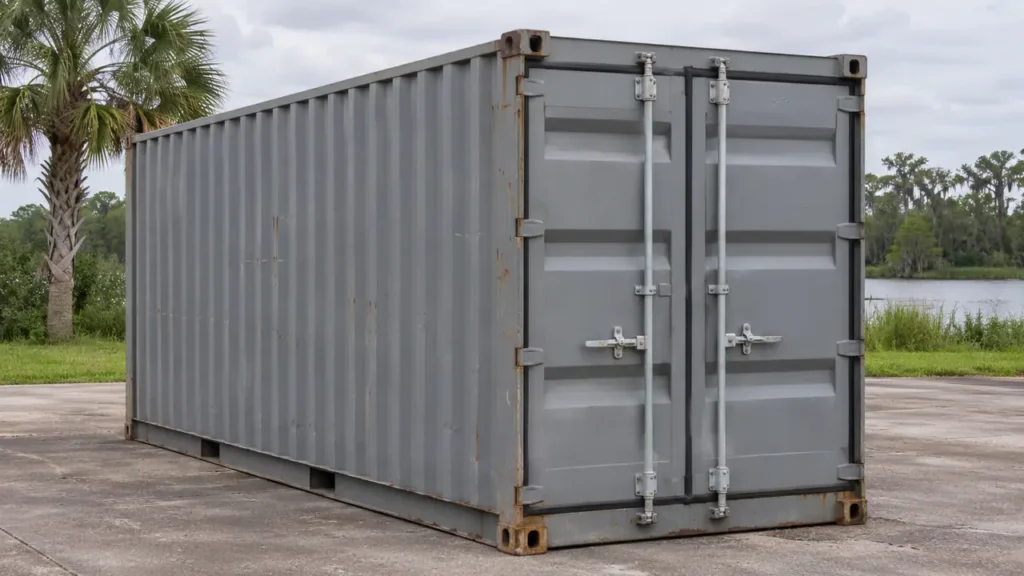
The outside of a ground-level storage container is a different washing request from its cargo space, undercarriage or transport certification. CoKo’s Pressure Washing reviews suitable exterior surface work around Greater New Orleans and the Westbank. For a shipping-style steel container used on a commercial property, identify the unit, its accessible outer faces and the person authorized to approve work. This page addresses that limited exterior scope. It does not offer cargo washouts, decontamination, food-grade certification, container inspection or removal of unknown materials associated with previous contents.
Provide a unit reference and photographs that distinguish the requested container from others nearby. Explain whether it is used for ordinary site storage, has been converted into another structure or is being prepared for a separately arranged maintenance project. Keep its current use distinct from its original transport purpose. An exterior appearance request does not establish that the unit is empty or that access to its interior is authorized.
The container owner and the property operator may be different parties. Identify who can approve washing its exterior and who controls the surrounding work area. If it is leased or supplied by another company, check the relevant maintenance responsibility before treating the request as authorized. A photograph of a container on a site is not permission to open it, move it or alter its markings. Those boundaries should remain explicit even when the proposed work concerns only a few outside wall faces.
List the accessible outer faces
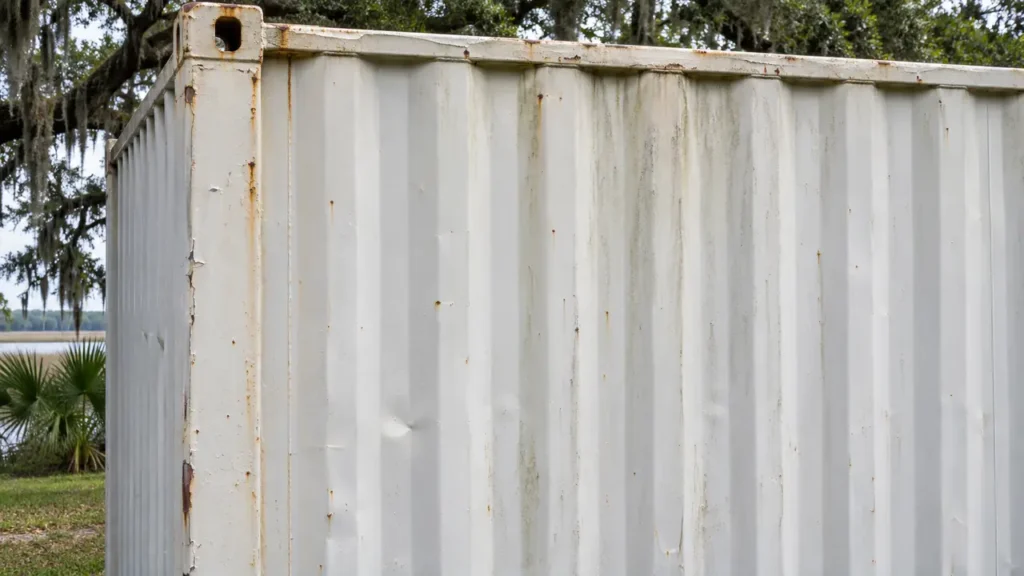
Name the long sides, end wall and exterior door faces requested. Mark any side that cannot be reached because of adjacent containers, stored items, fencing or another building. A container’s length and height do not by themselves establish how much surface can be included. Each corrugated face has recesses, edges and connections that an overall footprint estimate does not describe in useful detail.
This scope assumes a review of a ground-level unit in a position the property can make available. Stacked containers, elevated work and moving a unit to create access require separate capability and site decisions. Do not assume washing includes arranging handling machinery or entering a narrow space between units. A proposal should identify the faces actually reviewed and leave inaccessible portions as exclusions, rather than promising complete coverage because the container can be seen from one end of the yard.
Review the paint and steel condition
Send close photographs of the coating, corrugations and corner posts. Show peeling paint, exposed steel, corrosion, patches and prior repairs as existing conditions. Washing can expose differences that were already present beneath ordinary surface buildup. It does not replace a coating, remove every corrosion mark or repair damaged steel. If repainting is planned, the coating contractor’s preparation requirements remain a separate part of that project.
Unknown coating history should stay visible as a question. Do not select a pressure, heat setting or chemical treatment solely because a container is made of steel. The finish, condition and actual deposit need review. Any specialist coating-removal or hazardous-material question should be resolved through an appropriate separate assessment before ordinary washing is treated as suitable. CoKo’s exterior request is a defined surface service, not a promise to take an unidentified painted unit through a universal restoration process.
Keep doors, seals and identification markings in view
Photograph closed cargo doors and the accessible outer door faces if they are requested. Include handles, seals, hinges and visible damage so the scope can distinguish surrounding painted surfaces from operating components. Washing the exterior does not imply opening the doors, lubricating hardware, repairing a seal or checking whether the container is fit for transport or storage.
Identification plates, labels and other markings may have an operational role. Tell CoKo’s if the owner has specific restrictions around them, without sending confidential contents or shipment information. Do not ask an exterior washing crew to remove a label or change a marking by assumption. The responsible owner should define any separate work involving identification or certification. Keeping those items visible in the review helps prevent a straightforward appearance request from becoming an unreviewed task affecting the unit’s documentation or use.
Make roof and underside boundaries explicit
A container roof is a separate component from its visible wall faces. Identify whether it is requested and provide safe ground-level information about its condition and surroundings. Do not climb onto the unit to obtain an estimate photograph or assume it is a usable walking surface. Access and suitability need review before roof washing can be included in a proposal.
The underside, supports and any concealed surfaces are outside an ordinary wall request unless separately reviewed. No lifting, entry beneath a supported unit or removal of foundations is implied. If the container has a fitted canopy, electrical equipment or another conversion attached, show those components as additions rather than treating them as original steel wall faces. A clear list can separate straightforward accessible exterior surfaces from portions that need another plan, provider or capability decision before any washing commitment is made.
Have the property photos?
Let’s define the next step.
Send the address, requested surfaces and the contact who can confirm access.
Disclose residues without turning the request into cargo cleaning
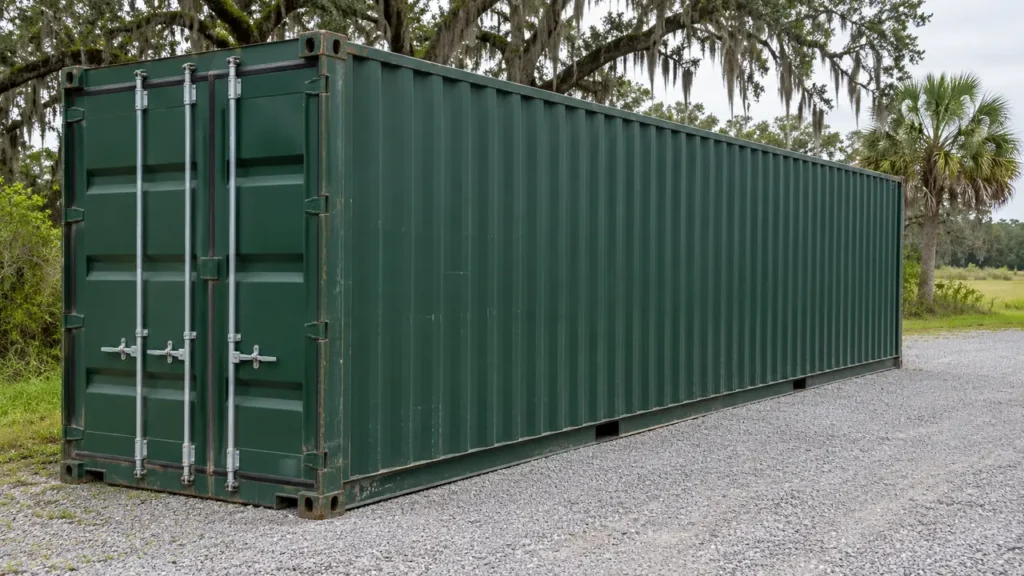
Describe the visible exterior buildup and what the owner actually knows about it. Ordinary dirt and a known material from a specific incident should not be treated as interchangeable. Unknown liquids, leaks, chemical deposits or suspected contamination need to be disclosed before a scope is confirmed. An exterior photograph alone cannot establish the nature of an unfamiliar substance or make it suitable for routine washing.
This page does not offer tank washing, interior washouts, cargo-residue removal, disinfection or a cleanliness certificate for shipping or another regulated use. Those services have different requirements from washing suitable outer painted surfaces. Keep requests involving previous contents or certification outside this scope unless separately verified. Where an unusual condition is unresolved, the useful next step is an appropriate assessment, not an unsupported promise that a stronger treatment will make every container suitable for its next purpose.
Arrange a clear and authorized yard area
Show the route to the unit and the working space beside each requested face. Include vehicle movements, nearby stock, surface changes and fixed obstructions in the overview. The property should identify what can be cleared and who controls that preparation. A washing crew should not be expected to relocate cargo, handle another company’s possessions or direct an active yard’s traffic as an implied part of exterior surface work.
Visible drains, planting and low areas should also appear in the site photographs. The appropriate water-handling arrangement needs review for the actual surface, deposit and location. A nearby yard outlet does not establish an acceptable destination by itself. If water access, permission or the work boundary is still uncertain, record the question rather than hide it in a broad instruction to wash the container. A practical proposal connects named outer faces to a site arrangement the property can actually provide.
Record the exterior scope before and after the work
Text the property location, unit reference, requested face list, current coating photographs and the contact authorized to coordinate access. Add any known exterior residue, coating restrictions, attached conversions or repair plans. For several units, create a separate labeled record for each. Similar dimensions do not establish identical condition, access or ownership, so avoid relying on one photograph to represent a whole yard.
Before any agreed washing, confirm the included faces and site preparation duties. At review afterward, compare the same components and distinguish remaining stains, worn coatings or repair needs from ordinary soil. Keep the exterior record for later maintenance, updating it when the unit is moved, repainted or converted. That produces a useful commercial surface-washing request without presenting an appearance service as a cargo treatment, inspection result or guarantee about the container’s fitness for a particular use.
Photograph corrugations from more than one angle when practical. Shadows can hide deposits in recesses, so a wide overview and a close surface image give a more useful starting record.
A practical start.
Three useful steps.
Show the surfaces
Send wide photos and close views. Label the buildings and the areas that matter now.
Set the boundaries
Explain materials, access, preparation and the work window your property can support.
Review the scope
Confirm included surfaces, responsibilities and the next step before scheduling.
Ground-Level Storage Container Exterior Washing.
Your questions, answered.
Your next exterior project.
Start with a clearer scope.
Text your address and the priority exterior photos. For a larger project, send the full property details.
Send your address. Show us what needs cleaning.
Text your address, a wide photo and a close-up of the buildup. We’ll review the surfaces and discuss your cleaning options.
Text photos for an estimate Start an online quoteCoKo’s Pressure Washing · (504) 296-9696