
Commercial exteriors · Greater New Orleans
Shopping Cart Corral Exterior Washing.
Review fixed frames, shelter materials and the approach.
Text clear property photographs, the requested surfaces and available access window. Let’s define the exterior washing scope.
Your property. Your priorities. A clearly defined scope.
Inventory the fixed frame and its base
A cart-return corral combines exposed framework, a parking-area location and sometimes a small roof. Cleaning that fixed structure is a different request from washing shopping carts or an entire parking lot. CoKo’s reviews suitable corral frames, shelter surfaces and defined adjacent hardscape around Greater New Orleans and the Westbank. Describe the installation that is actually present, which components you want considered and how the property can make the bay available.
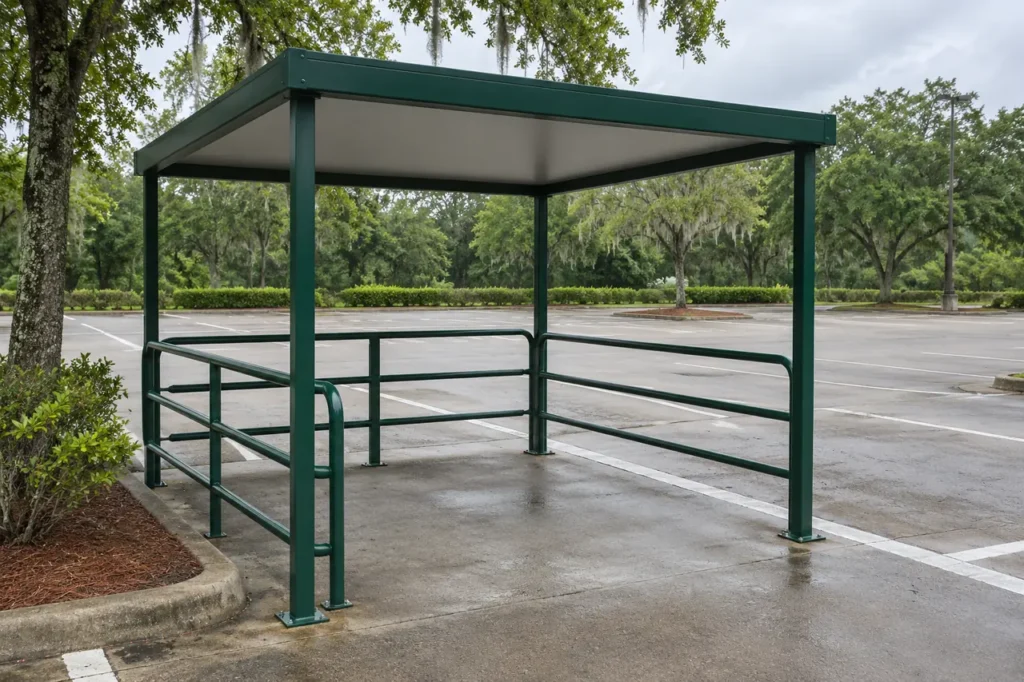
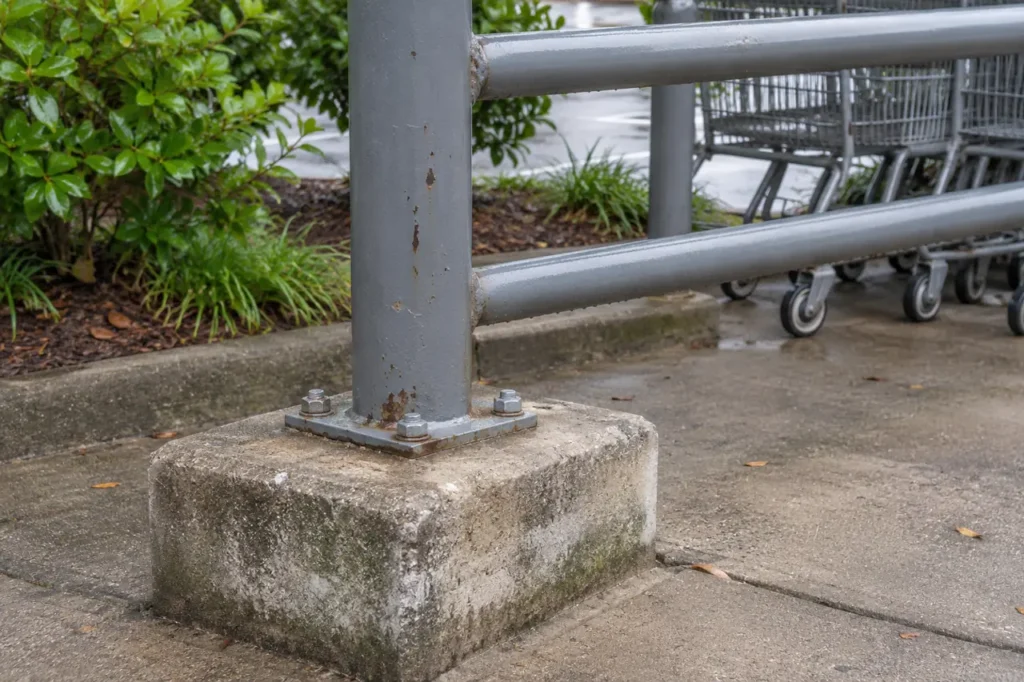
Start with a photograph across the full return bay. Identify the upright posts, horizontal rails, end frame and any roof supports. Explain whether the frame is bolted down, set into concrete or part of a larger shelter. These observations help describe the installation without asking you to diagnose its construction. Include a close view of the lower frame, where parked carts can otherwise hide the base and connections to the pavement.
A request to wash the corral should name the fixed surfaces. Shopping carts, baskets and powered mobility equipment are separate items, even when they are normally stored between the rails. State who will clear them before an agreed work window. A bay that is empty for photographs may be occupied again when work is proposed. If the structure cannot be emptied, describe that limitation at the start rather than assuming access will be the same as in the estimate images.
Distinguish painted rails from exposed metal
Photograph coating condition as well as the shape of the structure. Dark painted rails, galvanized members and previously repaired sections may need different consideration. Show places where the finish is loose, where rust is visible or where the surface has been scraped. You do not need to decide what those conditions mean. The purpose is to make them visible before a washing method or an expected appearance is discussed.
Cleaning is not corrosion repair, re-galvanizing or repainting. A corral can look more orderly after deposited buildup is addressed while scratches and coating loss remain. State whether the goal is routine exterior care or preparation for a separate maintenance project, and identify the contractor responsible for any later repair or finish work. Do not arrange a repainting date on the assumption that washing alone will make every member ready. Unknown coatings and deteriorated areas need their own review before a sequence is agreed.
Describe a roof as a separate material and area
Some cart-return bays have no roof; others use opaque panels, translucent covers or another shelter arrangement. Provide a side view showing whether the cover is attached to the return frame or to a separate support system. The visible upper surface, edges and underside are different places to reach. Say which ones concern you instead of referring generally to washing the shelter roof.
Photograph the material from a safe position and supply product information if the property already has it. Tell CoKo’s about known cracks, loose edges or recent replacements. A washing request does not include taking the cover apart or replacing its fixings. Nor should a ground-level photo be treated as confirmation that the entire upper surface is accessible. If the cover’s identity or condition is uncertain, keep that uncertainty in the request so the proposed scope can be reviewed without assuming that all canopy materials tolerate the same treatment.
Draw the hardscape boundary around the bay
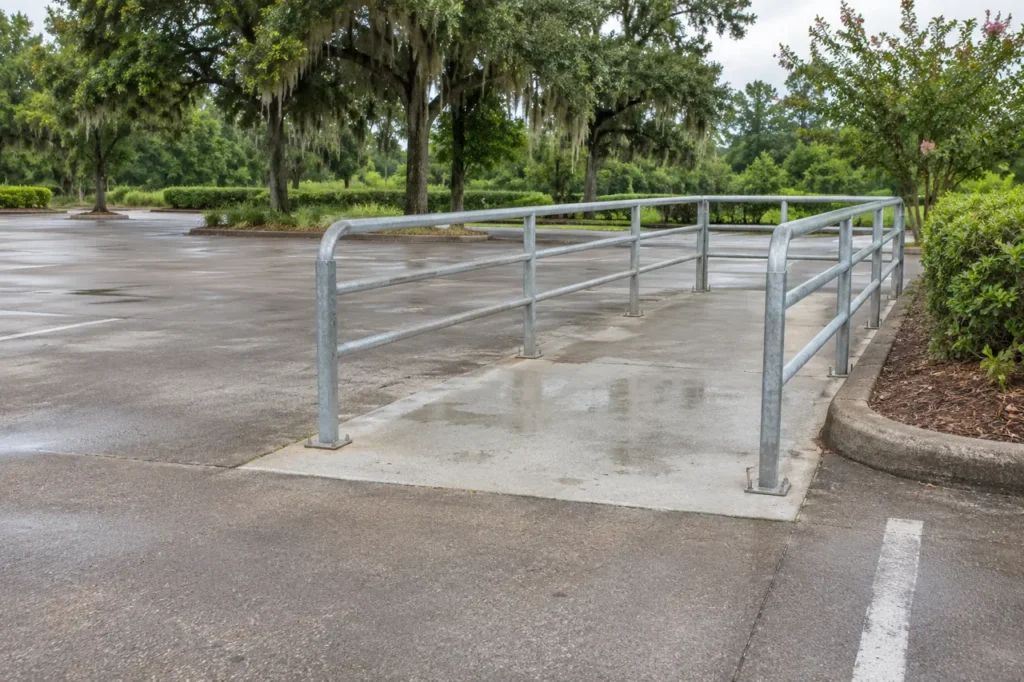
The concrete beneath the rails may differ from the surrounding driving surface. Show those transitions and mark the area you want considered. A useful boundary could follow a concrete slab edge or extend to a specifically identified approach; it should not rely on the vague phrase around the corral. Identify a curb, wheel stop or nearby pedestrian crossing separately if you want that feature discussed.
The request should also distinguish washing fixed surfaces from collecting loose litter or clearing damaged equipment. Explain what the property will remove and what will remain in place. Pavement coatings, painted traffic markings, repaired areas and existing cracks should be visible in the photo set. A corral project is not automatically a parking-lot wash or a marking-restoration project. Keeping the slab and approach dimensions clear allows the quote discussion to focus on the actual accessible area rather than an undefined part of the retail property.
Identify signs, dispensers and powered additions
Return bays can carry signs, advertising panels or small attached fixtures. Show them in the overview and identify which faces are part of the request. Applied graphics and sign finishes may have limits different from the rails underneath them. A logo panel is not simply another metal surface. Point out any panel that is loose or already peeling so its condition is considered before washing is proposed.
If a bay includes electrical equipment, a charging feature or another powered installation, describe its presence without sending access credentials or internal equipment photographs. An exterior-frame inquiry does not establish that washing that system is suitable or that electrical preparation is included. Leave equipment-service decisions with the responsible property representative and provider. Do not assume fixtures will be disconnected or removed. The written scope can exclude an attached item while still defining the other fixed surfaces that are suitable for review.
Have the property photos?
Let’s define the next step.
Send the address, requested surfaces and the contact who can confirm access.
Make the approach available without assuming traffic control
A corral in the middle of parking activity can be difficult to approach even when the bay itself is empty. Supply a wider photograph showing the adjacent spaces and the route used by shoppers returning carts. Identify the property contact who can discuss making the proposed area available. Parking restrictions or changes to customer routing should be arranged by the responsible operator, rather than inferred from an estimate photograph taken during a quiet moment.
Tell CoKo’s when cart collection, deliveries and other parking-area work normally occur. Ask which access arrangements need to be settled before scheduling. A proposal should not be read as a promise to work among moving vehicles or keep every surrounding space usable at all times. If the installation sits beside a store entrance or pedestrian crossing, make that connection explicit. The review can then consider the fixed washing surfaces alongside the real approach, without silently adding responsibility for managing the entire retail traffic system.
Label multiple bays before comparing their condition
For a property with several corrals, assign a simple reference to each one, such as a marked location on an existing site image. Keep overview and close photographs grouped under that reference. One shelter may have a sound roof while another has different panels, missing parts or a much smaller concrete base. A list of identical-looking bays is not enough to establish identical washing scopes.
Explain which locations are priorities and whether all of them can be made available together. CoKo’s can review a grouped request without assuming that the same preparation applies everywhere. If one bay is being replaced or repaired, identify it as a separate maintenance decision. Do not use the condition of the cleanest or most accessible corral as a stand-in for the rest. Location-specific photographs help keep included structures, exclusions and access assumptions attached to the correct parts of the property.
Keep the quote focused on exterior structure washing
A clear corral inquiry identifies the fixed frame, any shelter material and the named hardscape boundary. It also explains cart removal, vehicle access and the condition of coatings or attached items. Ask the proposal to state what is included and what still needs review. Washing the return structure does not certify the cleanliness of shopping carts, sanitize grocery-contact surfaces or repair damaged rails.
Begin by texting CoKo’s the site address, bay references and photographs, or send the full commercial request through the project form. Describe the visible concern without promising customers a particular result before the material has been assessed. For a larger retail maintenance plan, a corral can be discussed alongside other property areas while remaining a separately identified item. Comparing those defined components is more useful than treating every part of the parking area as one interchangeable washing surface or assuming that one visit includes all related maintenance.
A practical start.
Three useful steps.
Show the surfaces
Send wide photos and close views. Label the buildings and the areas that matter now.
Set the boundaries
Explain materials, access, preparation and the work window your property can support.
Review the scope
Confirm included surfaces, responsibilities and the next step before scheduling.
Shopping Cart Corral Exterior Washing.
Your questions, answered.
Your next exterior project.
Start with a clearer scope.
Text your address and the priority exterior photos. For a larger project, send the full property details.
Send your address. Show us what needs cleaning.
Text your address, a wide photo and a close-up of the buildup. We’ll review the surfaces and discuss your cleaning options.
Text photos for an estimate Start an online quoteCoKo’s Pressure Washing · (504) 296-9696