
Commercial exteriors · Greater New Orleans
Movie theater exterior washing.
Give each entrance a clear scope.
Define the outside surfaces, entrance route and operating restrictions. Text current property photos for a clear commercial washing scope.
Your property. Your priorities. A clearly defined scope.
Distinguish facade washing from display and sign work
A cinema frontage has to work between screenings, while visitors are deciding where to queue, where to collect tickets and which door to use. Exterior washing should be planned around that sequence rather than around the building’s outline alone. CoKo’s considers cinema roof, facade and suitable outdoor pavement washing in Greater New Orleans and the Westbank. Tell us which exterior areas you manage and what you want reviewed. Auditorium interiors, projection systems, concession sanitation and repairs are outside this exterior request. Current photographs, a simple door map and a realistic operating window give the estimate a useful starting point without assuming the theater can stop receiving visitors for an entire day.
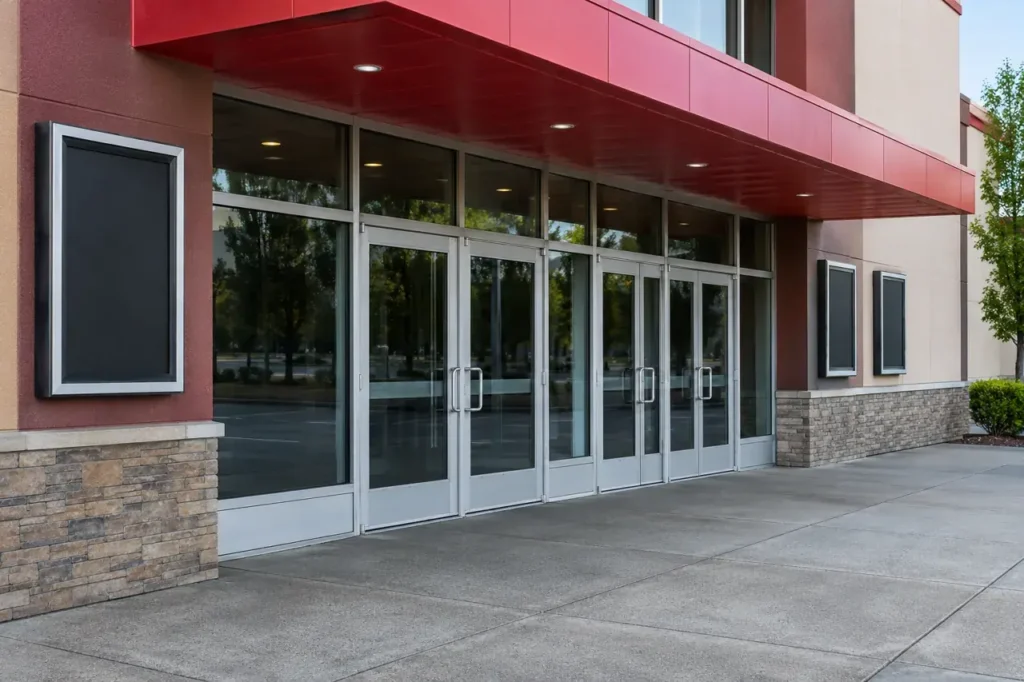
A theater facade can include stucco, painted block, metal trim, poster cabinets, illuminated signs and glazing in the same view. Describe the wall finish and show where display equipment is attached. A photograph should include the whole cabinet or fixture as well as the surrounding wall. This lets the review identify boundaries without treating everything on the facade as a washing target.
List display cases, ticket equipment, wiring covers and decorative lighting as separate items requiring their own decision. If a cabinet leaks or a cover is damaged, that condition needs the appropriate repair rather than a cleaning workaround. The request should not imply that CoKo’s will open display equipment, repair illuminated lettering or handle theater electronics. For suitable wall materials, a controlled washing method can be considered after condition and access are understood. The estimate should make it clear whether the work concerns the wall around a display, the canopy face above it or another specifically identified surface.
Give service access its own place in the plan
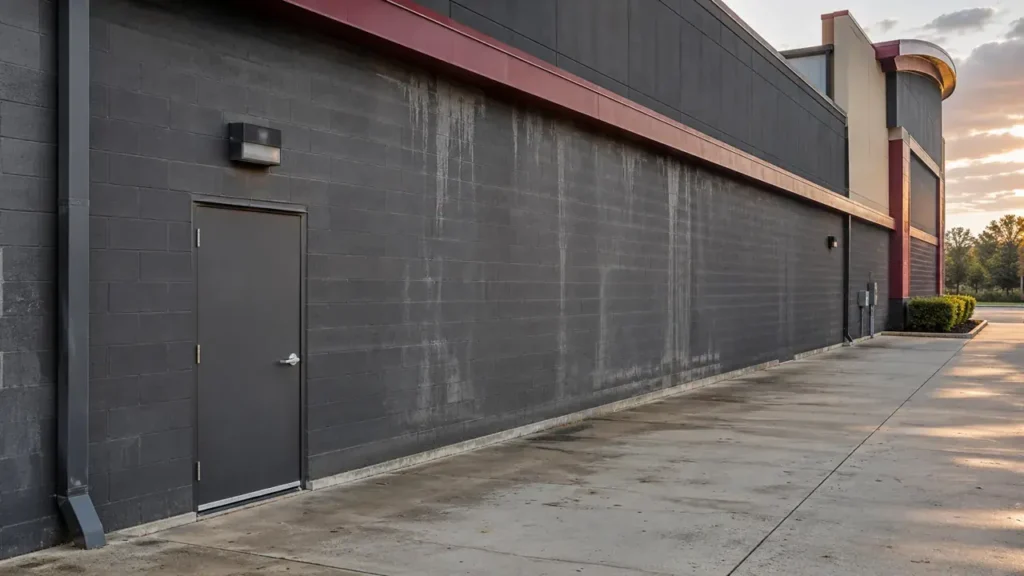
A cinema’s delivery side may be out of the customer’s view but still essential during the proposed appointment. Show the service passage, doors and any turning space that staff or suppliers need. Explain whether deliveries occur before opening, during a quiet period or at times that are still being confirmed. The review needs actual restrictions, not an assumption that the back of the building will be empty because the front doors are closed.
If that service-side pavement is also a washing target, list it separately from the customer forecourt. Equipment, storage and waste containers can limit access and should be visible in the photographs. Identify who can clear movable items and which objects are fixed or controlled by another provider. Exterior surface washing does not include servicing concession equipment, moving connected appliances or clearing an unreviewed storage area. Separating the service route from the public frontage makes the preparation list clearer and helps the manager coordinate different staff responsibilities without losing an important access requirement.
Divide the frontage into useful estimate areas
Begin with a wide image taken from the public approach. Mark the main ticket entrance, any separate box-office opening, the covered waiting area and the route back to the parking lot. If the cinema has several auditoriums behind one frontage, the number of screens alone does not describe the washing area. The useful information is the physical surface list: canopy faces, wall sections, columns and the pavement you want considered.
A marked overview can keep the estimate understandable when several people are involved. Use plain labels such as entrance apron, east wall and service passage rather than relying on staff nicknames. Explain which portion is leased space and which belongs to a shopping-center owner. The request may cover only a small forecourt even when a much larger parking area appears in the photograph. Those boundaries should appear in the proposal so a manager can distinguish the work being priced from neighboring property or optional additions.
Photograph roof edges and canopy transitions carefully
The tall decorative entrance feature of a cinema is not necessarily the same construction as the roof behind it. Send separate ground-level views of the roof edges, the canopy and any raised facade section. Note materials you can identify from existing property records, and say when a detail is unknown. An estimate is helped by honest uncertainty; a guessed roof material can send the review in the wrong direction.
Use the photographs to point out loose panels, staining below joints, peeling finishes and areas that have already been repaired. Washing is not roof inspection or waterproofing repair. If another contractor is scheduled to fix an opening or repaint part of the facade, explain that sequence before arranging cleaning. High areas also need their own access discussion. A clear request can ask for a roof or raised wall to be considered without promising that it is reachable from the same position as the low frontage. Keep staff on safe ground when gathering the initial information.
Separate pavement deposits from damaged finishes
The forecourt may have scattered gum, drink marks, tracked soil and older stains near planters or fixtures. Show representative examples, not only one close photograph with no location. If the request is mainly for gum removal in the queue area, mark that distribution on the overview. If you want a broader wash of the apron, identify the full boundary as well. These are related concerns, but they should not become an undefined promise to remove every mark from every surface.
Tell us about decorative concrete, coatings, pavers and repairs that changed the pavement’s appearance. The cleaning approach must be considered for the finish actually present. Heat may be useful for a suitable deposit on a suitable surface, but it is not a universal treatment for a cinema forecourt. Existing wear, discoloration and patching may remain visible. The written scope should explain the included surface work and any discussed limits on improvement so the finished appearance is judged against the agreed request rather than an expectation of newly installed pavement.
Have the property photos?
Let’s define the next step.
Send the address, requested surfaces and the contact who can confirm access.
Show how visitors arrive between screenings
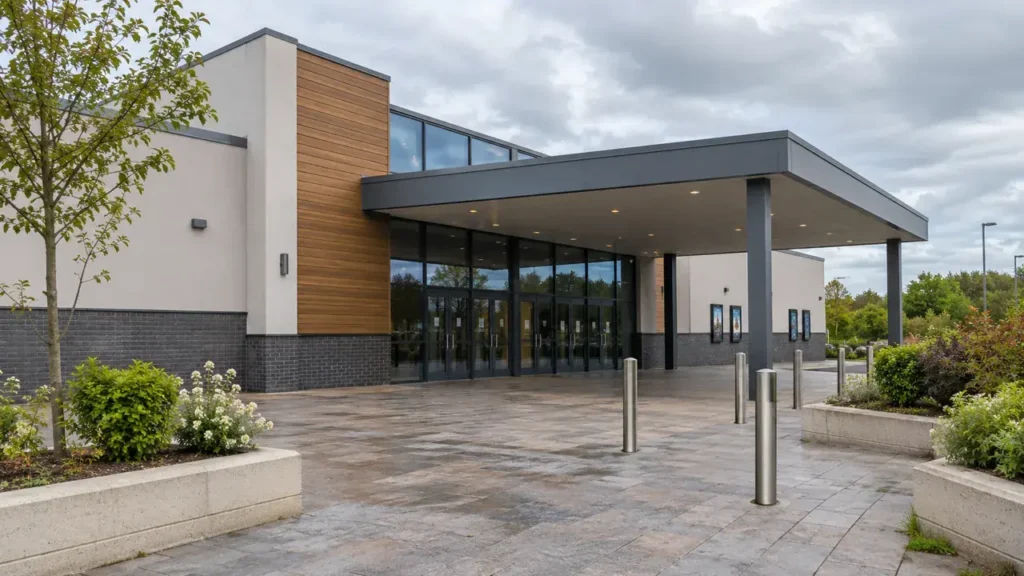
Cinema arrivals can come in groups around particular start times. Visitors may stop to read a display, wait for friends or move across the frontage while an earlier audience is leaving. Explain those ordinary movements without assuming that every gap between screenings is a workable cleaning window. A short interval on the booking schedule may still leave people in the waiting area or staff preparing for the next admission period.
Draw the actual customer route on the estimate overview and identify where it becomes narrow. Include curb ramps, planters, ticket queues and any door that must remain available. The cinema operator needs to decide what access arrangements are acceptable before work relies on them. Washing should not depend on guests stepping over hoses or finding an unfamiliar service entrance on their own. If the frontage cannot be divided into a practical work area and a separate customer route, say so early. That restriction can change the scheduling conversation more than the total pavement area does.
Confirm site responsibilities before announcing a date
Before staff tell visitors about any temporary restriction, the operator and property representative should know which areas are included, who can authorize them and what work window the property can support. A cinema in a larger retail center may need coordination with adjacent restaurants or shops. Shared sidewalks, common drive aisles and landlord-controlled water connections should be identified during the estimate rather than discovered after notices have gone out.
Photograph visible drains, low areas and nearby landscaping so site-water questions can be reviewed. Known ponding or drainage concerns should be disclosed; exterior washing does not repair those conditions. Appropriate water-handling arrangements need to be established for the actual property, and a visible drain is not automatic permission to use it. Name the person who will be available to confirm access on the day. This responsibility list is often more useful than choosing a time first and trying to make every other restriction fit around it afterward.
Keep the approved scope useful after the next release
A cinema’s program changes frequently, but the property record can remain simple. Keep a dated frontage overview, the included surface list and a short note describing access restrictions. Record exclusions such as display equipment, interior areas or landlord-controlled pavement. If the building is repainted, a canopy is replaced or the customer entrance is rearranged, update the record before requesting another wash. A previous estimate should not be treated as a permanent description of a changed property.
Use current condition to decide when another review is appropriate. A busier release period, nearby construction or an altered waiting arrangement may change the priority areas without changing the building’s size. Send updated photographs rather than assuming a fixed interval applies to every theater. CoKo’s can start the conversation from exterior photos and a clearly defined request, with commercial project details available through the quote form. The aim is a readable scope that connects the cinema facade, outdoor pavement and visitor approach while leaving theater operations and specialist equipment work with their proper providers.
A practical start.
Three useful steps.
Show the surfaces
Send wide photos and close views. Label the buildings and the areas that matter now.
Set the boundaries
Explain materials, access, preparation and the work window your property can support.
Review the scope
Confirm included surfaces, responsibilities and the next step before scheduling.
Movie Theater Exterior Washing.
Your questions, answered.
Your next exterior project.
Start with a clearer scope.
Text your address and the priority exterior photos. For a larger project, send the full property details.
Send your address. Show us what needs cleaning.
Text your address, a wide photo and a close-up of the buildup. We’ll review the surfaces and discuss your cleaning options.
Text photos for an estimate Start an online quoteCoKo’s Pressure Washing · (504) 296-9696