
Commercial exteriors · Greater New Orleans
Kitchen Showroom exterior washing.
Plan appointments, displays and deliveries separately.
Text current property photos and requested outside surfaces. Explain the access arrangements that affect your commercial washing scope.
Your property. Your priorities. A clearly defined scope.
Match roof and wall review to actual materials
A kitchen showroom sells a considered decision: customers may arrive with drawings, samples and an appointment to discuss a project. The outside of the premises is part of that arrival, but a washing request needs more detail than a photograph of the display windows. CoKo’s reviews suitable roof, wall and exterior hard-surface washing for commercial properties in Greater New Orleans and the Westbank. For a kitchen showroom, identify the building frontage, customer approach and delivery side separately. This page concerns those outside surfaces, not cleaning cabinets, appliances or installed kitchens. Text current photographs and explain which areas the business controls. A clear request helps distinguish an entrance refresh from a larger building scope before anyone assumes that the roof, display frontage and receiving apron belong in the same proposal.
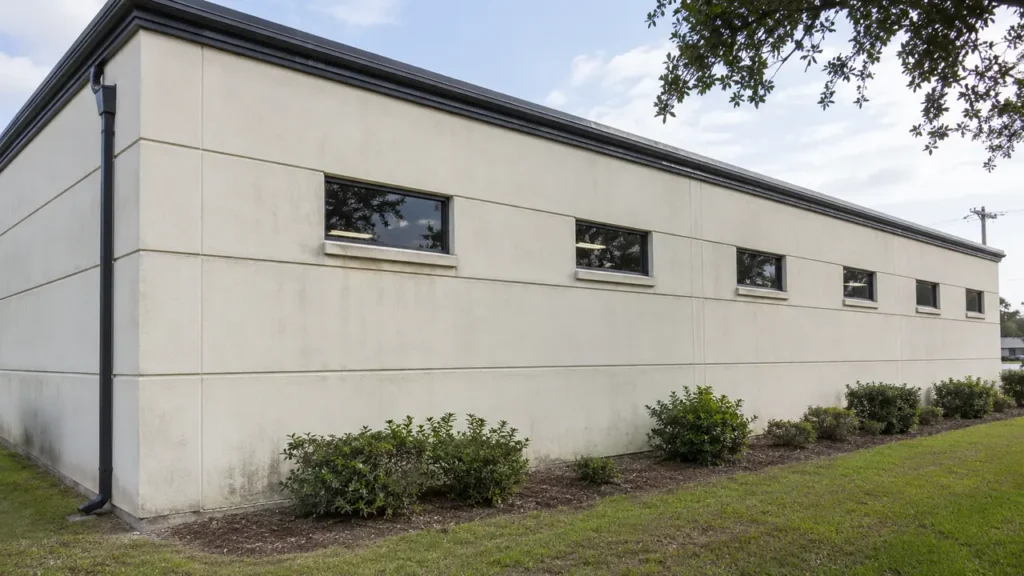
A showroom can occupy a converted house, a small masonry commercial building or one unit within a larger center. Those layouts create different roof and wall boundaries. Provide safe ground-level views of the roof edge and each requested elevation, along with any existing material information. If the concern is only the front parapet, say so; do not describe it as the whole roof. Keep adjoining tenant elevations outside the request unless their inclusion is authorized.
Describe the surface condition before discussing a washing method. Painted stucco, brick, metal fascia and decorative wood should not automatically receive the same treatment. Show peeling paint, open joints, loose trim or previous repairs. Those observations allow the review to distinguish an appearance concern from a repair issue and identify questions that need clarification. Roof access also needs its own discussion. There is no reason to climb onto the building to obtain an estimate photograph or to presume that access through another tenant’s space will be available.
Start with the appointment entrance
A design appointment can involve visitors carrying folders, finish samples or a mobility aid. Photograph the route customers actually use from parking to reception, including curb transitions and the landing immediately outside the door. A distant photograph of the facade may miss the narrow approach beside a planter or the recess where leaf debris gathers. Name the specific pavement and wall areas you want considered so the estimate follows the real customer journey.
Explain how appointments are arranged on the day you are considering for work. A quiet showroom floor does not necessarily mean an unused entrance: a designer may be meeting a customer privately or a contractor may be collecting samples. Identify who can confirm an appropriate access window and whether another entrance is genuinely available. The business should choose that arrangement rather than assuming a receiving door can serve as a public entrance. If the normal route must stay available, state that requirement before a proposal depends on closing it.
Separate display glass from surrounding building surfaces
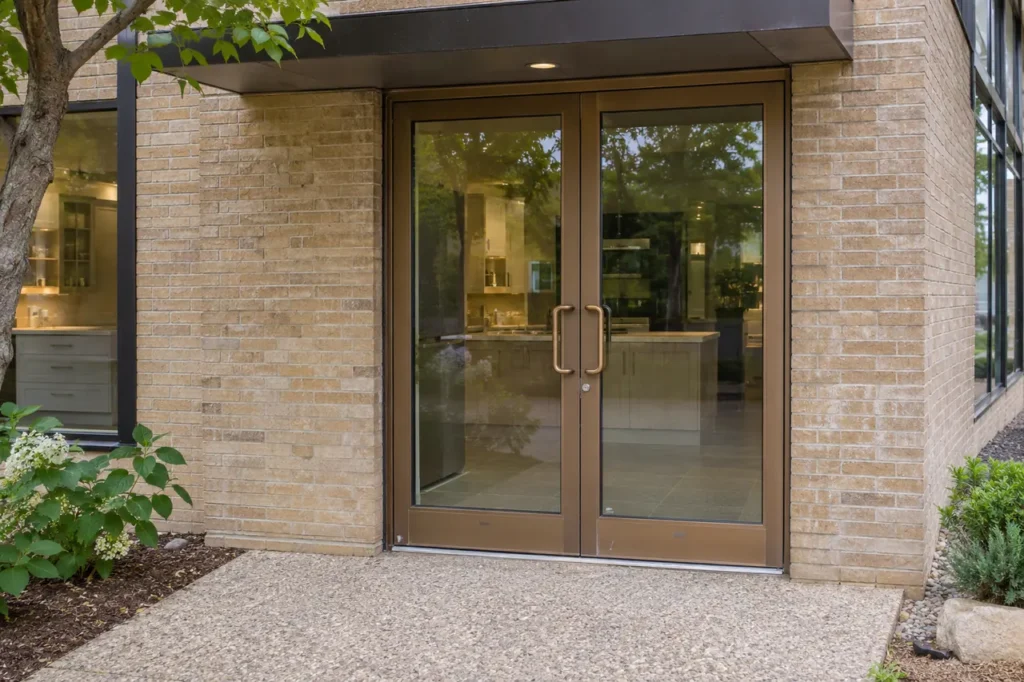
Large showroom windows may occupy most of the frontage while masonry piers, painted trim and a canopy form the washable building around them. Send both a full frontage view and closer photographs of the material that concerns you. Identify window graphics, display lighting and door hardware so the boundaries are recognizable. Do not use a general request for storefront washing to imply that every glazed panel, sign or electrical fitting is included.
If a tenant controls the displays but the landlord controls the exterior envelope, explain that distinction. Approval for display changes does not establish authority over the roof or common canopy. List any glass-cleaning arrangement separately so the order of work can be discussed without promising a result for a different service. Photographs should show failed sealant, loose graphics and damaged trim as well as visible buildup. Washing is not a repair for water entry or a way to restore a worn finish on a building component.
Account for samples and temporary exterior displays
A cabinet door sample, worktop display or promotional board outside the entrance can obscure the surface a manager wants cleaned. Identify items the showroom can remove and the person responsible for doing so. Do not assume a washing crew will handle saleable samples or dismantle a display. A current photograph showing the normal setup is more useful than an old image taken before the entrance arrangement changed.
Explain whether the display is brought inside each evening or stays outside permanently. That simple difference can affect when the approach is available. If something cannot be moved, record that restriction rather than relying on an unspecified workaround after arrival. Keep the request focused on authorized building and pavement surfaces around the display. Washing cabinets, stone samples or appliances involves different materials and responsibilities and is not included merely because those items appear in a property photograph. The business retains control of its products and presentation arrangements throughout the planning discussion.
Give the receiving side a separate plan
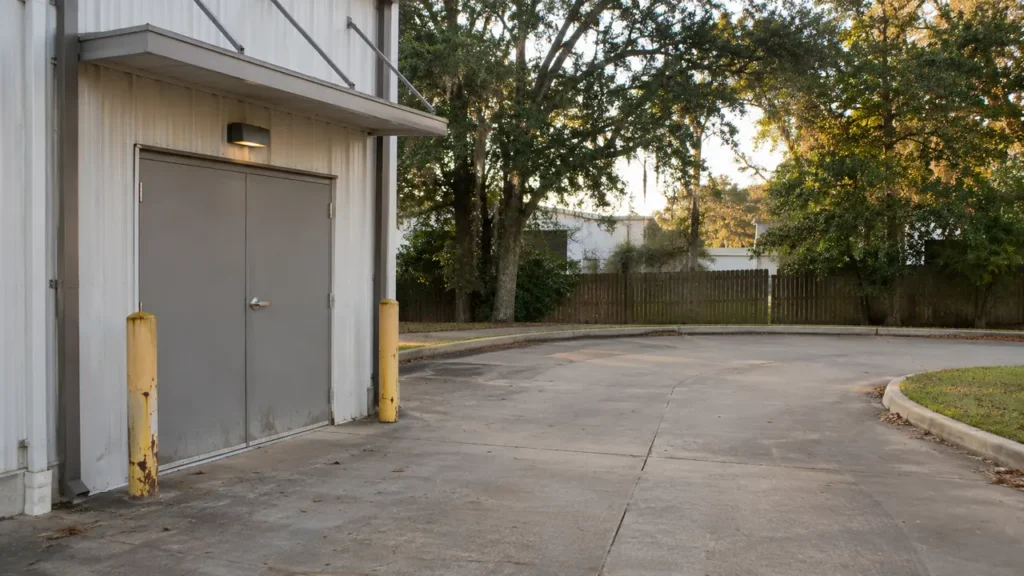
Showroom deliveries may contain large cabinet components or appliances even when the public frontage looks small. Photograph the receiving doorway and outside apron and describe how a delivery reaches it. Explain whether a supplier has already booked a time. The exterior scope should identify pavement and walls without assuming that washing includes unloading products, moving packaging or handling delivery equipment.
Where customer parking and receiving use the same small forecourt, describe the overlap directly. Do not present the two routes as independent if a delivery would block the public approach. The manager should identify an arrangement the business can actually provide, including who will confirm access and when. A proposal can then separate a customer-facing priority from an optional receiving-side area. If the delivery schedule is still unknown, leave that question open instead of promising that every outside surface can be completed within a particular appointment gap. A useful estimate records uncertainty rather than hiding it.
Have the property photos?
Let’s define the next step.
Send the address, requested surfaces and the contact who can confirm access.
Consider adjoining tenants and shared approaches
A showroom tenant may be responsible for the entrance landing while the center owner controls the sidewalk, parking aisle and roof. Send the property address and identify the unit, then mark the exact limits of the request. Include a wider photograph showing how the frontage connects to neighboring premises. This helps prevent a small shop inquiry from becoming an assumed authorization to wash a continuous shared walkway.
Ask the appropriate property contact to clarify approval when the boundary is uncertain. There is no need to guess what a lease allows. Different portions of the proposed work can remain separate until responsibility is confirmed. Also identify nearby businesses with different opening patterns or deliveries that affect the common approach. CoKo’s needs the actual operating restrictions relevant to the requested area, not a promise that the entire center can close. Clear authority and realistic access are useful parts of the scope even when only a modest entrance area is being considered.
Prioritize useful outside work
List the concern that prompted the inquiry first. That may be shaded buildup beside the customer landing, a weathered front wall or a roof section visible from the approach. Add other elevations as optional review areas rather than combining everything into one vague request. Separate roof, wall and pavement so permission, material condition and access can be discussed for each part.
Photographs taken after heavy rain may show a different condition from those taken on a dry day. Explain when an image was taken and whether the concern is persistent or occasional. Avoid treating a picture as proof of a repair diagnosis. For example, a mark below a roof edge does not by itself establish the cause. Washing may address suitable surface buildup, but roofing, drainage repairs and coating restoration remain separate work. A useful proposal should describe an agreed washing boundary and the preparation or access information still needed, without implying that appearance work resolves every building concern.
Send a request a designer or manager can act on
Start with the address, unit number if applicable and the contact coordinating the work. Include an overall building view, the customer entrance, close photographs of the concerns and the receiving approach if it is requested. Add material information already available and note known damage. Safe photographs from the ground are sufficient to begin the conversation.
Then explain appointment patterns, expected deliveries and who controls the roof and shared pavement. Distinguish must-have areas from optional additions. Text photographs first when convenient, or use the commercial project-details route to keep the address and scope notes together. CoKo’s can review those facts against suitable exterior washing work and identify remaining questions. The aim is a recognizable property scope with practical next steps: customers know which entrance arrangement the business intends to provide, and the manager knows which building surfaces are being discussed. No product cleaning, interior installation work or universal treatment of every material is implied.
A practical start.
Three useful steps.
Show the surfaces
Send wide photos and close views. Label the buildings and the areas that matter now.
Set the boundaries
Explain materials, access, preparation and the work window your property can support.
Review the scope
Confirm included surfaces, responsibilities and the next step before scheduling.
Kitchen Showroom Exterior Washing.
Your questions, answered.
Your next exterior project.
Start with a clearer scope.
Text your address and the priority exterior photos. For a larger project, send the full property details.
Send your address. Show us what needs cleaning.
Text your address, a wide photo and a close-up of the buildup. We’ll review the surfaces and discuss your cleaning options.
Text photos for an estimate Start an online quoteCoKo’s Pressure Washing · (504) 296-9696