
Commercial exteriors · Greater New Orleans
HPL panel washing.
The face. The finish. The right scope.
Identify the exterior laminate panels, mark the faces and share the care records before choosing a washing scope.
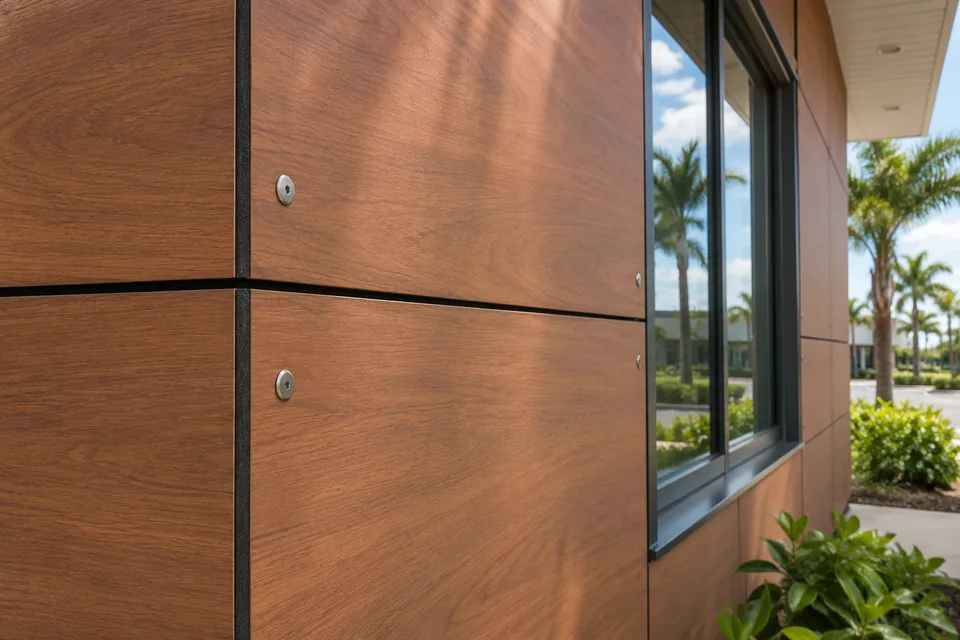
Your property. Your priorities. A clearly defined scope.
Start with the exterior panel identity
A flat decorative panel is not enough information to choose an exterior wash. High-pressure laminate, often shortened to HPL, calls for the installed panel's own care requirements and a clear agreement about the faces being considered. The phrase high-pressure describes the material category; it is not an instruction to wash the wall with a forceful jet. CoKo's starts an HPL facade inquiry with product records, marked photographs and the property's access conditions. That separates an ordinary surface-cleaning request from damage, panel replacement, cavity work or an unfamiliar finish that needs further advice. For a commercial building in Greater New Orleans, a useful proposal should explain what can be evaluated now, what remains uncertain and which other surfaces need their own review.
Ask the building's records contact for the cladding schedule, supplier information or maintenance file. A product name, exterior grade and decorative finish are more useful than a description such as brown composite or black panel. Wood-effect HPL can resemble timber, while a plain panel can look similar to metal composite cladding in a distant photograph. Neither visual similarity establishes that the cleaning instructions are interchangeable. If the product cannot be confirmed, label it as unknown and keep that uncertainty visible in the request rather than selecting a familiar manufacturer's instructions by appearance.
Record additions and replacements separately. A later entrance surround, a repaired corner and an original elevation might have different products even when the colors are close. Identify any protective film, previous coating or repair record without peeling, scraping or opening the assembly to investigate. Your purpose at the inquiry stage is to supply existing information, not to perform a facade inspection. If the available documents describe interior partitions or laboratory worktops, obtain the relevant exterior information before treating that document as the wall's maintenance specification.
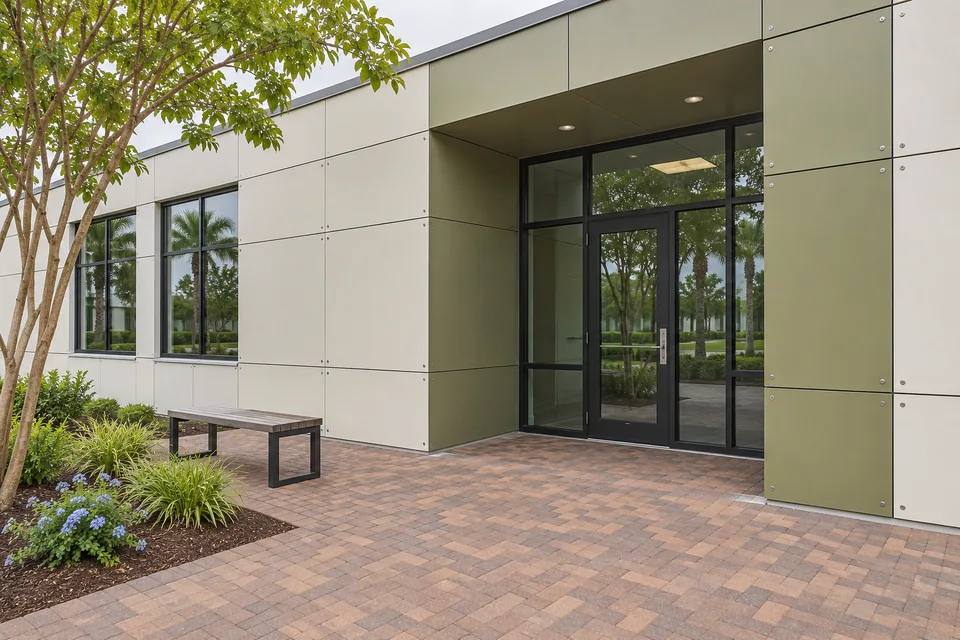
Mark the decorative faces and the boundaries
Use an elevation photo to outline the panel faces that you want considered. Give each area a simple reference, such as front entrance left or rear ground-level bay, and repeat that label on close views. Show the reveals, corners and adjacent window frames in the same set. A statement like wash the whole facade is difficult to price consistently when the exterior includes HPL, glazing, metal trims and rendered returns. A marked drawing or photograph makes those separate surfaces easier to discuss without assuming that one approach covers them all.
Identify open joints, exposed edges and visible fixings as boundaries, not as instructions to clean behind the panels. An exterior face-washing inquiry does not authorize removing a panel, reaching into a ventilated cavity, adjusting a fastener or treating an underlying wall. Also point out vents and the position of doors below the work area. Questions about joint condition, attachment, fire performance or the weather barrier belong with the responsible building professional. The washing scope can then be limited to the identified accessible faces after the material and working method have been reviewed.
Describe the deposit before choosing a treatment
A broad film of ordinary dust is a different concern from a concentrated mark below a sill or residue left by another contractor. Photograph both the overall distribution and the particular spot. Note whether the appearance followed recent painting, installation, landscaping or another known event. When the cause is uncertain, describe what you can see instead of naming a chemical or diagnosis. This helps the reviewer decide what information is missing and prevents a request for general upkeep from silently becoming a promise to remove every kind of contamination.
Keep installation residues and vandalism outside an assumed routine wash. Adhesives, sealants, paint and construction deposits can require product-specific advice, and some marks may remain. Fundermax's panel-cleaning information distinguishes ordinary cleaning from progressively different stain situations, while its chemical-resistance document treats exposure conditions as significant. Those resources are reasons to identify the actual product and concern; they do not establish that another brand, finish or existing residue will respond the same way. Send any product names from prior work when they are already available, without experimenting on the wall yourself.
Separate a dirty face from an altered finish
Tell CoKo's about scratches, worn decorative areas, replacement panels and previous touch-ups before judging what a wash should accomplish. A mark can remain visible after loose soil is removed because the surface itself differs. Cleaning does not replace a decorative layer, repair a gouge, reverse fading or make separately aged panels match. Include a photograph that shows the concern in its surroundings rather than a close-up alone. That context lets the discussion focus on a realistic appearance goal instead of an unsupported expectation of a uniformly new facade.
Take comparison photographs from a repeatable position and note whether the face is wet, shaded or reflecting bright surroundings. Finish sheen, shadows from joints and the angle of view can change how a panel looks in an image. The record need not be elaborate: a labeled wide view, a closer detail and a short note about the condition are useful. Avoid treating a picture as a warranty finding or a structural assessment. Where an alteration appears to need a supplier, installer or coating specialist, settle that question separately before including the affected area in ordinary washing.
Review the care document and a limited comparison area
Provide the current care instructions for the installed exterior product alongside the inquiry. Manufacturer guidance should inform the review rather than serve as a generic shopping list of cleaners. Fundermax cautions against abrasive cleaning materials on its HPL surfaces and notes that another manufacturer's panels may have different requirements. CoKo's must still review whether the proposed treatment, access and site conditions fit the requested work. An unfamiliar product or an unresolved limitation can remain outside the agreed area until the needed information is available.
If a small comparison area is proposed, agree its location, purpose and review process first. It should represent the relevant panel and deposit, with existing condition recorded. A favorable appearance in one spot does not demonstrate that every elevation or stain will behave identically, nor does it establish long-term finish performance. The parties should know who can approve the observed result and what happens if the appearance change is limited. Do not increase the treatment simply to chase a stubborn mark; revisit the scope and any need for product-specific advice before continuing.
Have the property photos?
Let’s define the next step.
Send the address, requested surfaces and the contact who can confirm access.
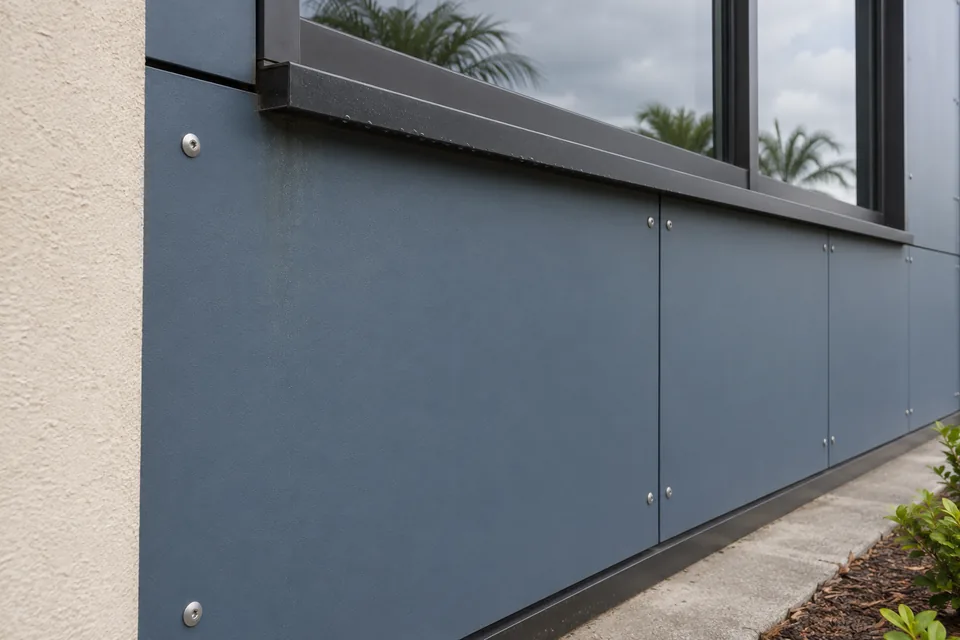
Account for glazing, tenants and the ground below
Treat windows, signs, lights and neighboring finishes as separate items in the property request. A clean panel face beside dirty glazing can change the overall appearance without making either surface part of the other's quote. Note tenant entrances, reception doors and customer paths below the wall so access can be planned around actual use. Share opening hours and any delivery periods the property cannot interrupt. Those details help define a possible work window without implying that all doors can close together or that occupants may pass beneath an active work area.
Show planted beds, outdoor seating, stored goods and electrical equipment near the proposed faces. Identify who controls movable items and who can authorize temporary route changes. The proposal should assign practical preparation and communication responsibilities rather than leave them implied. If a working position would require a roof, lift, suspended access or entry into a restricted area, disclose that need early; those arrangements are not automatically included. A ground-level photograph cannot establish reach or permission for the upper wall, and an accessible entrance does not prove that every elevation is accessible.
Build the visit around an approved work area
Describe available water arrangements and the locations of nearby drains or inlets without assuming that any opening is an approved discharge point. Explain the site's water-use rules and any known residue or environmental concern. These conditions can affect whether a washing proposal is feasible and what further review is needed. An HPL surface request does not include drainage repair, hazardous-residue handling or building-envelope testing. Where access or rinse-water handling remains unresolved, identify the held area clearly rather than treating it as included in a whole-building price.
For a larger property, separate elevations into useful phases based on the actual panel type, access and occupied routes. Prioritize the areas that matter to the owner without calling an unreviewed upper facade part of the first visit. Each phase should have identifiable faces, preparation responsibilities and an agreed stopping point. The scope can also note which adjoining surfaces are excluded or subject to a separate proposal. This makes changes easier to review if records reveal another product, a tenant needs a route kept open or a finish concern requires outside advice.
Send a panel-specific inquiry
Start the conversation with the property address, an authorized contact, labeled elevation photographs and the available product and finish documents. Add the main appearance concern, any known previous treatment and the access or business-hour restrictions. A concise description of the panels to consider is more useful than a building's total floor area. Include enough surroundings to show ground conditions and adjoining materials. If you are comparing proposals, give each provider the same marked face boundaries and document set so differences in the offers can be understood.
Review the eventual offer for included surfaces, unresolved areas, working arrangements and the intended appearance goal before scheduling. Ask how changes will be handled if the product or deposit turns out to differ from the original information. CoKo's can discuss whether the exterior washing request fits the proposed scope; supplier approval, panel restoration and specialist access should never be inferred from a material-planning guide. Text the priority photos to begin that discussion, or use the detailed project quote route for a larger property. Keep the confirmed HPL faces distinct from other cladding so the next step remains clear.
A practical start.
Three useful steps.
Show the surfaces
Send wide photos and close views. Label the buildings and the areas that matter now.
Set the boundaries
Explain materials, access, preparation and the work window your property can support.
Review the scope
Confirm included surfaces, responsibilities and the next step before scheduling.
HPL Facade Washing Planning.
Your questions, answered.
Your next exterior project.
Start with a clearer scope.
Text your address and the priority exterior photos. For a larger project, send the full property details.
Send your address. Show us what needs cleaning.
Text your address, a wide photo and a close-up of the buildup. We’ll review the surfaces and discuss your cleaning options.
Text photos for an estimate Start an online quoteCoKo’s Pressure Washing · (504) 296-9696