
Horse barns · Equestrian properties
Horse barn washing.
Built around your facility.
Roof washing, exterior soft washing and suitable hard-surface cleaning for horse barns and equestrian properties. Start with a defined surface list and an operator-led access plan.
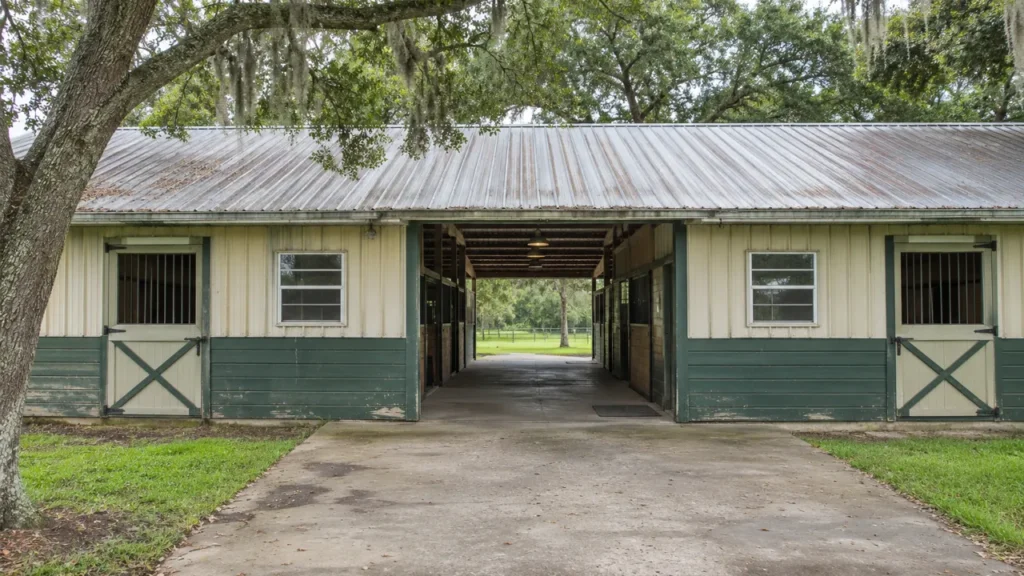
Your buildings. Your access. A defined washing scope.
The buildings and the operation
A useful barn list.
A practical next step.
Show the roofs, exterior elevations and suitable hard surfaces requested. Explain how the operator can make each area available, and keep animal-health protocols separate from routine washing.
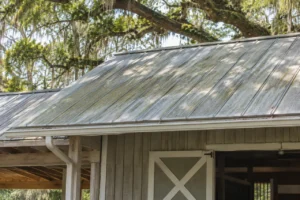 1 · YOUR SCOPE
Roofs
Material, condition and access for each barn.
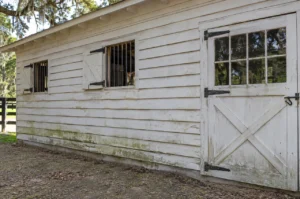 2 · YOUR SCOPE
Exteriors
Siding, timber and the elevations requested.
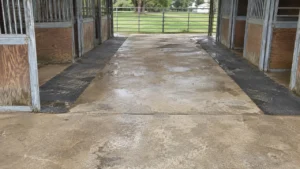 3 · YOUR SCOPE
Hard surfaces
Agreed concrete areas reviewed individually.
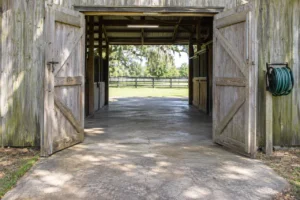 4 · YOUR SCOPE
Access plan
The operator controls animal movement and work-zone readiness.
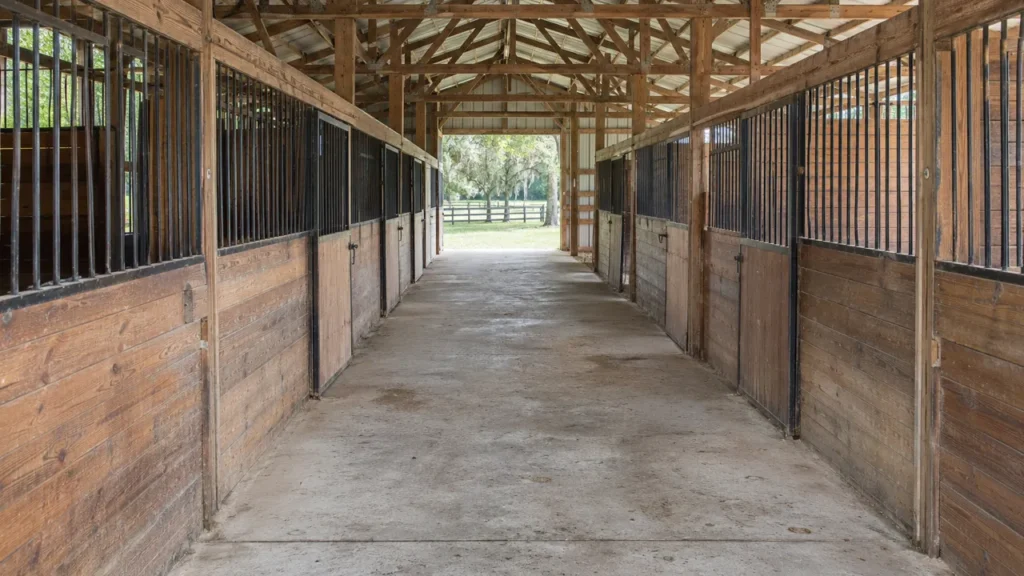
Name the barn and the surfaces first
A horse property can include boarding barns, a covered aisle, a tack building and several outdoor approaches. The words barn cleaning can mean very different things to the people requesting a quote. Begin by identifying the building and the actual surfaces you want reviewed. Separate roof washing, outside walls and suitable hard surfaces from routine mucking out or animal-care tasks. A clear surface list helps the facility manager describe a commercial washing project without assuming that every part of a stable is included.
Give each barn or zone a simple name that appears on your photographs or sketch. Show the sides of the building as well as the entrance and the route equipment would use. If interior surfaces are part of the request, identify them separately and explain how the operator would make them available. One well-defined barn request is more useful than a large area total that leaves materials, heights and operating requirements unresolved.
Roof washing comes with material and access questions
Identify the roof material if it is known, the approximate building height and the roof areas you want considered. Include lower covers and attached wings only when they belong in the request. Ground-level photographs can show visible buildup, roof edges and the surrounding setup area. There is no need to climb onto the barn to collect estimate pictures. Share maintenance or manufacturer guidance the property already has rather than guessing at a roof system from its color.
Tell CoKo’s about leaks, loose sheets, damaged coatings and recent repairs. Cleaning does not replace a roofing assessment or repair. A roof over occupied stalls needs an access and occupancy discussion with the operator, not an assumption that work can proceed above animals. Keep the proposed roof scope identifiable from wall and pavement washing so the property can review the methods, preparation and exclusions that apply to each part.
Match exterior soft washing to the building materials
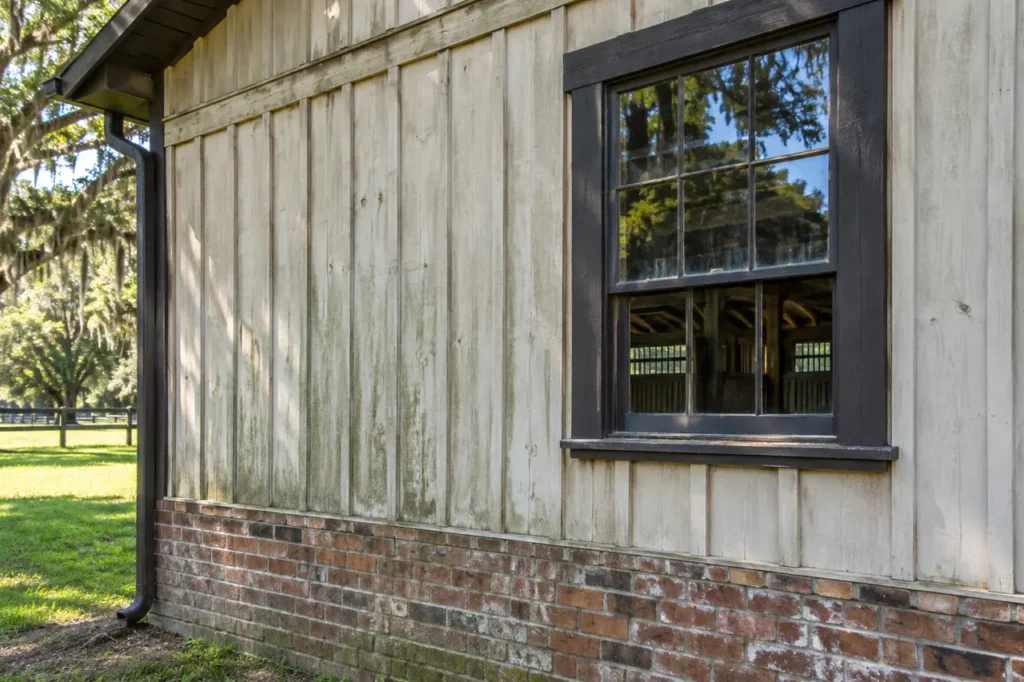
Barn exteriors may combine painted timber, metal siding, masonry and trim in the same elevation. Photograph material changes, worn finishes and areas around doors or openings. Identify loose paint, deteriorated boards, open joints or other known defects before a cleaning approach is proposed. A long building can look uniform from the gate while requiring different attention at its older section, repaired doorway or lower wall.
Soft washing is a service approach to review for appropriate exterior materials and buildup, not a promise that every finish can be washed the same way. Share any available coating instructions and identify nearby equipment, wiring and fixtures. Confirm which sides of the building are included. The scope should distinguish building washing from repainting, structural repairs, pest control and other farm services. That makes the proposal easier to compare with a request that covers fewer elevations or a different group of surfaces.
Define suitable concrete separately from dirt and footing
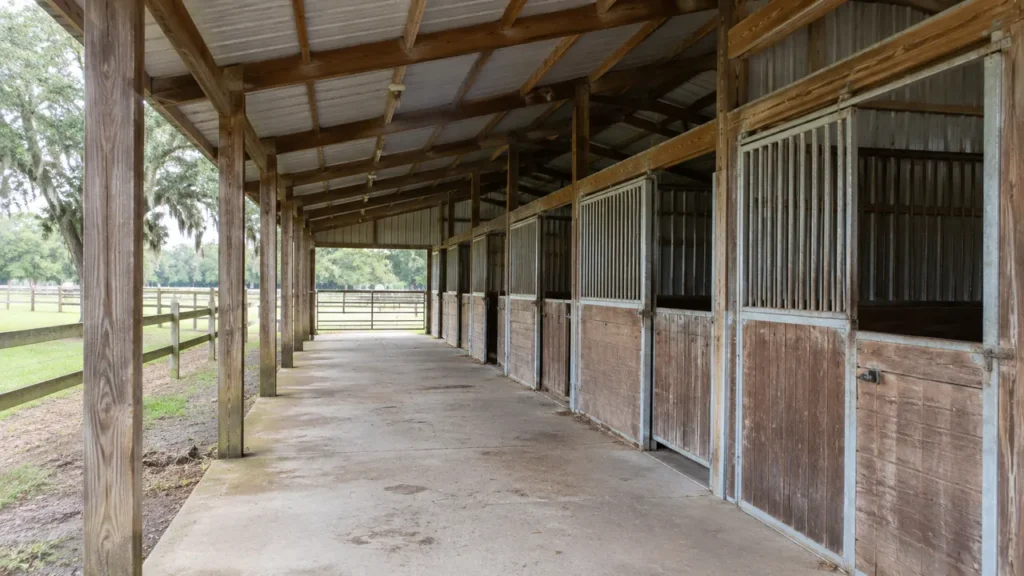
A concrete entry apron, a hard-surfaced aisle and an arena floor are not interchangeable cleaning targets. Name the material and mark the endpoints of each requested area. Show changes in level, joints, coatings, drains and nearby stall fronts. If the aisle includes mats or removable items, explain who is responsible for moving them and whether the underlying surface is part of the review. Do not convert the footprint of an entire barn into an assumed quantity of washable concrete.
Heated pressure washing may be relevant to particular durable surfaces and residue after conditions are assessed. It is not the default for every barn area. Dirt floors, bedding, riding footing and sensitive stall materials need their own decisions and should not be treated as ordinary driveway concrete. This page does not offer arena grading or footing maintenance. A request for those services should remain separate from the building and agreed hard-surface washing scope.
You do not need every measurement to start
Have the barn photos?
Let’s move it forward.
Send the address, buildings and surfaces requested, plus the operator-led access arrangements.
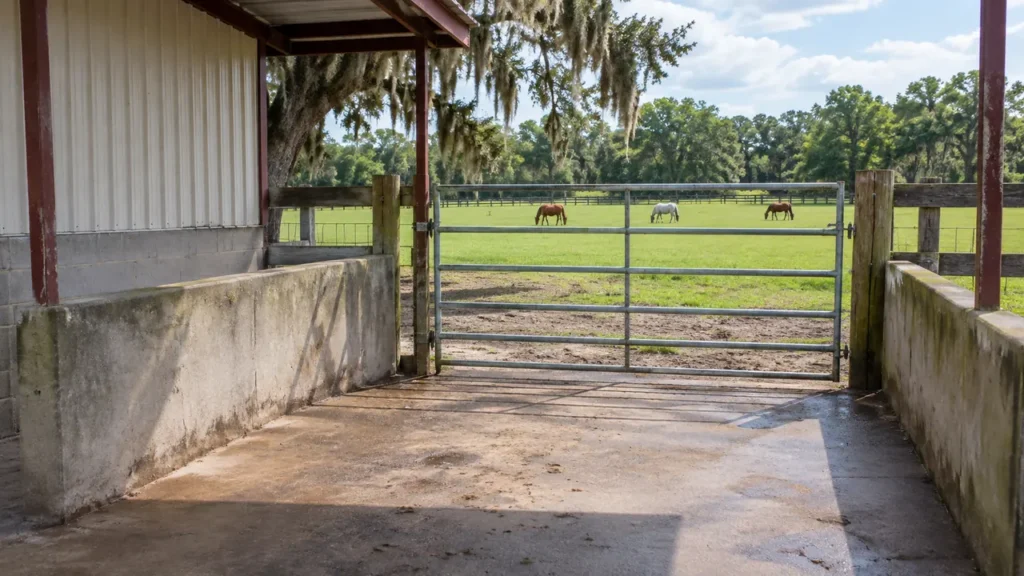
Let the operator control animal movement and access
The operator should identify which buildings or zones can be made available, who manages horse movement and what routes remain restricted. Discuss turnout, feeding, lessons, visitors and deliveries before selecting a work window. A vacant section and a fully occupied boarding barn present different planning questions. CoKo’s should receive an agreed access arrangement rather than being asked to decide where horses can be moved when work starts.
Identify the person who can confirm readiness and stop or change the sequence if conditions differ from the plan. Keep information about individual owners or animals limited to what is necessary for access coordination. If the facility has isolation restrictions, veterinary instructions or an active health concern, raise that before accepting a routine washing proposal. The operator and veterinarian direct those animal-health decisions. A commercial surface-cleaning request is not a substitute for that oversight.
Keep routine washing separate from a disease-control protocol
Cleaning and disinfection are different tasks. LSU AgCenter’s guidance on stalls and trailers describes preparation and cautions that high-pressure washing can spread contaminated material into the air. That is a reason to review the facility’s conditions and veterinary requirements before proposing work inside animal-housing areas. CoKo’s does not describe routine barn washing as outbreak remediation, sterilization or a guarantee of disease prevention. A specific health-related request needs appropriate specialist direction.
For an interior request, identify who removes feed, bedding, manure, tack and movable equipment before the area is considered for washing. Explain any site protocol the operator needs the contractor to follow. Do not choose a chemical, concentration, pressure setting or return-to-use time from a general sales page. Materials, facility conditions and the applicable instructions need review. The quote should describe the agreed cleaning surfaces and responsibilities without implying a veterinary certification or an unverified disinfecting capability.
Resource for the operator and veterinarian: LSU AgCenter guidance on equine cleaning and disinfection.
Work through utilities and water-handling responsibilities
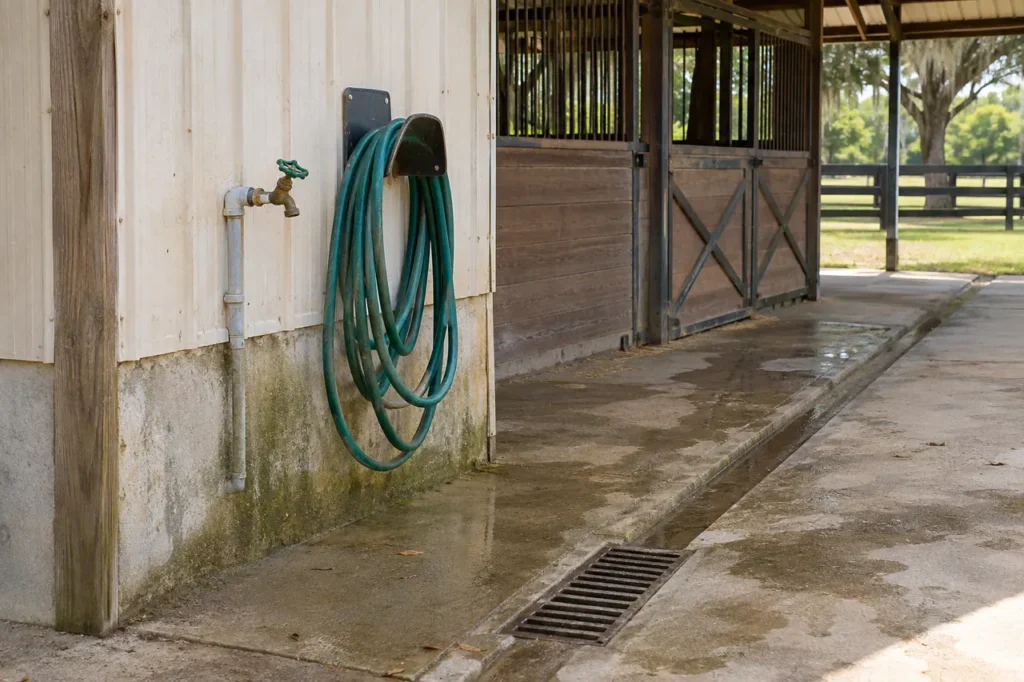
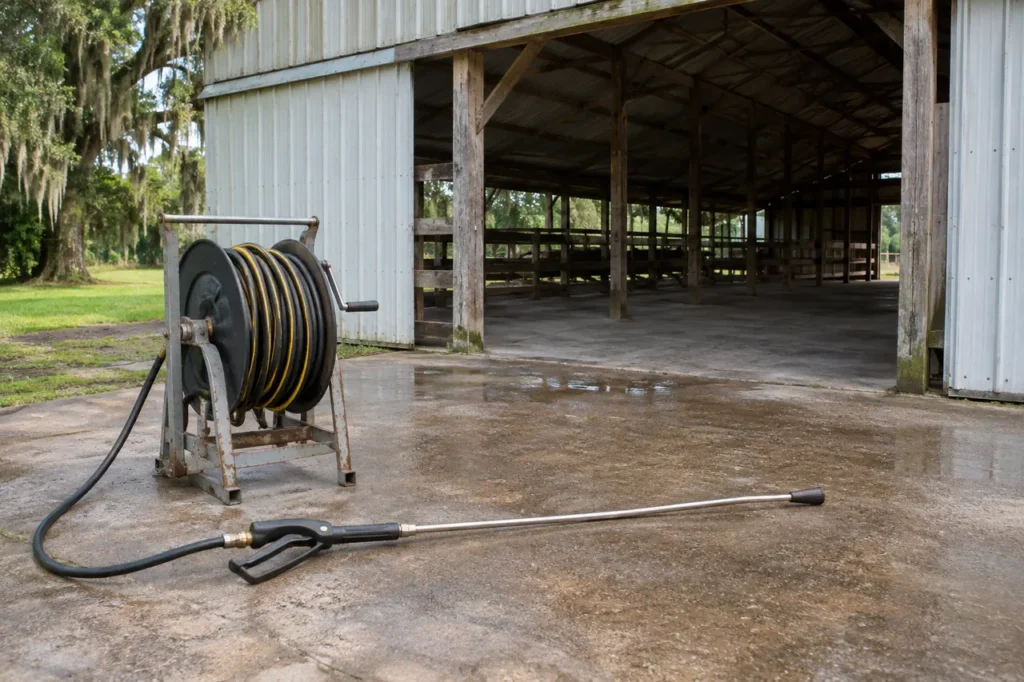
Show the proposed water connection and equipment route, along with gates, soft ground, narrow approaches and other access constraints. Identify lights, fans, electrical fittings and fixed equipment near the surfaces requested. A wide photograph often explains these relationships better than a close photograph of a stain. Tell CoKo’s about water limitations, existing drainage issues and any areas the facility cannot make available.
Discuss where wash water and loosened residue would be managed with the responsible property contact. Do not assume that a nearby ditch, drain, pasture or water feature is an appropriate outlet. The operator should share applicable facility procedures and identify who will resolve any additional handling requirements before work is accepted. If a separate arrangement or specialist support is needed, make that responsibility explicit. This planning conversation does not determine discharge permission or replace property-specific environmental advice.
Build a comparison that separates the real work
Ask each proposal to use the same building names and surface boundaries. Check whether roofs, exterior walls, concrete approaches and any agreed interior surfaces are included or excluded. A price for an outside barn wash is not directly comparable with a request that also includes roofs and a long hard-surfaced aisle. Identify the preparation and access assumptions that affect both offers.
Provide the facility’s approval or purchasing requirements early, along with the person authorized to accept the scope. If a complex interior, height or restricted approach needs a site review, agree on that next step instead of relying on an incomplete area total. No invented per-stall price or guaranteed finish should replace an actual evaluation. Clear photographs can begin the discussion, but the final request still needs to account for the surfaces and operation at the real property.
Plan phases and record what each phase covers
A larger equestrian property may want to consider one barn or building group before the rest. Name the surfaces in each proposed phase and identify the preparation needed before it becomes available. The operator should explain which routes and activities must remain separate. A phase is useful when everyone knows its boundaries; an informal promise to clean the whole place does not provide the same clarity.
Use the same zone names for completion notes and follow-up photographs. Record an unavailable area or a deliberate exclusion so a later manager can understand the work performed. Washing cannot repair damaged materials or eliminate every source of staining. Keep roof defects, coating failures, footing issues and animal-health decisions in their appropriate maintenance records. Future cleaning can be discussed from observations at the property rather than a universal interval applied to every surface.
Send a useful horse-property request
Start with the property address, your role and a short building list. Identify roof washing first, then exterior walls and the hard surfaces you want reviewed. Add wide photographs showing access and close photographs of representative buildup or damage. Include approximate heights or dimensions already available, the intended timing and the operator contact. You do not need to prepare a complete survey to start a defined commercial conversation.
CoKo’s prioritizes Greater New Orleans and the Westbank. Send the actual facility location so access and scheduling can be reviewed for your property. Texting keeps the photographs and scope notes together; the detailed commercial quote form is available for a longer surface list or operating explanation. Describe whether you mean a horse boarding barn, an equestrian center building or another structure. The next step is a practical scope review, with the animal-handling and site responsibilities kept clear.
Three useful steps.
One commercial request.
Send the address, building list, roof information and requested surfaces.
Identify preparation, animal separation, utilities and the contact who controls the facility.
Confirm included surfaces, exclusions and arrangements before scheduling.
Horse barn washing.
Your questions, answered.
Greater New Orleans · Westbank first
Your horse property.
A clearer washing scope.
Text your address and barn photos to 504-296-9696. We can review the roofs, exterior surfaces, access arrangements and next step.
Send your address. Show us what needs cleaning.
Text your address, a wide photo and a close-up of the buildup. We’ll review the surfaces and discuss your cleaning options.
Text photos for an estimate Start an online quoteCoKo’s Pressure Washing · (504) 296-9696