
Commercial exteriors · Greater New Orleans
Fishing camp washing.
Ready for the next trip.
Roofs, building exteriors and suitable walking surfaces for your fishing camp. Text property photos, access details and your preferred timing.
Your property. Your priorities. A clearly defined scope.
Start with the buildings your guests actually use
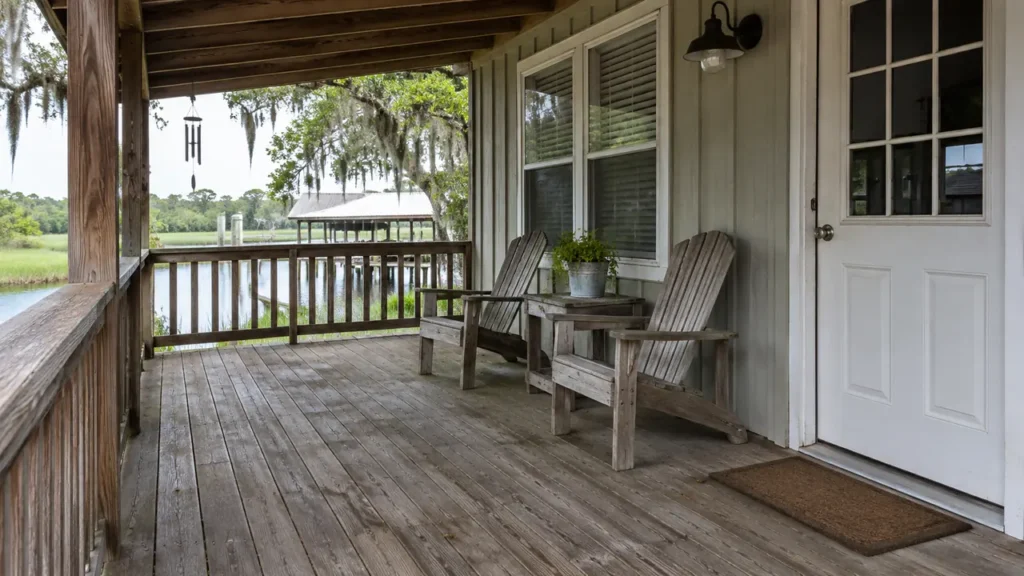
A fishing camp has a different arrival pattern from a house in town. Guests unload coolers, carry tackle up the stairs and move between the porch, storage building and vehicles with their hands full. Exterior washing works better when those movements are included in the plan. CoKo’s can review the camp roof, exterior walls, porch and suitable land-side walking surfaces as a coordinated request. Send photographs before deciding what needs washing first. A raised cabin, a long stair flight and a shaded equipment shed can require different access arrangements even when they belong to the same property. For fishing camp exterior washing around Greater New Orleans and the Westbank, the first conversation should connect the cabin surfaces with the practical route to reach them.
Name the occupied cabin, guest rooms and separate storage buildings in your photo set. A wide picture from the parking area helps connect those structures, while closer photographs show the siding, roof edges and steps. Explain whether everyone enters through one porch or whether a back stair is used during unloading. That information helps make the washing boundary understandable before equipment arrives.
It is useful to identify an unused outbuilding rather than silently including it in a general request for the entire camp. The same applies to a fish-cleaning structure, a screened room or a privately owned neighboring cabin. Keep each structure on its own line when requesting a proposal. CoKo’s can then discuss the surfaces being considered, the areas that need closer inspection and the parts of the property that are outside the requested work. A clear building list is easier to review than an acreage estimate alone.
Match the washing discussion to the roof and siding
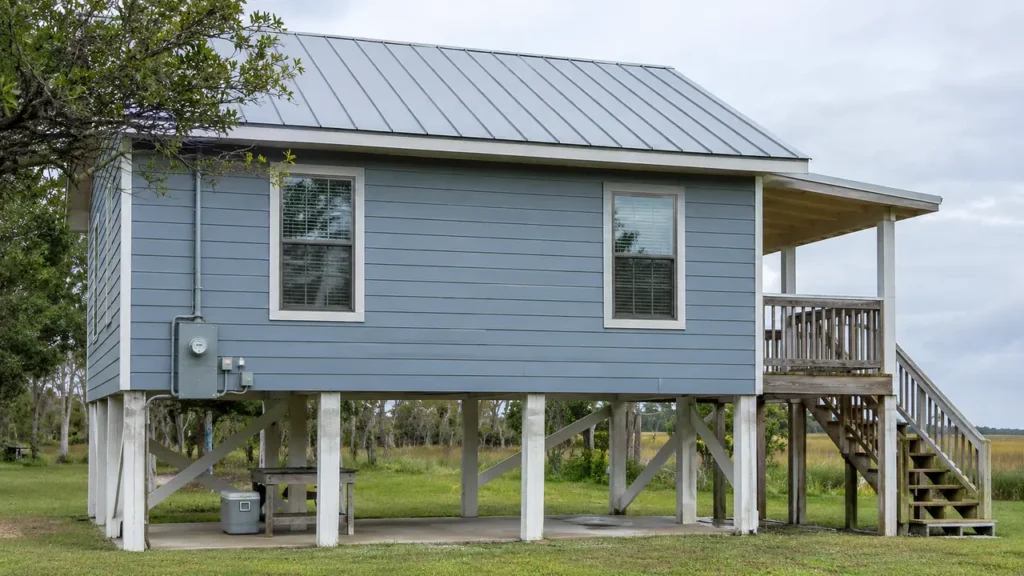
Photograph the roof from a safe position on the ground. Include different elevations if the roof changes over the main cabin, porch and storage room. Describe the material if you know it, but let the photographs show its condition. A request for roof washing should be reviewed as a roof-specific scope rather than assuming the same approach used on a concrete landing.
For walls, capture the sun-facing side and the shaded side. Mark loose paint, open joints or existing damage that you have already noticed. Those details can change what should be washed, what needs a closer look and what should be left alone until a repair is addressed. A washed wall is not a repaired wall, and a clean-looking roof does not establish its remaining life. Keep repair concerns separate so the proposal can focus on suitable exterior washing and sensible access around the camp.
Give porches, stairs and land-side paths their own boundaries
The porch may be the most visible surface at a fishing camp, but it is rarely the only walking route. Include the stair treads, upper landing, lower landing and path from the parking area. Explain whether a connecting walkway stands on land or extends over water. That distinction deserves a specific conversation before treating it as part of the same washing request.
Identify the surface material for each part of the route. A painted timber porch, an uncoated board stair and a concrete pad should not be combined into an undefined square-foot total. Photos should also show the sides of the steps and the space beneath them where practical. Remove loose tackle and other small items before the agreed work window. CoKo’s can review the accessible surfaces and discuss boundaries, but the scope should not imply that washing will correct loose boards, weak rails or an uneven approach.
Plan access around a raised camp
Show the route a service vehicle would use from the road to the work area. A narrow gate, low branch, soft shoulder or steep driveway transition is more useful to know about before arrival than after the equipment is parked. Include the gate opening in a photograph and explain whether another vehicle usually occupies the only clear unloading spot.
At a raised camp, a ground-level view can hide the relationship between the upper landing and the lower equipment area. Take one wider picture that includes both. Explain which spaces below the cabin are used for storage and which must remain accessible. Water supply, electrical items and doors that cannot be blocked should be identified without assuming every camp has the same arrangement. If access changes with weather or property use, say so. The proposed work should fit a practical arrival and departure route rather than depend on moving through someone else’s property.
Keep belongings and activity out of the working area
Fishing camps often have more loose outdoor gear than the photographs initially suggest. Coolers, folding chairs, nets, hoses and tackle boxes can occupy the exact porch or landing included in the request. Decide who will move those items and where they will go. Moving them from one side of the porch to the other may simply transfer the obstruction into the next work area.
Discuss boat trailers, parked vehicles and portable cooking equipment as part of the same preparation conversation. The goal is to provide a clear, agreed space for washing without making assumptions about valuable or personal equipment. Name anything that must not be moved. Keep children, pets and guests outside the active work zone during the agreed window. CoKo’s can coordinate the exterior project with the owner’s preparation, while responsibility for handling stored gear and sensitive items should be settled explicitly in advance.
Have the property photos?
Let’s define the next step.
Send the address, requested surfaces and the contact who can confirm access.
Treat the water edge as a separate planning issue
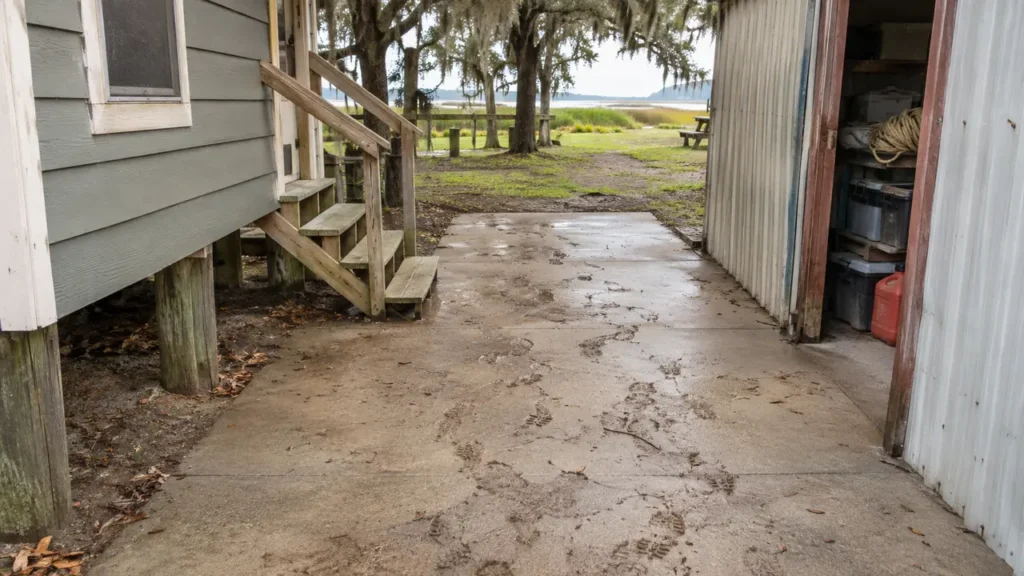
A cabin near the water does not automatically make every waterside structure part of the job. A dock, boat lift, gangway, bulkhead or fish-cleaning platform needs its own description. Show its connection to the land-side route and explain whether the requested surface sits over open water. Do not use a distant shoreline photo as a substitute for a close look at those conditions.
The review should establish what can be considered, what needs further discussion and what is excluded from the written scope. Drainage direction and the location of sensitive equipment also belong in that conversation. This page does not promise a universal over-water process or include boat cleaning in a cabin-washing quote. Separating those requests gives everyone a more accurate picture of the project. If the immediate need is simply the cabin and stairs on land, state that clearly and keep the waterfront structures out of the initial request.
Schedule around guest turnover and camp use
Tell CoKo’s when the camp is empty, when the next guests arrive and whether someone can meet the crew. A small gap between groups may still include deliveries, maintenance or an owner stopping by to unload supplies. List those activities instead of assuming the property will remain vacant throughout the window.
For a camp with several cabins, a phased plan may make more sense than treating every porch as available at once. Identify the buildings that can be closed temporarily and the route that guests must still use. Agree on who will communicate the schedule and who can authorize a change if conditions differ on arrival. Avoid promising that a surface will be ready at a specific time before the scope and conditions are reviewed. A realistic schedule starts with the actual property layout and access, then fits the work into the camp’s plans.
Send a photo set that leads to a clearer proposal
Begin with the property address and one wide arrival photograph. Add the roof views, wall elevations, porch, complete stair route and any separate building being considered. Label the photos in plain language, such as main cabin front stair or guest cabin parking-side wall. Include the preferred timing and explain who will prepare the outdoor areas.
Ask the written proposal to distinguish roof washing, exterior wall washing and the suitable walking surfaces included in the request. Note any waterfront structures that are being reviewed separately. A useful proposal makes the boundaries, access assumptions and preparation responsibilities easy to compare with your original photos. You do not need to calculate every measurement before contacting CoKo’s. Clear photographs and an honest description of how the camp operates are the better starting point for deciding what should happen next and whether a closer property review is needed.
A practical start.
Three useful steps.
Show the surfaces
Send wide photos and close views. Label the buildings and the areas that matter now.
Set the boundaries
Explain materials, access, preparation and the work window your property can support.
Review the scope
Confirm included surfaces, responsibilities and the next step before scheduling.
Fishing Camp Building & Walkway Washing.
Your questions, answered.
Your next exterior project.
Start with a clearer scope.
Text your address and the priority exterior photos. For a larger project, send the full property details.
Send your address. Show us what needs cleaning.
Text your address, a wide photo and a close-up of the buildup. We’ll review the surfaces and discuss your cleaning options.
Text photos for an estimate Start an online quoteCoKo’s Pressure Washing · (504) 296-9696