
Commercial exteriors · Greater New Orleans
Dry Cleaner Shop Exterior Washing.
Define the storefront and garment-pickup approach.
Text clear property photographs, the requested surfaces and available access window. Let’s define the exterior washing scope.
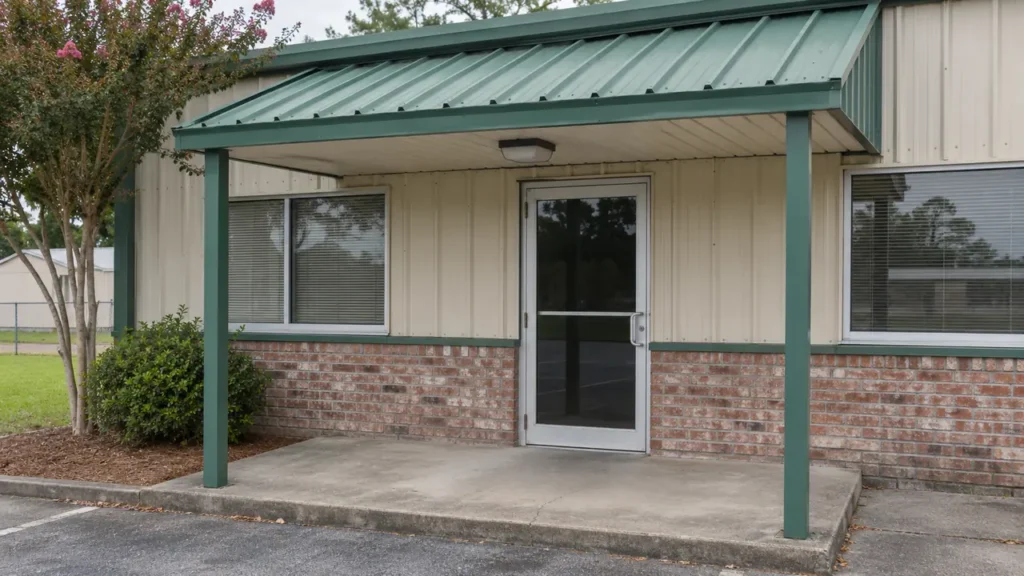
Your property. Your priorities. A clearly defined scope.
Separate the collection shop from the processing facility
A dry-cleaning shop hands customers garments that are ready to take home. Its exterior washing request should protect that handover routine while defining the actual building surfaces to be reviewed. CoKo’s Pressure Washing considers suitable exterior facility and hard-surface work around Greater New Orleans and the Westbank. This page concerns the shop frontage, exterior approach and separately identified service side. It does not concern cleaning clothing, operating garment-care equipment or treating a processing area. Begin with current photographs of the empty frontage and explain how customers normally collect and return their items.
A storefront may accept garments for processing elsewhere, or it may be part of a larger operation with separate work areas behind the customer counter. Describe the exterior layout without sharing private customer records or internal procedures. Identify which building faces and pavement areas you control. A quote for the customer entrance should not silently become a request to wash a production facility, storage room or equipment enclosure.
Label the front door, staff entrance and any garment-delivery doorway in the photographs. If several businesses share one building, show the shop boundary and identify the property manager who controls common walls or pavement. A collection-only location and a standalone building may need different access arrangements even when their front doors look similar. The useful first decision is which outside components belong in this particular request, not which general cleaning category describes the business.
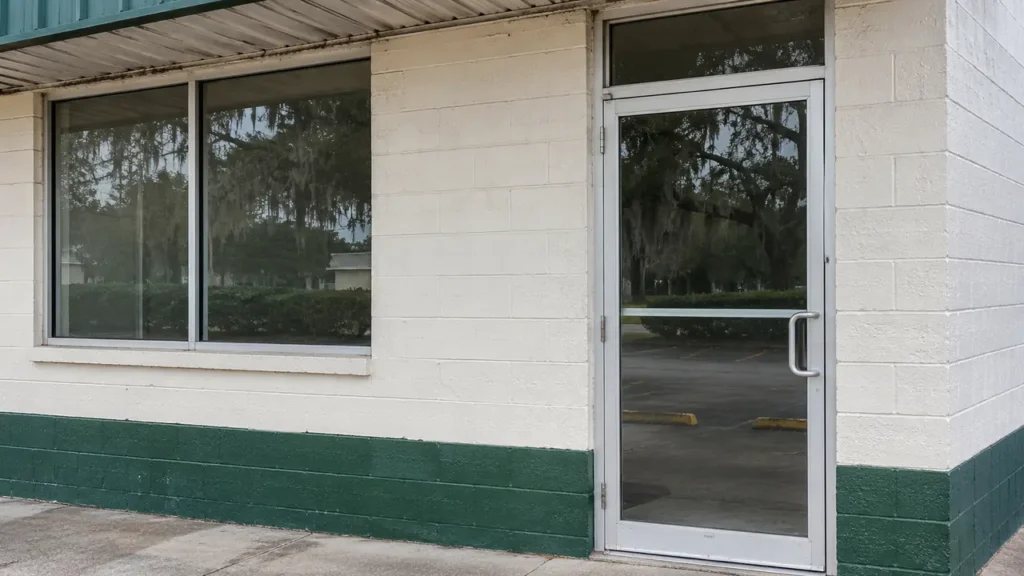
Plan around garments crossing the entrance
Explain where staff and customers stand when garments are handed over and which exterior route they use to reach vehicles. Garment bags, hanging rails, portable racks and customer belongings should remain under the shop’s control. CoKo’s should not be expected to move saleable or customer-owned items to reach a wall or pavement section. The shop should arrange an appropriate holding location outside the proposed work boundary before a work window is confirmed.
An empty customer area is useful only if the business can keep that section available for the agreed period. A brief gap between collections may not provide a workable closure. Tell the estimator whether pickups are concentrated at certain times and whether staff can pause handovers at the requested entrance. The business should choose and communicate any temporary arrangement. Do not assume a staff-only doorway can automatically become a customer entrance simply because it is on another side of the building.
Identify the storefront finishes and condition
Close photographs should show the actual wall material, painted trim, door frame and threshold. Some shops occupy older brick storefronts; others have coated panels, stucco or metal components. These finishes should not receive an assumed universal treatment. Include visible coating failure, loose trim, damaged joints and known water-entry concerns so the review can separate ordinary surface buildup from a condition needing repair before washing is considered.
A faded finish is different from removable soil. Washing does not restore an original paint color, repair a damaged seal or correct a poorly closing door. If repainting or glazing work is already planned, explain the proposed order and the contact responsible for that separate work. This helps establish a useful exterior washing portion without implying that one visit will resolve every storefront defect. Material information already held by the property manager can be included with the photographs.
Keep signs and customer-drop equipment separate
Photograph signs, lights, cameras and any after-hours drop unit near the requested surfaces. Their presence matters to the boundary review, but it does not mean they are included as washable building components. A drop unit may belong to another provider or have an operating mechanism that the shop must manage. Identify the responsible contact rather than asking a washing contractor to open, disconnect, service or move it.
If customers normally leave items outside business hours, explain how the shop intends to manage that access during the agreed work window. The proposal should not assume that a closed business has no active customer route. Keep alarm information, access codes and customer details out of the initial inquiry. What matters is the relationship between the requested wall or pavement, the fixed unit and the entrance that people may still try to use.
Review the pavement where customers actually walk
Show the route from the parking edge or common sidewalk to the door, including any turn around a column or planter. Mark the specific pavement section requested. A customer carrying several covered garments may use a different path from the shortest route visible in a photograph. The shop can explain that pattern without identifying individual customers. Include the threshold and any change of surface so the estimate follows the real approach.
Describe the concern rather than guessing its cause. Tracked dirt, shaded buildup and an old stain are not interchangeable descriptions. Show cracks, coatings, patched areas and existing unevenness as separate conditions. Exterior washing does not repair pavement or certify accessibility or slip resistance. If the sidewalk belongs to a shopping center, identify who can authorize its inclusion. The shop’s daily use of a walkway does not establish permission to approve work on every shared section.
Have the property photos?
Let’s define the next step.
Send the address, requested surfaces and the contact who can confirm access.
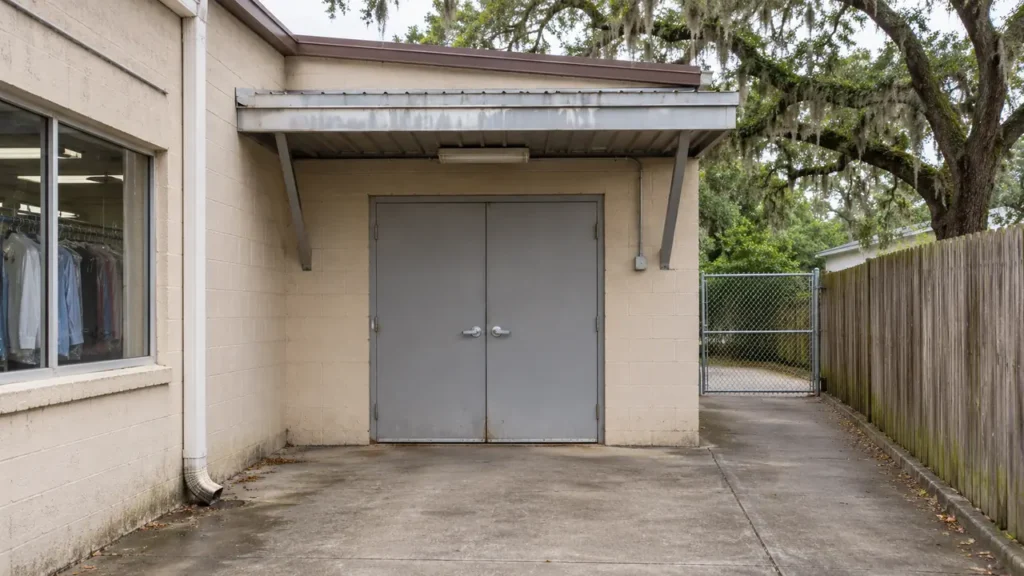
Give the service entrance its own clearance plan
Where garments arrive or leave through a rear door, photograph the outside landing and approach separately from the public frontage. Explain whether a vehicle stops there and when that movement can pause. The requested washing area should be clear of garments, packaging, portable rails and staff activity through arrangements made by the business. Handling those items is not an implied part of exterior surface washing.
Show vents, pipes, utility fixtures and equipment near the requested wall without asking for their internal cleaning or technical service. An exterior building request does not include solvent handling, spill remediation, ventilation maintenance or processing-equipment work. Unknown residue or a suspected leak should be disclosed for an appropriate separate review rather than treated as ordinary soil by assumption. If a suitable boundary cannot yet be established around a service-side condition, leave that area unresolved instead of including it automatically.
Coordinate the shop, landlord and neighboring entrances
The person booking a quote may operate the collection counter while a landlord manages the roof, canopy and common sidewalk. Identify those responsibilities early. A shop can request review of its frontage without presuming authority over a continuous roof or another tenant’s walkway. A wider photograph should show adjacent doors and the connection to the shared approach, especially if neighboring businesses open at different times.
Discuss the specific section that can be set aside, the contact who can confirm it is ready and the way a changed pickup schedule will be communicated. Visible drains, low areas and planting should appear in the scope photographs so site conditions can be reviewed. A nearby outlet does not establish an acceptable water-handling arrangement. The proposal should keep unresolved ownership, access and site questions visible, rather than promise the same setup for every garment-care storefront.
Build a repeatable exterior handover record
Start with the address, shop or unit reference, wide frontage images, close material views and a marked list of requested surfaces. Add the handover pattern, after-hours access information and service-side clearance arrangements. Identify the person who can authorize each area. Texting this building-focused information gives CoKo’s a practical starting point without sending garment tickets, customer names or confidential operational details.
Before work, use the agreed component list to confirm that the business has prepared the entrance and any included service approach. After the exterior washing portion, review the same boundaries and distinguish remaining wear, staining or repair needs from ordinary surface soil. Keep the list and dated photographs for a later request, updating them when the shop layout or materials change. This produces a useful property record instead of an undefined instruction to clean everything around the business.
If several collection shops share one manager, label each address independently and describe its own handover route rather than assuming identical frontage arrangements.
A practical start.
Three useful steps.
Show the surfaces
Send wide photos and close views. Label the buildings and the areas that matter now.
Set the boundaries
Explain materials, access, preparation and the work window your property can support.
Review the scope
Confirm included surfaces, responsibilities and the next step before scheduling.
Dry Cleaner Shop Exterior Washing.
Your questions, answered.
Your next exterior project.
Start with a clearer scope.
Text your address and the priority exterior photos. For a larger project, send the full property details.
Send your address. Show us what needs cleaning.
Text your address, a wide photo and a close-up of the buildup. We’ll review the surfaces and discuss your cleaning options.
Text photos for an estimate Start an online quoteCoKo’s Pressure Washing · (504) 296-9696