
Commercial exteriors · Greater New Orleans
Commercial service alley washing.
The lane. The doors. A workable service window.
Text both ends of the lane, rear doors and working window. Let’s plan a practical surface scope.
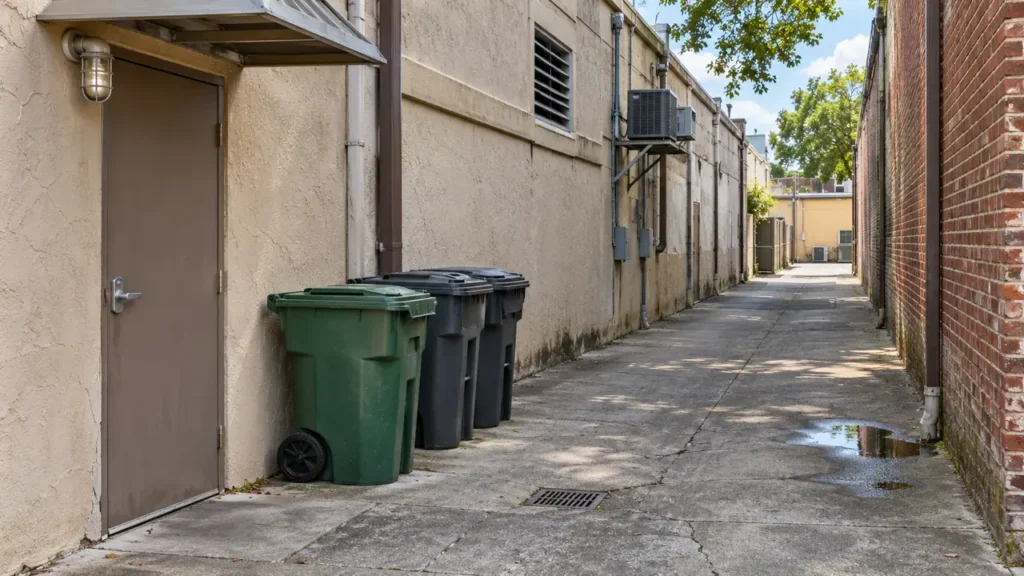
Your property. Your priorities. A clearly defined scope.
Establish the requested lane and the responsible contact
A commercial service alley can serve several rear doors, waste pickups and deliveries within a narrow strip of pavement. The surface may look like a small washing job, but the way the lane operates can determine whether the request is workable. Before asking for the whole alley to be cleaned, identify the section the property controls, the doors that depend on it and the buildup that actually needs attention.
CoKo’s reviews commercial service-alley washing in Greater New Orleans and the Westbank. Text an overview from each end and show the requested pavement between them. This scope concerns suitable accessible exterior surfaces. Waste hauling, drain clearing, hazardous-spill response and building repair are separate matters. A washing request should not be used to hide an unresolved access or contamination problem behind a general promise of a clean lane.
An alley can appear to be one continuous space while serving several properties. Mark the start and finish of the requested section on photographs and identify the person who can authorize that work. Describe whether the lane is behind one building, shared by several tenants or connected to a larger managed property. Do not assume that possession of a rear-door key establishes control over every adjoining surface.
Include turns, dead ends, gates and any boundary that a worker could otherwise miss. If the request involves a public or shared passage, the responsible property contact needs to resolve the appropriate approvals and operating arrangements before washing is agreed. CoKo’s does not determine ownership or grant access rights through a cleaning estimate. The scope needs a clear approved boundary and a contact who can answer questions about it.
Make a rear-door and delivery map
List the doors that open into the requested section and explain their normal use. One may serve a restaurant kitchen, another a storage room and a third a staff route. Name deliveries, waste collections and other activities that pass through the same space. An alley that looks empty in a photograph may have a busy schedule before opening or after customer hours.
Identify who will notify the affected businesses and who can hold or redirect activity during the agreed work window. Do not rely on a cleaner discovering the delivery schedule as vehicles arrive. A workable plan may need a closure, phased sections or a different date. Washing does not include a promise that unrestricted vehicle and pedestrian movement can continue immediately beside equipment and active surface work.
Tell us if upper-floor rooms, occupied balconies or openable windows face the lane. Rear service areas can sit directly below occupied space, and the property should coordinate the relevant notices and preparation. An alley should not be assumed unoccupied merely because there are no customer tables on its pavement.
Also identify gates that automatically lock and doors that staff need during the requested window. The approved contact should arrange entry and exit without leaving the crew dependent on an unavailable tenant. Washing does not authorize changing locks, disabling controls or blocking an unreviewed route. These operational details belong in the proposed work plan.
Identify pavement changes and fragile edges
Show the ground material throughout the requested lane. Concrete, asphalt, brick, pavers and patched areas may meet within a short distance. A concrete-colored repair does not establish that the entire lane is the same material. Include ordinary close photographs of coatings, joints and transitions where the condition is uncertain. The proposed approach should fit those surfaces rather than a single equipment setting applied from end to end.
Record damaged pavement, loose units, broken thresholds and open joints already visible. Cleaning cannot repair settlement or replace missing material. Tell us if another contractor is repairing a drain, threshold or slab so the sequence can be coordinated. The washing boundary may need to exclude an unstable area rather than treating its deterioration as a stain that can be removed. No construction or structural assessment is included in this exterior washing scope.
Describe ordinary buildup and flag anything different
Photograph the edge beside bins, the normal walking line and the vehicle approach separately. Leaves, deposited dust, tracked dirt and food-service residue can occur in different places for different reasons. Explain known sources and previous treatments. A specific description helps establish the requested work more clearly than asking for the alley to be sanitized or made like new.
If the property has an unknown substance, an active spill, sharp waste or another unusual condition, disclose it before seeking a cleaning date. This page does not promise hazardous-material cleanup, biological remediation or industrial decontamination. Deep stains and permanent surface changes may remain visible after ordinary buildup is addressed. Heated washing is not an automatic answer to every mark; its suitability, along with the rest of the proposed approach, must be reviewed for the actual material and surroundings.
Coordinate bins, parked items and wall-mounted equipment
Show waste containers, grease-service items, delivery carts and stored objects that restrict the lane. State which items the property or its regular service contractor will move and when the space will be available. Moving containers is not automatically included, and washing their contents or hauling accumulated waste is not part of a pavement-washing request.
The walls around the lane can carry outlets, meters, vents, cameras, pipes and air-conditioning components. Photograph their locations without opening covers or handling equipment. List known leaks or vulnerable openings. Those items are not all washable simply because the pavement beneath them is included. Electrical, mechanical and utility servicing remains separate. A practical preparation list should identify the surfaces to wash and the items that need protection or exclusion before equipment enters the passage.
Have the property photos?
Let’s define the next step.
Send the address, requested surfaces and the contact who can confirm access.
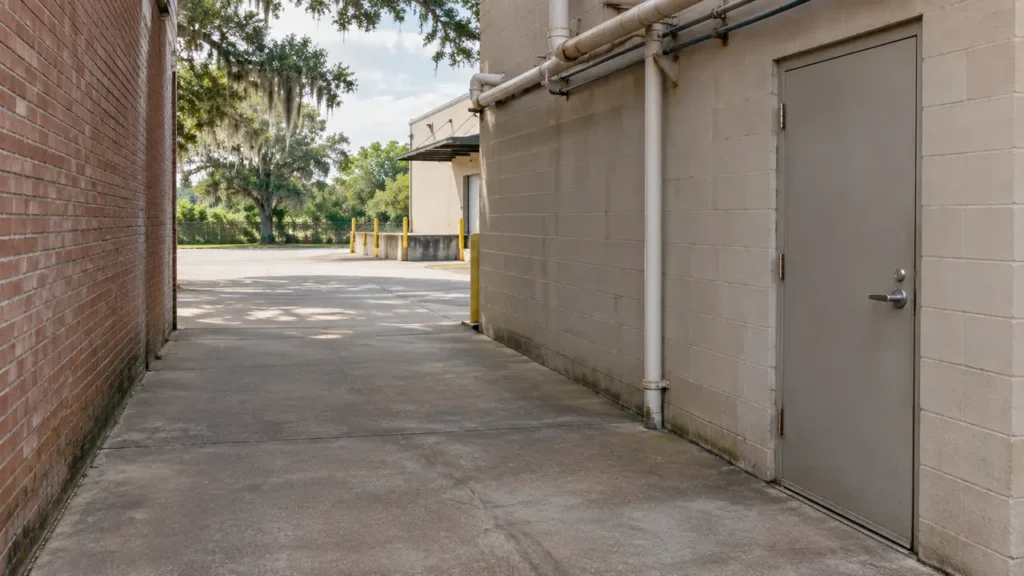
Work out the water route before treating the narrow lane
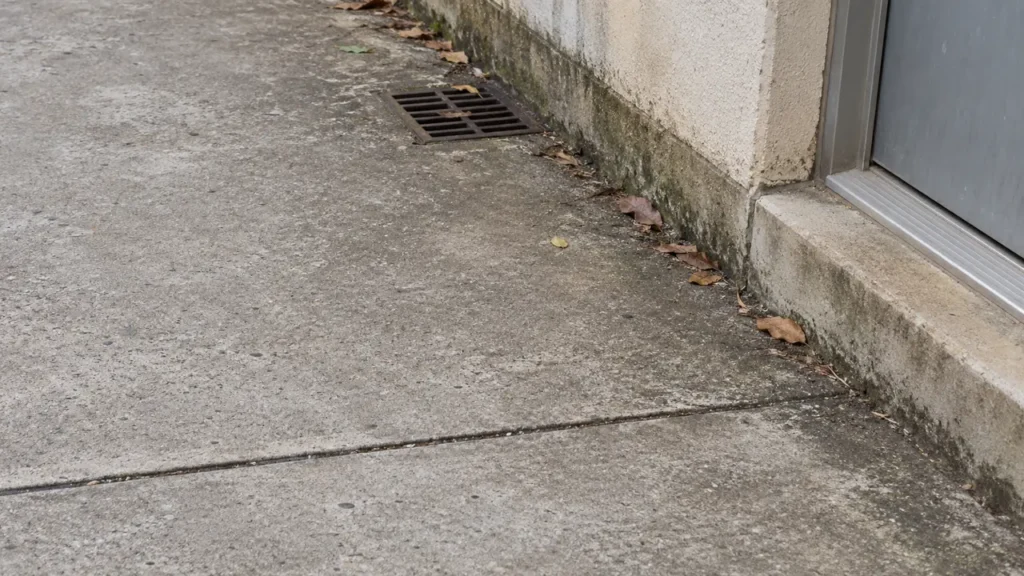
Photographs should show the low end, visible drain openings and every doorway near the pavement level. Explain where water normally stands after rain and whether the lane crosses another property boundary. A narrow channel can direct water toward a threshold that is not obvious in an attractive wide view. The working plan needs those details before washing begins.
The facility should identify the permitted water connection and the agreed arrangements for managing washing water. A grate is not a complete plan, and its presence does not imply permission to use it as an outlet. Drain clearing, sewer work and correcting existing flooding are not included. If the water route cannot be resolved for the proposed work, the washing scope needs revision or postponement. No discharge approval or flood-prevention promise is created by the estimate.
Include the approach from the street to the work area
A locked gate, narrow turn or occupied loading position can change how the crew reaches the lane. Send the equipment approach as part of the initial photo set. Identify steps, overhead obstructions and any section too narrow for the expected setup. CoKo’s can review access for the actual request; we do not promise that every confined or obstructed passage is suitable.
Describe where equipment can be positioned without blocking unrelated entrances or creating an unagreed restriction on another business. The responsible contact should arrange any required access controls before the visit. Tell us about lighting and security arrangements when requesting an early or late window, rather than assuming off-hour work solves every constraint. A realistic schedule considers arrival, preparation and departure as well as the time spent washing the pavement.
Make the estimate and final review follow the same boundary
A useful alley-washing proposal identifies the requested section, its surface materials, major buildup, agreed preparation and access assumptions. It should distinguish any included low wall or threshold area from pavement alone. Do not compare an estimate for one open concrete section with an undefined whole-alley request as though both cover the same work. A marked overview can keep that distinction visible.
Choose a facility contact for the completion walkthrough and retain the initial photographs of patches, old stains and known defects. The review concerns the accepted surface washing, not waste-service performance, drain function or property access rights. Keep separate repair concerns in the property’s maintenance record. Text CoKo’s the address, both ends of the requested lane and its door and delivery arrangements so the first discussion starts with a practical service-alley scope.
A practical start.
Three useful steps.
Show the surfaces
Send wide photos and close views. Label the buildings and the areas that matter now.
Set the boundaries
Explain materials, access, preparation and the work window your property can support.
Review the scope
Confirm included surfaces, responsibilities and the next step before scheduling.
Commercial Service Alley Washing.
Your questions, answered.
Your next exterior project.
Start with a clearer scope.
Text your address and the priority exterior photos. For a larger project, send the full property details.
Send your address. Show us what needs cleaning.
Text your address, a wide photo and a close-up of the buildup. We’ll review the surfaces and discuss your cleaning options.
Text photos for an estimate Start an online quoteCoKo’s Pressure Washing · (504) 296-9696