
Commercial exteriors · Greater New Orleans
Commercial Pergola Washing.
Review open frames, finishes and the space beneath.
Text clear property photographs, the requested surfaces and available access window. Let’s define the exterior washing scope.
Your property. Your priorities. A clearly defined scope.
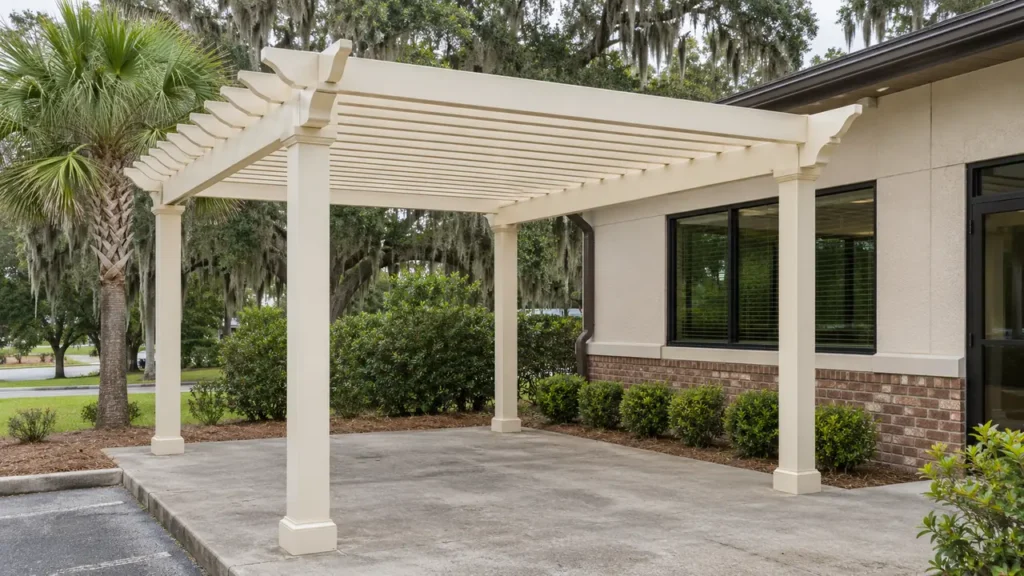
Decide whether the structure is an open pergola
A commercial pergola creates shade through a framework of posts, beams and overhead slats. That open construction makes its washing scope different from a solid-roof pavilion or a fabric awning. CoKo’s Pressure Washing reviews suitable exterior structures around Greater New Orleans and the Westbank. For a pergola, identify the installed material, the accessible faces and the business activity below it. This request concerns reviewed structural surfaces; it does not imply timber restoration, coating replacement, motor servicing or a universal treatment for every overhead system sold under the pergola name.
Begin with a full view that shows the overhead arrangement. Fixed open slats, a solid cover, fabric shade and moving louvers create different material and access questions. Describe what is actually installed rather than relying only on a product name. A photograph from the side can show whether there are clear panels, attachments or another covering above a framework that appears open when viewed from underneath.
List the posts, main beams, slats and any decorative lattice separately. If the concern is only the visible outer faces, say so. Do not assume a proposal includes concealed joints, the upper face of every beam or a roof added later. A freestanding courtyard pergola and one attached to a building can also have different boundaries. Identify the point where the structure meets the wall so the review can distinguish its components from a separate building-washing request.
Match the discussion to wood, vinyl or coated metal
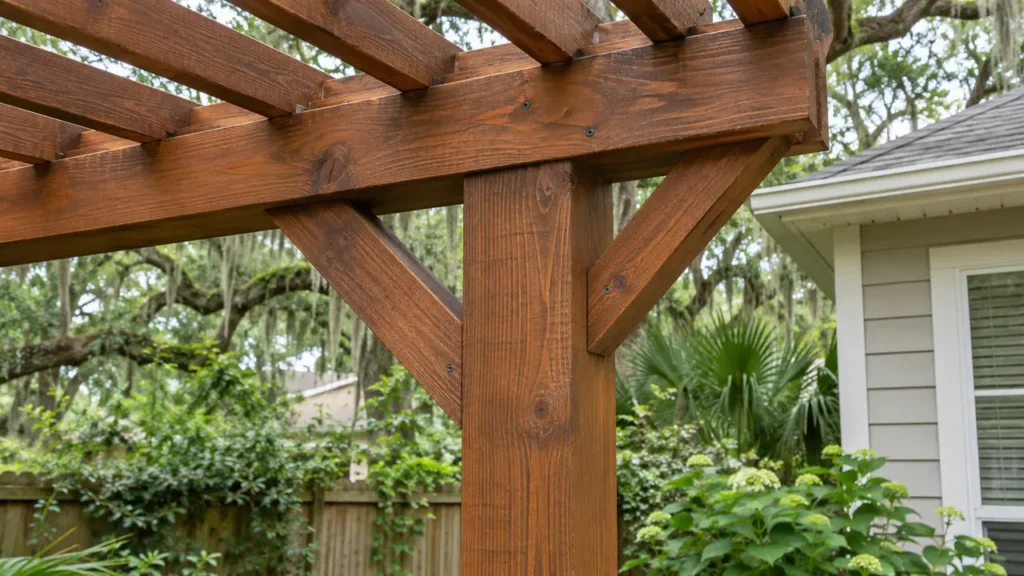
Send close views of the installed finish and any available product guidance. Stained wood, painted timber, vinyl and powder-coated metal should not be treated as interchangeable surfaces. The condition of a finish matters alongside its material. Describe peeling paint, exposed wood, chalking, cracks or repairs already planned. Washing may reveal existing finish differences; it does not apply a new stain, restore a coating or replace damaged structural parts.
If material information is uncertain, keep that question open rather than selecting a washing method from an overall photograph. A small exposed area and a sheltered beam joint may have aged differently. Point out the locations that prompted the request and distinguish general surface buildup from an issue needing another maintenance trade. CoKo’s can review the suitable washing portion without presenting pressure, heat or a particular cleaning product as the automatic answer for every pergola finish.
Identify vines, plants and attached shade accessories
A pergola may support planting or have vines woven through its lattice. Show these relationships clearly. The washing request should explain whether plant growth covers a requested face and who can arrange any necessary plant work. Pruning, removing vines or deciding how to handle a planted structure should not become an unspoken duty of the washing crew. Where surfaces are inaccessible, identify the limitation before including them in a proposal.
Lights, fans, speakers, heaters, fabric panels and decorative hangers also need to be visible in the photographs. Their attachment to a beam does not make them part of ordinary structure washing. The property should coordinate equipment preparation through the responsible provider. If an accessory cannot be removed or appropriately addressed, retain a clear boundary around it. This is especially useful where a business has added items over several seasons and the current arrangement differs from the original installation drawing.
Describe the use of the area beneath the frame
An office seating corner, restaurant courtyard and shared residential amenity can place different demands on the same kind of overhead structure. Explain how the area is used and when it can be set aside. People should not be expected to pass beneath active work simply because the pergola is outside. The property contact should identify a practical closure window and any alternative route the business can actually provide.
Portable tables, chairs, cushions, decorations and service items should have a property-managed clearance plan. Washing the pergola does not imply cleaning or moving every object underneath it. Where items are heavy, connected or controlled by another party, explain that restriction. A current photograph of the usual setup is more useful than an older image of an empty patio. The proposed scope can then distinguish the framework from the furniture and the ground area without assuming that all three form one inseparable service.
Keep the pavement and nearby building in separate lines
If the patio or walkway also needs washing, mark its boundary and identify its material. The surface beneath an open pergola may have a different finish from the path leading toward it. Concrete, pavers, coatings and timber decking should not be combined under one assumed treatment. A framework-only request can remain limited even when the photographs show a larger outdoor area.
Include nearby doors, windows, planting beds and existing drainage features in a few wider views. Their relationship to the pergola affects the site review, especially for an attached structure beside an occupied building. A visible drain does not establish an appropriate water-handling destination. Known leaks, ponding or a vulnerable doorway should be disclosed separately from surface soil. Washing cannot repair those conditions, and the proposal should not promise a uniform patio appearance or a correction to an existing drainage problem.
Have the property photos?
Let’s define the next step.
Send the address, requested surfaces and the contact who can confirm access.
Treat moving louvers and powered systems as a separate question
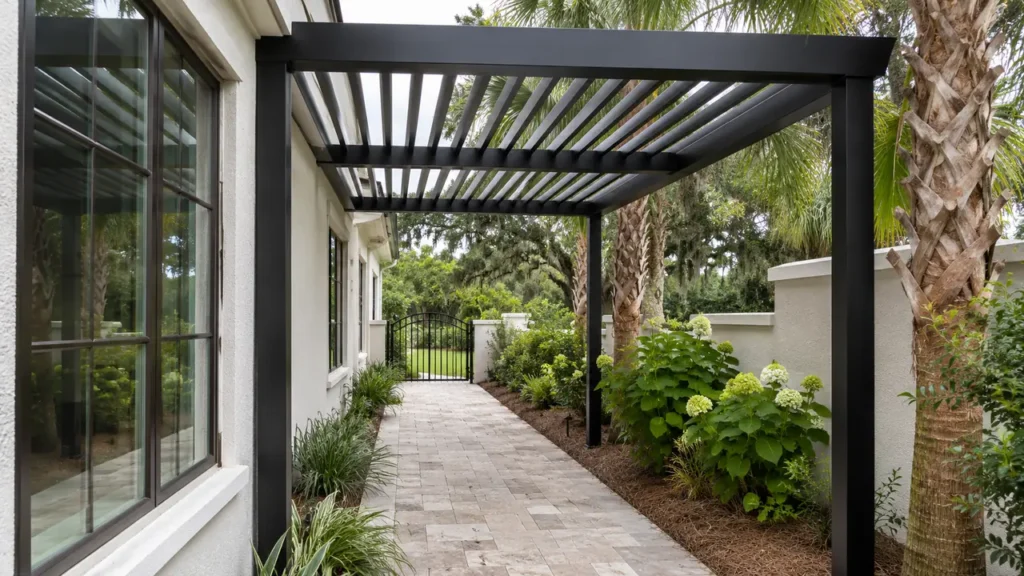
Some structures marketed as pergolas include moving roof parts, sensors, lighting circuits or drainage features integrated into their frame. Identify the manufacturer and current product instructions where available. Do not describe the structure as a simple fixed framework if it contains operating components. Washing suitability and any required preparation need review for the actual installation before a component can be included.
This page does not offer mechanism servicing, electrical work, drainage-system repair or a guarantee about a product warranty. The property should arrange technical decisions with the responsible manufacturer or service provider. Where those questions remain unresolved, a proposal can exclude the affected system rather than claim that every part can be washed in place. Separating this issue early helps avoid confusing an ordinary fixed-pergola exterior request with maintenance of a more complex adjustable shade installation.
Use component photographs to compare proposals
Label the photographs so the requested posts and beam runs can be recognized. Show material changes, attached accessories and the approach to each side. A broad square-foot estimate of the patio does not describe all the exposed faces of an open framework. Provide existing dimensions or drawings if available, but keep their purpose clear: they help identify the structure rather than establish a completed washing quantity by themselves.
Review proposals against the same component list. Check which accessible faces, upper portions and optional ground surfaces have actually been considered. Note exclusions involving planting, equipment, deteriorated finishes or unresolved access. Where several pergolas exist, give each one its own reference instead of assuming they share material and condition. This creates a useful comparison for the property manager without implying a fixed price, a universal maintenance interval or a promise that every inaccessible face belongs in the initial scope.
Prepare the request and record the agreed result
Text the location, an overall structure view, close material photographs and the component list. Explain current use, clearance responsibilities and the person authorized to arrange the work. For a group of structures or a longer site description, use the commercial project form. Keep the initial message focused on the physical property and the washing portion you want reviewed.
Before the agreed work, confirm that the area and requested faces are available under the preparation plan. At handover, compare the included components with the same list and distinguish remaining wear, staining or repair needs from ordinary surface buildup. Keep dated photographs for later requests, updating them when the finish or accessories change. This gives the next review an accurate starting point instead of relying on an instruction to repeat an earlier pergola cleaning under conditions that may no longer exist.
When photographing a framework, label the upper and lower faces you can see from the ground. That distinction is useful when an inaccessible top face differs from the visible beam sides.
A practical start.
Three useful steps.
Show the surfaces
Send wide photos and close views. Label the buildings and the areas that matter now.
Set the boundaries
Explain materials, access, preparation and the work window your property can support.
Review the scope
Confirm included surfaces, responsibilities and the next step before scheduling.
Commercial Pergola Washing.
Your questions, answered.
Your next exterior project.
Start with a clearer scope.
Text your address and the priority exterior photos. For a larger project, send the full property details.
Send your address. Show us what needs cleaning.
Text your address, a wide photo and a close-up of the buildup. We’ll review the surfaces and discuss your cleaning options.
Text photos for an estimate Start an online quoteCoKo’s Pressure Washing · (504) 296-9696

