
Commercial exteriors · Greater New Orleans
Commercial paver washing.
The units. The joints. A clearly marked paved area.
Text the paved area, joint close-ups and finish records. Let’s define the washing portion.
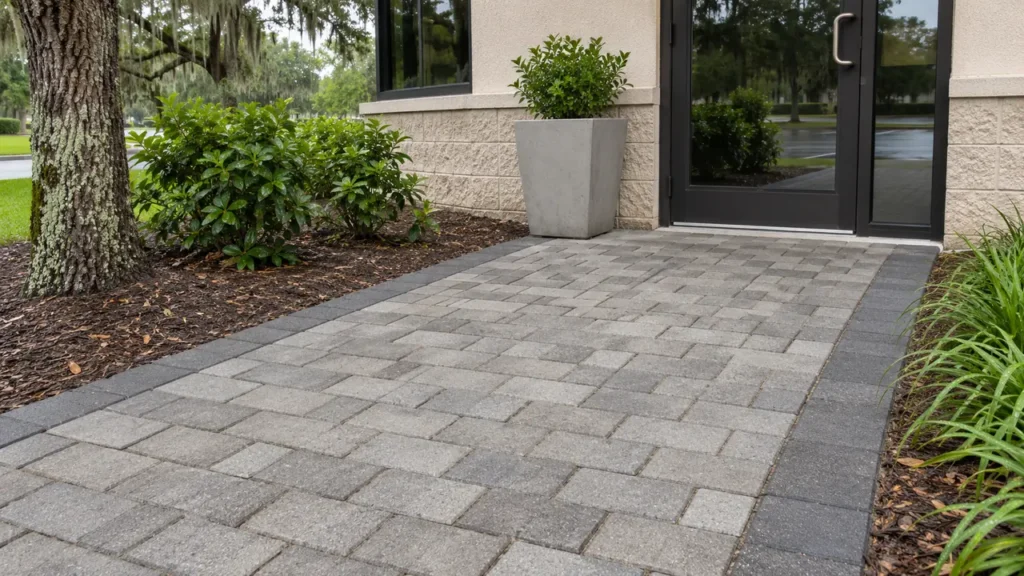
Your property. Your priorities. A clearly defined scope.
Identify the units and the way they are installed
A paver entrance is an assembly of individual units and joints, not one continuous concrete slab. A commercial courtyard can have a well-worn center, a settled edge beside a planter and replacement blocks that do not match the originals. Those differences matter when the property requests washing. The aim is to define removable buildup while keeping repair, joint work and any future sealing project clearly separate.
CoKo’s reviews commercial paver-washing requests in Greater New Orleans and the Westbank. Send photographs of the full paved area, the joints and the specific areas that look dirty. Include what is known about the paver material and any previous sealer. A request can cover an entrance, courtyard, pedestrian path or another suitable commercial paved area without automatically including every surrounding outdoor surface.
The word paver may describe concrete blocks, clay brick, stone pieces or other manufactured products. A distant photograph can hide those differences. Provide the product name or installer’s records where available, and include a close view of the unit face and its edge. A brick appearance does not establish that the surface is clay, and a stone pattern does not necessarily mean individual stones were installed.
Also explain whether the units have visible sand-filled joints, mortar joints or another joint system. If the installation has special drainage or care requirements, those should accompany the request. We are reviewing the existing paving for washing, not diagnosing its construction from a picture. When the material or assembly remains uncertain, the scope needs that uncertainty resolved before a suitable treatment is accepted.
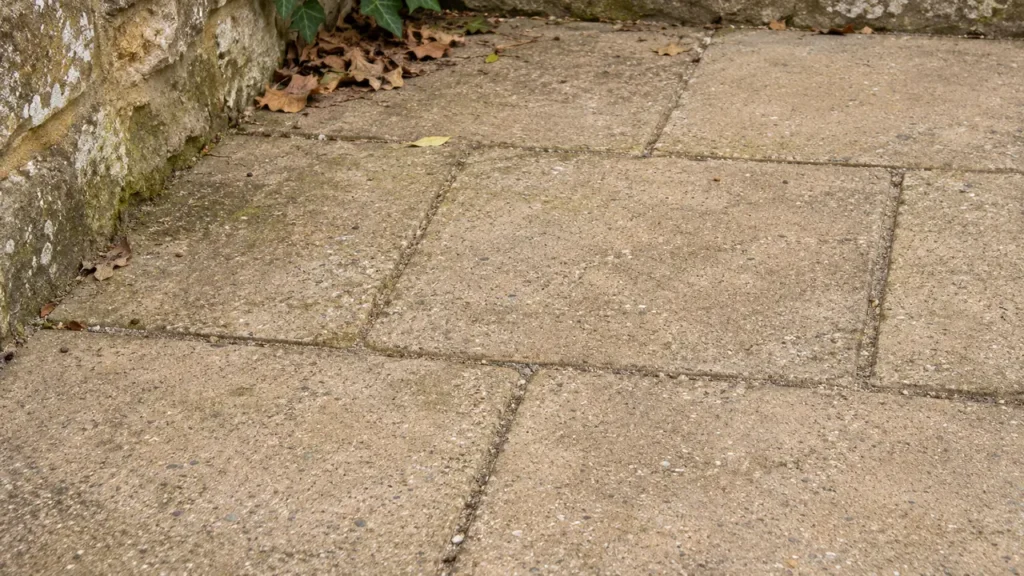
Treat the joints as part of the condition record
Photograph the joints where they appear full and where gaps are visible. Note missing joint material, plants between units, loose-looking blocks or a border that has moved. Those observations help distinguish surface buildup from work the paving contractor may need to perform. Do not dig into a joint or lift a block to obtain estimate information.
Belgard’s maintenance guidance cautions that forceful washing can damage a paver’s face. That is a reason to review the actual product and its condition rather than assuming the hardest wash is the best one. Joint replacement, re-sanding, weed treatment and resetting units are not automatically part of this washing scope. If repairs are required to make the paving stable, discuss that separately before requesting a cleaned appearance as the only outcome.
Tell us if the property describes the paving as a permeable system. Its particular maintenance requirements should come from the installation records or responsible paving contractor. Do not assume that washing its visible faces also restores drainage performance or provides joint-system maintenance. Those are different outcomes and should not be implied by an appearance-cleaning estimate.
Include unusual replacement units and sections installed after utility work. A repaired trench may use different blocks or joint material from the original courtyard. Label that strip on the same overview rather than allowing it to disappear into a combined area total. That record helps preserve a realistic expectation where the paving already has different ages, materials or repair histories.
Draw the boundary around the paving pattern
Pavers often run through several uses on the same property. The entrance may have a decorative border while the courtyard has a different layout, and the vehicle crossing may use another unit size. Mark each requested zone on a photograph or simple site sketch. A pattern change can make a useful estimating boundary, but it does not automatically mean the material has changed.
Show steps, gate thresholds, tree surrounds and any smooth concrete bands between the units. Say whether these are included or simply visible beside the requested pavers. For a shared commercial entrance, identify who can approve the complete paved area rather than assuming one tenant controls everything outside its door. The zone list should be specific enough that someone can find the same limits during the final review.
Separate dirty faces from worn faces and mismatched replacements
Take close views of the marks that prompted the inquiry. Light deposits on the paver faces, dark buildup at a shaded edge and an old stain beneath a table can require different assessment. Tell us about a known spill or previous cleaning attempt. The source and location of a mark are more useful than a blanket request to make every block identical.
Worn faces, chips, color variation and replacement units can remain visible after washing. A newer block may look different because it is newer, not because the original neighboring blocks need stronger treatment. Cleaning does not correct settlement, rebuild an edge restraint or restore missing material. If a white deposit, rust mark or other specific stain needs separate attention, identify it before approval; a standard paver-washing request is not a promise to remove every mineral or chemical mark.
Bring sealer information into the initial discussion
A sealer may change how the paving looks and how it should be maintained. Ask for the product name, date and contractor information if the property has those records. Explain whether the surface has been recoated repeatedly or whether different sections received different treatments. Gloss alone is not enough to identify what is on the pavers.
A cloudy or peeling-looking area may involve an existing finish problem. We do not promise that washing will strip a failed coating, renew a glossy appearance or prepare the surface for an unspecified replacement product. Cleaning, stripping and sealing are separate operations. If another contractor is planning to seal or repair the paving, provide that contractor’s preparation requirements and coordinate the sequence. The washing estimate should describe only the work that has actually been reviewed.
Have the property photos?
Let’s define the next step.
Send the address, requested surfaces and the contact who can confirm access.
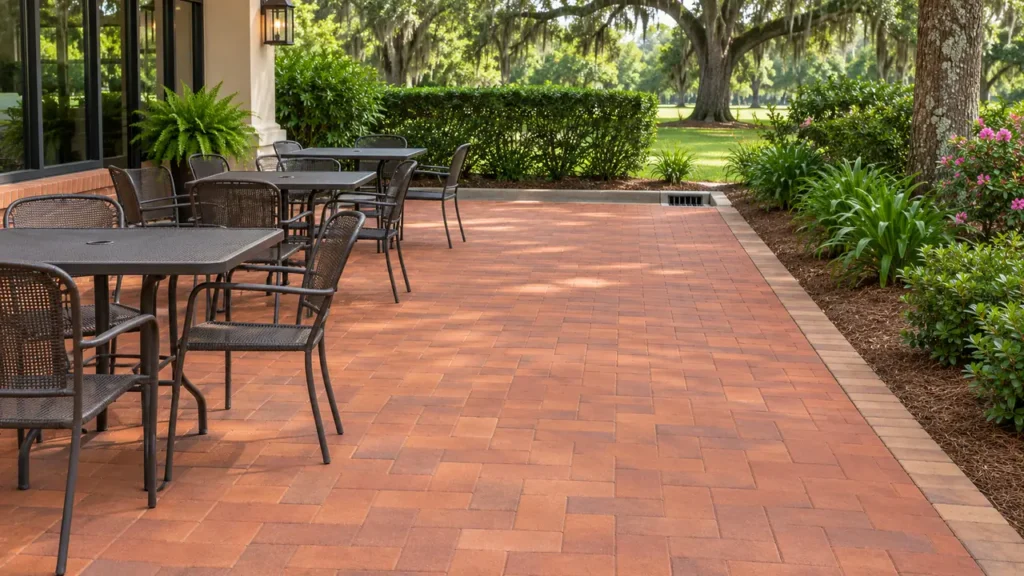
Work around furniture, loading and the usable walking route
A restaurant patio may contain heavy tables and planters while a retail forecourt may need to receive carts and deliveries. Include those uses when explaining the paved area. Decide which movable items the property will relocate, where they can be held and who will place them back afterward. Washing the open space between items is not the same scope as washing the complete pattern beneath them.
For an occupied property, identify the doors and gates that depend on the requested zone. A remaining strip beside active washing may not be a workable route for ordinary customers or delivery staff. The responsible manager needs to arrange a suitable closure or phased plan. If several businesses share the paving, coordinate their schedules before a date is approved. Access conditions should be settled in writing rather than left for the crew to negotiate on arrival.
Show the paved edge and its water-management constraints
Include the low edge, nearby drains and planted areas in the photo set. Pavers can meet an entrance threshold, public sidewalk, landscaped bed or another owner’s property. The requested work needs a practical water route that respects those boundaries. The presence of joints or a nearby grate does not establish permission to send wash water into them.
The property should identify the permitted water connection and any site-specific restrictions. Disclose places where water already ponds or where the edge has sunk. Washing cannot regrade a walkway or restore a drainage system. If the assembly has special maintenance requirements, pass those on before a method is chosen. A workable surface-cleaning plan should account for the surroundings without turning into an unreviewed drainage or construction project.
Compare the accepted zones and retain a useful handover record
A clear paver estimate should name the included zones, unit and finish assumptions, preparation responsibilities and exclusions. It should state whether any connecting steps or smooth bands are included. Compare those details before comparing totals, especially where one proposal assumes open access and another has to work around several occupied entrances.
At the walkthrough, use the initial photographs to locate old repairs, missing joint material and known replacement units. A cleaned surface should not be represented as newly installed paving, and no slip-rating or structural certification is implied. Keep the record with the product and sealer information so a later request can reflect actual changes. Text CoKo’s the address, complete area views and joint close-ups to start a practical commercial paver-washing review.
A practical start.
Three useful steps.
Show the surfaces
Send wide photos and close views. Label the buildings and the areas that matter now.
Set the boundaries
Explain materials, access, preparation and the work window your property can support.
Review the scope
Confirm included surfaces, responsibilities and the next step before scheduling.
Commercial Paver Washing.
Your questions, answered.
Your next exterior project.
Start with a clearer scope.
Text your address and the priority exterior photos. For a larger project, send the full property details.
Send your address. Show us what needs cleaning.
Text your address, a wide photo and a close-up of the buildup. We’ll review the surfaces and discuss your cleaning options.
Text photos for an estimate Start an online quoteCoKo’s Pressure Washing · (504) 296-9696