
Commercial exteriors · Greater New Orleans
Commercial Decorative Shutter Washing.
Identify fixed panels, finishes and reachable faces.
Text clear property photographs, the requested surfaces and available access window. Let’s define the exterior washing scope.
Your property. Your priorities. A clearly defined scope.
Establish which panels are decorative and fixed
Fixed decorative shutters are individual exterior components, not just an interchangeable part of the wall behind them. Their faces, slats, edges and finishes can make a washing request different from general facade care. CoKo’s reviews suitable decorative-shutter surfaces on commercial properties around Greater New Orleans and the Westbank. This page concerns exterior panels identified as decorative and fixed in place; security shutters, powered closures and storm-protection systems require a separate suitability discussion and are not implied services.
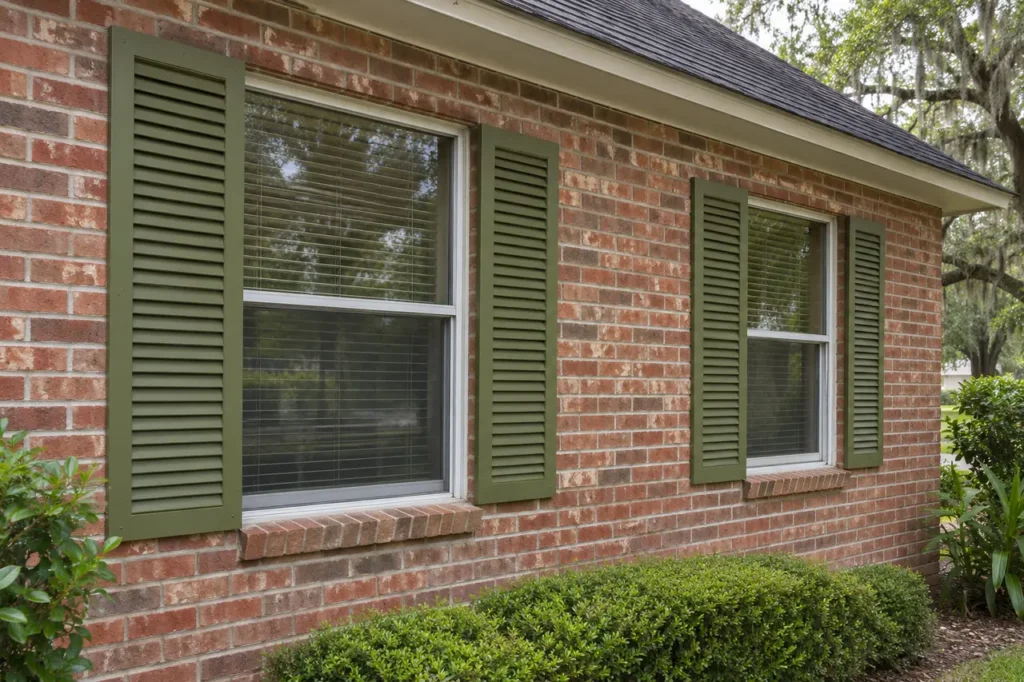
Send a wide photograph showing the shutters in relation to the building’s windows and wall. Explain what you know about their purpose and attachment. A louvered decorative panel beside a window can look quite different from a functioning window closure, but a photograph alone does not establish how it is mounted or whether it moves. Describe the installation without asking someone to open, remove or operate it merely for the estimate.
Identify the panels you want considered rather than requesting every shutter on a property by assumption. If several elevations have different styles or replacements, note those differences. Fixed decorative panels should be kept distinct from roll-down shutters, serving-window closures, tracks and powered security equipment. CoKo’s can review a clear component-level exterior request without accepting responsibility for operating or servicing a protective system. If the actual function is unknown, leave that question unresolved in the inquiry instead of labeling every outside panel as decorative.
Count locations and group genuinely matching panels
Mark the requested windows or panel positions on an existing building photograph. A simple reference for each elevation is often more helpful than a total panel count by itself. Two panels beside a front window may have very different access from a row above an entrance canopy. Include views showing the relative height and what stands below the requested area. Do not climb a ladder to obtain close estimate photographs.
Group panels only when their material, condition and position are actually comparable. A replacement on one side may have a different finish or fastening arrangement from older panels on the front. If you are unsure of the count, provide the available views and state that the quantities need confirmation. A component list should be something both parties can recognize when reviewing a proposed scope. It should not conceal different elevations, obstructed panels or additional work behind one convenient building-wide number.
Document painted wood without assuming sound finish
For wood panels, show the face, slats and any visible edge deterioration. Describe previous painting or repairs if the property has that information. A darkened recess, flaking coating and exposed damaged wood are different conditions to review, even when they appear beside one another. Give the wider location view as well as the close condition photo so a particular concern can be matched to the correct panel.
Washing is not wood repair, paint stripping or repainting. A request should not promise that weathered panels will return to a uniform color or that loose coatings will become sound. If a later painting project is planned, identify it separately and ask what preparation sequence needs discussion with the responsible trade. Do not arrange subsequent finish work on the assumption that routine washing will satisfy its requirements. Unknown paint history and visibly weakened material should remain explicit review items before a method or result is agreed.
Review metal faces and attachments as different parts
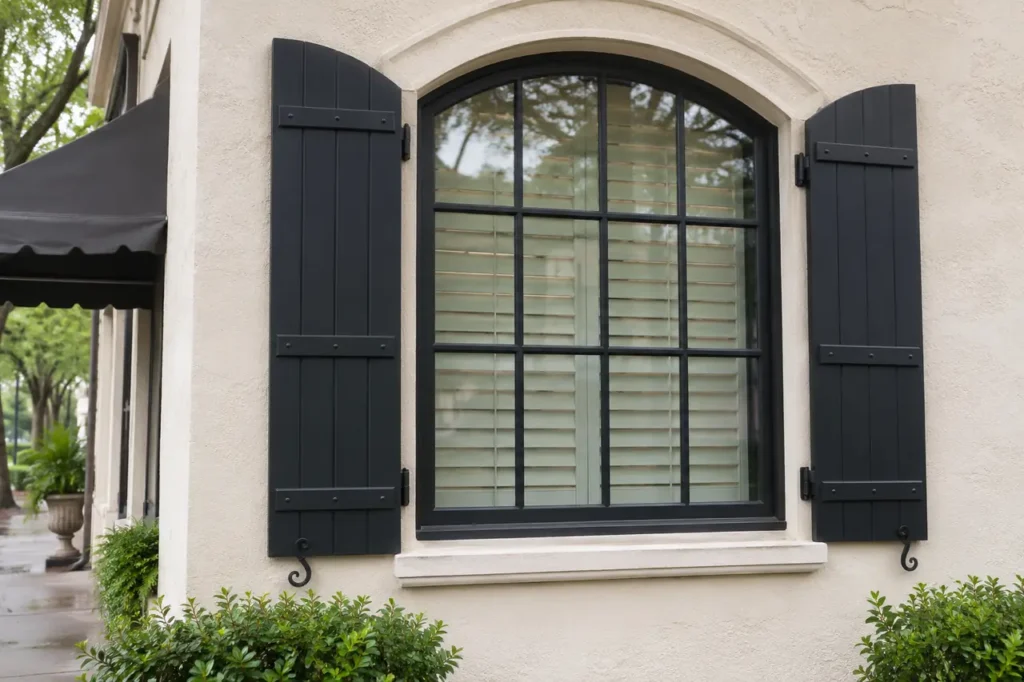
A decorative metal shutter can have a coated outer face, recessed detail and visible mounting hardware. Photograph those features without assuming that all of them need the same treatment. Note apparent corrosion, loose finish or repairs. The fact that a panel is metal does not establish that its coating is robust, that every fastener is sound or that the adjacent painted wall can be approached in the same way.
A surface-washing proposal does not include corrosion removal, straightening, re-coating or replacing mounting hardware. Identify a loose or damaged attachment as a maintenance issue instead of assuming it can be corrected during cleaning. If a panel has moving parts despite appearing decorative, say so before a scope is defined. The distinction matters because cleaning a visible fixed face is not an agreement to test or maintain a mechanical assembly. Keep those questions with the property representative and the provider responsible for the installation.
State whether the adjacent wall and window are included
Describe where the shutter request stops. It may concern the panels alone, the surrounding wall face or a larger elevation; those are different scopes. Provide enough of the window and wall in the overview to show their relationship, then identify which surfaces you actually want reviewed. Washing decorative panels is not automatically a glass-detailing service, a window-seal repair or a full building-facade wash.
Tell CoKo’s about known window leaks, cracked surrounding finish or previous water entry. Existing weaknesses can affect what needs further review before cleaning is arranged. Do not assume every narrow gap behind a fixed panel can be accessed, or that washing includes detaching the panel to reach a concealed surface. Where access is limited, ask the proposed scope to state that limitation. A defined visible-face request is more useful than expecting an exterior wash to reach places that the installation physically conceals.
Have the property photos?
Let’s define the next step.
Send the address, requested surfaces and the contact who can confirm access.
Identify vinyl and composite panels from available information
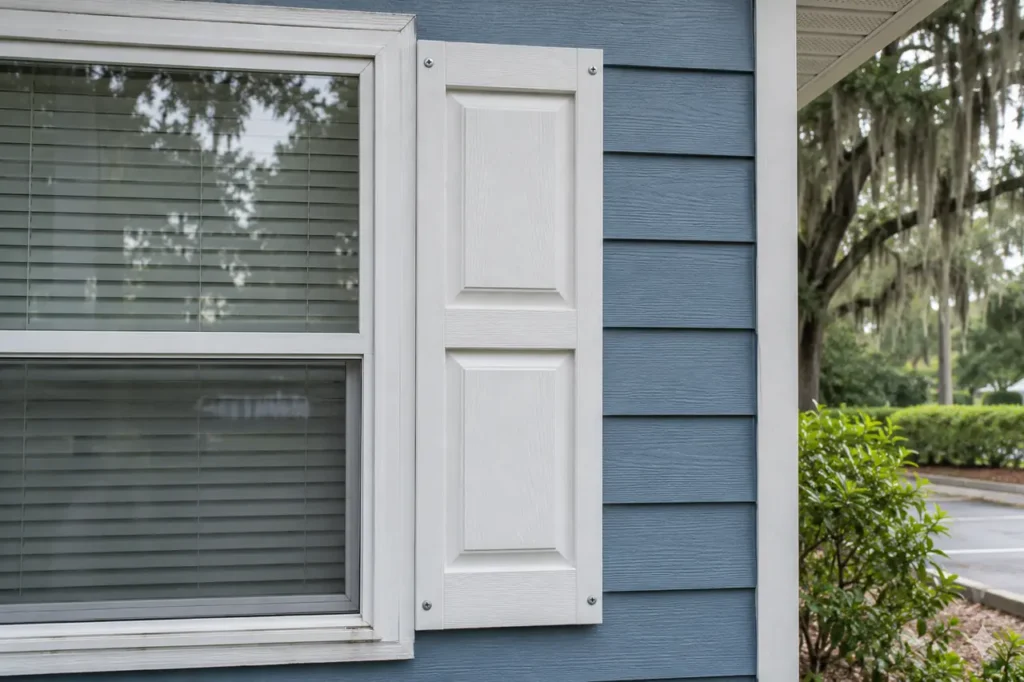
A decorative panel that resembles painted wood may instead be vinyl or another manufactured material. Provide product information if the owner already has it, or explain that the material is uncertain. Close photographs of the face and visible edges can help frame the discussion without requiring the panel to be detached. A product name or maintenance document is more useful than assuming that similar-looking panels share the same limits.
Show fading, surface chalking, deformation or a damaged fixing where those conditions are visible. Ordinary washing should not be described as restoring lost color, correcting a distorted shape or making a damaged panel sound. Identify whether replacement is already being considered so that a cleaning inquiry is not confused with a repair decision. CoKo’s can review the exterior surface that is actually present, but a proposal should leave unresolved product or installation questions visible until the relevant information has been supplied and considered.
Explain access below the panels on an occupied property
Photograph the area below the requested elevation. Include an entrance, customer path, landscaping, parked vehicles or other obstruction where it affects the approach. The panel itself may be easy to see while the route needed to reach the work area remains unclear. Tell CoKo’s which door or walkway the property must keep available and which items the operator can arrange to relocate before an agreed visit.
For multiple tenant fronts, name the contact coordinating access to the outside areas. A tenant’s interest in one window does not automatically authorize work across every storefront. If some panels sit over a canopy or another structure, describe that position explicitly rather than treating them like ground-level components. The proposal can then be reviewed around the available approach. Do not assume that a particular height or position is workable from the photographs alone, or that exterior cleaning includes changing building access arrangements on the property’s behalf.
Compare component-level proposals with realistic limits
A clear decorative-shutter request lists the panel locations, known materials and visible condition, together with the surrounding surfaces you want included. Ask the written scope to distinguish accessible faces from concealed areas and to identify preparation still needed from the property. A proposal for a few front panels should not be compared with one covering several elevations and adjoining wall work as if they describe the same project.
Begin by texting the address, building views and specific panel concerns to CoKo’s, or use the commercial project form for a larger grouped request. There is no need to choose pressure, temperature or a cleaning product before the material has been reviewed. The first objective is to establish what the panels are, what needs attention and what access the property can provide. Keep painting, hardware repair, protective-shutter operation and window restoration outside an ordinary fixed decorative-panel washing discussion unless a separate appropriate scope is explicitly established.
A practical start.
Three useful steps.
Show the surfaces
Send wide photos and close views. Label the buildings and the areas that matter now.
Set the boundaries
Explain materials, access, preparation and the work window your property can support.
Review the scope
Confirm included surfaces, responsibilities and the next step before scheduling.
Commercial Decorative Shutter Washing.
Your questions, answered.
Your next exterior project.
Start with a clearer scope.
Text your address and the priority exterior photos. For a larger project, send the full property details.
Send your address. Show us what needs cleaning.
Text your address, a wide photo and a close-up of the buildup. We’ll review the surfaces and discuss your cleaning options.
Text photos for an estimate Start an online quoteCoKo’s Pressure Washing · (504) 296-9696

