
Commercial exteriors · Greater New Orleans
Concrete-block wall washing.
The units. The joints. The existing finish.
Text the block faces, mortar joints and marked wall photos. Let’s review the actual elevation.
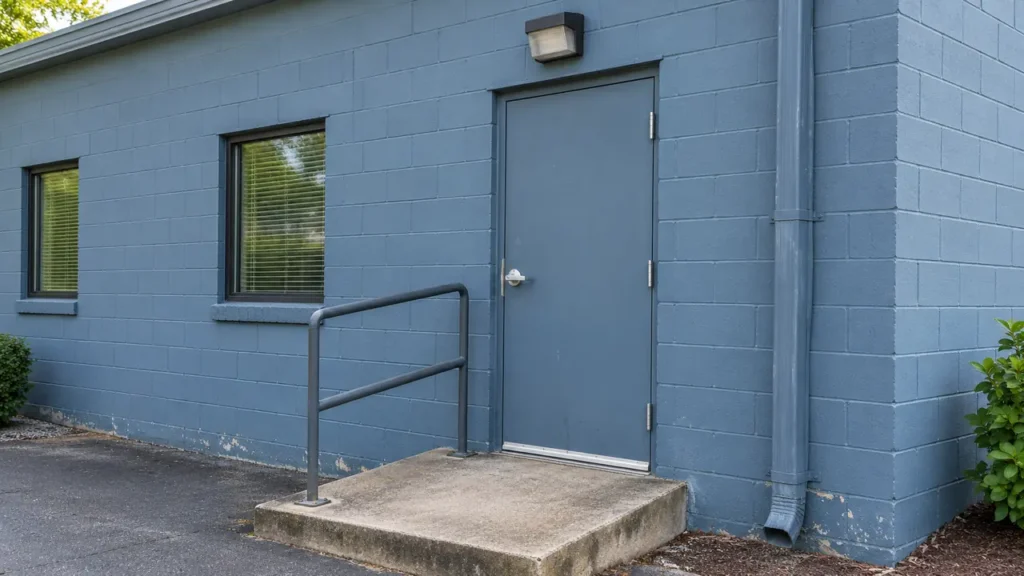
Your property. Your priorities. A clearly defined scope.
Describe the block units and the wall you want washed
CoKo’s reviews commercial concrete-block wall washing in Greater New Orleans and the Westbank. A wall made from individual masonry units needs a different scope from a poured slab or a rendered facade. The unit faces, mortar joints, existing coatings and attached components all belong in the initial photographs.
Text the building address, the wall sections you want considered and any product or maintenance records available. This application concerns washing suitable exterior block surfaces. It does not include masonry repairs, repointing, waterproofing, paint stripping or a promise that an unidentified stain will disappear. The purpose is to define the actual wall before agreeing to treatment.
Begin with a wide photograph showing the requested elevation from end to end. Include corners, door openings and the ground below the wall. Mark whether the request concerns one service-side elevation, a public entrance wall or several sections around a larger building. A close photograph alone cannot explain the working area.
Then show representative block faces and joints. Concrete masonry can have different colors, surface textures and existing finishes; records are more useful than guessing a product from its appearance. Tell CoKo’s whether the units are exposed, painted or covered by another treatment, and identify any portions where the material remains uncertain.
Distinguish the block wall from a concrete pavement apron, brick accent band or stucco addition beside it. Those surfaces may share a color without sharing the same cleaning requirements. A material map lets the proposed washing area stay precise instead of converting one request into permission to treat every adjoining exterior surface.
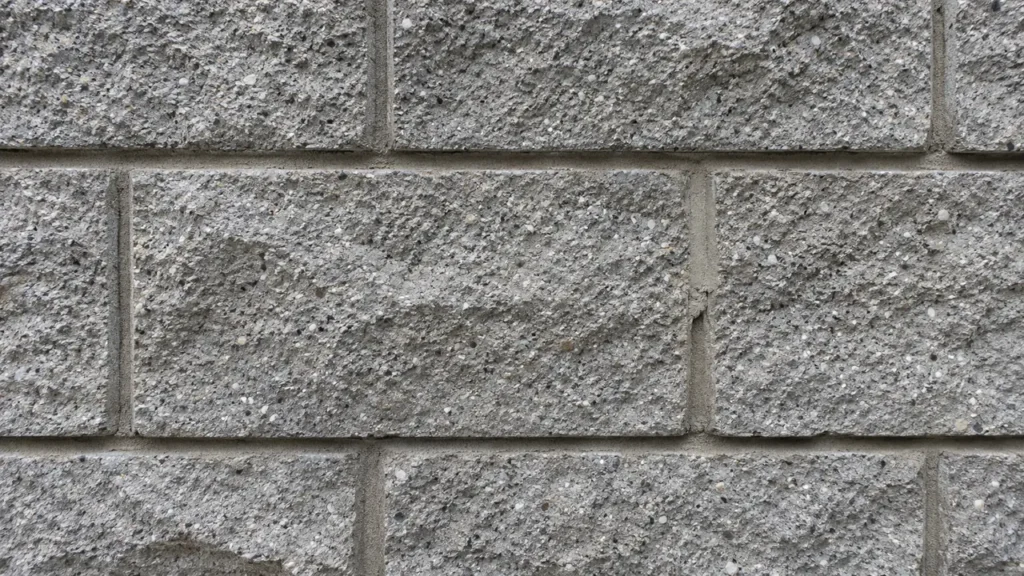
Look at the face texture and the recesses together
A rough or deeply textured unit can hold visible buildup in recesses while its exposed high points look lighter. A smooth unit presents a different visual pattern. Photograph the same area from a normal viewing position and at closer range so the discussion is based on the actual surface rather than an isolated dark spot.
The Concrete Masonry & Hardscapes Association’s cleaning guidance emphasizes that the units and mortar affect cleaning and that adjacent materials need protection. That is a reason to review the particular wall, its condition and a proposed method together. It is not a universal permission to apply high pressure to anything described as block.
Provide the unit manufacturer’s care requirements when known, along with instructions for any later coating. A reviewed test area can help establish reasonable appearance expectations before a larger section is accepted. The owner should identify who can authorize that test and the location that can be used without disrupting the property.
Keep mortar condition separate from removable soil
Show the horizontal and vertical joints clearly. Missing material, loose-looking edges, earlier repointing and open gaps should be identified before work is scheduled. Record these conditions from a safe position; nobody needs to scrape a joint or climb a wall to begin a washing inquiry.
A joint repaired at another time may remain a different shade after the surrounding surface is cleaned. That does not automatically mean the darker or lighter area needs stronger treatment. Explain which repairs are known and provide the repair contractor’s restrictions if there are any.
Washing is not a way to replace missing mortar, stabilize units or assess the wall’s structural condition. A deteriorated section may need exclusion or review by a qualified masonry provider. The proposal should preserve that boundary rather than combining a surface appearance request with an unsupported promise to repair the assembly while cleaning it.
Record coatings and replacement units before choosing a finish goal
Commercial block walls are sometimes painted repeatedly or repaired with replacement units. Photograph changes in sheen, peeling areas, patch edges and units that differ from the surrounding field. Include the approximate coating date or product name if reliable records exist; label uncertain information rather than inventing it.
A wall that looks uniformly gray at a distance may contain bare block, painted patches and several repair generations. The desired result needs to account for those differences. Removing loose surface soil does not create one new color across unlike materials or make a repaired unit disappear into an older wall.
If recoating is planned, share the coating provider’s preparation specification before washing is agreed. Paint removal, abrasive preparation and new coating application are separate tasks. CoKo’s should not be assumed responsible for the adhesion or appearance of a later finish simply because exterior washing happens earlier in the project.
Show the deposit pattern without diagnosing the wall
Describe the concern in its location: pale powder near a joint, a dark band beneath a pipe, green discoloration in shade or a concentrated mark below attached metal. Take a wider photograph that shows what is above and beside the deposit. Its pattern can matter more to the review than a close-up of the darkest point.
Do not assume that white residue, rust-colored streaks and ordinary dirt are interchangeable. Specialty stain treatment needs separate consideration against the actual material and finish. Washing also does not correct the source of a recurring leak or confirm that an exterior wall is watertight.
Explain whether a mark appeared after a repair, returns after rain or remained following an earlier cleaning attempt. Keep photographs of those changes with the request. The proposed appearance goal should distinguish removable buildup from permanent color differences, material weathering and conditions that may need another provider’s investigation.
Have the property photos?
Let’s define the next step.
Send the address, requested surfaces and the contact who can confirm access.
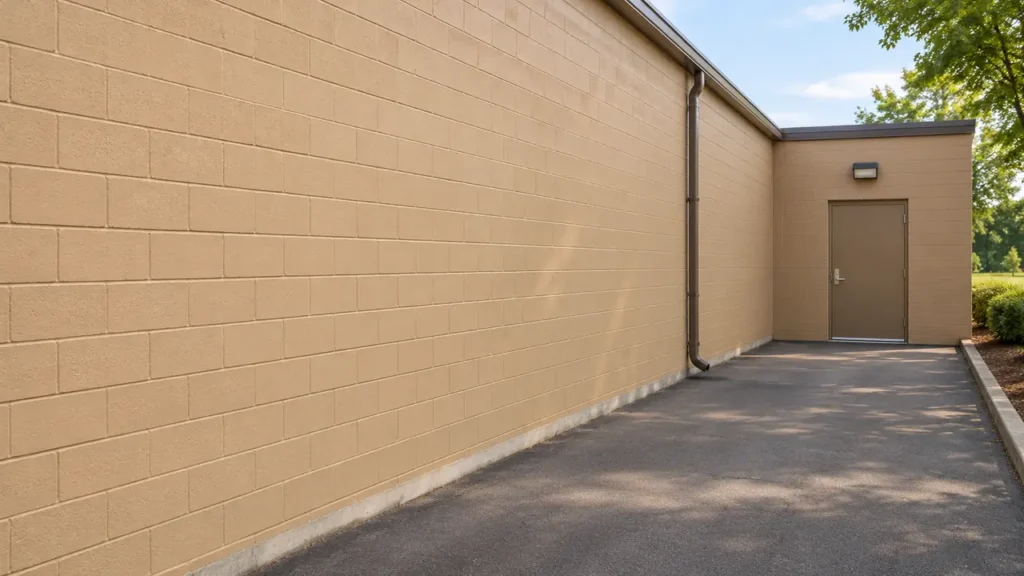
Include openings, caps and attached service components
Concrete-block elevations often support service doors, light fixtures, conduits and signs. Show the components that interrupt the requested wall sections, including known leaking openings or damaged sealant. Washing the exposed units does not automatically include servicing the equipment attached to them.
Photograph the wall’s upper edge from the ground where it is visible. A cap, ledge or adjoining roof can affect what can be reached and where the requested surface ends. Do not remove caps or open utility covers for an estimate. Any repair or equipment restriction should come from the responsible owner or provider.
Indicate whether the request includes the exterior door face, a different trim material or only the masonry field. Those decisions should be stated in the proposal. A clear boundary is particularly useful at delivery entrances where several trades have installed components and the property needs to keep a working door or utility connection available.
Plan access along the base of the wall
A warehouse service elevation may have pallet storage, parked vehicles or movable equipment close to the block. An office frontage may instead have planting and a continuous customer path. Show the actual ground area so the working approach can be reviewed alongside the wall materials.
Identify who can move stored items and authorize a temporary work boundary. The washing proposal should not assume permission to handle another tenant’s inventory, operate equipment or close a shared passage. Tell CoKo’s about delivery times and doors that the property must use during the proposed visit.
Provide reliable height information if available and ground photographs showing canopies, setbacks and overhead obstructions. Wall area alone does not establish a suitable reach method. Nobody needs to climb for the initial request; any specialized setup requirement belongs in the access discussion before the scope and timing are accepted.
Put the wall map and site arrangements into the request
Include the address, marked elevations, close views of units and joints, coating records, known defects and the authorized contact. Show water access, visible drains, low spots and neighboring finishes at the wall base. The property should identify applicable restrictions and appropriate wash-water arrangements for the actual site.
An existing drain or open paved area does not settle that discussion by itself. Drain clearing, leak repair and specialized disposal are not presumed included. If unresolved water-management or access questions affect the requested elevation, address them before agreeing to service rather than leaving them hidden under a broad building-wash description.
Review the written proposal for the exact wall sections, exclusions, preparation responsibilities and realistic appearance limits. Keep the accepted map and useful reference photographs for future maintenance. Later requests can then respond to changes in those same block sections without assuming a universal repeat interval or a guarantee that deposits will never return.
A practical start.
Three useful steps.
Show the surfaces
Send wide photos and close views. Label the buildings and the areas that matter now.
Set the boundaries
Explain materials, access, preparation and the work window your property can support.
Review the scope
Confirm included surfaces, responsibilities and the next step before scheduling.
Commercial Concrete-Block Wall Washing.
Your questions, answered.
Your next exterior project.
Start with a clearer scope.
Text your address and the priority exterior photos. For a larger project, send the full property details.
Send your address. Show us what needs cleaning.
Text your address, a wide photo and a close-up of the buildup. We’ll review the surfaces and discuss your cleaning options.
Text photos for an estimate Start an online quoteCoKo’s Pressure Washing · (504) 296-9696

