
Commercial exteriors · Greater New Orleans
Aquatic Center Building Exterior Washing.
Define the outside surfaces separately from pool operation.
Text clear property photographs, the requested surfaces and available access window. Let’s define the exterior washing scope.
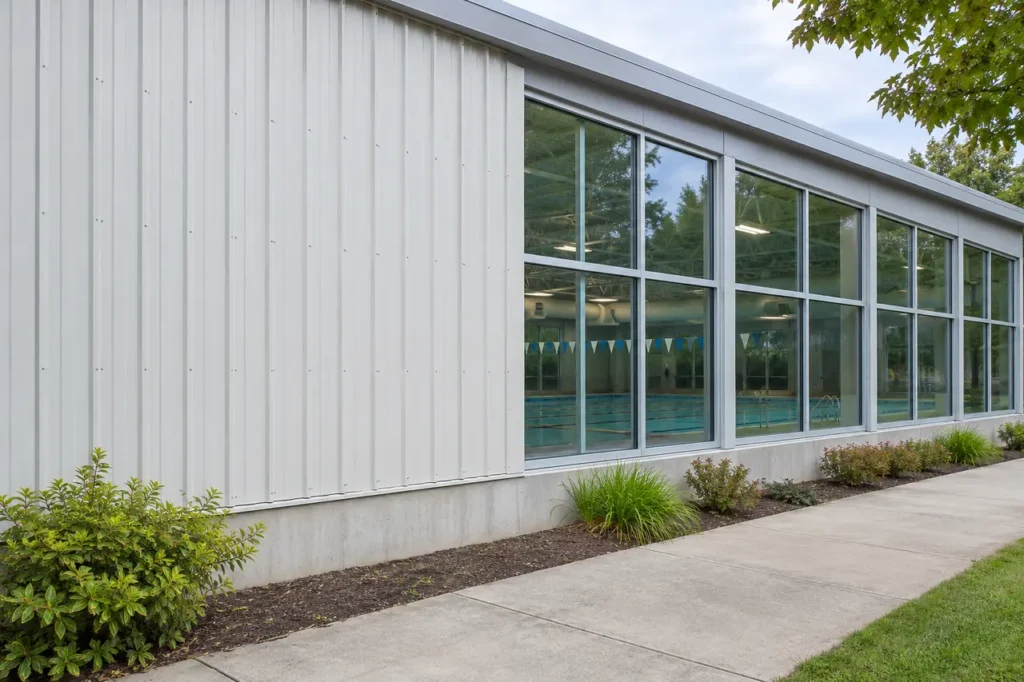
Your property. Your priorities. A clearly defined scope.
Separate the building exterior from pool-side space
An aquatic-center washing request can concern the building without including the pool or its operation. CoKo’s reviews suitable exterior roof, wall and approach work in Greater New Orleans and the Westbank. The first decision is where the proposed area sits: the public arrival side, an outside face behind the pool enclosure, and a staff entrance may require different project boundaries. This guide helps the facility assemble those decisions without treating a whole aquatic campus as one cleaning surface.
Begin with a photograph showing the building and the fence or other boundary around the swimming area. Mark the side of that boundary where the requested work is located. A public entrance outside the enclosure is a different request from a pool-side wall reached through it. The phrase aquatic-center exterior does not make that distinction clear enough on its own. If an area cannot be shown without entering an operating zone, ask the facility contact how the outside surface should be identified.
List roof sections, exterior wall faces and outside arrival paving individually. Keep pool decks, pool interiors, water features and swimming equipment off that list unless a separate, appropriate scope has been reviewed. The existing pool-deck service information can help distinguish a deck inquiry from a building inquiry, but it should not silently expand this project. For a recreation campus with an aquatic building and other facilities, label the aquatic building specifically. An overall campus image is useful context, not permission to clean every structure shown in it.
Understand which side of an entrance the quote covers
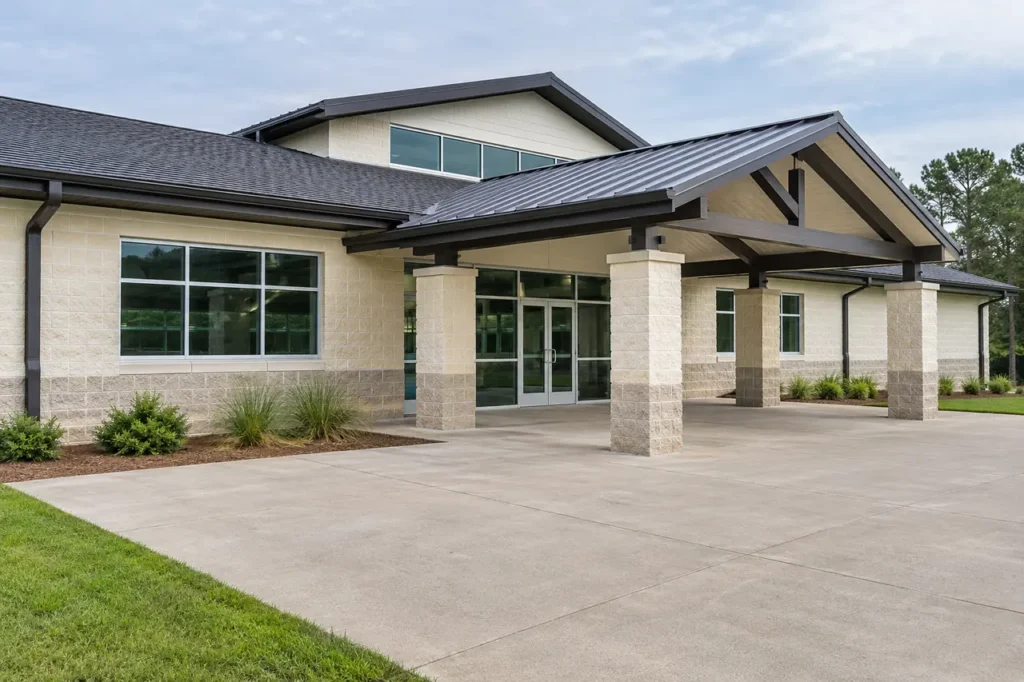
An aquatic facility can have a public reception entrance and separate doors connecting changing areas or swimming space to the outdoors. Show the outside face of each requested entrance and name its function using the facility’s own descriptions. An estimate for the public front should identify whether it includes only the approach to reception or also another exterior landing. Do not use the word entrance to combine doors whose access the operator manages differently.
Discuss where a proposed washing area meets the visitor route. A customer may arrive dressed for a swim and return by a different door; the operator should explain the actual route rather than leaving a contractor to assume it from the floor plan. Locker rooms, showers and interior corridors remain outside ordinary exterior-building washing. If staff need an approach available during a session change, identify that requirement beside the requested landing. The facility retains responsibility for admissions, supervision and deciding how its users move between swimming space and the public outside area.
Give the roof its own building-specific review
Provide roof material records that the owner already holds and ground views showing the aquatic building’s roof edges. Distinguish the main roof from a covered spectator approach, entrance canopy or lower support wing. They may look like a continuous outline from the parking area while representing different surfaces in a maintenance request. Mark the section prompting the inquiry and identify any other section as an option rather than assuming all roofs are included together.
Explain any known leakage, recent patching or roof work already planned. An inquiry about appearance should not be used to settle a question about the roof’s condition or the building environment beneath it. Washing does not assess moisture behavior inside a natatorium, repair the roof assembly or service ventilation equipment. Those matters need their responsible providers. CoKo’s can consider a clearly identified ordinary exterior roof surface, subject to its condition and available access. Do not select a cleaning method simply because the building contains a pool, or assume the building type proves that a particular roof treatment is suitable.
Describe wall finishes without diagnosing every mark
Photograph the requested outside elevation in a wide view and add a closer view of the material or mark that concerns you. Identify known masonry, coated panels, painted trim and glazing separately. A wall beside an aquatic building should not be described as one uniform surface if several finishes meet there. Show where the concern stops, especially when only a lower wall or the front reception elevation is requested.
Tell CoKo’s what is known about the finish and what remains uncertain. A pale deposit, a darkened patch and damaged coating do not establish the same cleaning problem merely because they appear on a swimming facility. Avoid attributing a mark to pool chemicals or prescribing a treatment without a suitable assessment. Exterior washing does not repair failed coatings, leaking window assemblies or deteriorated joints. If an existing repair issue affects the area, identify it before discussing appearance results. A useful proposal can distinguish the building components being considered and the marks that may remain, without promising restoration of every finish.
Keep pool equipment and chemical-service areas outside scope
Ask the operator to identify restricted plant, chemical-service and equipment access zones near the requested exterior. The estimate needs to understand their location relative to the proposed wall or route; it does not need chemical inventories, operating credentials or an employee opening a restricted enclosure for photographs. A wall visible beyond a service gate may have an access condition that is not apparent from the public frontage.
Do not assume CoKo’s will move treatment equipment, disconnect systems, open chemical containers or operate valves and controls. Pool-water management, chemical handling and mechanical maintenance are not part of an ordinary building-exterior request. Where a proposed outside area depends on access coordinated by the facility’s technical staff, have that contact explain what the property can make available. Leave unresolved areas pending instead of treating them as standard exterior access. This separation is useful even when only a staff-door landing is being considered; the door’s relationship to an operating area matters more than a broad description of the facility as closed or quiet.
Have the property photos?
Let’s define the next step.
Send the address, requested surfaces and the contact who can confirm access.
Plan outside access around the swimming program
Provide the actual activities affecting the requested outside area: lesson arrivals, session departures, swim meets or maintenance access, where relevant to this facility. There is no need to send personal participant details. The useful information is when the operator can make each named approach available and who can coordinate a change. Public opening hours alone may not describe when staff and participants are using an exterior route.
For a seasonal facility, explain what closed means for the proposed date. Public swimming may have stopped while maintenance staff or contractors still use the site. A roof or wall estimate should not assume that the swimming enclosure is unattended, unrestricted or available for equipment staging. Identify the person confirming outside access and the entrance they authorize. If the project will be divided, keep the public frontage and any separately reviewed pool-side exterior as named phases. Do not treat a quieter period as proof that all requested building surfaces can be washed together or that a particular opening deadline can be guaranteed.
Identify the ordinary paving at the staff entrance
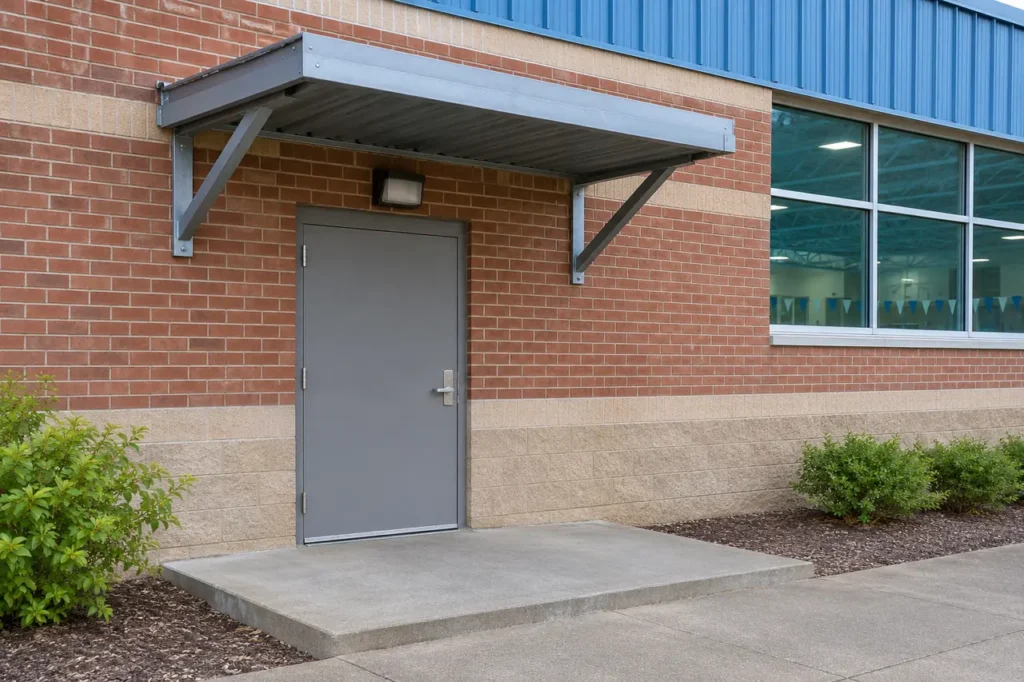
Show a requested staff or service entrance with its immediate outside landing and the route reaching it. State whether the inquiry concerns that landing, the adjacent wall, or both. Keep delivery activity, stored supplies and any nearby equipment enclosure visible as access context rather than automatically adding them to the washing scope. A small outside service area can need a different preparation arrangement from the public reception front.
Have the facility identify who will move movable items that obstruct the named surface. CoKo’s should not be expected to handle pool supplies or decide where operational materials belong. Confirm whether the route crosses a swimming enclosure or another controlled part of the property, because a public-front photograph will not reveal that restriction. If the area cannot yet be made available, retain it as a separate pending item. The estimate can remain useful for the accessible requested frontage without implying that a later service-side phase has already been approved, priced or scheduled under the same assumptions.
Request a proposal the aquatic operator can hand over
Ask the written scope to distinguish the aquatic building roof, named wall elevations, reception-side approach and any separately identified staff entrance. A campus-wide cleaning label can hide differences between ordinary building surfaces and swimming-related work. State which pool-side areas are excluded, and keep any separate deck discussion visible as its own item. Compare proposals using those boundaries instead of assuming that each provider has included the same building parts.
Text CoKo’s the address, labeled outside photographs, known materials and the facility contact coordinating access. Include existing defects and the proposed window confirmed by that contact. For a larger property, the commercial form can hold the fuller project description. Before a date is agreed, update any change to swimming sessions, outside access or other contractors that affects the named work area. The goal is a practical exterior-building scope that the next staff shift can understand. It does not certify pool readiness, replace water-quality procedures, promise specialist system work or establish that washing will remove every mark on the facility.
A practical start.
Three useful steps.
Show the surfaces
Send wide photos and close views. Label the buildings and the areas that matter now.
Set the boundaries
Explain materials, access, preparation and the work window your property can support.
Review the scope
Confirm included surfaces, responsibilities and the next step before scheduling.
Aquatic Center Building Exterior Washing.
Your questions, answered.
Your next exterior project.
Start with a clearer scope.
Text your address and the priority exterior photos. For a larger project, send the full property details.
Send your address. Show us what needs cleaning.
Text your address, a wide photo and a close-up of the buildup. We’ll review the surfaces and discuss your cleaning options.
Text photos for an estimate Start an online quoteCoKo’s Pressure Washing · (504) 296-9696