
Commercial exteriors · Greater New Orleans
Composite panel washing.
Identify the finish. Define the faces.
Bring the panel finish, requested faces and adjoining surfaces into one clear exterior washing request.
Original illustrative scenes show anonymous material examples, not customer jobs.
Your property. Your priorities. A clearly defined scope.
Identify the composite panel product
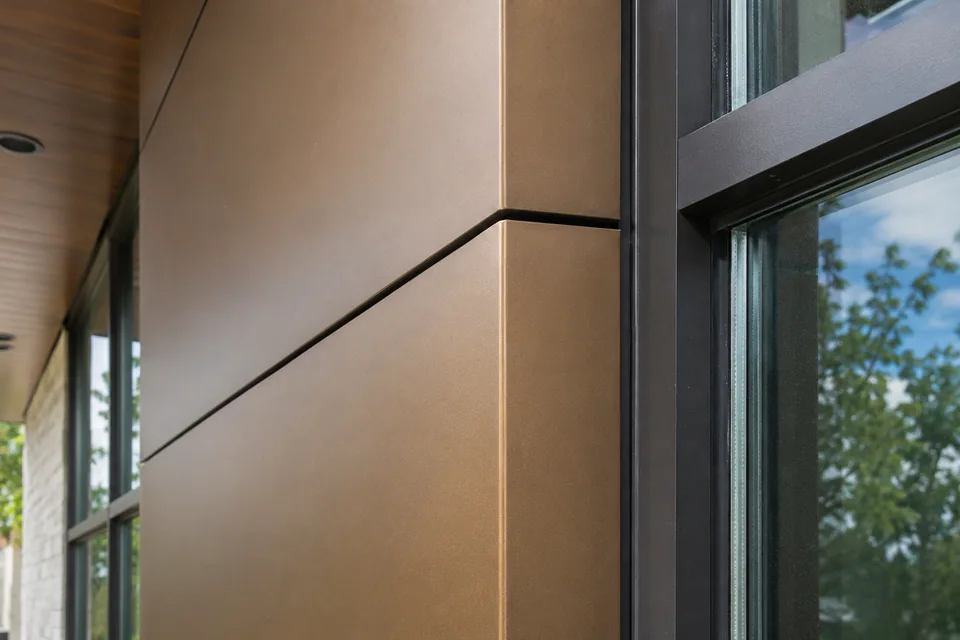
An aluminum composite facade can present a smooth, continuous brand image while containing many separate panels, folded returns, reveals and adjoining materials. A request to wash the metal on a commercial building does not explain which of those components the owner wants considered. For a property in Metairie, Kenner, LaPlace or New Orleans, begin with the installed panel product and the appearance concern. This guide helps organize that discussion. It does not establish a cleaning method, supplier approval, coating-restoration service or permission to work on every part of the wall assembly.
Ask the property manager for the panel schedule, supplier information and available maintenance documents. Record the product series and finish separately rather than entering only a color. A later extension may use a different product from the original entrance even when both elevations look similar from the street. If records are incomplete, identify the missing information explicitly. A photograph of a flat face can help locate the concern, but it should not be treated as proof of the concealed construction or exact factory finish.
Keep aluminum composite material separate from solid sheet, corrugated siding and other products described loosely as composite cladding. The ALUCOBOND resource library, for example, lists distinct exterior and interior cleaning documents. That distinction is useful when collecting records: the fact that a document carries a familiar brand name does not make it the correct instruction for this application. Obtain the applicable exterior information for the actual installed product. Do not transfer a process from an interior display panel or a different supplier's wall simply because the surfaces resemble each other.
Map panel faces and reveal boundaries
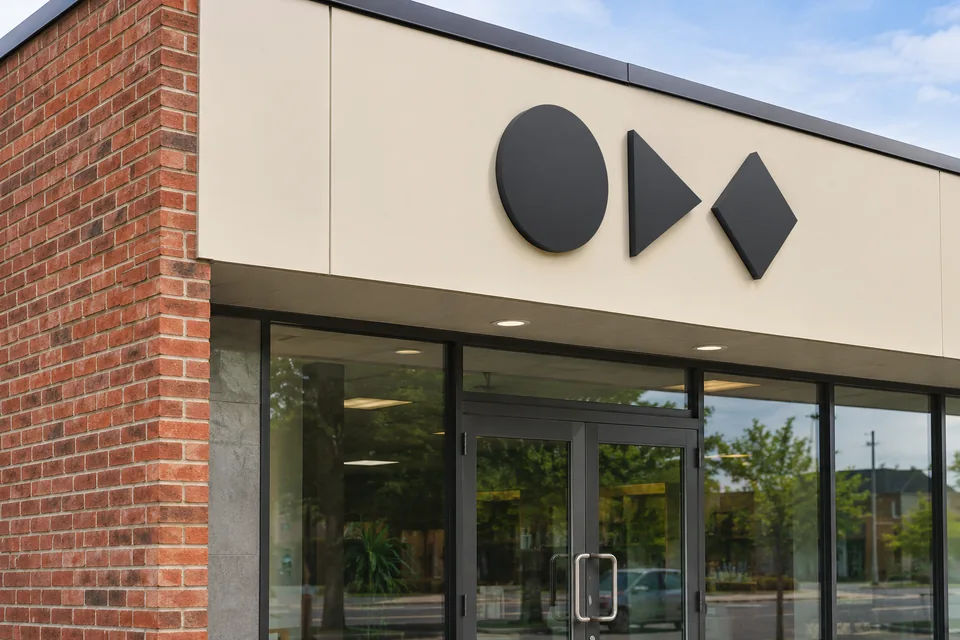
Use one wide photograph of each requested elevation and mark a few recognizable panel groups. Labels such as entrance return, lower west face and sign-band corner are more useful than an unlocated close-up. Show where the requested face ends at a reveal, storefront frame, coping or another material. If only selected panels are under consideration, mark neighboring areas as excluded. This makes it possible to discuss a limited appearance concern without silently converting the inquiry into a whole-building or all-metal cleaning package.
Describe returns and projecting details independently from the broad panel faces. A folded edge beneath a canopy is not represented well by a straight-on photograph of the upper sign band. Equally, a visible gap is not an invitation to clean inside an assembly. Identify open reveals and joints as boundaries needing consideration, with any known restrictions supplied by the property team. Washing discussions must not imply dismantling panels, investigating cavities, replacing sealants or resolving water-entry concerns that belong with the building's appropriate maintenance professionals.
Describe directional and visual differences
Before deciding that a contrast is dirt, document how the wall looks from more than one normal viewing position. Note whether the concern appears across a full panel, follows a runoff path or becomes visible mainly at a particular angle. Keep the original image rather than relying on an edited picture that changes the brightness or color balance. The objective is to let the reviewer understand the observation and its location, not to prove a diagnosis using a photograph taken under unusually favorable or unfavorable lighting.
If the building contains replacement panels or different construction phases, include that history with the location labels. An owner may want the facade to read as one uniform color, but the request should allow the provider to explain what washing can and cannot change. Do not make matching old and new panels the assumed acceptance standard. A reference photograph can establish an agreed viewpoint for later discussion while leaving material, finish, weathering and installation differences available for a separate review when the appearance cannot reasonably be attributed to removable deposits.
Separate coating concerns from surface soil
List scratches, worn areas, previous touch-up and any known finish complaints apart from general surface buildup. State when the concern was first noticed and whether it changed after earlier maintenance. If a coating or finish provider has already issued advice, keep that advice attached to the relevant elevation. The washing inquiry should not require the estimator to infer whether a pale mark is removable soil, a damaged coating or a previous treatment from a distant image with no supporting history or product information.
Avoid describing a wash as polishing, restoring or renewing the factory finish. Those words can imply a result beyond removing suitable surface deposits. A clearer request asks which named faces can be reviewed for washing and what appearance limitations should be discussed. Coating repair, refinishing and warranty decisions remain separate matters. Where the finish is uncertain, the unresolved question belongs in the proposal record. It should not disappear because a broad method label such as soft washing has been added to the estimate.
Review windows, signs and adjoining finishes
An entrance elevation often combines panel faces with glass, sealants, lettering, lights and a masonry base. Mark those items individually so the requested work is understandable. Specify whether the interest concerns the panels alone or whether other components need their own assessment. A sign letter mounted over a panel does not automatically become part of a cladding-washing scope. Likewise, a window beside the affected face should not be presented as included professional glass cleaning merely because the two materials appear in the same photograph.
Tell the reviewer about objects or activities near the lower edge of the wall: planters, merchandise, outdoor seating, parked vehicles or frequently used doors. Identify which items the property can arrange to move and which must remain. Do not assume the cleaning provider will remove signage, disconnect fixtures or handle someone else's equipment. An explicit preparation list supports an achievable review and helps prevent a request for a narrow panel strip from becoming an undefined commitment to manage every item associated with the entrance.
Have the property photos?
Let’s define the next step.
Send the address, requested surfaces and the contact who can confirm access.
Plan access by elevation
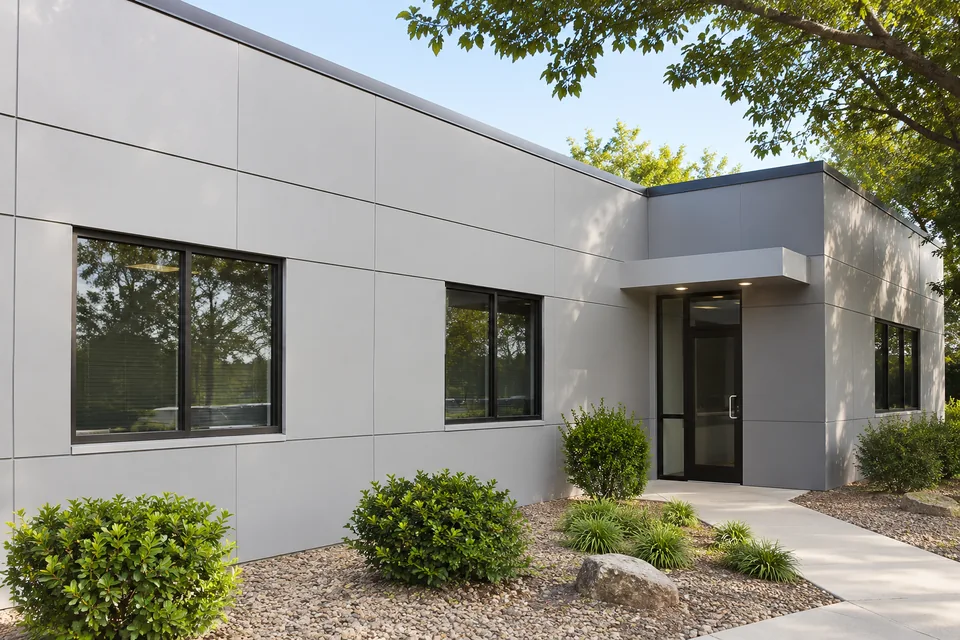
Describe the actual approach to each requested face. A low entrance return, an elevated fascia and a recessed courtyard wall can have different access questions even when the same panel product appears on all three. Give useful location context and disclose known restrictions, then allow the available approach to be reviewed. This guide does not claim that a ladder, roof, lift or suspended access system is available or appropriate. Property permission and a suitable work arrangement must be established for the specific scope before a date is treated as confirmed.
For an occupied commercial site, distinguish the person approving the work from the person managing daily use of the entrance. Explain which doors, loading periods or tenant activities affect the proposed area without sending unnecessary private information. If an alternate route is being considered, the property should decide whether it is available and appropriate. Avoid asking a panel-washing estimate to serve as a complete traffic-management plan. The practical purpose is to identify the constraints that must be resolved before the requested elevations can become an agreed project.
Agree the review area and comparison record
Where an appearance comparison or limited test is proposed, identify its location and the question it is intended to answer. A useful discussion might concern the effect on a particular deposit or the appearance of one documented finish. The choice of area and process still requires review against the applicable product guidance. Do not supply a pressure, chemical mixture or abrasive-tool instruction copied from a general internet example. The intended result is an informed scope decision, rather than an owner-selected cleaning recipe imposed before the actual surface has been assessed.
Keep the comparison modest in what it establishes. An acceptable result on one face does not certify hidden wall conditions or guarantee an identical appearance on every replacement panel. Record any limitations that should follow the result into the written scope. If another finish or elevation remains uncertain, leave it as a separate decision. That creates a useful path forward: the owner can consider an understood area without treating a limited appearance review as approval to extend the same approach across unrelated surfaces or unresolved building-envelope concerns.
Build an exterior panel inquiry
Collect the address, marked elevations, known panel product, finish records and photographs showing both the concern and its surroundings. Describe the desired area in ordinary location terms and attach the history of prior treatment or repair where it is relevant. Separate confirmed facts from uncertainties. If the product series is documented but a later coating is not, say exactly that. This gives the reviewer a practical starting point and avoids presenting incomplete records as a complete technical specification for the facade or every item visible on it.
When a proposal is returned, compare it with the same panel labels used in the inquiry. Check which faces are included, which nearby fixtures are excluded and which questions remain before work can proceed. Agree how a change in access or condition will be communicated through the authorized contact. After any accepted washing, review the named surfaces under reasonably comparable viewing conditions. Keep unrelated finish complaints, repairs and supplier questions distinct so the record remains useful for the building's next maintenance decision instead of becoming a general promise that every visual difference will disappear.
Product-care reference: ALUCOBOND exterior material resources. Obtain instructions for the installed product and finish before agreeing a method.
A practical start.
Three useful steps.
Show the surfaces
Send wide photos and close views. Label the buildings and the areas that matter now.
Set the boundaries
Explain materials, access, preparation and the work window your property can support.
Review the scope
Confirm included surfaces, responsibilities and the next step before scheduling.
Aluminum Composite Facade Washing Planning.
Your questions, answered.
Your next exterior project.
Start with a clearer scope.
Text your address and the priority exterior photos. For a larger project, send the full property details.
Send your address. Show us what needs cleaning.
Text your address, a wide photo and a close-up of the buildup. We’ll review the surfaces and discuss your cleaning options.
Text photos for an estimate Start an online quoteCoKo’s Pressure Washing · (504) 296-9696
Is the facade a laminate panel?
Keep phenolic HPL faces distinct from metal composite cladding. Plan HPL facade washing by its product, decorative finish and face boundaries.

