
Commercial exteriors · Greater New Orleans
Stamped concrete washing.
The pattern. The finish. An honest surface scope.
Text the pattern photos, sealer history and requested zone. Let’s review the existing decorative finish.
Your property. Your priorities. A clearly defined scope.
Identify the slab instead of relying on the pattern
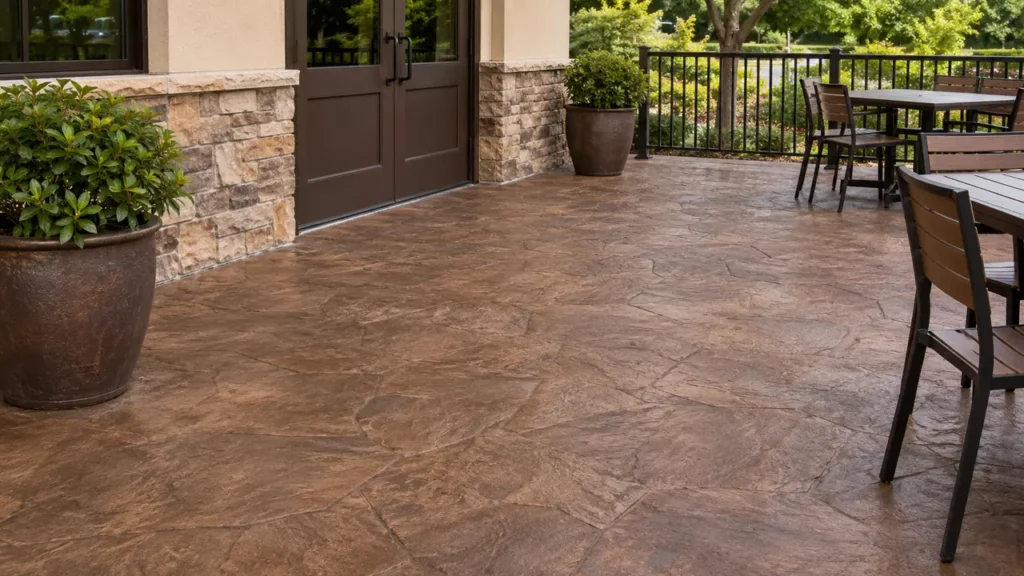
Stamped concrete can imitate stone, brick or another pattern while remaining one continuous concrete surface. The darker detail in a recessed pattern may be part of the decorative finish rather than dirt. For a commercial property, that distinction belongs at the beginning of a washing request. A stronger cleaning promise should not be used to turn an intentionally varied finish into a single flat color.
CoKo’s reviews washing of existing commercial stamped-concrete areas in Greater New Orleans and the Westbank. Send wide views of the requested slab and close photographs showing the pattern, color and any sealer concerns. This request is for suitable surface washing. Stamping new concrete, changing its color, stripping a finish, repairing cracks and resealing are different operations and are not automatically included.
A stone or brick appearance does not tell us how the surface was built. Show a control joint, an edge or another ordinary visible transition that helps identify the installation. If the property has records naming stamped concrete, a decorative overlay or a specific coating system, include them. A thin overlay and an older stamped slab may look similar from a distance without having the same condition or care requirements.
Name the contractor or product where known, but do not invent a material specification from its appearance. We are not asking anyone to break a corner, scrape the coating or remove a fixture for estimate photographs. The aim is to establish what is already there. An uncertain surface needs appropriate clarification before a proposed cleaning method can be accepted for the full area.
Record which color differences are intentional
Stamped concrete may combine a base color with darker accent detail. Butterfield Color describes those distinct color elements in its explanation of the stamped-concrete process. That is a useful reason to preserve the finish information and look carefully at the pattern before calling every dark recess a stain. It is not a guarantee that any particular property uses that manufacturer’s system.
Take photographs of a representative area that the manager considers normal as well as the area that prompted the inquiry. Identify old repair patches, different pours and changes made by a previous tenant. Cleaning should not promise to erase every visual difference between them. If the owner wants a different color or a renewed decorative effect, that is a separate finish decision. The washing request should describe the buildup of concern without assuming that all existing contrast must disappear.
If the original owner or installer supplied a finish sample, old project photograph or color reference, retain it with the request. It can help explain the intended appearance, particularly where a later patch is different. It does not establish that today’s weathered slab can be returned to that exact color by washing. The useful comparison is between removable buildup and the condition of the existing installation.
Review sealer condition and earlier maintenance work
Ask for the sealer name, approximate application date and any care instructions retained by the facility. Record whether an area has received repeated applications or was treated separately from the rest of the patio. Photographs should show dull, cloudy, peeling or uneven-looking sections in ordinary light. Those appearances may need a finish assessment rather than an assumption that they are removable surface soil.
Washing does not automatically remove an old sealer or recreate its original sheen. Nor does it provide a preparation specification for an unidentified replacement product. If a decorative-concrete contractor is planning separate work, supply that contractor’s written requirements and expected sequence. The accepted washing portion needs its own boundary. We do not include stripping, recoloring or resealing simply because the surface is decorative and the owner would like it to look newer.
Distinguish pattern grooves from real joints and cracks
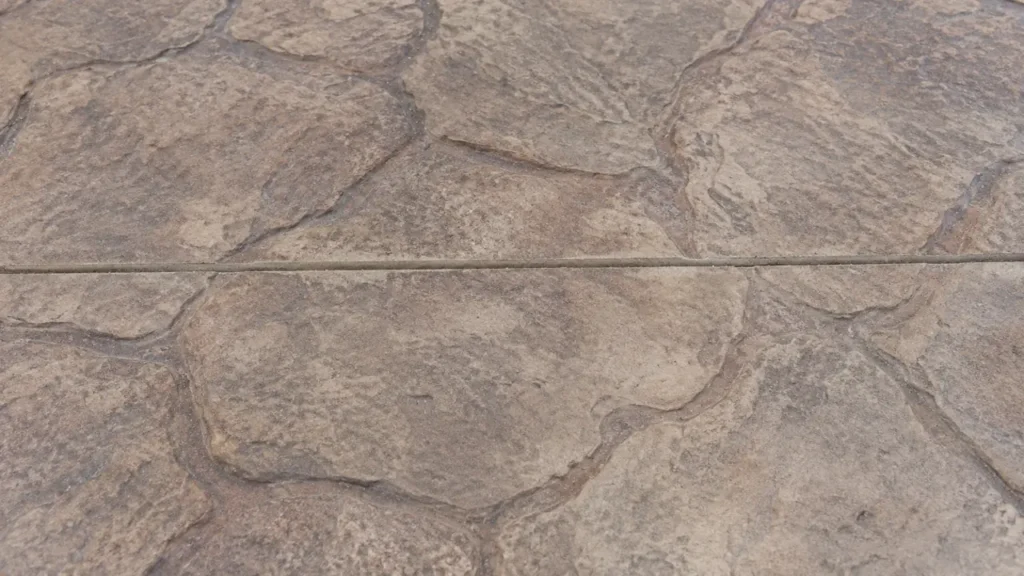
A stamped pattern can resemble separate stones even where the slab is continuous. Show the actual straight cuts, construction joints and any known cracks alongside the shallow decorative lines. A close photograph makes that difference easier to understand than a wide image taken from the far side of the courtyard. Mark the locations of previous joint repairs and any material that appears loose.
Surface washing cannot repair a crack, close a joint or rebuild a damaged pattern edge. If the slab has a broken or unstable area, the appropriate repair assessment should happen separately. Do not ask for a groove to be made deeper or for part of the concrete surface to be removed as part of washing. The cleaning scope concerns existing suitable material, with visible defects recorded rather than treated as proof that more force is required.
Divide the commercial area by use and existing condition
Decorative concrete may continue from an entrance into a seating patio, beneath a canopy and around a planting bed. Mark those zones and explain which ones need attention. A shaded recess beneath furniture may collect different buildup from an open entrance crossed by carts. Include the specific table location or door approach when describing a mark, rather than presenting the whole slab as one identical condition.
List furniture, portable displays, planters and mats within the requested area. Decide whether the estimate concerns only open floor space or the complete slab beneath movable items. State who will move and replace them. A cleaning request for the patio floor does not automatically include furniture, vertical walls, railings or an adjacent decorative feature. Naming those components protects the scope from growing into an undefined full outdoor restoration job.
Have the property photos?
Let’s define the next step.
Send the address, requested surfaces and the contact who can confirm access.
Plan closure and the route away from the slab
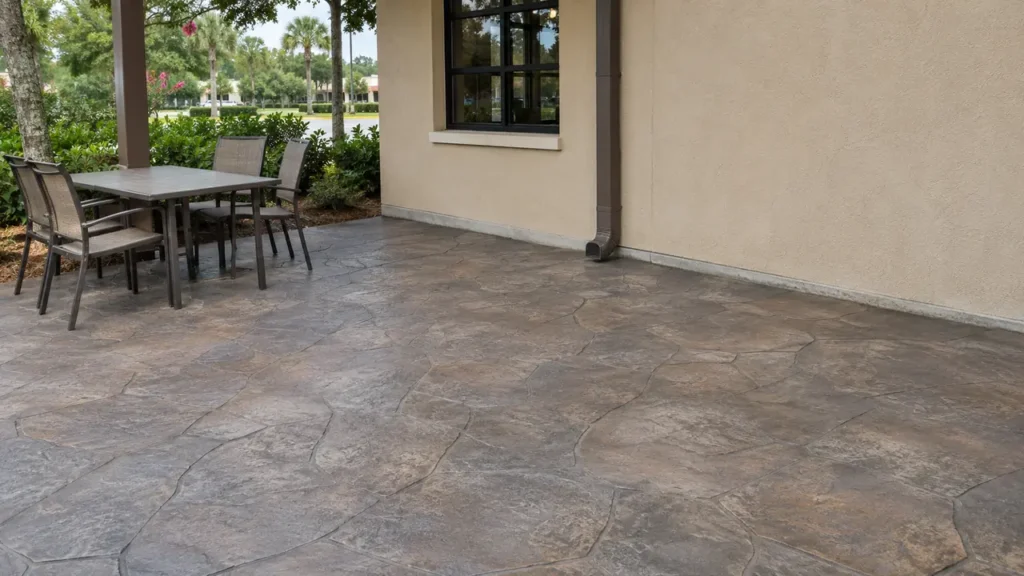
Explain when the area is used by customers, staff or deliveries and identify the manager who can arrange the working window. A restaurant terrace or office forecourt may need a closure plan even where the requested slab is small. Consider the way people enter and leave, not just where equipment can be parked. Ordinary traffic should not be expected to pass directly through active washing.
Show the low edge, drains, doorway thresholds and nearby surfaces that need protection. The facility should identify the approved water connection and any restrictions affecting water movement. A stamped finish beside a public path or another tenant’s doorway needs a practical arrangement that respects those boundaries. Washing is not drainage repair, and the presence of a grate does not itself authorize any particular discharge route. Unresolved access or water-management questions should be settled before a date is approved.
Make the written estimate specific to the existing finish
A useful proposal names the requested stamped-concrete zones, known coating or sealer information, access conditions and preparation responsibilities. It should say which connecting plain-concrete bands or steps are included. An unexplained square-foot total cannot describe a job involving several separate patios, furniture zones and finish conditions. Available dimensions help when tied to the same marked photographs.
Ask how newly observed loose material or a finish problem would affect the work. The accepted scope should not require a uniform result from surfaces that already have different colors, repairs or maintenance histories. Compare the inclusions and exclusions before comparing totals. Washing an open, identified slab is a different request from restoring a decorative coating, and the estimate should make that distinction clear enough for the property to authorize the right work.
Use the original finish record during the handover
Select a property contact to review the listed zones and keep the initial photographs available. Compare the same pattern sections, patches and joints. Damp and dry decorative concrete can look different, and lighting can emphasize the relief of a stamped design. A wet photograph alone should not be treated as proof that a glossy finish has been restored or that an old color difference has been eliminated.
Keep the completed washing record with the product information and separately noted repair concerns. A future request should reflect changes such as a new sealer, altered furniture layout or replacement concrete. No universal maintenance interval, slip-rating or coating warranty is established by this washing scope. Text CoKo’s the address, the full stamped area and clear finish photographs so the review starts with the actual decorative surface rather than a generic promise to make concrete look new.
A practical start.
Three useful steps.
Show the surfaces
Send wide photos and close views. Label the buildings and the areas that matter now.
Set the boundaries
Explain materials, access, preparation and the work window your property can support.
Review the scope
Confirm included surfaces, responsibilities and the next step before scheduling.
Commercial Stamped Concrete Washing.
Your questions, answered.
Your next exterior project.
Start with a clearer scope.
Text your address and the priority exterior photos. For a larger project, send the full property details.
Send your address. Show us what needs cleaning.
Text your address, a wide photo and a close-up of the buildup. We’ll review the surfaces and discuss your cleaning options.
Text photos for an estimate Start an online quoteCoKo’s Pressure Washing · (504) 296-9696