COKO’S • GREATER NEW ORLEANS
What Is Pressure Washing?
A guide to describing your surface, understanding the method and requesting a defined scope.
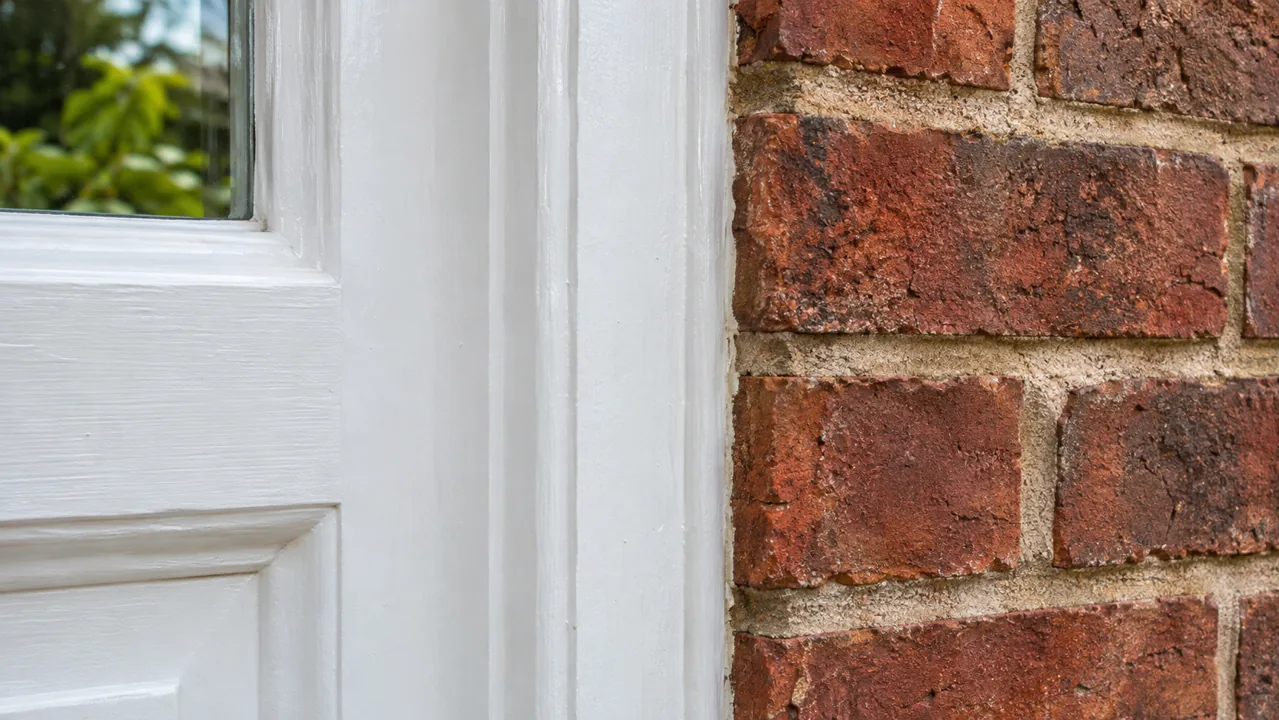
Pressure washing describes a cleaning method, but the name alone cannot tell a property owner which surface should receive it. A concrete approach, a painted door surround and a weathered wood feature may share one entrance while presenting different questions. This guide explains how to read the term, describe what you see and ask for a surface-specific proposal. It does not provide machine settings or replace the care instructions for the particular material and finish on your property.
A method name is the beginning of the conversation
People often ask for pressure washing when they mean that an exterior looks dirty and they want help improving its appearance. That is a useful starting point. It identifies a concern without requiring the owner to select equipment. The next step is to identify the actual area: the front walk, one wall, the loading entrance or another clearly described surface. An estimate becomes more meaningful when the proposed work can be connected to something both parties can locate.
The term should not be read as a promise that every mark will disappear or that every material will be treated with the same force. It also does not establish that roof cleaning, gutter work or a neighboring deck is included. Those may be separate service questions. Keep the initial request in ordinary language, then look for a written scope that turns that request into identifiable surfaces, boundaries and a realistic description of the intended appearance improvement.
A practical first message might name only the front concrete walk and exclude the painted porch floor until its coating is identified. That is a clearer request than asking for the strongest wash across the whole entrance. It lets the provider discuss a known area while leaving a different material unresolved. The example describes how to state a scope; it is not a report of a customer job or a recommendation for treating either surface.
What mechanical cleaning means for the customer
At its simplest, pressure washing uses a directed flow of water to help dislodge material from a surface. The useful customer question is not how impressive a machine looks. It is whether the proposed approach fits the surface and the buildup being discussed. Equipment is one part of that decision. Existing wear, an applied finish and access to the area can change what a reasonable cleaning request looks like before any work starts.
This explanation is not a do-it-yourself pressure chart. A number copied from an article would not describe the condition of your paint, masonry joints or previous repairs. Nor would it identify the exact care requirements for a particular product. When reviewing an estimate, ask what will be cleaned and which material limitations were considered. If the proposal relies only on a machine size or a broad promise of more power, the important surface questions are still unanswered.
Identify the material and the finish separately
A surface can have a structural material underneath and a different exposed finish on top. A concrete slab may have a coating, and masonry may include painted details or repaired joints. Photograph the transitions rather than treating the entire entrance as one uniform material. If you know a product name, installation date or coating history, include it with the request. Unknown details can be recorded as unknown instead of guessed from a small photograph.
An existing finish matters because the visible outer layer is part of the cleaning question. An owner asking for a cleaner approach may not be asking to remove its coating. The proposal should make that boundary understandable. Nearby trim, door thresholds and decorative inserts may also need to be considered individually. A useful scope recognizes these differences without suggesting that washing will correct an unsuitable coating, recreate a worn finish or make every adjoining material match.
Separate buildup from the condition underneath
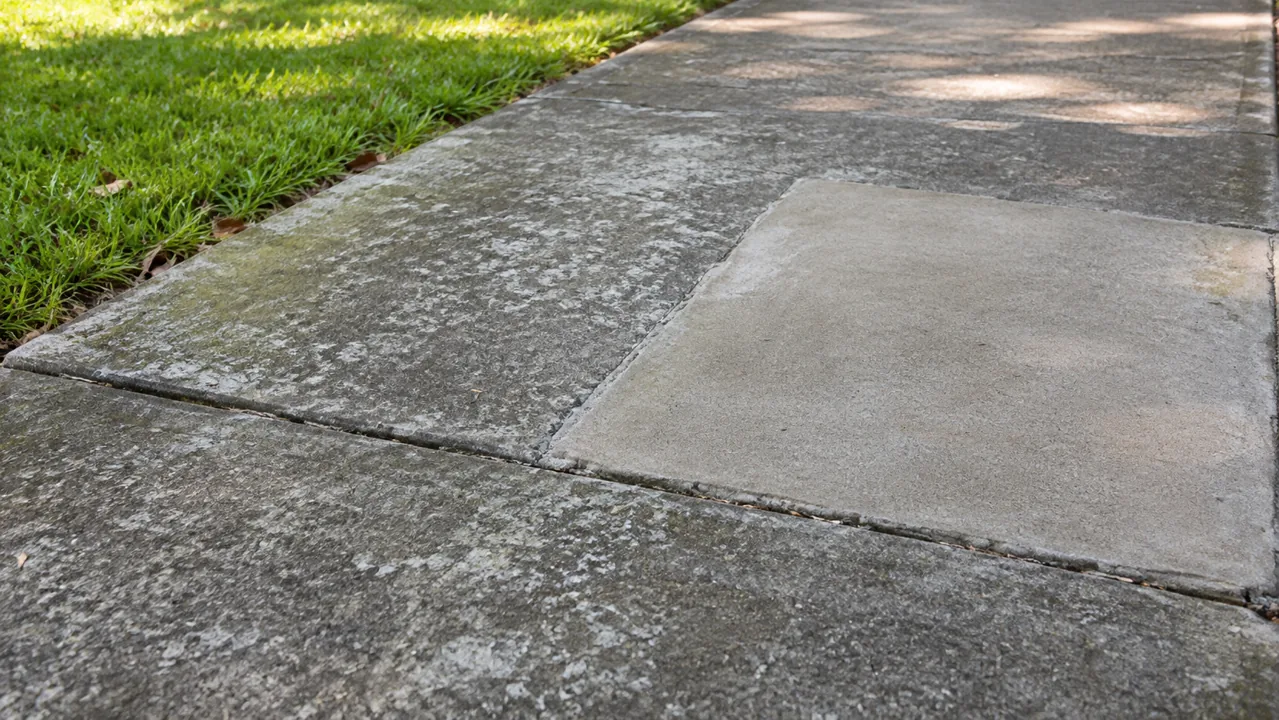
Visible discoloration and physical deterioration are different observations. A darkened walking area may also contain an old repair, exposed aggregate or a worn coating. Cleaning can be proposed for the buildup while the underlying condition remains a separate concern. Include a close photograph of any patch, crack or peeling area so the request does not describe a uniform surface when the property actually contains several conditions.
The distinction also helps with expectations after the work. A surface may look cleaner while a repair line remains visible. An old coating may still show uneven wear. Those outcomes do not establish that more aggressive washing would be appropriate. Ask the provider to identify known limitations in the proposal and to separate appearance work from repairs. A washing estimate should not quietly become a promise to restore structural condition or extend the life of the building.
Use photographs to show the question, not diagnose it
A wide view explains where a concern sits on the property. A closer view shows texture, boundaries and visible changes. Together they can help describe the request more clearly than a tightly cropped image of a dark mark. Include a recognizable edge, doorway or adjacent area in at least one picture. That context helps distinguish the small area you want discussed from the larger surface that might otherwise be assumed.
A photograph still has limits. Lighting, moisture and shadows can change how a mark looks, and an image does not by itself establish the cause of discoloration. Describe the observation instead: a dark strip below a planter, a recurring patch near a downspout or a contrasting mark at a vehicle space. Add what you already know about its history. Avoid turning a visual description into a mold diagnosis or a guaranteed stain-removal request.
Access is part of the surface description
The same material can present a different request when it sits behind a locked gate, beside an occupied entrance or above an area that cannot be approached from the ground. Mention those facts early. The purpose is to make the estimate match the actual location, not to select an access method yourself. Photographs can show the gate, nearby objects and route to the surface without requiring you to climb or enter a restricted area.
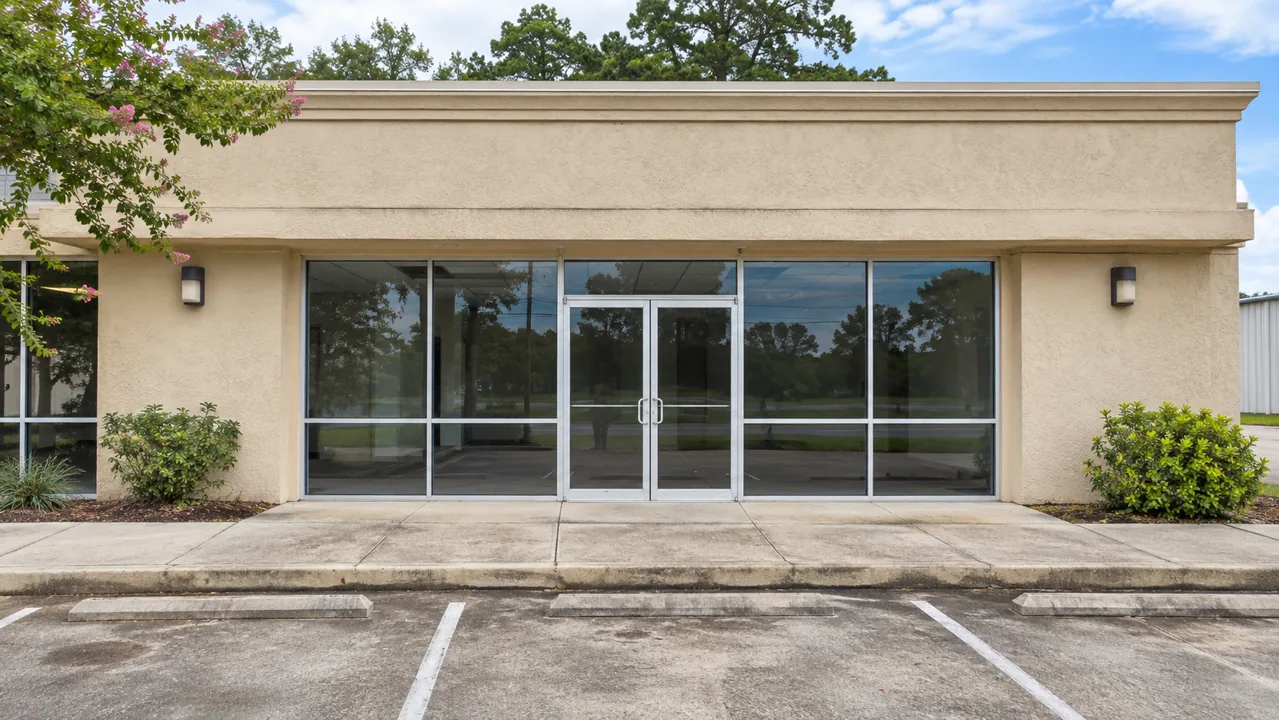
For a business or shared property, identify the entrance people need to keep using and who can coordinate access. A washing request for a storefront approach is easier to understand when it distinguishes public passage from the area proposed for work. Do not assume that a provider has approval to enter adjacent property or use an owner-controlled utility. Those details belong in the scope discussion, alongside the surface itself, before a date or result is treated as confirmed.
Read the estimate as a set of boundaries
A clear proposal should let you point to the area being discussed and explain what is included. That might mean the main concrete approach up to a particular joint, with decorative brick and steps addressed separately. The boundaries matter as much as the name of the service. If the written description says only pressure washing, ask whether it includes edges, vertical faces, isolated marks and any areas shown in the photographs but not named in the text.
Also look for the distinction between general area cleaning and a particular mark that needs separate review. A broad appearance request is not automatically a promise to eliminate every stain. Keep exclusions visible rather than relying on a verbal assumption. A useful estimate describes the intended work, known limitations and any unresolved questions in language you can recognize at the property. That makes later decisions more straightforward without requiring the customer to become an equipment operator.
Choose the next page by the question you still have
If you are deciding between cleaning methods, use the existing method-comparison guide rather than treating this definition as a surface recommendation. If you already know the area you want reviewed, move to the appropriate service page and describe that actual request. Roof washing, soft washing and heated washing have separate service scopes. This article explains the vocabulary; those pages help organize a specific discussion about the property.
For a CoKo’s estimate in the Greater New Orleans service area, send the location, a wide view, a detail view and the boundaries of the area you want considered. Mention known finishes and visible deterioration. You can start through the free online quote at cokospressurewashing.com/quote or text 504.296.9696. The useful outcome is a surface-specific proposal with understandable limits, not an unsupported promise about property value, universal suitability or a like-new result.
Existing washing comparison
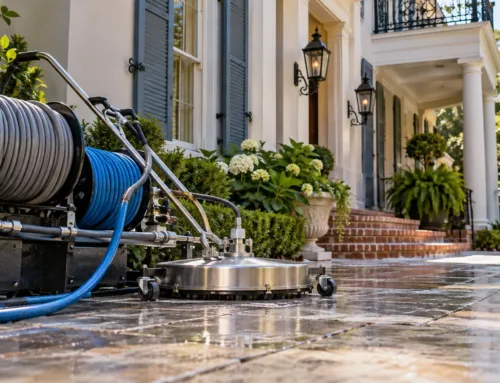
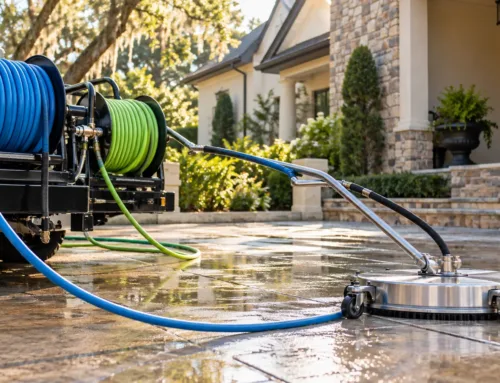
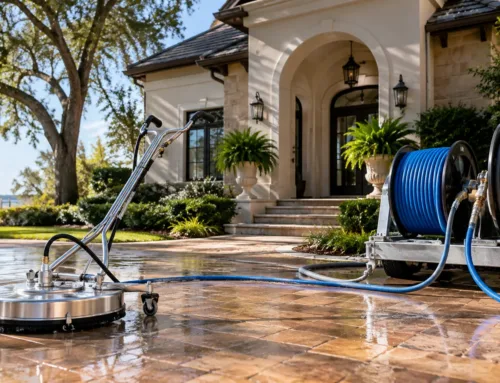
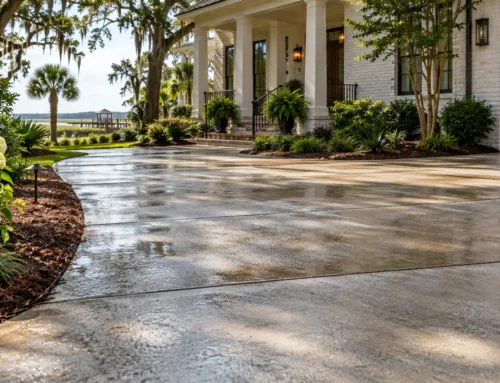
These retained comparison photographs illustrate the existing website example; they do not document the anonymous properties shown in this guide.


Questions about this washing request
Continue with a specific question
More existing resources: Online quote · pressure washing · what is soft washing soft washing explained · off
Send your address. Show us what needs cleaning.
Text your address, a wide photo and a close-up of the buildup. We’ll review the surfaces and discuss your cleaning options.
Text photos for an estimate Start an online quoteCoKo’s Pressure Washing · (504) 296-9696