
Venetian Isles homes · New Orleans
Venetian Isles washing.
Roof to landward approach.
Refresh your roof, house walls, exterior stairs and land-side paving. Show us the surfaces that matter and start with a clear quote.
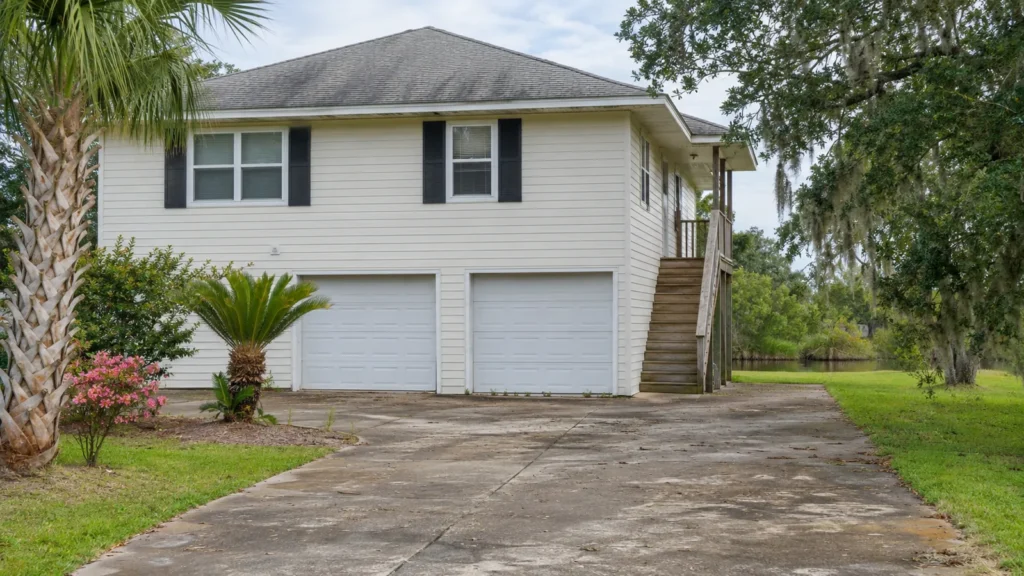
Your property. Your priorities. A clearly defined scope.
Start with the house and the land-side boundary
A useful washing request for a canal-side home starts with a clear land-side boundary. Name the roof faces, house walls, exterior stairs and landward paving you want considered, then show how those areas can be reached. A canal in the background does not turn a household request into a marina project. CoKo’s can review the actual address, photographs and requested surfaces through the normal quote process. Availability, access and a suitable scope must be confirmed for the individual property.
The images show original generated representative properties, rather than identified Venetian Isles addresses or completed customer work.
Take a wide photograph from the ordinary arrival side of the property. Show the main house, any detached building and the surfaces connecting the arrival point to the entrance. Label the parts you want considered rather than circling everything in a waterfront photograph. For example, the requested area might include the street-facing roof, two wall elevations, an exterior stair and the paved approach, while stopping before a canal-edge structure. Use an obvious material joint or another agreed landmark to explain that stopping point. Keep excluded docks, boat lifts and bulkheads identified as separate features so their presence does not expand the request by implication.
The City of New Orleans planning material describes Venetian Isles in its canal-side residential context. That context helps explain why a boundary matters, but it does not establish the condition of your property or authorize work beside a particular waterway. Your photographs and written component list should describe the actual home. Do not assume another residence’s layout or maintenance arrangements apply simply because it shares the neighborhood name.
Put roof washing first in the photo set
Begin the surface review with the roof areas that concern you. Photograph the visible roof planes from safe, authorized ground positions, keeping enough of the building in each image to show their location. Label a face by a familiar feature, such as above the driveway or over the entrance stair. Identify a garage or addition separately if its roof is also requested. Share the roofing product or maintenance information when known, and say when the material is uncertain. A dark-looking area in a photograph is a condition to discuss, not a diagnosis to supply yourself.
Never climb a ladder, lean over a railing or take a boat out simply to obtain an estimate photograph. If a roof plane cannot be shown safely from land, explain what blocks the view and ask whether further assessment is needed. A roof-cleaning inquiry does not establish that roofing components are defect-free. Report known leaks, loose components and recent repairs so those concerns can remain separate from the proposed washing work.
Describe walls, finishes and different building levels
Show the requested wall elevations individually, including changes between siding, masonry, trim and any known coating. At a home with different building levels, identify the actual upper and lower surfaces rather than assuming one description covers them all. Some properties have stairs, lower enclosures or sheltered areas; include those components only when they are present and requested. Do not describe every Venetian Isles residence as having the same construction. A useful image set follows the particular building from its landward approach around the accessible sides.
Give peeling paint, open joints and visibly damaged finishes their own close views alongside the wider elevation photograph. Explain what you know about earlier repairs or recently applied coatings. Those details help the provider consider a suitable house-washing scope and any exclusions. Removing surface buildup does not reconnect loose material or renew a failing finish. If another contractor is assessing a defect, identify the affected wall or trim location and discuss the sequence before combining the visits into an assumed cleaning-and-repair appointment.
Itemize exterior stairs and the entrance route
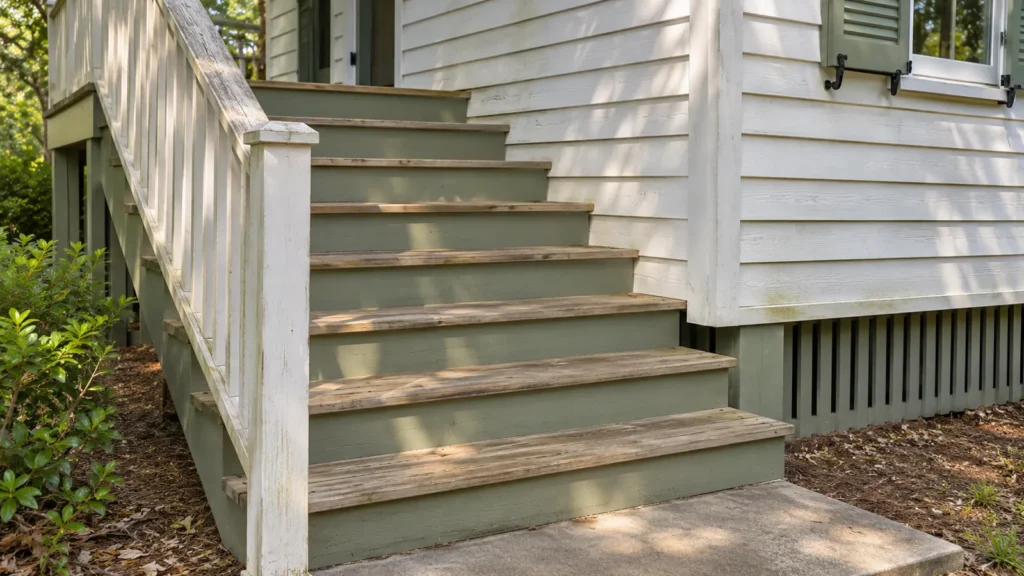
An exterior stair is more than the view of its front face. Show the approach, treads, risers and landing from positions you can reach safely. Identify the rail and nearby wall as separate components if you want them considered. Include the route from the parking or arrival area to the stair so access is understandable. A request for the roof above the entrance does not automatically include the steps below it, and a pavement request does not automatically cover a painted rail.
Tell the estimator about loose tread material, worn edges, damaged joints or an unstable rail without deliberately testing the component for a photograph. Washing is separate from repairing the stair and evaluating its structural condition. Explain if it is the household’s only entrance and discuss how access will work during the proposed visit. Confirm who moves mats or small planters and identify anything that remains in place. The accepted scope should describe the usable route and requested surfaces, not promise uninterrupted passage through an active work area or certify the stairs as slip-resistant afterward.
Distinguish landward paving from waterfront structures
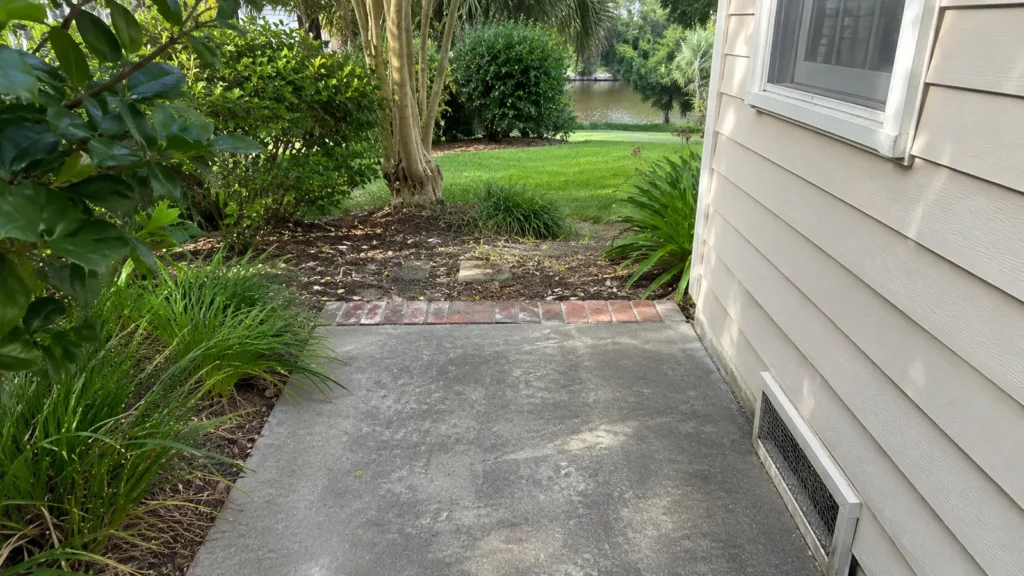
Photograph the driveway or land-side walk as its own surface. Show the material, joints, coatings and the point where the requested washing area ends. A paved side yard may lead toward another structure, but that connection should not silently include a dock, bulkhead, boat lift or decking over water. Keep those features outside the initial land-side request unless their feasibility and scope have been separately verified with an appropriate provider. This guide makes no claim about working from boats, operating over water or servicing marine equipment.
If an older stain or a particular patch of pavement is central to your request, show it in context and describe any known history. Ask what appearance is realistic for the actual material. Heated pressure washing can be discussed for suitable land-side surfaces when the provider reviews the project; do not infer that heat is appropriate for every coating or mark. Cleaning also does not repair a drain, resolve persistent standing water or establish an approved route for wash water. Explain those site concerns before a proposal is agreed.
Have the property photos?
Let’s define the next step.
Send the address, requested surfaces and the contact who can confirm access.
Show the ordinary land access and surroundings
Include the driveway, side passage and any controlled gate that affects the requested work. Identify routes you control and places where permission remains unresolved. Do not cross a neighbor’s parcel or assume an adjoining open area can be used because it appears in a photograph. If part of the building can only be reached through another property, disclose that limit before scheduling. The provider can then discuss whether the requested work is feasible and what additional information is needed. A neighborhood name alone does not confirm the available access.
Show nearby planting, stored equipment and exterior utility fixtures without opening covers, disconnecting equipment or moving heavy items for the estimate. Explain which objects can be relocated by agreement and which cannot. Avoid posting private gate codes in a shared photo collection; arrange necessary access information directly with the responsible contact. The objective is an accurate land-side arrival and work-boundary description. It is not a request for the cleaner to improvise water access, maintain electrical equipment or take control of a neighboring or shared property area.
Coordinate the real property and appointment
Send the actual New Orleans address with a short priority list: roof areas first, requested wall elevations next, then separately named stairs and landward pavement. Include the views showing the work boundary and the ground access. State whether the property is occupied, which entrance the household uses and who can answer questions on the appointment day. Ask the provider to confirm availability and the suitable scope before treating a preferred date as booked. A previous washing plan for another waterfront home cannot substitute for that review.
Mention other planned work, such as roofing repairs, painting or movement of large stored items, that may affect the same surfaces or access route. Identify the provider responsible for any preparation or repair requirement. Keep the cleaning inquiry separate from flood remediation, water-quality treatment and diagnosis of concealed damage. If the condition or access changes after an estimate is discussed, send an updated photograph and explain the change. The useful outcome is a current, accepted surface list with realistic boundaries rather than a broad promise to clean everything visible around the home.
Review the included surfaces by location
Keep the labeled photographs and accepted scope together so the completed work can be reviewed component by component. Compare the requested roof faces, wall elevations, stair surfaces and landward paved area separately. Give any concern a location, such as the driveway-side wall or lower stair landing, instead of describing the whole property as unfinished. Discuss a useful review time with the provider and allow for wet and dry appearance differences. Older repairs, worn finishes and some discoloration may remain visible after suitable washing.
Maintain the same boundary used at the estimate stage. An excluded dock or canal-edge feature should not become an assumed missed area during the review. Equally, ask about a clearly included land-side surface that appears to have been overlooked. Keep repair concerns with the appropriate repair provider rather than treating another wash as a solution to damaged materials. For the next request, begin from the condition and use of the actual home. Text current photographs and the address to CoKo’s, or start an online quote, so the next scope can be considered without relying on old assumptions about access or waterfront work.
A practical start.
Three useful steps.
Show the surfaces
Send wide photos and close views. Label the buildings and the areas that matter now.
Set the boundaries
Explain materials, access, preparation and the work window your property can support.
Review the scope
Confirm included surfaces, responsibilities and the next step before scheduling.
Venetian Isles Roof and Exterior Washing.
Your questions, answered.
Your next exterior project.
Start with a clearer scope.
Text your address and the priority exterior photos. For a larger project, send the full property details.
Send your address. Show us what needs cleaning.
Text your address, a wide photo and a close-up of the buildup. We’ll review the surfaces and discuss your cleaning options.
Text photos for an estimate Start an online quoteCoKo’s Pressure Washing · (504) 296-9696