
Commercial exteriors · Greater New Orleans
Guardhouse and Gatehouse Exterior Washing.
Define the building surfaces and authorized entrance access.
Text clear property photographs, the requested surfaces and available access window. Let’s define the exterior washing scope.
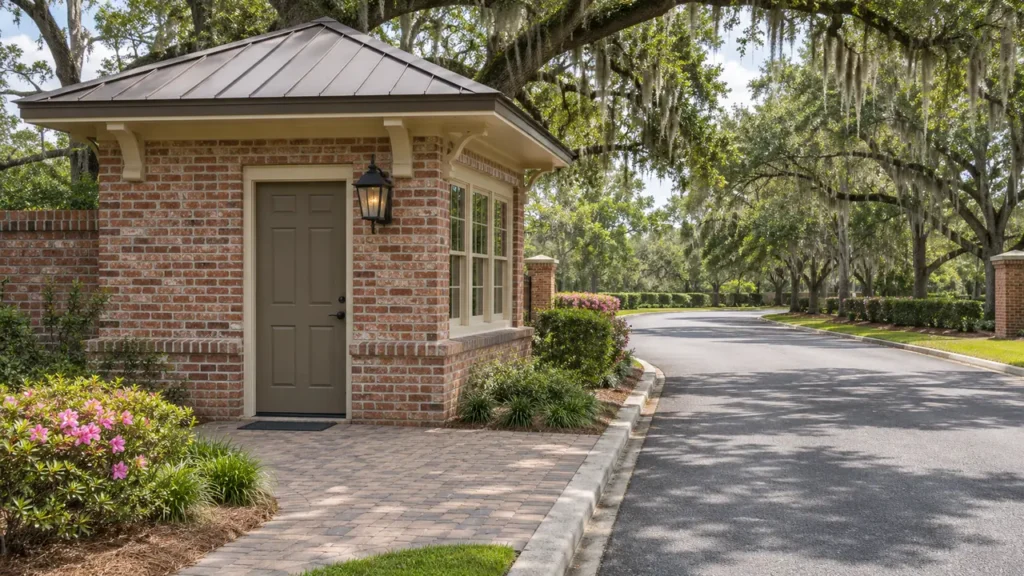
Your property. Your priorities. A clearly defined scope.
Define the building separately from the entrance system
A guardhouse or gatehouse is a small building with an unusually important access role. Its walls, roof and outside landing may need washing while people still depend on the entrance it serves. CoKo’s Pressure Washing reviews suitable exterior facility surfaces around Greater New Orleans and the Westbank. The first discussion should identify the building, the requested components and the person authorized to coordinate access. This page concerns the structure and agreed exterior pavement. It does not offer security operations, barrier-equipment service or unrestricted work inside a controlled entrance.
Label the guardhouse on an overview photograph or existing site plan and show each elevation you want considered. Some entrances have a standalone building between lanes; others have a small gate office beside a single approach. Those arrangements create different exterior boundaries. Identify the actual building rather than asking to wash the entire gate, which could be understood to include machinery, fencing or a much larger entrance area.
The roof, walls, canopy, landing and pavement should be named independently. A wall request does not automatically include a boom barrier, reader pedestal or intercom. If there is a separate visitor shelter, monument sign or pedestrian gate nearby, show its position but list it as an additional review area only when appropriate. This component list helps the property obtain a proposal for recognizable surfaces without confusing building maintenance with the equipment and operating procedures that control entry.
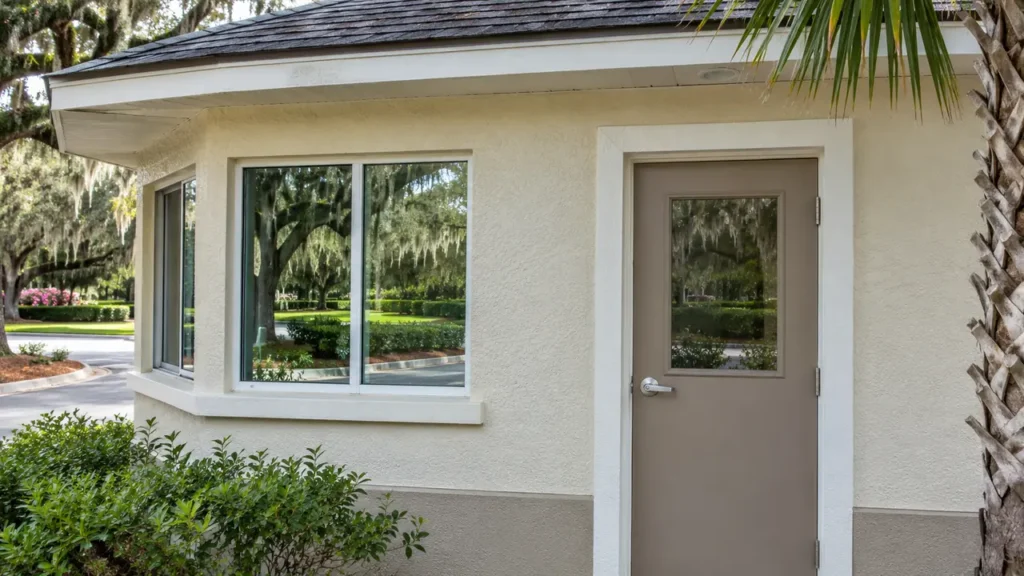
Name an authorized access coordinator
Identify the property representative who can approve the requested surfaces and the contact who can coordinate the workday. A person staffing the entrance may not have authority to authorize roof washing or changes to a vehicle route. Explain those responsibilities without sending alarm codes, access credentials or confidential security procedures. The initial inquiry needs a practical contact and building information, not a detailed description of how the property is secured.
If several organizations use the entrance, describe the relevant coordination issue at a general level. The contractor should not assume that one occupant can approve work affecting another party’s access. Any necessary site permissions or screening requirements need to be resolved through the responsible property team. A proposed date is not a substitute for authorization. Where permission is still pending, record the exact question and keep it separate from exterior surfaces that are already clearly identified for review.
Review the roof and wall finishes from the ground
Send safe ground-level photographs of the roof edges, wall materials and visible condition. A gatehouse may combine masonry, painted stucco, trim, metal roofing and glazed openings in a compact building. Provide available material or care information and point out known leaks, damaged joints, loose trim or failed coatings. The name guardhouse does not determine a suitable washing method; the installed surfaces and their condition need to be understood.
Separate the upper roof from a canopy face or exposed soffit. Roof access and suitability require their own discussion, and nobody needs to climb for an initial quote photograph. Washing cannot repair a leaking roof or restore a deteriorated finish. If other maintenance is planned, identify the relevant sequence and responsible provider. A clear exterior washing portion can fit into that larger plan without implying that it replaces roofing, painting, glazing or structural work still required.
Show occupied windows and staff doorways
Photograph closed exterior openings and the landing outside the staff door. Explain when those openings can remain closed and whether staff need to use the same doorway during the proposed window. A small office can have continuous activity even when the surrounding lane appears empty. The property should decide what operating arrangement is possible rather than assuming the building can be vacated or that staff can simply use another door.
Keep faces, documents, screens and other private information out of the scope photographs. Show the surrounding wall and frame instead of looking into an occupied workspace. Known seal problems or doors that do not close properly should be reported for the property’s separate review. Exterior washing is not a repair for water-entry defects. The proposal should identify the included outside faces and the preparation duties needed around openings, leaving internal cleaning and office equipment outside the request unless separately reviewed.
Establish a workable vehicle-lane boundary
Provide a wide view showing the building’s relationship to vehicle lanes and any pedestrian route. Describe which section the property can make available for maintenance and who controls that arrangement. A quiet moment in a photograph does not establish that the entrance can close. Deliveries, visitors and normal staff movements can continue outside advertised business hours, so the property’s actual operating window matters more than an assumed early-morning gap.
CoKo’s should not be expected to run a security checkpoint, operate barriers or direct entry decisions as part of washing a wall. Any required lane controls or alternative access arrangements must be agreed by the responsible parties. If only one elevation can be released at a time, explain that restriction for review without assuming a particular phased method is always workable. The requested surface and the available area need to fit together before the scope is treated as ready for scheduling.
Have the property photos?
Let’s define the next step.
Send the address, requested surfaces and the contact who can confirm access.
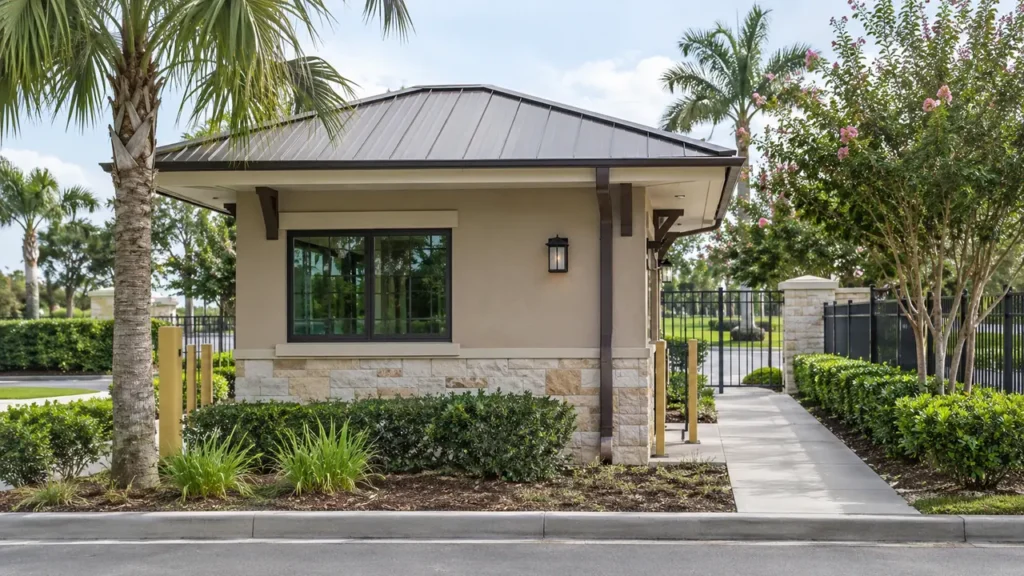
Identify machinery and attachments without including them
Show the positions of cameras, lights, reader units, intercoms, barrier mechanisms and electrical fixtures near the requested surfaces. Do not send sensitive equipment identifiers or technical configuration details in the initial message. The useful information is their physical relationship to a wall, roof edge or pavement boundary. Their presence can affect the review even when they are excluded from washing.
The property should coordinate any necessary equipment preparation with the responsible provider. A general building request does not imply disconnecting power, opening control boxes, washing moving mechanisms or testing security functions. Decorative signs and window films can also have their own care requirements. When suitability is unresolved, retain an explicit exclusion rather than promising treatment of everything around the entrance. This keeps the review focused on ordinary facility surfaces while the property manages its separate equipment and operating responsibilities.
Describe the landing and surrounding hard surfaces
Mark the specific landing, approach strip or pavement section you want reviewed. It may have a different material and maintenance history from the main entrance lane. Include joints, coatings, patches and visible wear in the photographs. Tell CoKo’s what prompted the request, such as ordinary soil or shaded buildup, without assuming that every mark has the same cause or can be removed completely.
Show nearby planting, low areas and drainage features so the location can be assessed in context. A visible drain does not establish an appropriate wash-water destination. Site requirements and a suitable handling arrangement need review before work proceeds. Washing also does not repair uneven paving, change a drainage slope or certify the entrance’s compliance with access requirements. If the larger drive or parking area needs attention, describe it as a separate surface scope rather than letting a small gatehouse request expand into an undefined property-wide project.
Keep a practical scope and handover record
Text the property location, labeled exterior photographs, requested component list and authorized contact. Add material information, known defects and the maintenance window the property can actually provide. Use a general description of access requirements while keeping credentials and confidential instructions out of the first inquiry. The commercial project form can hold a longer building and surface list when several entrances need review.
Before any agreed work, confirm the included elevations, preparation responsibilities and property-managed access arrangement. After the washing portion, review the same surfaces and distinguish remaining stains, worn finishes and repair conditions from ordinary soil. Keep dated photographs with the accepted boundary so a later manager does not have to interpret a vague instruction to repeat the gate cleaning. Update the record when equipment, wall finishes or entrance patterns change. A useful guardhouse proposal remains a defined building-surface service, with security operations and technical maintenance under separate control.
A practical start.
Three useful steps.
Show the surfaces
Send wide photos and close views. Label the buildings and the areas that matter now.
Set the boundaries
Explain materials, access, preparation and the work window your property can support.
Review the scope
Confirm included surfaces, responsibilities and the next step before scheduling.
Guardhouse and Gatehouse Exterior Washing.
Your questions, answered.
Your next exterior project.
Start with a clearer scope.
Text your address and the priority exterior photos. For a larger project, send the full property details.
Send your address. Show us what needs cleaning.
Text your address, a wide photo and a close-up of the buildup. We’ll review the surfaces and discuss your cleaning options.
Text photos for an estimate Start an online quoteCoKo’s Pressure Washing · (504) 296-9696