
Commercial exteriors · Greater New Orleans
Goods Donation Center Exterior Washing.
Plan facility washing around intake and donated goods.
Text clear property photographs, the requested surfaces and available access window. Let’s define the exterior washing scope.
Your property. Your priorities. A clearly defined scope.
Define the donation facility and its boundaries
A goods-donation center brings vehicles, donated items, staff and sometimes volunteers into a concentrated handover area. A useful exterior washing scope must distinguish the building and pavement from the goods passing through it. CoKo’s Pressure Washing reviews suitable commercial exterior surfaces around Greater New Orleans and the Westbank. Begin with photographs of the donation approach while it is empty, identify the responsible site contact and explain which parts of the facility can be cleared. Donated property, sorting operations, waste handling and interior processing remain separate from this exterior facility request.
Describe whether the location is a standalone collection building, a staffed receiving point attached to a retail operation or one tenant in a larger center. Show the requested frontage, vehicle approach and any covered handover area. A freestanding collection bin in someone else’s parking lot is not the same scope as a building. Identify who owns or manages each structure and surface before assuming it can be included in the same proposal.
Mark the washing boundary on a wide photograph. The area where a donor stops, the staff doorway and the receiving apron may be close together but have different operating requirements. Name each requested component rather than asking to clean the entire donation operation. If the project also involves a retail entrance, treat that as a separately described area with its own customer access. This makes the quote easier to review and prevents a narrow collection-point request from expanding without clear authorization.
Keep donated goods under the center’s control
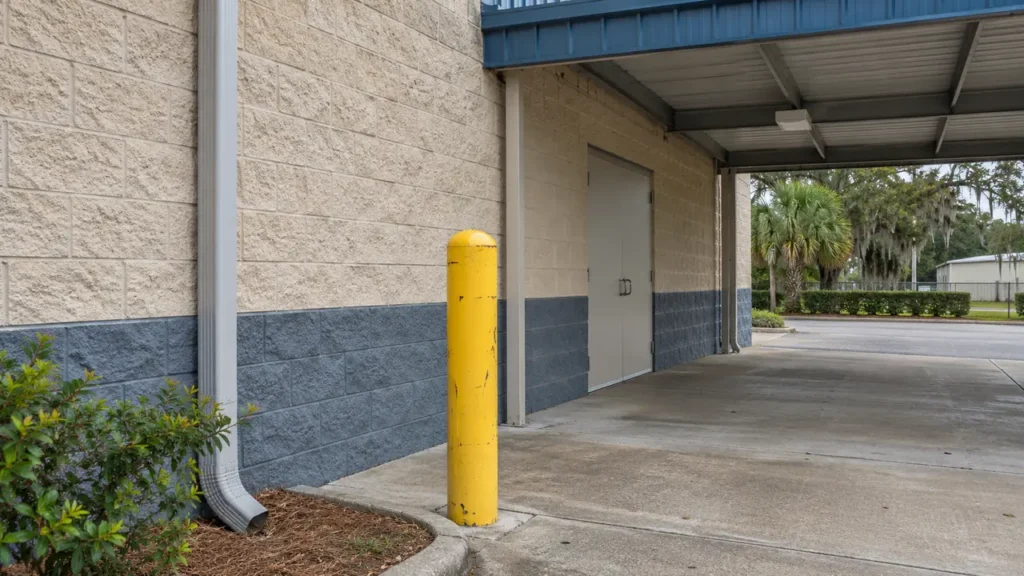
The center should arrange removal of bags, boxes, furniture and other donated goods from the proposed washing area. Staff must decide where those items can wait and who is responsible for moving them. A washing contractor cannot determine which belongings are accepted inventory, property awaiting a decision or items the center intends to discard. None should be treated as disposable merely because it is sitting outside a receiving door.
Explain whether donations can continue arriving while an exterior section is set aside. If the site needs to pause intake, the center should manage that communication and the practical handover arrangement. An old photograph of an empty apron does not establish that the current site can remain clear. Provide a realistic preparation plan that accounts for staff, volunteers and donor activity, without assuming the washing crew will sort, relocate or safeguard incoming goods as part of ordinary building-surface work.
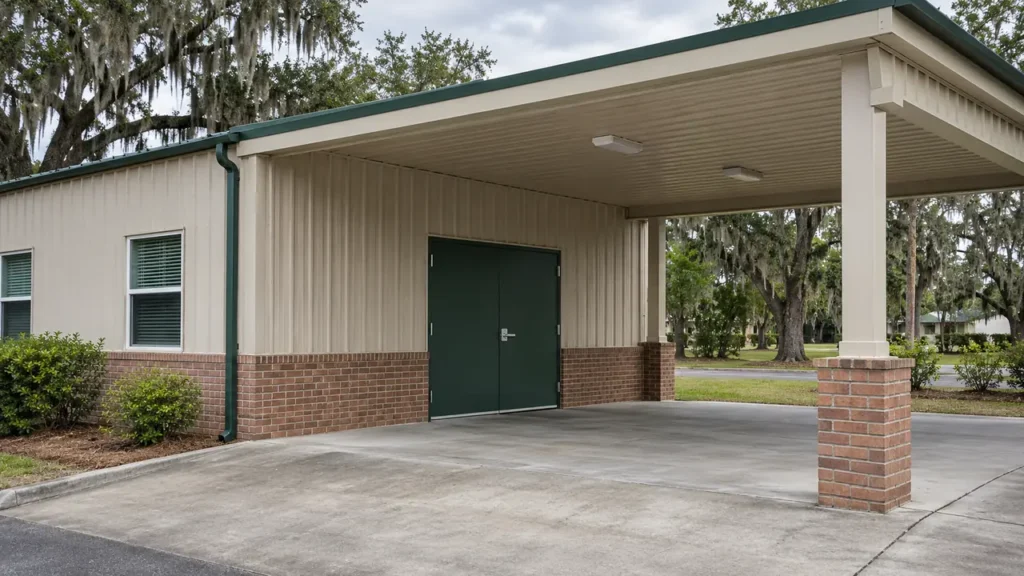
Review the covered handover structure by component
A covered donation point can combine roof panels, exposed underside framing, posts, wall faces and pavement. List the portions you want considered. The upper roof is separate from the canopy underside, and a wall-washing request does not automatically include every overhead fixture. Photograph roof edges and supports from the ground and provide available material information. Do not climb onto a roof merely to obtain an estimate photograph.
Include lights, cameras, signs, outlets and any equipment attached near the work area. Identify known leaks, loose components, failing coatings and previous repairs. Washing does not fix these conditions. A suitable scope should respect actual materials and finish condition, with repair needs kept visible as separate decisions. If a property manager controls the canopy or roof while the charity operates the intake area, bring that responsibility into the conversation before either component is treated as authorized work.
Explain donor vehicle and pedestrian movements
Show where vehicles enter, stop and leave. A drive-up donation lane may share an approach with customer parking, a neighboring tenant or a service vehicle route. Describe those connections directly instead of presenting the collection point as an isolated apron. Include the place where people step out of vehicles and the route staff use when receiving items, while keeping faces, license plates and private information out of the initial photographs.
The center should identify the person who can release the agreed section and manage its normal intake activity during the work window. CoKo’s should not be expected to accept donations or direct donors into an improvised handover point. If only part of the approach can be cleared, explain that limit before a proposal depends on closing the whole area. The practical access decision belongs alongside the surface list, not as a last-minute detail after a date has been discussed.
Separate ordinary pavement soil from other conditions
Photograph the surface that concerns the center and describe what is known about its history. An apron may show tracked dirt, shaded buildup, vehicle-related marks or differences caused by previous repairs. These are not all the same condition. The review should identify the material, any coating and realistic improvement limits rather than promise that older pavement will become uniformly new-looking after washing.
Unknown residues, leaking containers or suspected hazardous items should be disclosed and handled through the center’s appropriate separate process. Ordinary exterior washing is not waste transport, dumping cleanup or specialist remediation. If goods cover the requested area, arrange clearance before using a photograph to assess the pavement beneath them. The quote should make clear which exposed surfaces are included and which areas remain unreviewed, so an appearance-maintenance request does not become an undefined cleanup obligation.
Have the property photos?
Let’s define the next step.
Send the address, requested surfaces and the contact who can confirm access.
Identify receiving doors and service-side restrictions
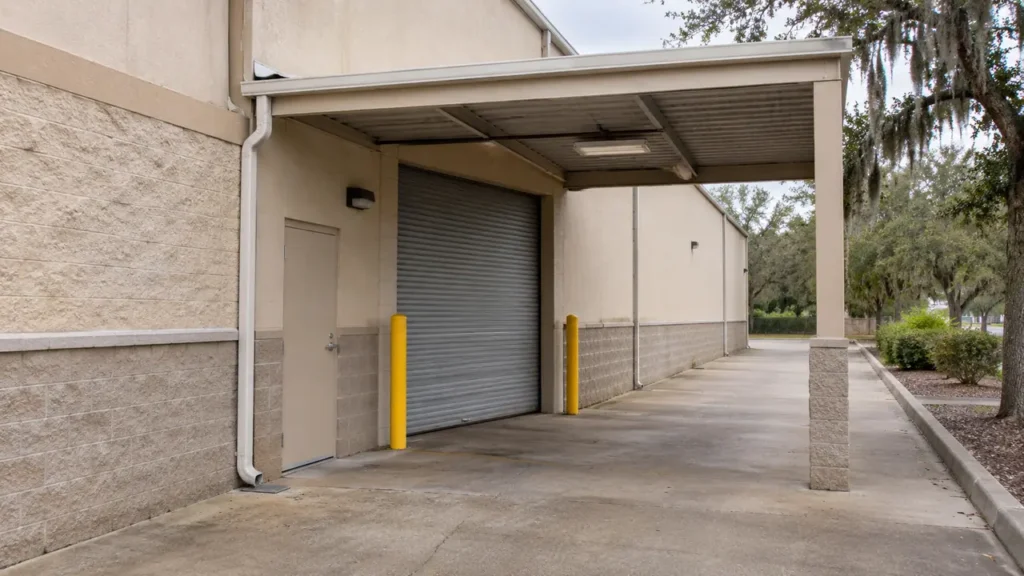
The receiving side may include a roll-up door, staff entrance, loading apron or a route used to move accepted goods indoors. Photograph closed doors and the clear exterior approach, then describe the operating window when that area can be released. Washing the outside wall or pavement does not imply opening the building, handling inventory, unloading a vehicle or working inside a sorting space.
List carts, portable racks, bins and other objects that affect access. The center should identify what staff can move and which items belong to another provider. Fixed equipment and utility fixtures require their own boundary decisions; they should not be included simply because they appear against the wall. If a receiving door must open repeatedly for normal operations, discuss that restriction before assuming the same section can be washed during active intake or inventory movement.
Coordinate the property and preparation responsibilities
An operator may control donation intake while a landlord controls shared pavement, roof areas and neighboring access. Identify the authorized contact for every requested area. Show nearby planting, drains, low spots and adjacent entrances in the overview photographs. Site conditions and appropriate water handling require review; a visible drain is not automatic permission to direct wash water toward it. Keep unresolved site questions separate from an otherwise clear surface request.
The preparation note should say who clears goods, who confirms the approach is ready and who can respond if intake arrangements change. Where volunteers rotate, use a named responsible contact rather than assuming everyone on site knows the plan. A simple written boundary and preparation list is more useful than relying on a verbal instruction passed between shifts. It also gives a manager something concrete to compare when reviewing proposals for several collection locations.
Use the same scope list before and after washing
Text the property location, labeled building photographs, requested wall or canopy components and marked pavement boundary. Add material information, known damage, the intake pattern and the clearance window the center can provide. If several buildings are involved, label each location and its own constraints. A useful inquiry describes the exterior facility without sending donor records, internal inventory information or unrelated confidential details.
Before work, confirm that the agreed surfaces and approach are available and that the center has completed its preparation duties. At handover, review the same components and distinguish remaining stains, finish wear and repair conditions from ordinary surface washing. Save dated photographs and the accepted area list for future maintenance requests, updating them when intake routes or building finishes change. The result is a defined exterior washing conversation, with goods handling and other operational services kept under the center’s separate control.
For multiple collection points, distinguish each address and canopy clearly; the number of locations does not establish that their materials or intake arrangements match.
A practical start.
Three useful steps.
Show the surfaces
Send wide photos and close views. Label the buildings and the areas that matter now.
Set the boundaries
Explain materials, access, preparation and the work window your property can support.
Review the scope
Confirm included surfaces, responsibilities and the next step before scheduling.
Goods Donation Center Exterior Washing.
Your questions, answered.
Your next exterior project.
Start with a clearer scope.
Text your address and the priority exterior photos. For a larger project, send the full property details.
Send your address. Show us what needs cleaning.
Text your address, a wide photo and a close-up of the buildup. We’ll review the surfaces and discuss your cleaning options.
Text photos for an estimate Start an online quoteCoKo’s Pressure Washing · (504) 296-9696

