
Commercial exteriors · Greater New Orleans
Hardware Store Exterior Washing.
Plan building washing around outdoor stock and receiving.
Text clear property photographs, the requested surfaces and available access window. Let’s define the exterior washing scope.
Your property. Your priorities. A clearly defined scope.
Divide the storefront into workable areas
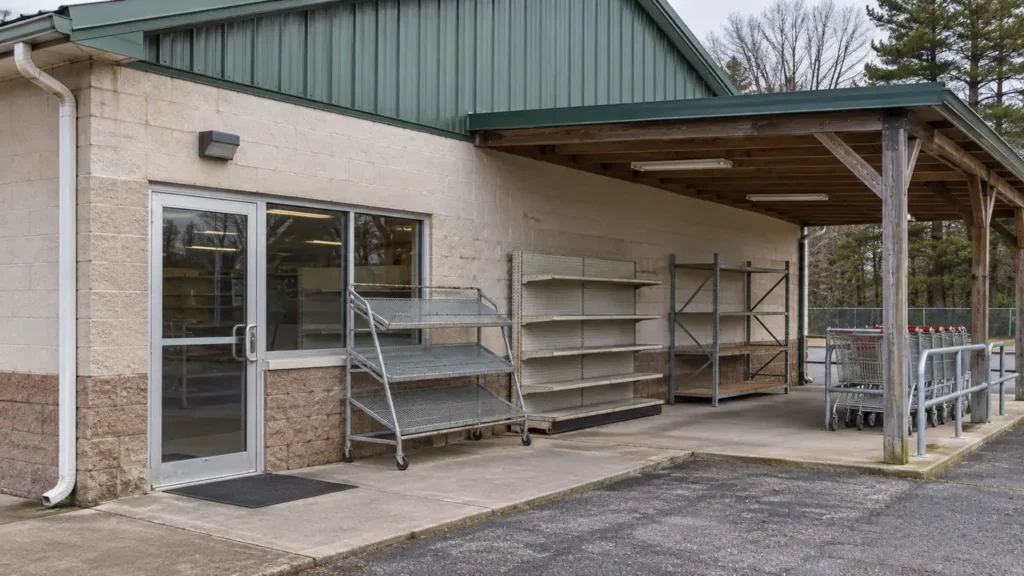
A hardware store’s exterior is both a building and a working retail space. Customers may collect bulky purchases near the entrance while staff move stock through a separate receiving area. CoKo’s Pressure Washing reviews the building and hard-surface portions of that setting for Greater New Orleans and Westbank properties. A useful request explains what can be cleared, which doors must stay available and which surfaces belong in the washing scope. Text photographs of the frontage and receiving approach before treating the entire store exterior as a single task.
Start with the front wall, entrance threshold, sidewalk and any covered customer area. Mark the sections you want reviewed and show where each one stops. A freestanding hardware shop may have a different property boundary from a store in a shared shopping center. Identify whether the store or the property manager controls the sidewalk, canopy and adjacent parking area, so the person requesting the work can authorize the proposed surfaces.
Outdoor racks, carts and displays should be distinguished from the building itself. A photograph showing a rack does not establish that its contents can be washed or moved by the contractor. State whether you are requesting the wall behind it, the pavement underneath it or the rack as a separate item. This avoids confusing a manageable exterior-building project with a broad merchandise-cleaning request that has never been discussed.
Give outdoor merchandise a store-managed plan
Hardware retailers may display bagged goods, seasonal products, tools or other stock outside. The store should decide what needs to be moved, where it will be kept and who will confirm the area is clear. A contractor cannot judge which packages may tolerate moisture or which inventory needs special handling. Make merchandise preparation an explicit store responsibility rather than an assumption left until the workday.
Some products and equipment need more than a simple relocation decision. Identify fuel, propane, chemicals, batteries, electrical equipment or other restricted stock that affects the area, without requesting that CoKo’s handle it. The store’s responsible team should manage those items through its own procedures. Ordinary exterior washing is not hazardous-material remediation or a substitute for a product-specific spill response, and unusual conditions need a separate qualified review before a washing scope is confirmed.
Match the review to the wall and canopy finishes
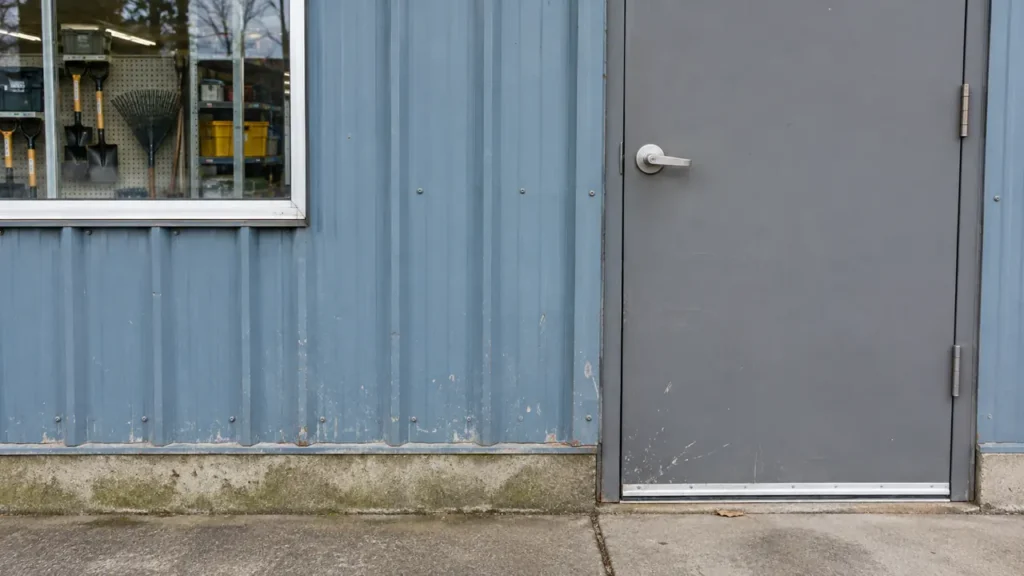
The storefront may combine painted metal, masonry, coated panels and glazed doors. Send close photographs of each requested finish and mention known leaks, peeling paint, loose trim or previous repairs. A pressure level or cleaning method should not be selected from the store category alone. The actual material and its condition determine what needs review, and some surfaces may need repair or a narrower exclusion before washing can be considered.
A canopy can have an upper roof, visible underside, support posts, signs and lights, all with different access issues. List the portions you want included. Do not assume a request for the front wall covers overhead components or electrical fixtures. If the canopy is part of a landlord-maintained structure, bring that contact into the conversation early so the quote does not cross a maintenance responsibility the store cannot authorize.
Keep customer pickup and entrance access clear
Explain how customers normally enter, where pickup takes place and whether staff use the same doorway for stock movement. A planned work area needs to fit those routines. Give the available closure window and identify any route the property must keep open. The store should communicate temporary access arrangements to its own staff and customers rather than relying on washing equipment to serve as a makeshift access barrier.
Show ramps, door landings, cart areas and nearby parking spaces in the photographs. If the project can only proceed before opening or after a particular pickup period, say so before a date is discussed. A small entrance can still require careful coordination when customers carry long or heavy items through it. The practical goal is a clearly defined area with a store contact who can confirm it is ready for the agreed work.
Review the receiving side as a separate request
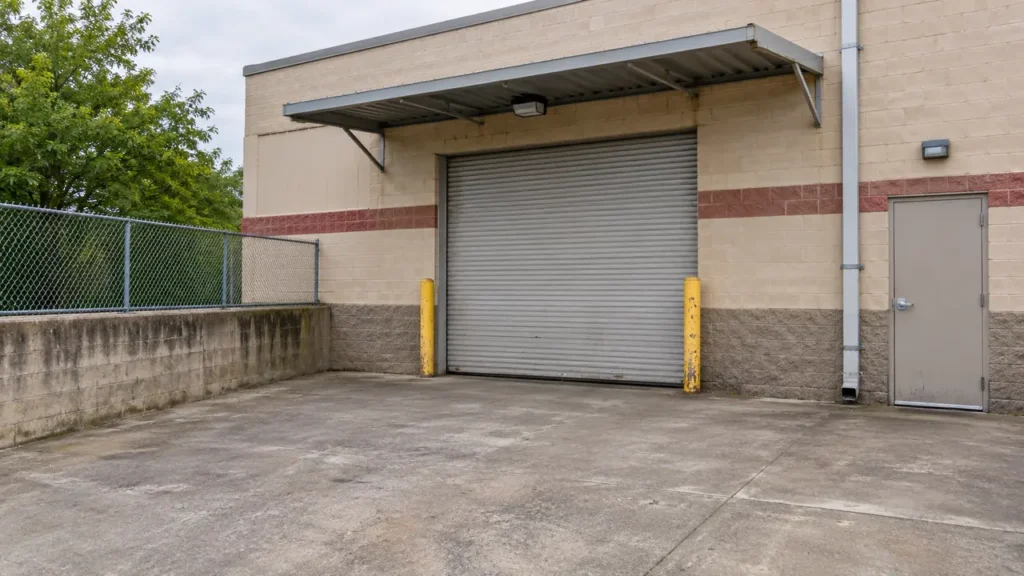
The rear or side receiving area often has a different surface history from the public entrance. Photograph the closed receiving door, apron, wall edges and approach. Explain whether deliveries can be paused and whether the store can remove stock, pallets and portable equipment. A loading area should not be included only because it appears in the background of a storefront photograph; name it explicitly if it is part of the request.
Marks on a delivery apron may involve ordinary soil, finish wear or a particular incident that needs its own response. Describe what the store knows without asking washing to resolve every unknown stain. CoKo’s should not be expected to move goods or handle leaking containers. If a condition falls outside ordinary exterior-surface washing, record that boundary and let the responsible property team arrange the appropriate separate service.
Have the property photos?
Let’s define the next step.
Send the address, requested surfaces and the contact who can confirm access.
Separate hard surfaces from signs and equipment
Door frames, bollards, painted posts and cart-return structures can require individual material review. Identify them by name instead of describing everything near the entrance as concrete. Close photographs help show finish condition and whether the feature is fixed or movable. If a painted element is already deteriorating, washing cannot restore its coating, and that limitation should be understood before it is included in a proposal.
Signs, security cameras, outlets and mounted equipment also need to be visible in the scope photographs. Do not assume a building-washing quote includes servicing these items. The store or property manager should coordinate necessary preparation with whoever is responsible for the equipment. Exterior washing should remain a defined building-surface task, without turning into an electrical, signage, inventory or fixture-maintenance service through an unclear description.
Use a stock-aware preparation and review sequence
First, send marked photographs and identify the store contact and any landlord contact. Second, agree on the surfaces, material limitations, access window and the store’s stock-clearance responsibilities. Third, have the responsible person confirm that the work area is clear and the agreed delivery and customer arrangements are in place. This sequence gives the quote a realistic operational setting without making promises about how the store will manage its own business.
Afterward, review the included frontage and hard surfaces against the same list. Separate remaining finish wear or staining from areas of ordinary washing. If the building also needs roof, sidewalk or loading-area work, those can be described as additional scopes with their own boundaries. A component-based handover makes it easier to plan later maintenance and avoids presenting one exterior visit as a cure for every appearance or property condition.
Send a quote request that reflects the store layout
Text the address, wide frontage photographs, close material views and a marked list of requested areas. Add photographs of the receiving side if it is included. Explain outdoor display removal, cart storage, delivery times, customer pickup patterns and the window when a defined area can be set aside. If another party maintains the canopy or sidewalk, include that responsibility in the initial message so the right scope can be discussed.
CoKo’s can review the building and surface-washing portion from those details and discuss what further site information is needed. Avoid starting with an unsupported promise that every stain, sign or stocked display can be cleaned in place. A specific hardware-store request gives a manager something useful to compare: the same included surfaces, the same preparation duties and the same access assumptions. Clear photographs sent by text are the most direct way to begin that conversation.
Where a store uses temporary seasonal displays, describe the layout expected during the proposed work window rather than relying on an older photograph. A frontage that is open in one season may be crowded with goods in another. Mark the specific wall or pavement beneath the display and explain how the store will clear it. If display removal is uncertain, record that as an unresolved preparation item instead of assuming the contractor can work around stocked shelves.
A practical start.
Three useful steps.
Show the surfaces
Send wide photos and close views. Label the buildings and the areas that matter now.
Set the boundaries
Explain materials, access, preparation and the work window your property can support.
Review the scope
Confirm included surfaces, responsibilities and the next step before scheduling.
Hardware Store Exterior Washing.
Your questions, answered.
Your next exterior project.
Start with a clearer scope.
Text your address and the priority exterior photos. For a larger project, send the full property details.
Send your address. Show us what needs cleaning.
Text your address, a wide photo and a close-up of the buildup. We’ll review the surfaces and discuss your cleaning options.
Text photos for an estimate Start an online quoteCoKo’s Pressure Washing · (504) 296-9696

