
Commercial exteriors · Greater New Orleans
Commercial screen enclosure washing.
The mesh. The frame. A clearly bounded enclosure.
Text the complete enclosure, panel condition and access photos. Let’s identify the surfaces suitable for review.
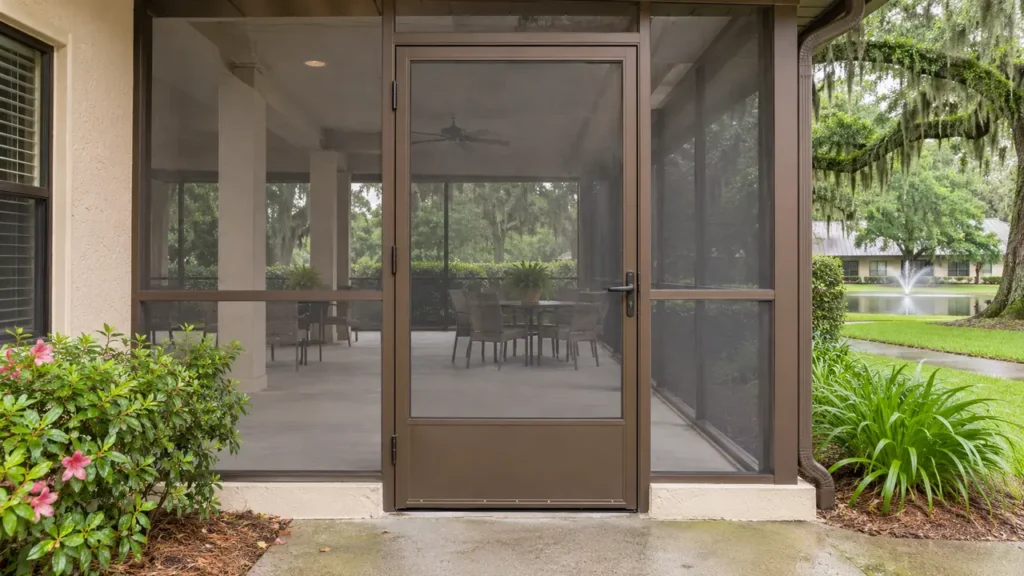
Your property. Your priorities. A clearly defined scope.
Describe the enclosure before counting the panels
A screened patio enclosure is a structure with several materials, not simply a wall of mesh. Its frame, fixed panels, door, roof sections and surrounding floor each need a clear place in the cleaning request. A property manager may want dusty screen panels reviewed while the deck beneath them needs no work. Another facility may be concerned mainly with buildup on the lower frame. Those are different scopes.
CoKo’s reviews suitable commercial screen-enclosure exterior-washing requests around Greater New Orleans and the Westbank. Text photographs of the complete structure, the panel condition and the approach on each side. Fixed patio enclosures are considered separately from removable window screens, glass rooms and powered shades. The accepted work depends on the actual assembly, accessible surfaces and available care information, with repairs and dismantling kept outside ordinary washing.
Start with an outside overview showing where the enclosure meets the building and how its roof is arranged. Include a second view from inside if the area is normally accessible. State whether it encloses a dining patio, clubhouse veranda or pool surround. That use affects the preparation and operating plan even when the screen material itself appears similar.
Count the requested wall sections and identify doors, lower kick panels and roof screens separately. A quote for the wall panels is not automatically a quote for the entire overhead enclosure. Solid roof sections, gutters, glass panels and nearby building walls should also be identified rather than blended into a single description. A marked photograph can show an awkward corner more accurately than a panel total that says nothing about height or reach.
Establish the mesh and frame materials
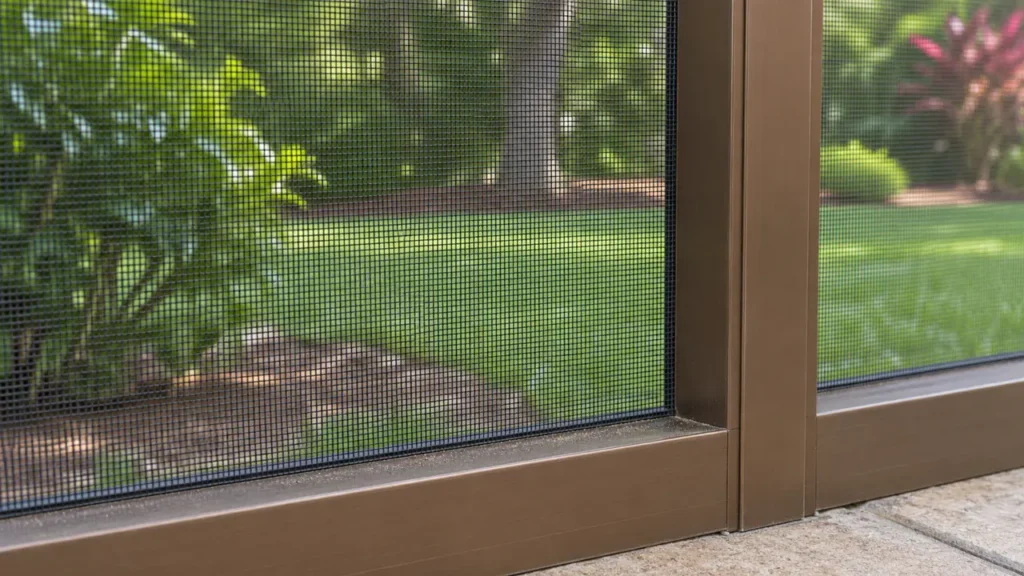
The screening and the frame should have separate entries in the request. Mesh may differ in construction, finish or age from one section to the next. A replaced panel can look similar to its neighbors without having the same care requirements. Provide the installer’s information or available product records and disclose any coated or treated material.
Phifer’s screen-cleaning guidance emphasizes gentle handling of screens and light rinsing rather than aggressive treatment. It is a useful reminder to identify the installed product, not permission to use one process on every enclosure. The proposed method must fit the mesh, its condition and the surrounding finish. We do not promise to restore damaged screening, brighten every aged metal coating or remove all discoloration. A fragile or unidentified panel may need further review before it can be included.
Photograph existing tears, loose panels and finish wear
Give close views of the lower corners, attachment edges and any places that concern the property. Note torn mesh, pulled edges, loose-looking sections, corrosion or a door that does not close normally. These observations should be passed to the appropriate enclosure or screen professional when repair is needed. Do not remove a fastening strip or pull on a panel to demonstrate its condition.
Cleaning is not a tensioning service, rescreening job or structural inspection. The same distinction applies to roof framing and attachments to the building. If a component is damaged or unsuitable for the proposed cleaning, it should be excluded or dealt with before washing. An intact-looking wide photograph should not hide a known weak area. A useful condition record prevents existing deterioration from becoming an unreasonable expectation that the cleaning visit will fix it.
Decide which faces can actually be reached
A screen wall has two sides, and access outside the enclosure may be very different from access inside it. Show planted beds, narrow side strips, neighboring fences and changes in elevation. The exterior of an otherwise low panel can be difficult to reach if it stands beside a drop or restricted property. Tell us who controls those adjacent spaces.
Overhead sections require their own assessment of height and working approach. We do not assume that a mesh roof or frame can be walked on, and property staff should not climb onto it for photographs. There is no automatic promise to wash every high or obstructed section. The scope should identify the faces that can be reached under the agreed setup and leave unresolved areas clearly listed rather than burying them in an enclosure-wide total.
Prepare the occupied area inside the screens
An enclosed patio can function as a dining room, guest amenity or resident gathering space. Explain its opening hours and identify the person who can take it out of use. Washing should be scheduled with a practical plan for furniture, customers and staff, rather than relying on a cleaner to negotiate occupied tables as work progresses.
List portable chairs, cushions, table items, display pieces and decorations that the property will relocate. Name any fixed fixtures that need preparation or protection by facility staff. Lights, outlets, fans, heaters and powered door hardware are not automatically included as washable enclosure components. Their servicing is outside this scope. If food service uses the veranda, the operator should establish its own preparation and reopening requirements; exterior appearance washing is not a food-equipment sanitation service.
Have the property photos?
Let’s define the next step.
Send the address, requested surfaces and the contact who can confirm access.
Separate a pool enclosure from pool maintenance
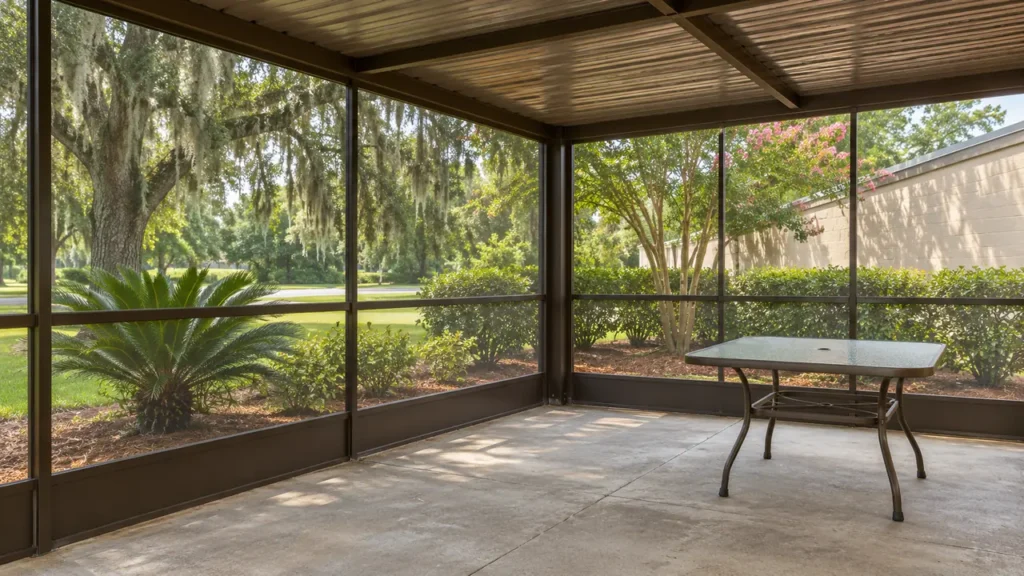
If the structure surrounds a pool, the property’s pool representative needs to explain operating conditions and protection arrangements before enclosure work is approved. Cleaning screen or frame surfaces is separate from cleaning pool water, treating water chemistry, servicing equipment or entering the basin. A pool visible behind the panels does not expand the scope to include it.
The floor also requires its own boundary. A request for mesh and frame washing does not automatically include the pool deck, coping or a patio coating. Identify how water can be managed while surrounding areas remain protected and show any existing low points or drainage concerns. No permission to direct washing water into the pool, adjacent property or a specific drain is implied. An unresolved protection or water-route issue needs a real plan before scheduling.
Compare estimates by components instead of enclosure size alone
An enclosure measurement helps only when everyone understands what it represents. A floor footprint does not describe the wall area, roof sections or number of accessible faces. Give available dimensions along with labeled photographs and note any changes in roof height. Do not climb or stretch across an unsafe area just to produce exact measurements for an initial request.
A comparison-ready proposal identifies included mesh faces, frame members, doors and any separately accepted solid panels. It should also state access assumptions, preparation responsibilities and exclusions. Ask how an unexpected loose panel or deteriorated finish will be handled. Two estimates may describe very different work even when both use the words screen cleaning. The useful question is whether each one names the same components, materials and feasible approach.
Include any removable curtains or roll-down shades installed inside the fixed enclosure when explaining the setup. Those accessories may cover a screen panel without being part of its construction. The property should identify their care requirements and decide who can retract or relocate them. Cleaning fixed mesh does not authorize operating a motorized shade or removing its controls. A simple photograph with the accessories in their normal position helps identify where the accepted access would otherwise be obstructed.
Keep the handover focused on the accepted washing work
Arrange for an authorized property contact to review the named components afterward. Use the starting photographs to locate existing tears, replacement panels and finish differences. A cleaner mesh panel may change the way light passes through it, while an old frame finish can remain uneven. Judge the work against the agreed removable buildup and condition limits rather than a promise that the enclosure will look newly installed.
Keep any deferred repair items in the facility’s maintenance record and discuss them with the appropriate enclosure specialist. Future washing requests should reflect those repairs and any new panels or finishes. To begin, text CoKo’s the property address, full-structure views, close condition photographs and the enclosure’s normal use. Tell us whether the request is for wall screens, frames, doors or overhead areas so the review starts with a complete, honest boundary.
A practical start.
Three useful steps.
Show the surfaces
Send wide photos and close views. Label the buildings and the areas that matter now.
Set the boundaries
Explain materials, access, preparation and the work window your property can support.
Review the scope
Confirm included surfaces, responsibilities and the next step before scheduling.
Commercial Screen Enclosure Washing.
Your questions, answered.
Your next exterior project.
Start with a clearer scope.
Text your address and the priority exterior photos. For a larger project, send the full property details.
Send your address. Show us what needs cleaning.
Text your address, a wide photo and a close-up of the buildup. We’ll review the surfaces and discuss your cleaning options.
Text photos for an estimate Start an online quoteCoKo’s Pressure Washing · (504) 296-9696

