
Commercial exteriors · Greater New Orleans
Commercial soffit and fascia washing.
The underside. The edge. A defined roofline scope.
Text the marked roofline photos, materials and access details. Let’s review the exterior surfaces you want washed.
Your property. Your priorities. A clearly defined scope.
Distinguish the underside from the edge and the gutter
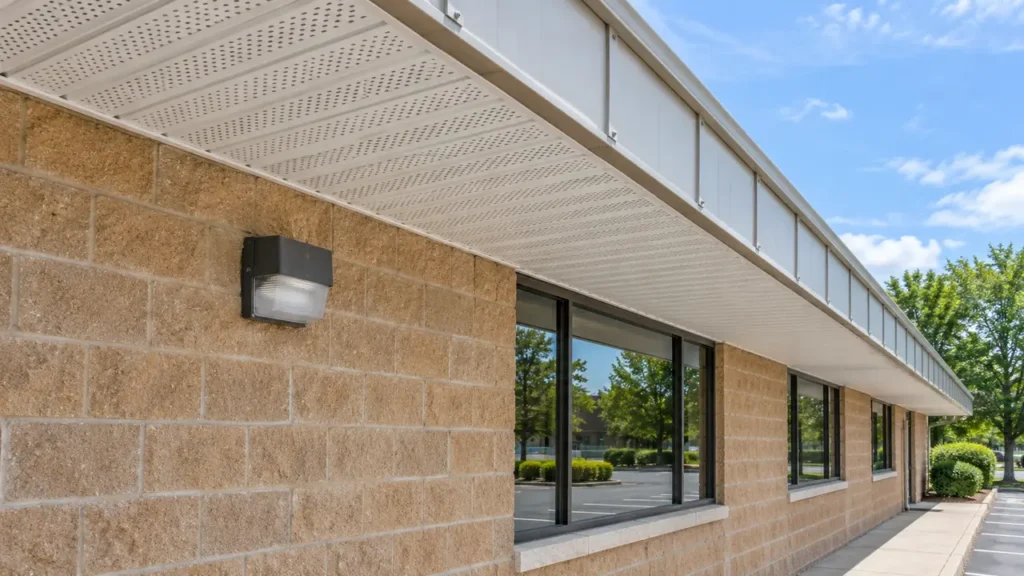
A dark roof edge can be a soffit or fascia problem even when the roof surface itself is not the part the manager wants washed. The horizontal underside, the vertical edge board and the gutter are different components. On a small office, retail building or community facility, an accurate request identifies which one looks dirty and shows the route underneath it. That is more useful than asking for an undefined roofline wash.
CoKo’s can review a commercial soffit and fascia exterior-washing request in Greater New Orleans and the Westbank. Begin with ground-level photographs of each affected elevation and the materials beneath the overhang. This scope concerns suitable visible exterior surfaces. It does not include roof repair, opening the roof assembly, gutter-debris removal or servicing lights and vents unless a separate appropriate arrangement has been made.
Stand back far enough for a photo to show how the roof projects beyond the wall. Mark the soffit beneath that projection and the fascia facing outward along its edge. A gutter may hide some of the fascia, and a fascia return can extend around a corner that is easy to miss. Naming those parts avoids an estimate in which the buyer and cleaner picture different surfaces.
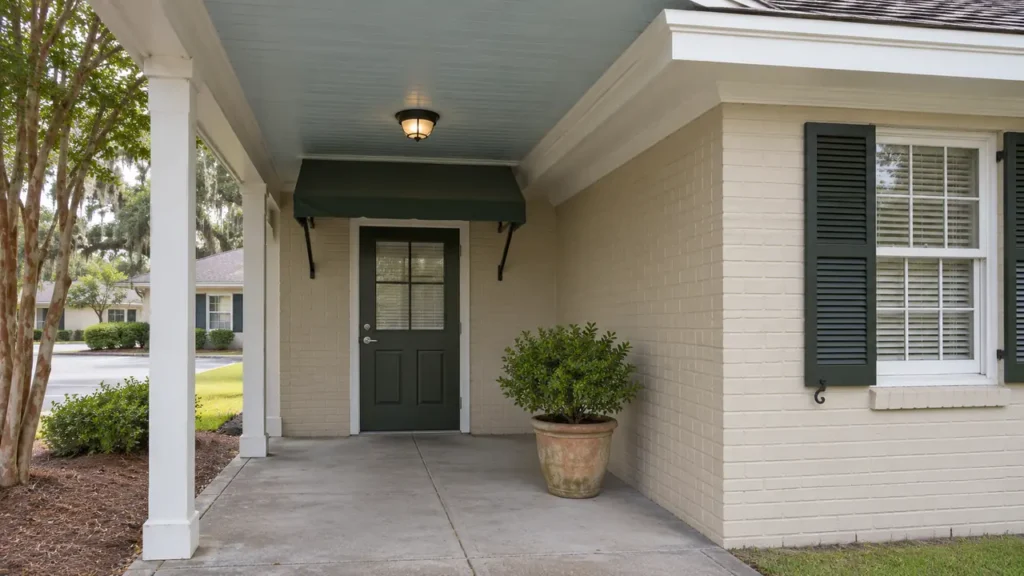
Then identify the elevations you want reviewed. A shaded side entrance may look different from a road-facing edge, while a covered porch may have its own ceiling material. Say whether the requested boundary includes that porch ceiling or stops at the narrow roof overhang. Do not assume the roof covering, upper wall and gutter channel are included simply because they appear together in the same photograph.
Match the surface information to the actual panels
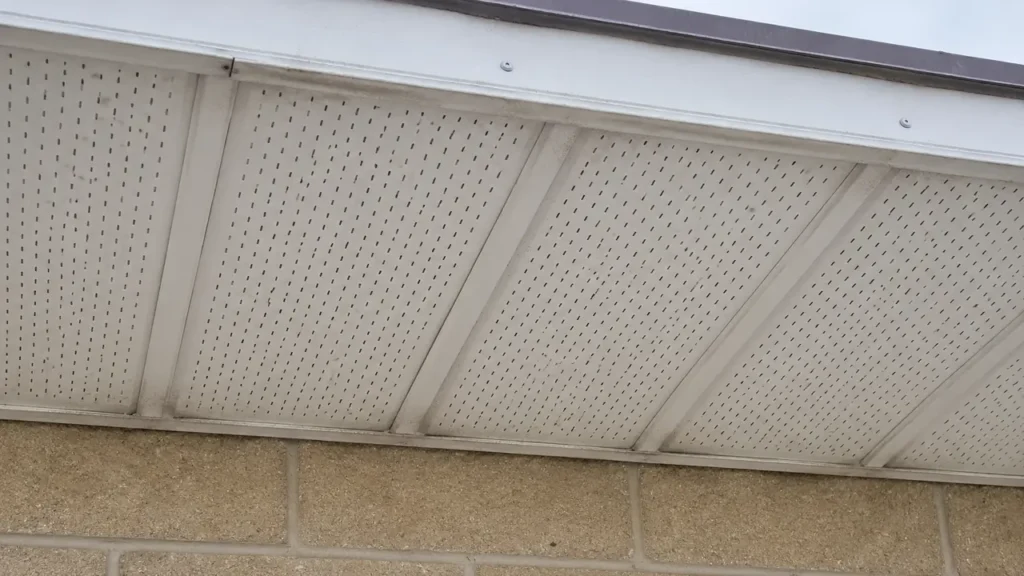
Soffits may contain perforated vinyl, painted wood, fiber-cement panels, metal or another material. The fascia can have a different finish again. Provide records from the installer or identify any replacement sections you know about. A white panel in a distant photograph is not enough information to decide that all the material can tolerate the same treatment.
CertainTeed’s vinyl-cleaning guidance cautions about moisture intrusion and advises against prolonged or high-pressure rinsing of open ventilated areas. That supports a careful material review, not a universal method for every product mounted under a roof. The actual assembly and its care information must guide the proposed washing. Disclose recent painting, failed coatings and any instructions supplied with repairs. We do not remove panels, paint the roof edge or promise that washing will restore the finish of every replacement piece.
Look at ventilation and openings without turning cleaning into inspection
Photograph visible vents, gaps, light fittings and other interruptions in the soffit from a normal safe position. Explain known leaks or areas where a panel is loose. The purpose of those photographs is to identify limits for an exterior washing request; they do not substitute for an inspection of the attic, roof structure or electrical installation.
Do not climb onto the roof, remove vent covers or open a panel to provide estimate information. If material is missing, water is already entering or the assembly needs repair, the appropriate trade should address that concern first. Exterior washing does not seal a ventilation opening or verify that an assembly is watertight. A dirty-looking edge with an unresolved defect may need a smaller cleaning scope or a postponed date rather than a stronger cleaning promise.
Separate deposited soil from finish deterioration
Take an overview and then a closer ground-level photograph of the discoloration. Sheltered undersides can show dust, surface film and marks differently from fascia exposed to weather. Describe where the change is occurring and whether it followed a roof leak, repainting or another event. An old stain beneath a repaired leak is not the same thing as loose dirt on a sound panel.
Fading, chalking, paint failure, rust and damaged wood are not automatically removable buildup. Cleaning cannot replace a rotten board, correct a roof leak or restore lost paint. Existing sealants and touch-up areas may remain visible afterward. We set the requested washing boundary around the suitable material and explain concerns before work is approved. Pest treatment, nest removal and biological remediation are not promised as part of this appearance-cleaning scope.
Plan the working approach below the roof edge
The ground beneath an overhang can determine whether the work is practical. Show narrow alleys, planted beds, parked vehicles, outdoor seating and changes in level. A low-looking edge over a stairwell may have more complicated access than the same edge over open pavement. Photographs should show both the height and the space available underneath rather than cropping out the difficult approach.
Access and reach must be confirmed for the actual building. We do not advertise automatic lift access, roof walking or work on every high-rise elevation. If an acceptable setup is not available, that elevation may need a separate review or remain outside the proposal. Identify property boundaries as well; a convenient-looking strip beside the wall may belong to a neighbor. A useful scope is one that can actually be reached with the agreed arrangements.
Have the property photos?
Let’s define the next step.
Send the address, requested surfaces and the contact who can confirm access.
Coordinate doors, outdoor activity and sensitive items
An entrance under the requested soffit may be the place where tenants, customers or delivery drivers arrive throughout the day. Explain opening hours and identify the person who can arrange a closure or an alternative approach. The plan should account for people leaving the building as well as people arriving from the parking area. A short overhang still needs a controlled working area.
List movable items beneath it, including furniture, display racks, entry mats and potted plants. Say which items the property will relocate and where they can remain during the visit. Cameras, alarms, lights, signs and entrance controls should be pointed out without opening their covers. Their servicing is not included in soffit washing. Any needed preparation by the facility’s maintenance team should be agreed before the cleaner is asked to work around sensitive equipment.
Write a scope that does not become an accidental full-building wash
The estimate should identify the named elevations, included components, material assumptions and access conditions. If you want the visible outside of a gutter reviewed alongside the fascia, say so; clearing debris from inside the gutter is a different request. Likewise, a porch ceiling, a sign canopy and the roof surface itself should have their own clearly stated boundaries.
Approximate lengths help when the owner already has them, but a total linear measurement alone does not describe corners, returns, height or interrupted access. Use marked photos to tie those numbers to the actual elevations. Ask what will happen if a loose panel or failed finish is observed before washing that section. The accepted work should not expand into repair, painting or dismantling merely because an unexpected condition becomes visible at close range.
For a multi-tenant building, note where a shopfront alteration interrupts the original roof edge. A projecting sign, later canopy or enclosed porch may have been installed by a tenant rather than the building owner. Obtain the relevant approval instead of assuming one contact can authorize every attached component. A photograph labeled by elevation and tenant can preserve those boundaries without adding another ambiguous item to the work order. This is especially useful when the exterior finishes were installed at different times.
Keep the result review tied to the requested roofline surfaces
Choose the person who will review the included sections and keep the initial photographs available. Compare the same corners and elevations, allowing for changes in lighting. An underside viewed in deep shade may not look identical to a sunlit fascia even when removable soil has been addressed. Judge the work against the agreed cleaning scope rather than expecting all components and old repairs to become one uniform new finish.
Retain the material information and note any deferred repair areas in the property’s maintenance file. Future washing should reflect the condition of those components and the route below them, particularly after painting or roof work changes the assembly. Text CoKo’s the address, elevation photographs and the specific soffit or fascia areas you want reviewed. A separate roof, siding or gutter request can be discussed without blurring what this roof-edge cleaning is intended to include.
A practical start.
Three useful steps.
Show the surfaces
Send wide photos and close views. Label the buildings and the areas that matter now.
Set the boundaries
Explain materials, access, preparation and the work window your property can support.
Review the scope
Confirm included surfaces, responsibilities and the next step before scheduling.
Commercial Soffit and Fascia Washing.
Your questions, answered.
Your next exterior project.
Start with a clearer scope.
Text your address and the priority exterior photos. For a larger project, send the full property details.
Send your address. Show us what needs cleaning.
Text your address, a wide photo and a close-up of the buildup. We’ll review the surfaces and discuss your cleaning options.
Text photos for an estimate Start an online quoteCoKo’s Pressure Washing · (504) 296-9696