
Commercial exteriors · Greater New Orleans
Commercial roll-up door washing.
The curtain. The finish. A defined exterior scope.
Text the closed-door photos, finish details and working access. Let’s define the exterior washing scope.
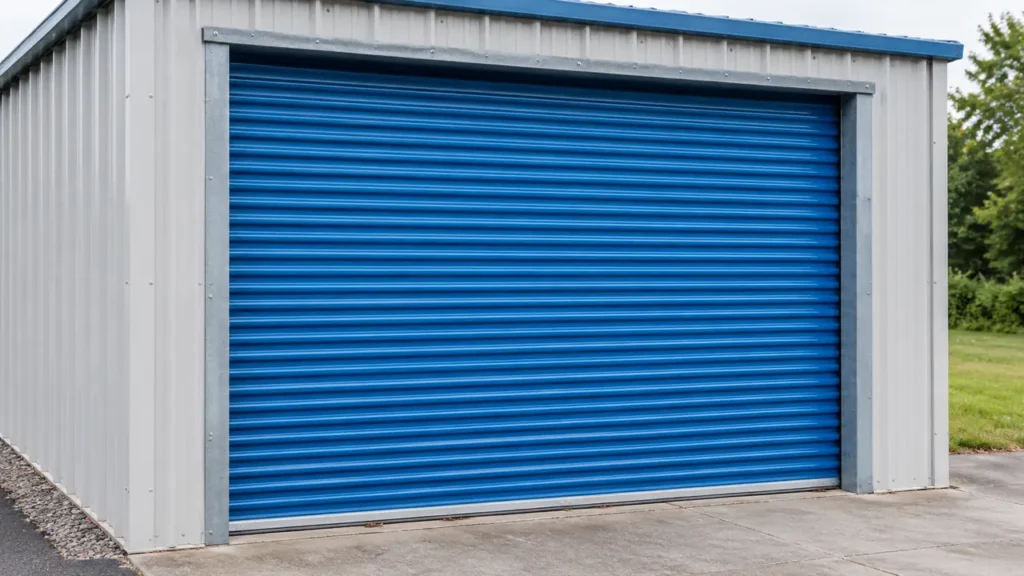
Your property. Your priorities. A clearly defined scope.
Count door faces instead of assuming a building-wide wash
The exterior face of a rolling door is part of a building’s appearance, but the door is also working equipment. A warehouse manager may want dust and surface buildup removed while keeping the stock behind the opening dry and the service lane available. A storage operator may need several different door finishes reviewed in one request. Neither job should be described simply as washing the whole building.
CoKo’s reviews commercial rolling-door exterior washing requests in Greater New Orleans and the Westbank. Start with photographs of the closed doors, their finishes and the approach. Identify the specific faces that need attention and disclose operational or leakage problems. The washing portion can then be separated from adjustments, repairs and interior cleaning, with the work boundaries agreed before equipment arrives.
Give each requested door a simple reference on a photograph or site sketch. A row can include different heights, replacement curtains and paint conditions even when the doors appear similar from the road. Indicate whether you want the outside curtain face only, the surrounding fixed trim or a separate section of wall. The word bay can mean a single door, a loading position or the entire shop interior; a marked view removes that ambiguity.
For multiple buildings, group the doors by location and finish rather than reporting one total alone. Include accessible height and approximate width if those measurements are already available. No one needs to climb or dismantle a door to collect estimate information. If the full face cannot be safely reached with the agreed setup, access needs further review before that door can be included.
Identify the coating and preserve its existing condition record
A rolling sheet door, a sectional overhead door and a slatted service grille are different assemblies. Explain which type you have and provide manufacturer or finish records if available. Janus International’s published resources describe mild cleaning of its rolling-door curtains and distinguish it from maintenance of other components. The useful principle is to obtain the instructions for the actual product instead of selecting a washing method solely because the door is metal.
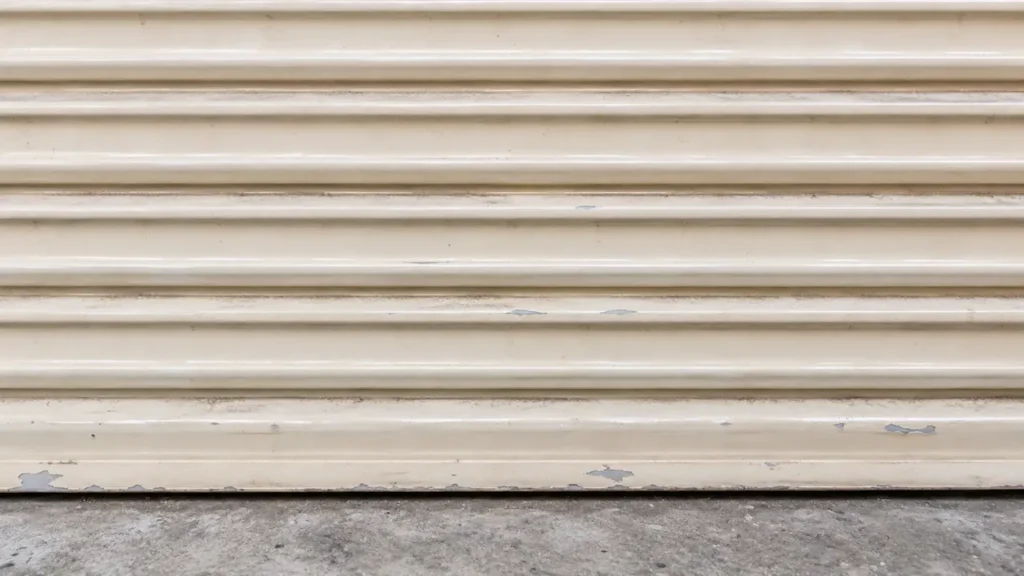
Show faded areas, chalking, scratches, corrosion, adhesive residue and peeling paint in close photographs. Cleaning does not restore lost coating, reverse corrosion or remove a dent. The finish may already differ between the exposed face and areas normally rolled away. A condition record makes that distinction visible before the job. If the request is really for refinishing or mechanical restoration, arrange that separate assessment rather than treating washing as a repair.
A replacement curtain can have a different factory finish from the original jambs. Include both in the photo set, especially where a tenant has added decals or painted over older lettering. Tell us whether those markings must remain. Ordinary exterior washing does not include adhesive removal or stripping a business name. That separate request needs its own finish assessment rather than an assumption that every mark should disappear.
Keep water exposure outside the closed opening
Tell us what is immediately behind each door. Packaged stock, documents, tools, electrical equipment and tenant possessions can change whether the proposed work is practical. The property contact should disclose known gaps, damaged seals or previous water entry. A door that closes is not automatically a watertight barrier, and appearance cleaning is not a leak test.
Agree on the door’s closed position and the preparation the property will complete before the visit. Washing the back of the curtain, inside the opening or above the rolled assembly is not included in an exterior-face request unless specifically reviewed and accepted. If an opening cannot be appropriately protected, that part of the request may need to wait. Protecting the building contents takes priority over completing an arbitrary count of doors.
Coordinate deliveries, tenants and the responsible operator
Rolling doors often sit where people need to work, not where a crew can close an area indefinitely. Discuss freight deliveries, service appointments, tenant access and shift changes. Name the person authorized to control each opening and communicate a closure. The cleaner should not have to discover that a supposedly unused bay is the only route to equipment needed that afternoon.
A phased plan can group compatible doors when the facility can provide a practical closed work area. Confirm how vehicles will be moved and how drivers will recognize the available entrance. For self-storage rows, the operator should handle tenant permissions and access notices; private units are not opened as part of an exterior-door estimate. A clear contact and a realistic sequence reduce interruption without promising that all business operations can continue beside active work.
Exclude the door mechanism from ordinary surface washing
Springs, operators, tracks, sensing equipment and fire-door components are not decorative trim. This page offers no mechanical adjustment, lubrication service, electrical troubleshooting or operating certification. Report a door that binds, drops, will not close or has a damaged safety device to the appropriate door-service professional. Do not schedule appearance washing as the solution to an operating fault.
Photograph the visible outside components from a normal position and explain what has already been identified as vulnerable. The agreed approach should avoid treating the entire assembly as an exposed wall. We do not ask a customer to remove protective covers, reach into the roll or change spring tension for an estimate. Where the assembly’s condition or instructions make the requested cleaning unsuitable, the scope must be revised before work proceeds.
Have the property photos?
Let’s define the next step.
Send the address, requested surfaces and the contact who can confirm access.
Separate door-face buildup from the apron and threshold
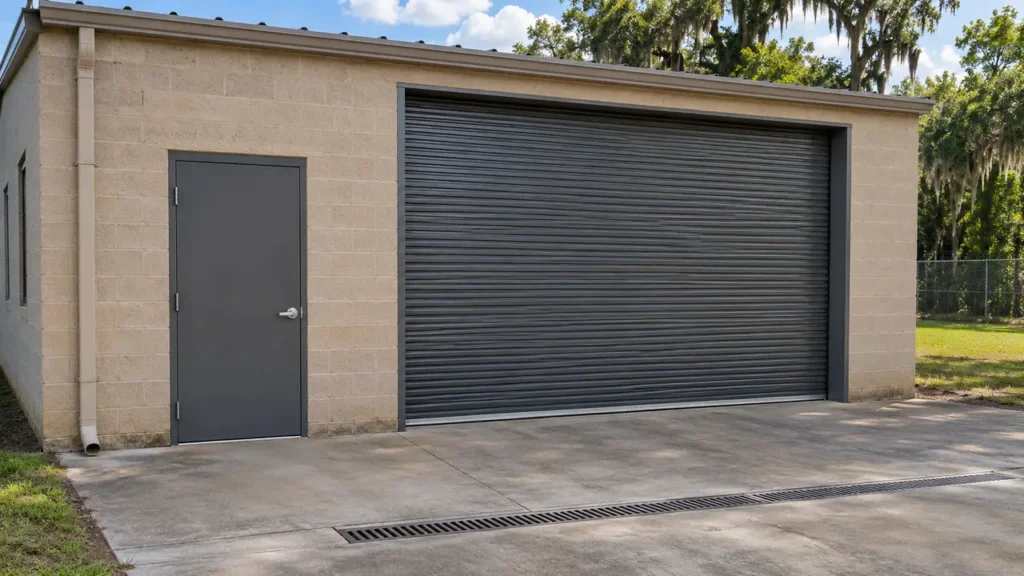
The corrugations on a curtain may hold ordinary airborne dust while the concrete beneath it carries tire residue or tracked material. Those are different surfaces. List the door face and apron separately if both need attention, and show the line where the outside pavement meets the opening. A floor wash is not automatically included just because the equipment is already near the bay.
Send a wider view of the pavement slope and any nearby drains. The site contact should identify the approved water supply and restrictions on the surrounding area. Water routing and the condition of the threshold need to be understood before washing starts. A loading dock, hazardous residue or an unclear outlet may require a different review. No discharge permission, spill remediation or industrial decontamination is implied by a door-cleaning request.
Write the estimate around components, access and exclusions
A useful door-washing estimate identifies the requested faces and fixed trim, the finish assumptions, the access arrangement and the preparation expected from the property. It should also say which surrounding areas remain outside the work. An estimate for four low rolling-sheet doors is not equivalent to one for several tall openings with high-access requirements, even if the reported door count happens to match.
Ask how an unexpected loose finish or newly observed opening will be handled. The agreed scope may need to stop at a component that cannot be safely cleaned as proposed. Appearance expectations also deserve a written explanation: removable surface buildup, existing oxidation and permanent coating defects should not be bundled into one promised result. That clarity helps a manager approve the work that is actually wanted and compare proposals without overlooking their differences.
Prepare the photo request and the completion walkthrough
Send one complete photograph of every requested door or clearly identified group, plus close views showing the finish and the specific buildup. Include the working approach, adjacent traffic lane and any known gaps at the bottom or sides. Add the site address, preferred service window and responsible facility contact. These details are more useful than a request to clean all the metal without a defined boundary.
Before the visit, confirm the property’s preparation and how the included door faces will be checked afterward. The walkthrough concerns the agreed exterior cleaning; it does not certify door operation or warranty compliance. Related warehouse walls, storage-building roofs and loading areas can be discussed under their own scopes. Start by texting the door photographs so CoKo’s can help turn a broad appearance concern into a specific washing request with realistic access, finish and result expectations.
A practical start.
Three useful steps.
Show the surfaces
Send wide photos and close views. Label the buildings and the areas that matter now.
Set the boundaries
Explain materials, access, preparation and the work window your property can support.
Review the scope
Confirm included surfaces, responsibilities and the next step before scheduling.
Commercial Roll-Up Door Exterior Washing.
Your questions, answered.
Your next exterior project.
Start with a clearer scope.
Text your address and the priority exterior photos. For a larger project, send the full property details.
Send your address. Show us what needs cleaning.
Text your address, a wide photo and a close-up of the buildup. We’ll review the surfaces and discuss your cleaning options.
Text photos for an estimate Start an online quoteCoKo’s Pressure Washing · (504) 296-9696

