
Commercial exteriors · Greater New Orleans
Commercial sign washing.
The face. The base. The finish.
Text the complete monument sign, requested components and finish information. Let’s review a defined exterior washing scope.
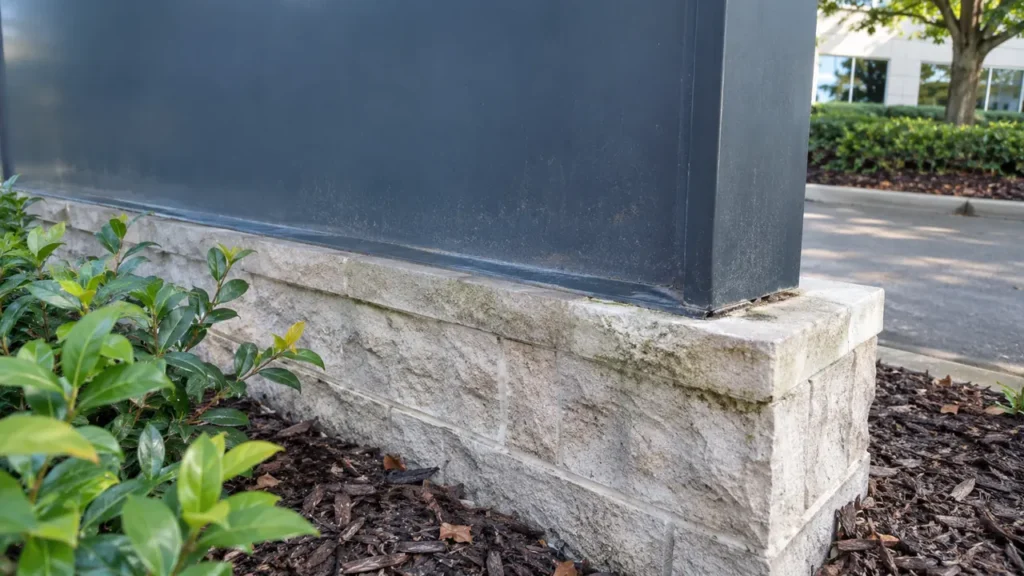
Your property. Your priorities. A clearly defined scope.
Identify the sign and the requested components
A low commercial monument sign combines a sign face, supporting structure and the landscaping or pavement around the entrance. Those parts can have different cleaning requirements, even when they look like one compact feature from the road. CoKo’s reviews suitable exterior washing requests for commercial monument signs in Greater New Orleans and the Westbank. Show the complete sign and identify the components you want considered. This inquiry concerns a defined surface-washing task, not electrical servicing, sign installation, replacement graphics, structural repair or an assumed ability to reach a tall pylon.
Locate the sign by the property address and the entrance it serves. A shopping center or office park may have separate signs at different driveways, and the most visible street frontage may not be the feature the manager wants addressed. Send a wide view showing the base, sign panel and immediate surroundings. If several structures are included, label them individually so their different materials and access conditions stay visible.
List the front and rear faces, side returns, base, cap and any adjacent entrance-wall sections separately. A quote to wash the masonry base should not be mistaken for cleaning every sign panel or attached letter. Explain which components are essential and which should be considered as options. This gives the property a useful comparison between proposals without relying on a sign count that hides the difference between a small ground-level structure and a much larger assembly.
Bring sign-face and graphics information into the review
Share the sign manufacturer or installer information available to the property, together with relevant care instructions for the panel, lettering or graphics. Painted metal, plastic faces, applied films and other finishes should not be treated as one material. An outside appearance photograph can locate a concern without establishing the product or the condition of a graphic layer. When information is missing, identify it as unknown instead of substituting a guessed material name.
Describe peeling graphics, loose letters, brittle edges, faded panels and previous repairs before any washing approach is agreed. Cleaning is not graphic replacement or color restoration. A request should not imply that a sign will regain its original printed color after surface soil is addressed. The responsible sign provider may need to resolve finish or attachment questions first. Keep that review separate from the washing proposal so an uncertain panel is not accepted under the same assumptions as a sound masonry base.
Separate masonry, caps and painted supports
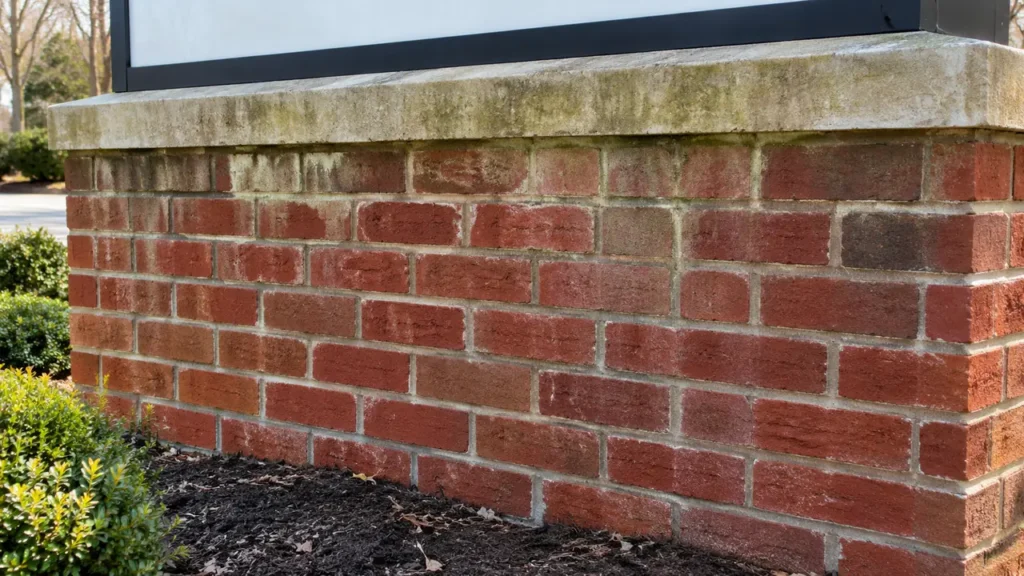
Photograph the base and supporting components closely enough to show brick joints, stone trim, concrete, painted posts or other finishes. A sign structure can combine several materials within a short distance. The horizontal cap may differ from the face below it, while previous patching or repainting can introduce another surface. Identify these boundaries before selecting a single method for the entire feature.
Disclose loose masonry, damaged caps, worn coatings and movement already known to the property. Appearance washing does not repair these conditions or certify that the sign structure is sound. A damaged section should be identified for the appropriate provider before assuming it can receive routine washing. Ask the proposal to explain which components are being reviewed and which remain pending. That component-level approach is more useful than expecting one pressure or heat setting to suit lettering, panel finishes, mortar and every adjoining support.
Describe buildup without promising restored graphics
Show whether the concern is general surface soil, streaking below an edge, buildup on a shaded base or concentrated marks near the landscaping. Pair a close photograph with an overview that locates it on the sign. Describe known previous cleaning attempts and visible changes without treating every dark mark as the same deposit. A photograph can communicate appearance while leaving the cause or suitable treatment uncertain.
Set the expected improvement in terms of the actual components. Removing surface buildup from a brick base does not mean faded lettering will look newly installed. Repairs, weathering and finish differences may remain noticeable after cleaning. If the sign’s main problem is unreadable or failing graphics, discuss that issue with its responsible provider rather than allowing a washing quote to stand in for replacement work. Persistent stains should also be raised separately so the proposal does not hide uncertain results behind a general promise to make the whole sign look new.
Coordinate illuminated signs and attached fixtures
Tell CoKo’s whether the sign is illuminated and identify visible lighting, service panels, timers or other attached fixtures relevant to the proposed area. Show their relationship to the surfaces requested for washing without opening covers or handling equipment to obtain a photograph. The property should identify the authorized sign or electrical contact who can provide applicable restrictions and arrange any necessary preparation through the appropriate provider.
Do not assume that the washing scope includes opening cabinets, disconnecting equipment, repairing seals or checking electrical operation. Lower-pressure cleaning does not establish that an assembly is watertight or resolve an existing equipment defect. Keep those responsibilities outside the ordinary surface-washing request. If the information needed for a particular panel cannot be established, leave it pending rather than treating the entire illuminated sign as automatically suitable for the same exterior treatment as its base.
Have the property photos?
Let’s define the next step.
Send the address, requested surfaces and the contact who can confirm access.
Show the driveway and the permitted approach
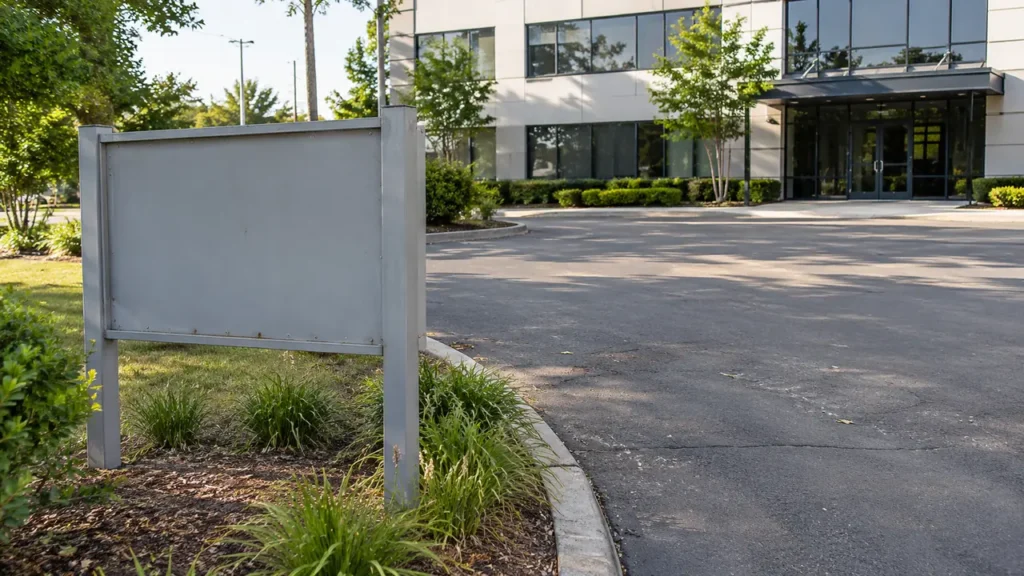
Include the pavement, planted border, parked vehicles and routes immediately around the monument. A low sign can still have awkward access if it sits between traffic lanes or close to a busy driveway. Explain what space the property controls and when an appropriate work area can be made available. A photograph taken before opening does not establish that the same entrance will remain clear later.
Identify the manager who can confirm operating arrangements and any coordination needed for shared property. Do not assume a washing quote includes permission to occupy public space, direct traffic or close a neighboring tenant’s entrance. Tall signs and inaccessible faces require separate access review; this page does not promise high-rise or specialist lift capability. Use safe ground-level views and existing installation records to begin. An estimate should make unresolved approach or permission questions visible before scheduling depends on them.
Prepare landscaping and washing-water arrangements
Photograph planting, irrigation components, ground lights and fixtures touching or close to the sign. Explain whether those surroundings limit access to the base or rear face. Decide who can move portable items or arrange appropriate landscaping preparation before the proposed visit. Trimming vegetation, altering irrigation and dismantling fixtures are not automatically included in washing the sign’s exterior components.
Show visible drainage paths, curb edges and nearby lower areas, and provide the property’s requirements for washing water and loosened material. An entrance island or nearby drain does not itself establish an appropriate destination. If access or washing-water arrangements cannot be resolved for one face, identify that limitation in the scope. Keep the request focused on components that can be reviewed appropriately instead of assuming that a small structure has no meaningful preparation or environmental constraints.
Keep the accepted component list for future visits
Compare quotations using the same sign structures, faces, bases and optional additions. Check material assumptions, preparation responsibilities and limitations as well as the total. A proposal for a masonry base is different from one that also includes selected sign panels. When another sign or entrance-wall section is added, review the change explicitly rather than assuming that everything beside the driveway belongs to the original price.
Retain the accepted component list, sign-provider information and condition photographs with the property’s maintenance records. New graphics, replacement panels, lighting changes or altered landscaping can affect a later request even if the address and sign location remain the same. Text CoKo’s the address, entrance reference, full sign views, close material details and authorized contact. For several structures, use the commercial project form to explain them separately and keep unresolved finish, equipment or access questions visible before an agreed washing scope is scheduled.
A practical start.
Three useful steps.
Show the surfaces
Send wide photos and close views. Label the buildings and the areas that matter now.
Set the boundaries
Explain materials, access, preparation and the work window your property can support.
Review the scope
Confirm included surfaces, responsibilities and the next step before scheduling.
Commercial Monument Sign Washing.
Your questions, answered.
Your next exterior project.
Start with a clearer scope.
Text your address and the priority exterior photos. For a larger project, send the full property details.
Send your address. Show us what needs cleaning.
Text your address, a wide photo and a close-up of the buildup. We’ll review the surfaces and discuss your cleaning options.
Text photos for an estimate Start an online quoteCoKo’s Pressure Washing · (504) 296-9696