
Commercial exteriors · Greater New Orleans
Picnic pavilion washing.
The roof. The floor. A defined shelter scope.
Text the shelter photos, requested components and reservation window. Let’s review a practical pavilion washing scope.
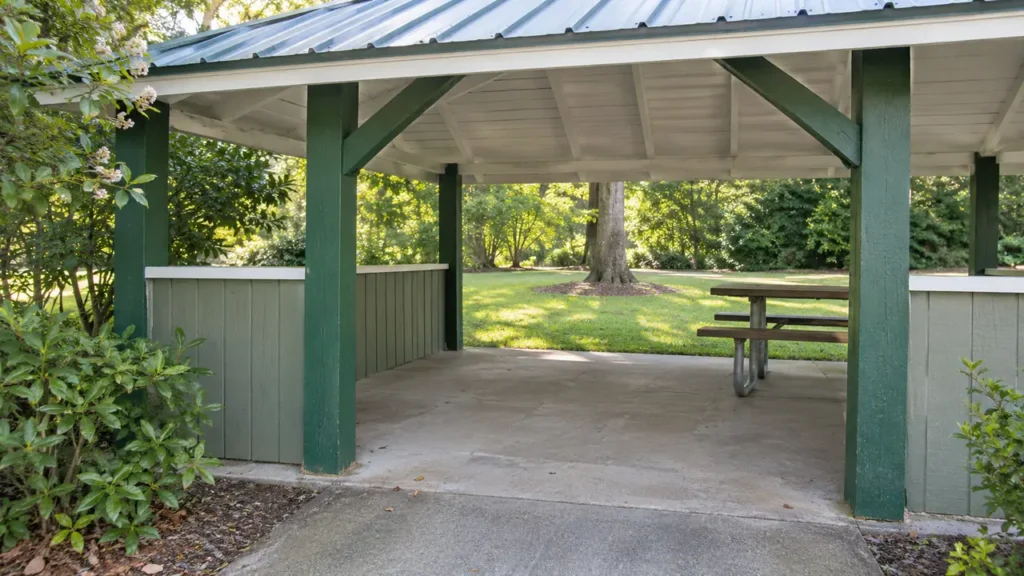
Your property. Your priorities. A clearly defined scope.
Describe the shelter from roof to ground
A picnic pavilion combines roof surfaces, an open-sided structure and the concrete or paving used for gatherings. A request to wash the shelter should identify which of those components are included rather than treating the surrounding park as one undivided cleaning area. CoKo’s reviews suitable pavilion and picnic-shelter washing in Greater New Orleans and the Westbank. Begin with the shelter’s location, current photographs and the components that need attention. Keep cooking equipment, playgrounds, drinking-water fixtures and repairs separate from this exterior surface-washing inquiry unless they receive their own appropriate review.
Identify the pavilion using the facility’s normal name or map reference, especially where several shelters share one park address. Photograph the complete structure from more than one accessible side. A covered gathering area may have a roof, ceiling panels, exposed framing, posts, trim and a floor made from different materials. Name the components you want considered instead of assuming that the phrase pavilion wash includes every visible face.
Separate the shelter itself from adjoining paths, restroom buildings and other amenities. If the concrete extends beyond the roof, show that boundary and state whether the open apron is part of the request. A roof-only inquiry differs from one focused on the floor beneath picnic tables. Clear component boundaries help the facility collect comparable proposals without turning a small shelter project into an unpriced commitment to wash every nearby park feature.
Identify overhead materials and existing finishes
Provide any available records for the roof covering, ceiling, structural posts and painted trim. Metal roof panels, coated wood and masonry supports should not be grouped together under one assumed treatment. An underside may have a decorative ceiling that differs from the framing above it. Show those details from ordinary accessible positions and explain whether the shelter has been painted or modified since its original installation.
Disclose loose panels, damaged finishes, known leaks and restricted areas before asking for appearance washing. Cleaning is not a roof repair, carpentry repair or inspection of the structure. Where a condition needs attention from the appropriate maintenance provider, identify the affected component and keep the question open before washing is agreed. Do not select heat or pressure simply because the roof and floor belong to the same pavilion; each requested material and its current finish need their own consideration.
If the shelter has gutters, specify whether their outside faces are part of the appearance request. Gutter interiors and roof-channel maintenance are different tasks. Show how these components connect to the shelter without assuming that washing visible trim includes removing material from every channel or correcting a damaged downspout.
Define the floor and the surfaces beneath tables
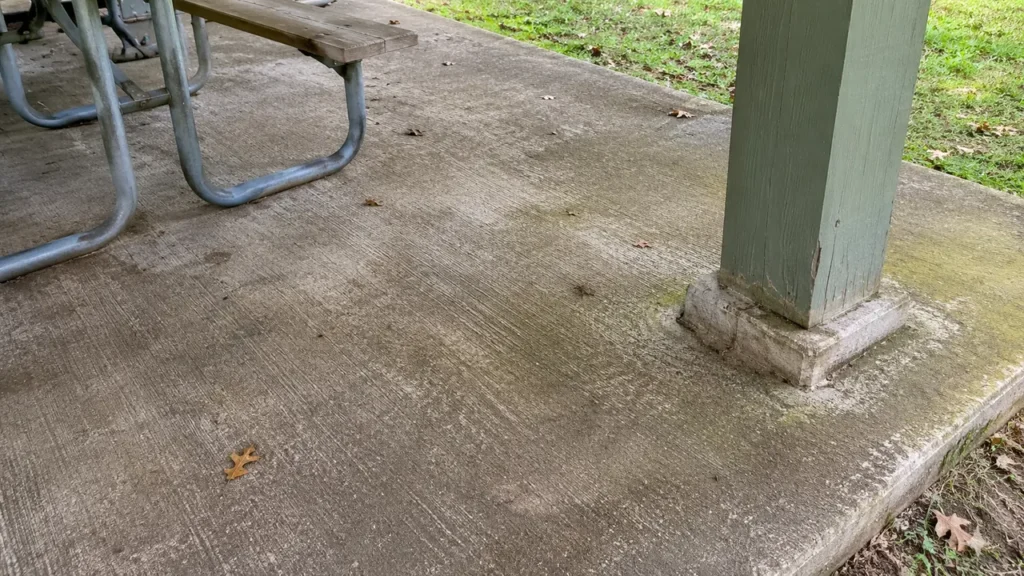
Show the concrete or paving both in open areas and beneath the usual table positions. Food spills, leaf staining, tracked soil and persistent marks may be concentrated in different places. Explain which concerns prompted the inquiry rather than assuming every dark patch has the same cause. A representative close view helps locate the condition, while an overview shows how it relates to the shelter’s entrance and gathering space.
Identify coatings, repaired sections, decorative paving or unlike materials where known. State whether bench feet, fixed table supports, curbs and low edges are included in the requested surface list. Floor washing does not automatically include cleaning picnic tabletops, benches or every movable item under the roof. When furniture cleaning is also wanted, list it separately with its material information. A clear distinction between the floor and the items sitting on it makes the proposed work easier to understand before the facility compares prices.
Coordinate reservations and park operations
Give the facility contact the shelter’s full reservation and preparation window. A posted event time may omit staff setup, equipment deliveries or use immediately before the booking. Explain whether the shelter can be made unavailable as a complete area and who can confirm that arrangement. An empty pavilion in a photograph is not evidence that visitors will stay out of it during a proposed washing visit.
Include maintenance activities and adjoining paths that affect access even when the shelter is not reserved. A nearby trail, restroom approach or loading position may remain in use independently. Discuss phasing only where the actual layout and facility arrangements support meaningful separation. Do not assume that a small open-sided structure can be washed safely around an ongoing gathering. The operating contact should identify the workable boundaries and any access questions that remain unresolved before scheduling depends on them.
Assign preparation for tables and gathering items
List portable tables, bins, signs, decorations and event supplies that usually occupy the shelter. Decide who has authority to move them, where they can remain and when the requested surfaces will be clear. Heavy fixed tables and permanent benches should be shown in advance. Do not assume that a washing quotation includes relocating every furnishing or dismantling anything attached to the structure.
Identify grills, food-service equipment, electrical fixtures and other installations near the work without treating them as automatically included surfaces. The facility should explain what must remain in place and what preparation it will arrange through its responsible staff. A pavilion wash is not a food-equipment sanitation service. Keeping these responsibilities visible prevents a floor-cleaning appointment from relying on preparations nobody has confirmed and avoids confusion between permanent building components and unrelated equipment stored under the roof.
Have the property photos?
Let’s define the next step.
Send the address, requested surfaces and the contact who can confirm access.
Show the approach and the surrounding ground
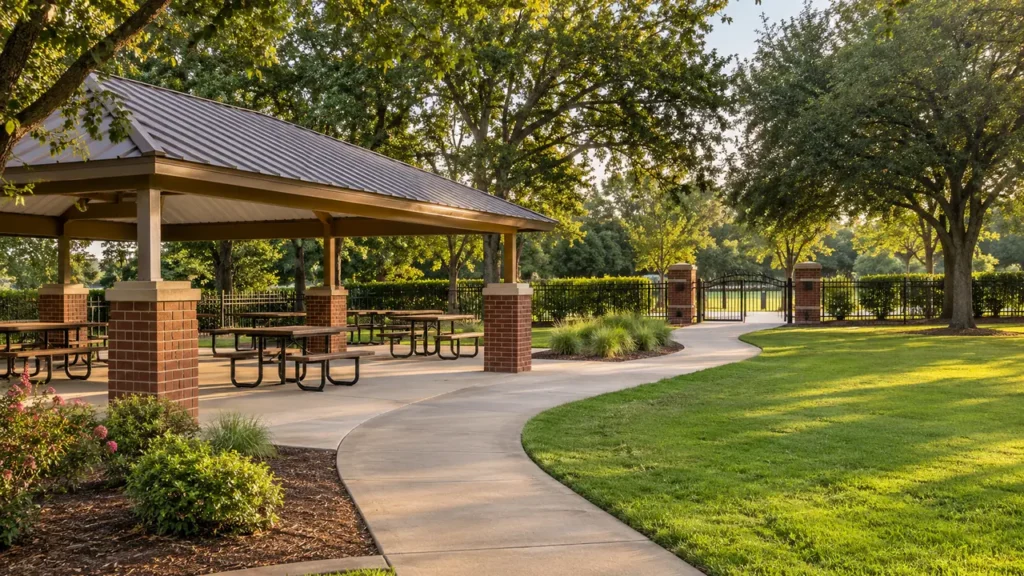
Photograph the permitted approach from the park entrance to the pavilion. A broad shelter floor may still be reached only through a narrow gate or across a path with restrictions. Explain where equipment access is allowed and identify the water connection offered for review. Do not assume travel over a lawn, playing surface or landscaped area simply because it appears to be the shortest route.
Show the ground around the shelter, visible drains and where the paved apron meets planted areas or nearby paths. Supply the facility’s requirements for managing washing water and loosened material. The presence of an open lawn or a drain does not establish an appropriate washing-water arrangement by itself. If those details cannot be resolved for a requested component, keep that part of the inquiry pending instead of extending a general promise across every surface beside the shelter.
Compare shelter washing with broader park services
Ask each proposal to name the roof, underside, posts, trim, floor and adjoining paving it actually covers. A roof-and-post wash is not the same scope as floor cleaning beneath fixed tables. Check any exclusions or material questions before comparing totals. Where several pavilions are included, label them individually so differing materials or access conditions do not disappear inside one shelter count.
The broader parks and recreation page remains useful for a facility-wide request involving multiple buildings or amenities. This application concerns the defined shelter components. Keep playground equipment, specialty recreation surfaces, restroom interiors and repairs as separate questions rather than assuming they belong to the same visit. The proposal should also distinguish expected surface-soil improvement from persistent staining, worn paint or damaged materials. Washing should not be described as returning every component to a new condition or certifying the shelter for public use.
Keep a shelter-specific maintenance record
Retain the agreed component list and location photographs with the facility’s maintenance information. Review them before requesting another visit. Replacement ceiling panels, new paint, changed table layouts or a revised reservation system can alter the next washing plan even when the pavilion name stays the same. The previous scope is a useful reference, not a reason to repeat assumptions that no longer fit the structure.
Base future requests on observed conditions and the facility’s actual use rather than an invented universal interval. Text CoKo’s the address, shelter reference, wide views and closer material photographs, with the priority components and authorized contact. Include the reservation window, preparation responsibilities and access or drainage questions still open. For several shelters or mixed building work, use the commercial project form to keep those details together and make the next review more practical than a general request to clean the whole park.
A practical start.
Three useful steps.
Show the surfaces
Send wide photos and close views. Label the buildings and the areas that matter now.
Set the boundaries
Explain materials, access, preparation and the work window your property can support.
Review the scope
Confirm included surfaces, responsibilities and the next step before scheduling.
Picnic Pavilion and Shelter Washing.
Your questions, answered.
Your next exterior project.
Start with a clearer scope.
Text your address and the priority exterior photos. For a larger project, send the full property details.
Send your address. Show us what needs cleaning.
Text your address, a wide photo and a close-up of the buildup. We’ll review the surfaces and discuss your cleaning options.
Text photos for an estimate Start an online quoteCoKo’s Pressure Washing · (504) 296-9696