
Commercial exteriors · Greater New Orleans
Bleacher washing.
Ready for the next crowd.
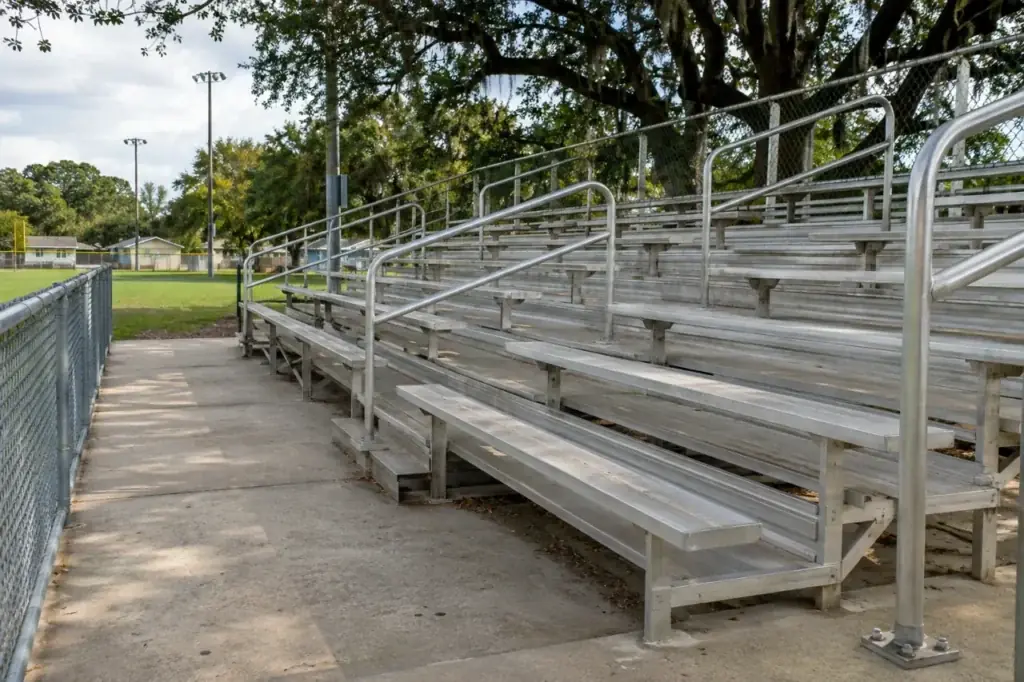
Text photos of the seating rows, steps and surrounding pavement. We’ll review the materials, access and a work window between events.
Your property. Your priorities. A clearly defined scope.
Look beyond the seat tops
A set of outdoor bleachers is a collection of different washing surfaces in one compact space. Seat planks, footboards, steps, rails and the pavement below them do not present the same access or material conditions. For a park manager, school or recreation facility, the useful starting point is a recognizable seating area with clear boundaries. CoKo’s reviews bleacher and outdoor spectator seating washing in Greater New Orleans and the Westbank. Send a wide photograph of each seating bank, closer views of the buildup, and the next event dates. That gives us a practical basis for discussing the requested cleaning and the space around it.
Identify the parts you actually want washed: seating surfaces, footboards, stair treads, handrails, side panels and the exposed concrete pad. Some requests concern only a small freestanding seating bank. Others include several banks along a field, each with a different approach or a separate patch of pavement underneath. Naming those areas avoids a vague request for the whole stadium when the immediate priority is the spectator seating.
Photograph leaves, ordinary dirt and visible surface buildup from both the front and an accessible side. Include the area beneath the seats if it can be seen safely without entering a restricted space. A top view does not show every underside, support or obstruction. The proposal should distinguish the agreed washing surfaces from loose-trash pickup, repairs and any restricted areas. If the supports or rails have a separate maintenance concern, identify it for the facility’s own maintenance team before scheduling washing around that location.
Match the scope to the actual materials
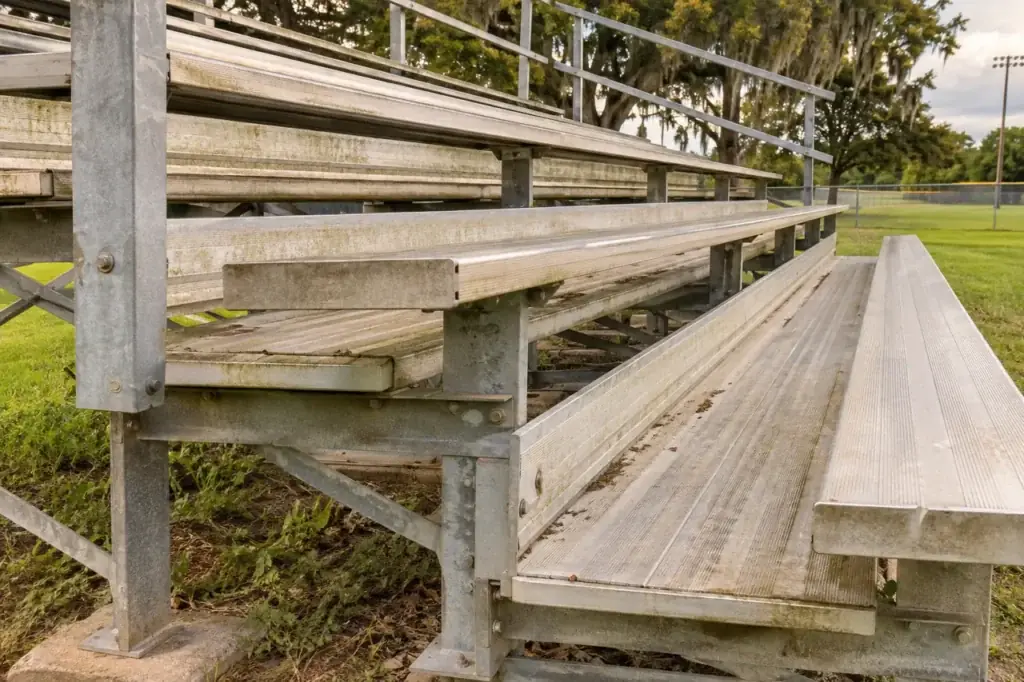
Outdoor spectator seating may combine aluminum planks, coated rails, steel supports, wood components and concrete approaches. Describe each material you can identify and photograph any finish that looks loose, worn or different from the neighboring section. A shiny seat top and a painted side panel should not be treated as interchangeable simply because they belong to the same structure.
Provide the manufacturer or model information if it is readily available, together with any cleaning instructions the facility already follows. CoKo’s can review the requested washing against the visible condition and supplied information. Do not scrape a coating or climb the structure to collect an estimate photograph. Washing is not a structural inspection or a promise to remove permanent discoloration. The important decision is which existing surfaces are suitable for the proposed work and which condition questions need the owner’s maintenance contact to resolve first.
Count seating banks and show their dimensions
Give each bank a simple label, such as Field One east side or courtside seating near the entrance. Record the approximate overall length and number of rows when those details are known. State how many separate banks the request covers. A photograph containing one set of seats should not leave everyone guessing whether there are six more elsewhere on the property.
Include the width of the requested concrete approach and whether the area under the seating is pavement, gravel or soil. Those details help separate a seating-only request from a larger spectator-area wash. Dimensions are a starting point, not a substitute for reviewing access and the surfaces involved. If a measurement is unavailable, label it unknown and send a clear overview instead. An organized list of banks, requested components and approximate dimensions is more useful than a single estimated square-foot total that mixes seats, vertical rails and surrounding pavement together.
Plan access around fields and spectator routes
Show the route from the approved service entrance to the seating area. A narrow gate, fenced court, soft shoulder or occupied parking area can affect how the work is arranged. Include any locked gates and identify the person who can authorize access. Explain where equipment may be positioned and which parts of the facility must remain available while the selected seating bank is being washed.
Nearby playing surfaces, landscaping, concessions and electrical fixtures also belong in the conversation. Photographs should show their relationship to the requested wash area rather than treating the seating as an isolated object. The facility should identify access restrictions and the responsible contact for its operating rules. CoKo’s can then review a practical washing scope and work zone. Do not assume that access through a field, across a track or beneath a raised structure is approved just because it offers the shortest route.
Work between events with a clear handoff
Share the actual calendar: practices, school dismissal, league games, tournaments and any setup period before spectators arrive. The useful window is the time during which the facility can make the agreed area available, not simply the time between two advertised game starts. Include opening hours, staff availability and any neighboring activity that uses the same gate or approach.
For multiple seating banks, explain whether the owner can close one area at a time or needs all work coordinated within a single window. Identify who can communicate temporary access changes to coaches, staff or event organizers. Reopening arrangements should be agreed with the facility contact as part of the job plan. Washing does not replace the owner’s inspection and operating responsibilities. A named handoff contact helps avoid confusion about whether the work is finished, whether an adjoining area remains restricted and what happens if weather changes the scheduled window.
Have the property photos?
Let’s define the next step.
Send the address, requested surfaces and the contact who can confirm access.
Decide what belongs in the same quote
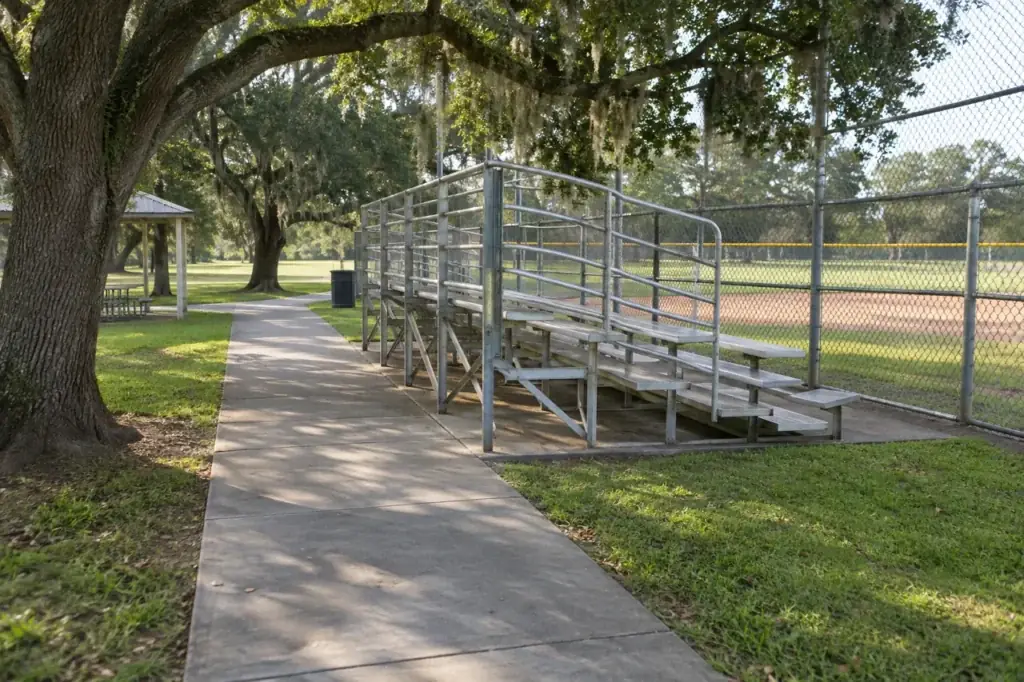
The seating may be the priority while the concrete approach, entry steps and nearby spectator walkway also need attention. Photograph those areas separately and say whether you want them included, optional or left for another visit. This makes it possible to discuss a focused bleacher wash without quietly expanding it into an entire sports-complex project.
Concession fronts, building exteriors and other pavement can be reviewed as separate requested surfaces when relevant. Identify their materials and access needs rather than assuming that one cleaning method fits everything. Roofs, playing surfaces, interior facilities and maintenance repairs should not become implied additions to a seating-area quote. A written scope is easier to compare when each included area has a name and optional work is clearly separated. If several staff members are requesting different areas, choose one facility contact to consolidate priorities before the final scope is agreed.
Prepare the area and clarify responsibilities
Tell us about stored sports equipment, temporary signage, trash cans, personal belongings and anything else occupying the requested seating or approach. Agree which items the facility will remove and when the area can be handed over. Do not assume that washing includes moving heavy seating structures, dismantling rails or relocating equipment that belongs to a team or another vendor.
Identify available water access and any site-specific requirements for managing wash water before work is scheduled. Nearby drains or grass do not, by themselves, establish an approved destination. The facility contact should provide its restrictions and identify who can answer unresolved site questions. A useful proposal records the agreed preparation, access, requested washing and exclusions together. That allows both sides to understand what must be ready on the day and prevents a small missing detail, such as a locked gate or occupied seating bank, from becoming a larger scheduling problem.
Text the photos that make the quote useful
Start with the address and a wide view of every seating bank in the request. Add closer pictures of the seat surfaces, footboards, steps and any particular buildup. Photograph the approach and accessible side so the gate, surrounding pavement and nearby playing surface are visible. Use safe ground-level positions; the first estimate request does not require climbing or entering the space beneath the structure.
Include the bank labels, approximate dimensions if known, event dates and the contact who can confirm access. State the must-do areas first, then list optional pavement or adjacent exterior surfaces. Texting those details gives CoKo’s a focused starting point for reviewing the job. For a larger facility, the project-details form can keep the photographs and scope notes together. The next step is a quote for identifiable washing work, with the remaining questions settled before scheduling rather than an unsupported price based on a distant photograph alone.
A practical start.
Three useful steps.
Show the surfaces
Send wide photos and close views. Label the buildings and the areas that matter now.
Set the boundaries
Explain materials, access, preparation and the work window your property can support.
Review the scope
Confirm included surfaces, responsibilities and the next step before scheduling.
Bleacher and Outdoor Spectator Seating Washing.
Your questions, answered.
Your next exterior project.
Start with a clearer scope.
Text your address and the priority exterior photos. For a larger project, send the full property details.
Send your address. Show us what needs cleaning.
Text your address, a wide photo and a close-up of the buildup. We’ll review the surfaces and discuss your cleaning options.
Text photos for an estimate Start an online quoteCoKo’s Pressure Washing · (504) 296-9696