
Commercial exteriors · Greater New Orleans
Auto Repair Shop washing.
A better arrival starts outside.
Text the building address and priority exterior photos. We’ll review roof and wall materials, walking surfaces and the access your property can provide.
Your property. Your priorities. A clearly defined scope.
Give the service building a clearer first impression
A repair shop can do excellent mechanical work while its building exterior tells a less welcoming story. A shaded reception wall, streaked office roof or dirty approach to the key-drop door can become the first thing a customer notices. CoKo’s auto repair shop exterior washing starts with those building surfaces and the way customers actually reach your service desk. For shops in Greater New Orleans and the Westbank, the useful starting point is a few property photographs, the address and the areas you want included. Roof washing, exterior soft washing and suitable concrete washing can be considered together while keeping the parts of the job clearly identified. The goal is a cleaner-looking property and an understandable work plan that fits a working shop. You can begin with reception and the public approach or ask about a larger building project.
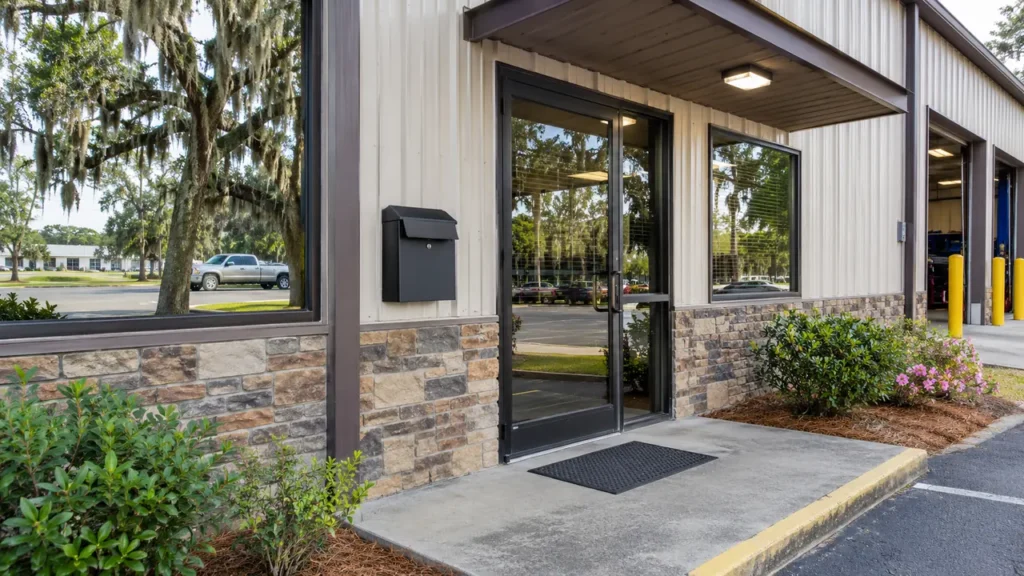
Customers arriving for an estimate need to recognize the public entrance without walking through a repair bay. Show the office frontage, entrance canopy and the path from customer parking. Include a side entrance if that is where people normally hand over keys. These views explain the difference between a small reception improvement and a request covering the entire workshop exterior. A shop with a separate office should name that building independently, even if the two structures share one address.
Look at the walls as materials rather than one broad rectangle. Painted masonry, coated metal, trim and glazing may meet around the same doorway. Photograph changes in finish and any known damaged areas. Tell CoKo’s which elevations are important from the street and which face a neighboring business or service yard. Naming those priorities makes it easier to discuss useful exterior work without paying attention only to the largest wall in the photograph.
Put the roof on its own material list
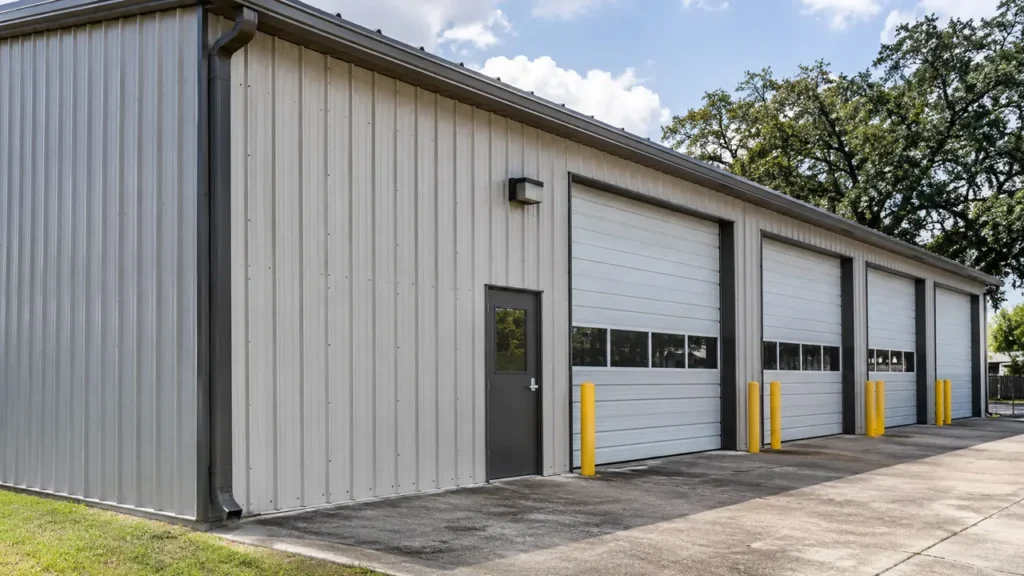
The office roof and the workshop roof may have different coverings, slopes and maintenance histories. A repair business might have a shingle-roof reception building attached to a broad metal shop. Show both from the ground and identify which roof sections you want considered. Include lower canopies where they are part of the request. You do not need to climb onto the building to start a quote conversation or obtain a more dramatic photograph.
Share available roof or coating information and identify repairs already known to the owner. Roof washing should be considered around that material and condition rather than assumed to follow the same approach used on a concrete parking strip. A roof request also needs a clear perimeter and access discussion. Show parked customer vehicles, outdoor storage and neighboring entrances below the proposed roof area so their relationship to the work is understood before a date is agreed.
Separate public approaches from active repair areas
A customer walkway and a repair apron may look like connected concrete while serving very different purposes. Start the surface list at the parking space, follow it to reception and name the entrance landing. If you also want a section outside closed bays considered, mark its endpoints. Explain whether that area is used for vehicle movement, temporary parking or ordinary pedestrian access. A useful scope should distinguish these areas before combining them in one price.
Show visible marks in context. A photograph of an oily-looking patch does not identify its source, age or likely response to washing. Explain what the shop knows about the area and identify any active leak or spill separately. Suitable hard-surface washing can be reviewed without promising that every discoloration will disappear. Mechanical equipment, vehicle cleaning and internal bay operations remain separate requests unless they have been specifically discussed and accepted.
Choose a phase that fits appointments and drop-offs
The appointment book is only part of the shop’s arrival pattern. Early key drops, tow-truck deliveries, parts couriers and customers collecting vehicles may use the frontage outside advertised office hours. Tell CoKo’s which periods affect the actual surfaces requested. A roof or side-wall phase may have a different available window from washing the reception landing. Describing that difference early is more useful than assuming the whole property becomes empty when the doors close.
Choose the person who can confirm vehicle positions and building availability. If several staff members arrange customer drop-offs, make sure the proposed exterior phase has one coordinating contact. Identify a practical alternative reception approach if the shop can provide one. The agreed sequence should connect each surface with the conditions needed to make it available, including access to the offered water connection and the space required to reach the building.
Prepare the frontage without creating another obstruction
Before an agreed phase, review the loose items around reception and the requested wall elevations. Signs, bins, mats, planters and stored parts may hide surfaces that looked clear in an older photograph. Decide who will move them and where they can wait. Placing everything beside the next bay or across the customer path can simply transfer the obstruction to another part of the job. A short location-based preparation list is easier for staff to follow.
Vehicle coordination belongs with that same list. Explain which parked units are customer property, which can be repositioned by staff and which spaces must remain available. Do not send personal customer records to begin an exterior quote; the useful information concerns the location and control of the work area. Show fixed signs, external lights and visible wall fixtures so they can be considered with the actual building surfaces rather than discovered only on arrival.
Have the property photos?
Let’s define the next step.
Send the address, requested surfaces and the contact who can confirm access.
Follow the customer route to the last doorway
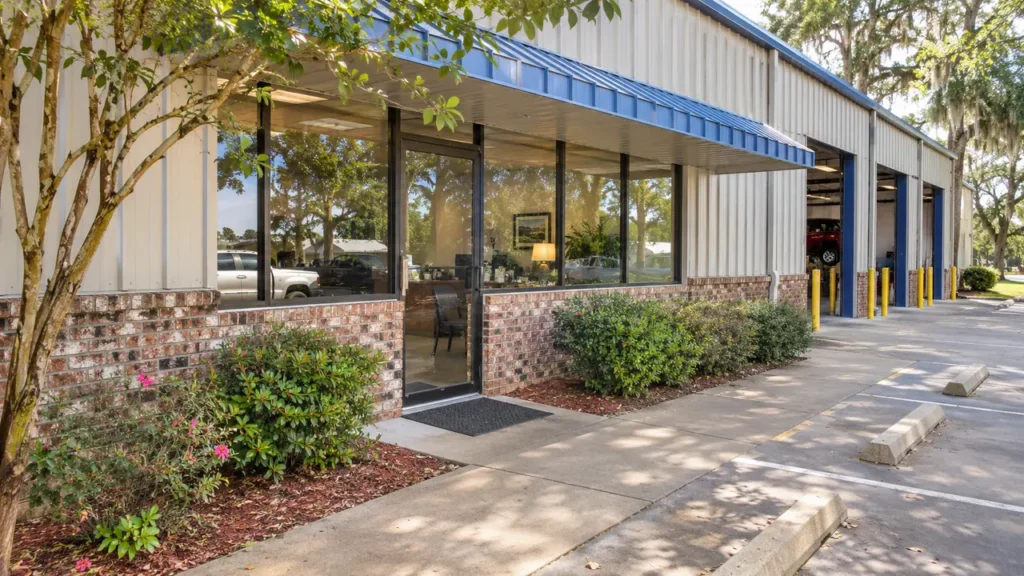
The key-drop approach can deserve its own attention even when it is a short walk. Customers may use it in poor light or outside normal reception hours, so explain which door and landing the request concerns. Photograph the paving from both ends and include transitions beside a curb, porch or covered entry. This helps distinguish the main customer route from the next piece of workshop concrete and keeps the endpoints of the washing request understandable.
If a side office or collection window is also used, identify that connection separately. The surfaces may include ordinary concrete, pavers or a coated landing, and their finish should be shown closely. Existing cracks, uneven paving and worn coatings are condition issues to report, not something a washing price automatically repairs. A defined route lets the shop compare the requested appearance improvement with the practical arrangements for keeping another entrance available.
Compare a written proposal by building and surface
A useful repair-shop proposal should make it possible to point to the areas included. Look for named office and workshop elevations, requested roof sections and clearly described hard-surface approaches. Confirm whether entrance canopies and their undersides are included or were simply visible in the original photos. If an area still needs material information or closer review, keep that question visible rather than treating it as an agreed addition to the work.
The lowest total does not explain whether two proposals describe the same property. Compare preparation responsibilities, available access and the surfaces each contractor has actually included. An office-frontage project is different from a complete shop-envelope request. Repairs, coating renewal and correction of leaks should remain distinct from washing. When priorities change, identify the additional building or surface so the revised scope can be discussed before scheduling.
Start with the address and the surfaces that matter
Text CoKo’s the shop address, a wide frontage photograph and closer views of the roof, walls or walking surfaces you want considered. Add the building owner or manager who can confirm the request and the periods when those areas can be made available. If reception is your immediate priority, say so. A focused first message is enough to begin a conversation without producing a full property survey or guessing the treatment for every mark.
For a larger project, make a short building list and number the requested elevations in the same way staff describe them on site. Include current ground-level photos rather than relying only on a street image from an earlier year. CoKo’s can review the roof, soft-washing and suitable pressure-washing request around the actual property. The next step is a clear scope discussion with the right contact and the most useful information already in one place.
A practical start.
Three useful steps.
Show the surfaces
Send wide photos and close views. Label the buildings and the areas that matter now.
Set the boundaries
Explain materials, access, preparation and the work window your property can support.
Review the scope
Confirm included surfaces, responsibilities and the next step before scheduling.
Auto Repair Shop Exterior Washing.
Your questions, answered.
Your next exterior project.
Start with a clearer scope.
Text your address and the priority exterior photos. For a larger project, send the full property details.
Send your address. Show us what needs cleaning.
Text your address, a wide photo and a close-up of the buildup. We’ll review the surfaces and discuss your cleaning options.
Text photos for an estimate Start an online quoteCoKo’s Pressure Washing · (504) 296-9696