
Commercial exteriors · Greater New Orleans
Commercial Awning Washing
Identify the fabric before defining the work.
Text current property photos and requested outside surfaces. Explain the access arrangements that affect your commercial washing scope.
Your property. Your priorities. A clearly defined scope.
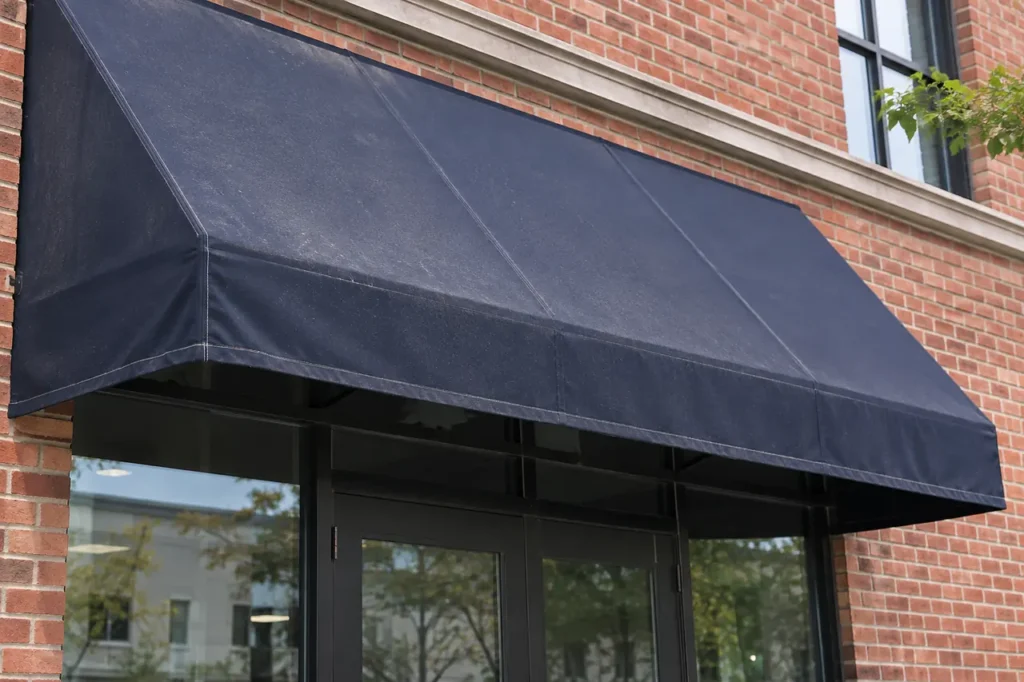
Identify the awning material before choosing a method
A storefront awning is a separate material and scope from the wall behind it. Its fabric, seams, valance, graphics and supporting frame can have different condition and care questions, even when the whole assembly appears to be one simple canopy. CoKo’s reviews commercial exterior washing requests in Greater New Orleans and the Westbank. For an awning inquiry, begin with the product information already available, current photographs and the particular surfaces you want considered. Acceptance of a suitable scope depends on that review; this page is not a promise that every fabric or retractable assembly can be washed. The useful starting point is a recognizable awning and an agreed business boundary, with repairs, mechanical work and replacement kept separate from an exterior appearance request.
A photograph can show the shape and color of an awning without establishing its exact fabric, coating or care requirements. Send any label, invoice, installer information or existing care sheet the business holds. There is no need to guess a product name from appearance. Identify which information is known and which still needs confirmation so the review does not begin with an assumed treatment for an unidentified material.
Manufacturer guidance is product-specific. Sunbrella, for example, publishes care instructions specifically for its shade fabrics; those instructions should not be treated as permission to use the same approach on an unrelated canopy or a different component. This is a reason to collect the correct product information, not a claim that CoKo’s is manufacturer-certified or that every awning uses that brand. Keep fabric identification and existing care requirements in the initial discussion before deciding on a washing method. A wall-cleaning proposal should not silently become a fabric-cleaning instruction merely because the awning is attached to the same storefront.
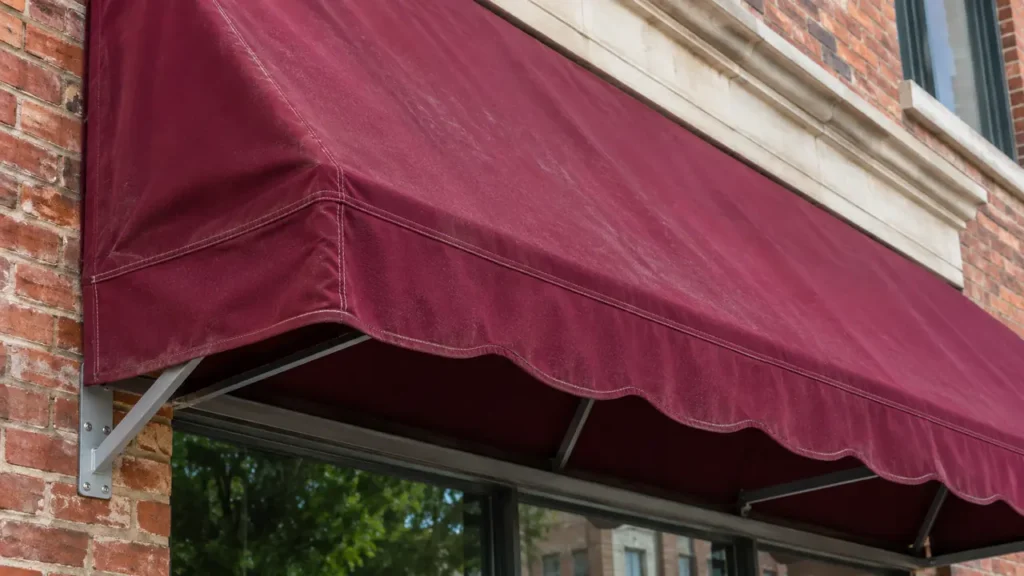
Show seams, edges and existing damage
Photograph the full awning from the sidewalk, then add closer views of the concern where they can be taken safely. Show the valance, stitched panels and edges as well as the main visible face. A narrow close-up of a stain can miss damaged stitching, loose attachment points or worn areas that matter to the scope. Identify any known tears or previous repairs rather than describing all visible change as ordinary dirt.
Washing does not mend fabric, strengthen failed stitching or restore a damaged coating. Explain whether a mark has been present for a long time and whether the business knows how it occurred, without inventing a diagnosis. Fading and aged finishes should not be presented as a guaranteed cleaning result. The estimate discussion can then distinguish suitable surface buildup from a repair or replacement issue. Clear condition photographs help the manager understand why a defined appearance request may need limits instead of an assurance that every part of an older awning will look new.
Separate graphics and decorative trim
An awning can carry printed lettering, attached graphics, decorative edging or a contrasting valance. Include those details in the overview and identify any existing damage. Their presence does not establish that the fabric face, graphics and trim share the same care requirements. Provide the installer or product information already held rather than assuming a method suitable for one component applies to all of them.
If a sign company controls the graphic or another provider maintains part of the assembly, describe that arrangement. Restoration, repainting, graphic replacement and sign servicing remain separate from ordinary exterior surface washing. A useful request names the face or edge you want reviewed and states the limitations already known. It does not treat a visible logo as proof of a brand relationship or imply that CoKo’s can guarantee the condition of every applied graphic. Those distinctions make it easier to discuss a real awning scope without allowing a modest appearance inquiry to expand into unverified specialist work.
Keep supports and retractable mechanisms distinct
The frame and attachment area can appear beside the fabric in the same photograph. Show them so the reviewer understands the assembly, but identify which surfaces are actually requested. Structural repairs, motor servicing, controls and adjustment of a retractable system are separate work. Do not assume a washing crew will dismantle or operate an assembly whose condition and procedures have not been established.
Explain whether the awning is normally fixed or retractable and who is responsible for its operation. Existing instructions and a named property contact are useful starting information. If a component is damaged or cannot be operated normally, disclose that fact before scheduling is considered. A suitable washing scope may be narrower than the whole assembly. The discussion should remain grounded in the actual product, condition and access available, rather than promising work around an unknown mechanism or treating a decorative fabric surface as if it were simply another masonry wall.
Define the relationship to the building frontage
An awning inquiry may begin because it is the most visible part of a dirty storefront, but the wall, display glass, door recess and pavement are separate possible scopes. Photograph the full frontage and name any additional areas the manager wants reviewed. Do not assume a fabric request includes every adjacent building surface, or that a wider facade request automatically includes the awning.
Identify known water-entry concerns, damaged trim and attached lights in the overview. Repairs and electrical servicing need their own responsible providers. Where the premises are leased, explain whether the tenant controls the awning while the landlord controls the wall or canopy structure. Different portions can remain separate until authority is confirmed. This approach helps the estimate compare recognizable work areas and avoids using a single photograph as an undefined instruction to wash everything it contains. It also keeps the discussion focused on suitable surface work rather than an assumed solution for all frontage maintenance.
Have the property photos?
Let’s define the next step.
Send the address, requested surfaces and the contact who can confirm access.
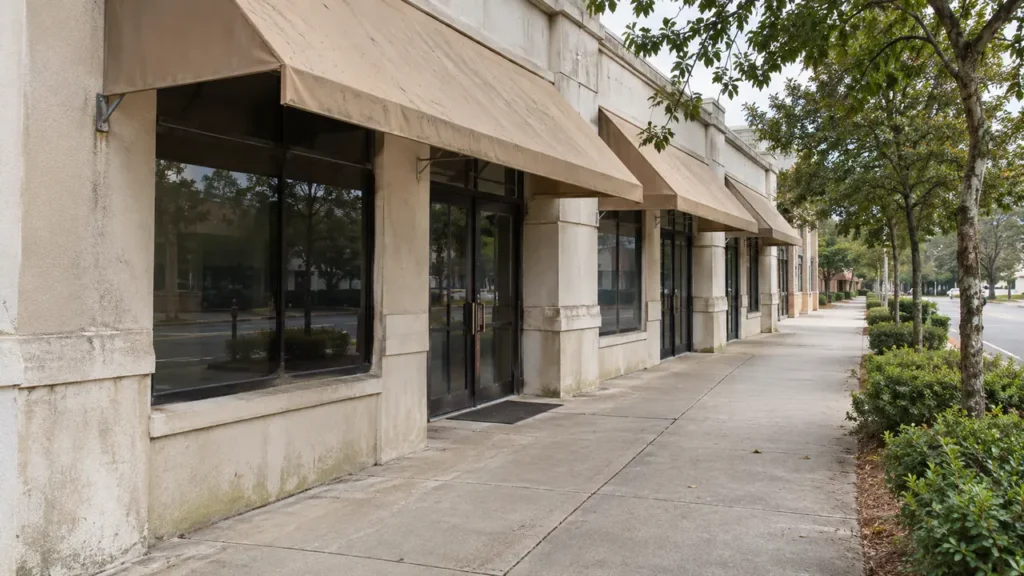
Plan the sidewalk and doorway arrangement
An awning usually sits directly above space customers use. Photograph the pavement and door beneath it, plus the connection to neighboring entrances. Explain whether the business has another entrance it genuinely intends to use during any proposed work. Do not assume customers can simply be redirected through a service door or another tenant’s frontage because those routes appear nearby.
The operator or property contact should identify the arrangement it can provide and who will communicate it to customers. Published opening hours do not necessarily show staff arrival, appointments or deliveries beneath the awning. Add those restrictions where they affect access. If the sidewalk is shared, identify the person who can approve an arrangement for the common area. A washing proposal can then discuss an actual exterior surface with realistic access rather than promising that every doorway and pedestrian route can remain in normal use beneath any awning being considered.
Make outdoor displays and furnishings part of preparation
A storefront may place promotional boards, tables, planters or merchandise beneath an awning. Include their normal position in the property photographs. Then explain what the business can remove, who will handle it and which items must remain. Do not assume product handling or furniture relocation is part of a washing estimate merely because those items stand under the requested surface.
If the arrangement changes during the day, describe that pattern. A photograph taken before opening may not show the space available during trading hours. Keep the awning face, supporting components and pavement boundaries recognizable even when other items occupy the frontage. The request can leave unresolved preparation questions open instead of depending on an unspecified workaround after arrival. It should not imply cleaning saleable products, treating plants or servicing outdoor equipment. The business retains control of those arrangements while suitable exterior washing and access are reviewed against the actual property conditions.
Send an awning-specific estimate request
Start with the address and the contact coordinating the inquiry. Include the complete awning, its attachment area, closer views of the concerns and the sidewalk and doorway beneath it. Add existing product or installer information, care instructions and known damage. Safe photographs from the ground are sufficient to start; do not climb or dismantle anything for an estimate picture.
Explain the business’s operating pattern, the authority for the requested surfaces and any preparation restrictions. Separate the awning priority from optional wall, glass or pavement work. Text photographs first when convenient, or use the commercial project-details route to organize the information. CoKo’s can review whether a suitable exterior washing scope can be offered and what questions remain. The request does not promise acceptance of every fabric or assembly, restoration of faded material, mechanical servicing or a universal stain-removal result. Correct identification and clear boundaries make the next step more useful than choosing an assumed treatment from appearance alone.
A practical start.
Three useful steps.
Show the surfaces
Send wide photos and close views. Label the buildings and the areas that matter now.
Set the boundaries
Explain materials, access, preparation and the work window your property can support.
Review the scope
Confirm included surfaces, responsibilities and the next step before scheduling.
Commercial Awning Washing.
Your questions, answered.
Your next exterior project.
Start with a clearer scope.
Text your address and the priority exterior photos. For a larger project, send the full property details.
Send your address. Show us what needs cleaning.
Text your address, a wide photo and a close-up of the buildup. We’ll review the surfaces and discuss your cleaning options.
Text photos for an estimate Start an online quoteCoKo’s Pressure Washing · (504) 296-9696

