
Commercial exteriors · Greater New Orleans
Commercial Drive-Through Lane Washing
Map the lane from queue entrance to exit.
Text current property photos and requested outside surfaces. Explain the access arrangements that affect your commercial washing scope.
Your property. Your priorities. A clearly defined scope.
Identify the pavement and its present condition
A drive-through lane is a working route, not simply another strip of parking-lot concrete. Vehicles queue, stop at service points and rejoin the property drive, sometimes beside a pedestrian crossing. A useful washing request explains that entire sequence while naming the particular surfaces to be considered. CoKo’s reviews suitable commercial exterior and hard-surface washing in Greater New Orleans and the Westbank. For a drive-through, start with the pavement material, lane limits and operating arrangement the property can provide. This concerns agreed exterior surfaces, not servicing order boards, payment equipment or vehicles. Send current photographs and identify the person coordinating access. Those facts help distinguish a focused lane request from a larger building or parking-area proposal without assuming that the whole customer operation can remain active during work.
Photograph the lane surface with enough surrounding context to locate it. Show pavement joints, patches, coatings and transitions between concrete and other materials. Close pictures of buildup are useful alongside a wider view of the affected portion. A lane can contain several different surface conditions even when it appears continuous from the entrance. Name the particular area you want reviewed rather than treating every visible paved surface as an identical cleaning target.
Disclose existing cracks, damaged joints, loose coatings or previous repairs. Washing does not repair pavement or renew a worn finish. Describe marks using ordinary observations instead of guessing their composition from a photograph. An unusual deposit or condition needing specialist handling should be identified for review before ordinary washing is assumed to cover it. Suitable methods and expectations depend on actual material and condition; heated pressure is a possible service discussion where appropriate, not an automatic treatment or a promise to remove every mark from every lane.
Map the queue entrance and the stopping points
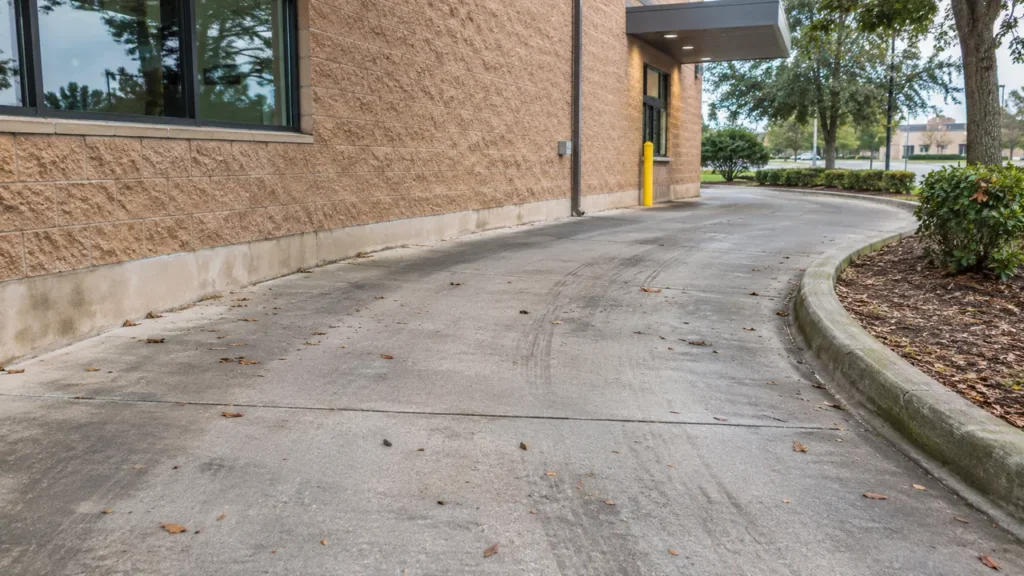
Send a view from the point where customers enter the lane and another showing the approach to the main stopping area. Explain whether vehicles can leave the queue before reaching the service point or must continue through the same narrow route. That detail matters to access even when the pavement area is relatively small. A close photograph below a window does not show how the lane connects to the rest of the property.
Identify separate order, transaction or collection points where they exist, without assuming every drive-through has the same arrangement. The request should describe the actual property, whether it serves food collection, a bank transaction or another customer use. Do not include equipment servicing by implication. If the lane shares an entrance with normal parking, show the junction and explain who controls it. A proposal can then distinguish the requested washing surfaces from the business decisions needed to make the route available.
Define the surfaces beside the service window
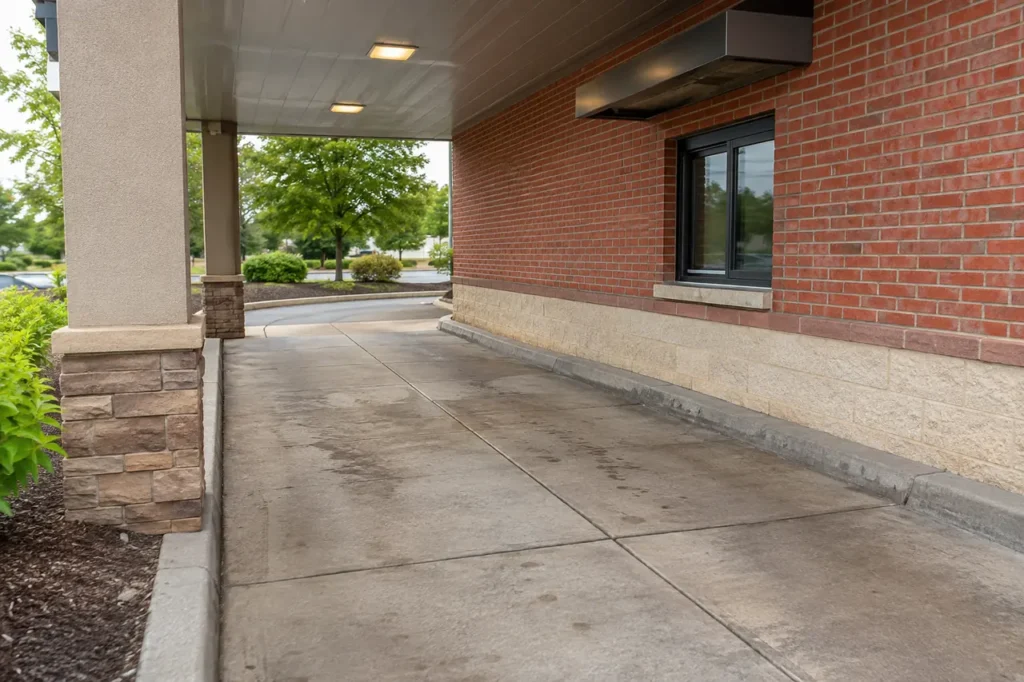
The pavement beneath a service window may sit beside a wall, sill, canopy support or recessed doorway. Name the surfaces you want considered and provide photographs showing their relationship. A request to wash the lane should not automatically expand to the building facade, window assembly or every fixture along it. Those additional areas can be listed separately if the property wants them reviewed.
Explain any known water-entry concerns, damaged covers or loose trim near the work area. Washing is not a repair for those conditions. Transaction systems, speakers, cameras and signs remain separate from ordinary exterior surface washing. Their position should be visible in the overview so the scope can recognize the real surroundings without treating them as targets. If another provider maintains a window or attached equipment, identify that arrangement. A clear boundary helps the operator understand what an estimate includes and prevents an outside pavement request from becoming an assumed commitment to unrelated building components.
Keep canopy work separate from lane pavement
A drive-through canopy can have overhead faces, supports and an attached sign, while the lane beneath it has its own material and access concerns. If overhead surfaces are a priority, photograph them from a safe ground-level position and identify which portions are requested. Do not assume that pavement washing includes the canopy or that every part of the structure uses the same finish.
Explain who controls the canopy, especially where a tenant operates the business but the landlord owns the structure. Include visible damage and existing material information when available. Repairs, sign restoration and equipment servicing need their own responsible providers. The washing discussion can then separate an exterior appearance request from structural or operational questions. Access also needs review: a photograph showing overhead clearance does not by itself establish what equipment can be used or how the lane will be arranged. Keep those decisions open until the property details and restrictions are understood.
Agree how the business will make the lane available
Published business hours do not necessarily describe when a drive-through is unused. Staff may arrive early, deliveries may cross the approach and customers may use different service arrangements at different times. Explain the actual pattern relevant to the requested area. Identify who can confirm an appropriate work window and communicate the business’s own customer arrangements.
If the route must remain in use, state that requirement before a proposal depends on closing it. Do not assume that vehicles can be redirected through a pedestrian area or another tenant’s drive. The operator should identify the arrangement it can provide rather than expecting customers or a washing crew to improvise traffic control. Where the lane cannot be separated from the main drive, describe the limitation directly. A useful estimate records the recognizable surface boundary and unresolved access questions instead of promising that every customer operation can continue unchanged around any proposed exterior work.
Have the property photos?
Let’s define the next step.
Send the address, requested surfaces and the contact who can confirm access.
Show the exit and nearby pedestrian crossings
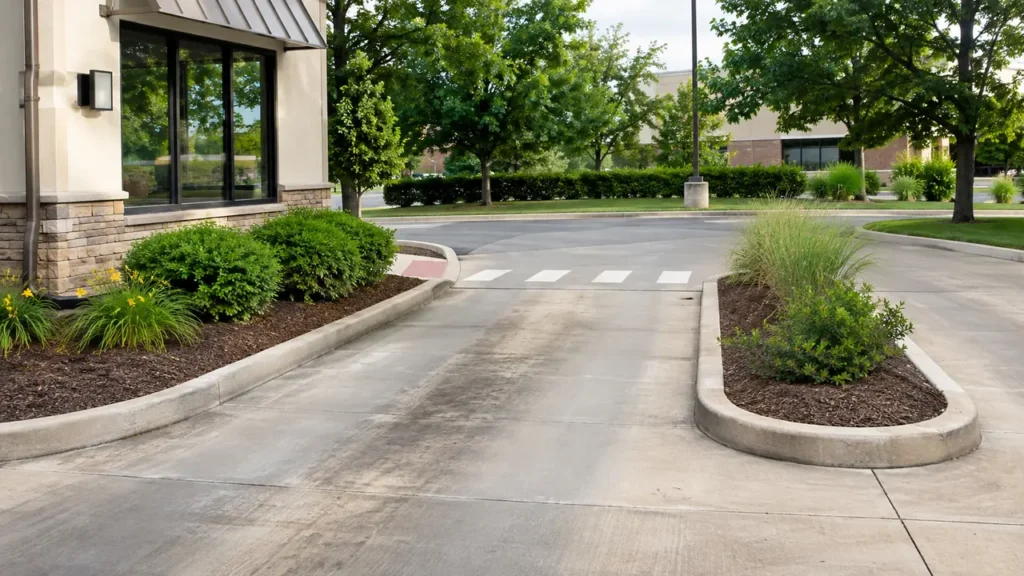
Photograph where the lane rejoins parking or the property drive. Include any walkway that crosses the exit or passes beside it. A washing request can otherwise focus on the stopping point while overlooking a small connection used by people walking to the main entrance. Explain which pavement belongs to the requested lane and where the broader common approach begins.
The property contact should identify the arrangement it intends to provide for customers and pedestrians. Do not assume a neighboring entrance or parking aisle can be closed without approval. If several tenants use the connection, identify who controls the common area. These details allow the estimate to address an actual outside route with realistic boundaries. They do not turn surface washing into management of the entire property’s vehicle movements. Keep the responsibility for operating arrangements clear, especially when a lane is narrow and an apparent alternate path is not genuinely available to the public.
Separate lane priorities from parking-area additions
List the problem that prompted the inquiry first, such as buildup at a stopping point or dirt along a shaded curb. Then identify optional portions of the lane, adjacent walks or building elevations. A marked overview can make those priorities clearer than a request to clean everything outside. Keep the immediate lane scope recognizable so material condition, permission and access can be discussed independently.
Where the pavement meets a shared parking area, confirm who can approve that wider work. A tenant may control its service operation without having authority over an entire center’s drive. Broader additions can remain pending until the property owner is involved. Also distinguish appearance concerns from repair questions or unusual deposits. Washing may be appropriate for suitable surface buildup, but it does not repair drainage, pavement damage or equipment faults. A practical proposal should describe what is under consideration and what remains unresolved, rather than implying that every condition visible in a photograph will be corrected.
Send a route-focused estimate request
Begin with the address and the person coordinating the property request. Include the queue entrance, main stopping point, lane surface, exit connection and any overhead area being considered. Pair closer photographs of the concerns with wider views showing their location. Add existing surface information and known damage, plus a simple marked boundary if the lane shares space with normal parking.
Explain the operating restrictions and who can confirm the proposed arrangement. Separate required lane washing from optional canopy, wall or walkway additions. Text photographs first when convenient, or use the commercial project-details route to keep the address and notes together. CoKo’s can review suitable exterior washing against those facts and identify remaining scope questions. The result should be an understandable surface request with practical access information. It does not imply vehicle washing, transaction-equipment maintenance, universal stain removal or a guarantee that all customer traffic can continue through the requested area during work.
A practical start.
Three useful steps.
Show the surfaces
Send wide photos and close views. Label the buildings and the areas that matter now.
Set the boundaries
Explain materials, access, preparation and the work window your property can support.
Review the scope
Confirm included surfaces, responsibilities and the next step before scheduling.
Commercial Drive-Through Lane Washing.
Your questions, answered.
Your next exterior project.
Start with a clearer scope.
Text your address and the priority exterior photos. For a larger project, send the full property details.
Send your address. Show us what needs cleaning.
Text your address, a wide photo and a close-up of the buildup. We’ll review the surfaces and discuss your cleaning options.
Text photos for an estimate Start an online quoteCoKo’s Pressure Washing · (504) 296-9696

