
Commercial exteriors · Greater New Orleans
Lumber Yard Store exterior washing.
Keep the building and stock separate.
Text current property photos, requested outside surfaces and the operating restrictions that affect access. Start with a clearly defined commercial washing scope.
Your property. Your priorities. A clearly defined scope.
Distinguish the office roof and walls from the warehouse shell
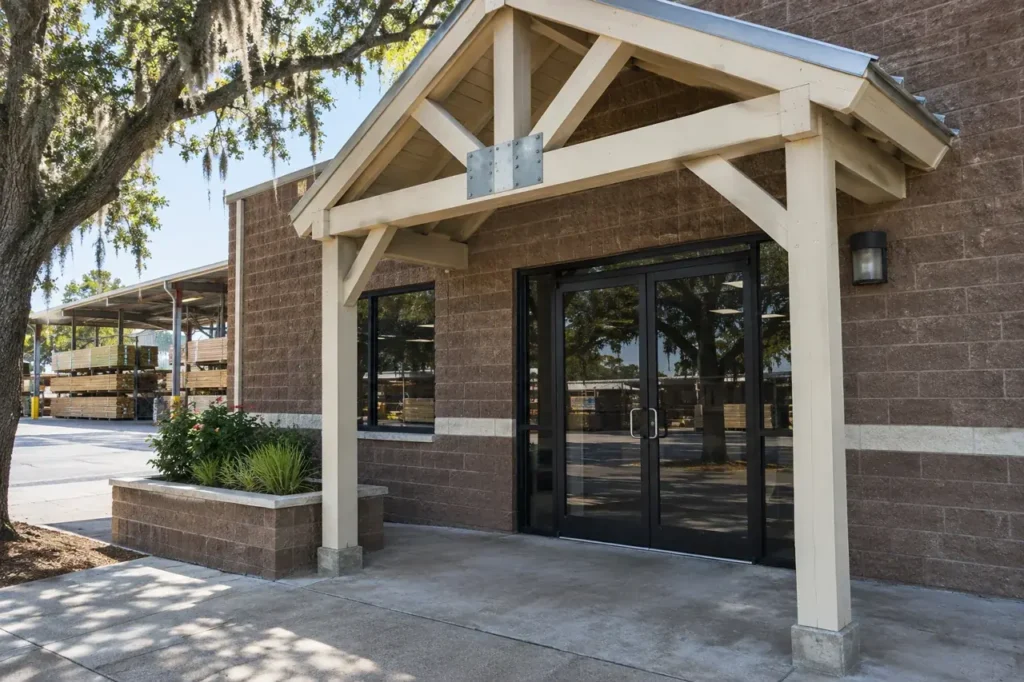
A lumber merchant's building serves a different purpose from the stock and open yard around it. The office frontage may welcome retail customers while the warehouse side supports order collection and supplier deliveries. A useful washing request keeps those parts separate. CoKo’s considers roof, wall and suitable outdoor hard-surface washing for lumber-store premises in Greater New Orleans and the Westbank. This concerns the building exterior and agreed pavement, not treatment of saleable lumber, packaged building products or yard machinery. Start with the address, photographs of the building and the particular surfaces you want reviewed. Explain which door customers use and how collections reach the premises. Those details establish a practical property scope before a method or work window is discussed.
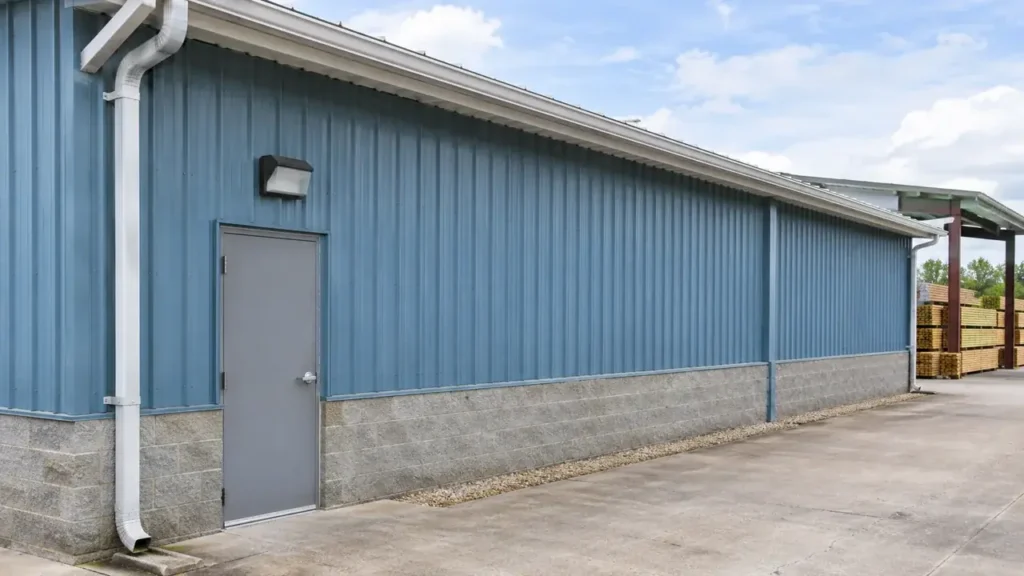
A lumber-store office can have a small pitched roof and masonry frontage attached to a much larger metal-sided warehouse. Photograph each requested part separately. Include an overview showing the connection between the office, warehouse and outdoor approach. A close picture of one stained panel does not establish which roof section or wall elevation the request concerns. Name the areas using references the business already recognizes, such as counter frontage or receiving-side elevation.
Show painted surfaces, repaired panels, loose trim and visible damage in the first request. Washing cannot repair a failed coating or close an opening. Where roof washing is requested, provide existing material information and safe ground-level views of the edges. There is no need to climb onto a store or warehouse roof for estimate photographs. The review can distinguish suitable appearance work from repair questions and keep a decision about one building section from silently applying to every connected roof or wall.
Show the route to the sales counter
Retail buyers may arrive to discuss an order before entering the collection yard. Show the actual pedestrian route to the counter rather than only the vehicle entrance to the property. Include curb transitions, canopy supports and places where the walkway narrows. A photograph taken looking outward from the customer door can explain the connection to parking and help identify the small pavement area the manager actually wants considered.
Identify which entrance the operator intends to keep available during any proposed exterior work. A warehouse doorway should not automatically become a public entrance because it appears close to the office. The business needs to decide what customer arrangement is acceptable before a proposal depends on it. If the counter frontage shares an approach with another tenant or a property-wide drive, explain who controls that area. The estimate can then separate the merchant's own requested surfaces from wider access decisions still needing approval.
Keep saleable timber and building products outside the request
A photograph of the property can show stacks of lumber, sheet products or packaged goods close to the building. Do not assume those items are washing targets. The request should identify the wall, canopy or pavement surface you want reviewed and explain how the business will make that area available. Saleable stock and its storage arrangements remain the merchant's responsibility, separate from ordinary exterior surface washing.
Point out products that are temporarily staged near a doorway or along an elevation. A stock arrangement that changes during the day can affect what outside space is available even when the building itself is unchanged. Identify who can arrange any movement of inventory or packaging; do not presume a washing crew will relocate it. If stock cannot be moved from a requested area, state that restriction honestly so the estimate can discuss the actual boundary rather than relying on an unspecified solution after arrival.
Describe the collection side without including yard operations
Customer order collection may use a different entrance from the sales counter. Send an overview of the collection approach and explain which outside surfaces are part of your request. State whether collections happen throughout the day or during a defined period arranged by the merchant. The operating pattern helps the review understand access to the building; it does not turn washing into order handling or management of the loading yard.
Identify the contact who can answer questions about that approach. If collection traffic and a proposed washing area overlap, the operator needs to decide what arrangement is workable before scheduling. Do not assume that drivers, customers or equipment operators will improvise a different route. The proposal should be based on a named exterior area and an agreed business arrangement. Vehicle movements, yard machinery and the handling of customer orders remain outside the surface-washing responsibility.
Separate fixtures, canopies and storage shelters
An office entrance canopy, an open stock shelter and a warehouse wall may appear in the same overview photograph, but they are different possible scopes. Label the part you want considered. Explain whether the concern is a canopy face, support columns, suitable wall material or the pavement beneath it. A broad request to wash the frontage should not automatically include storage structures or every fixture attached to a building.
Include signs, lamps and utility fittings in the overview so their position is understood. Damaged covers, loose trim or known water-entry concerns should be disclosed rather than described as ordinary dirt. Repairs and equipment servicing need their own responsible provider. Where another contractor is already working on the building, explain the intended order. The exterior washing discussion can then fit around the actual maintenance plan without implying that cleaning will correct damage or include work on signs and equipment.
Have the property photos?
Let’s define the next step.
Send the address, requested surfaces and the contact who can confirm access.
Give receiving access its own outside boundary
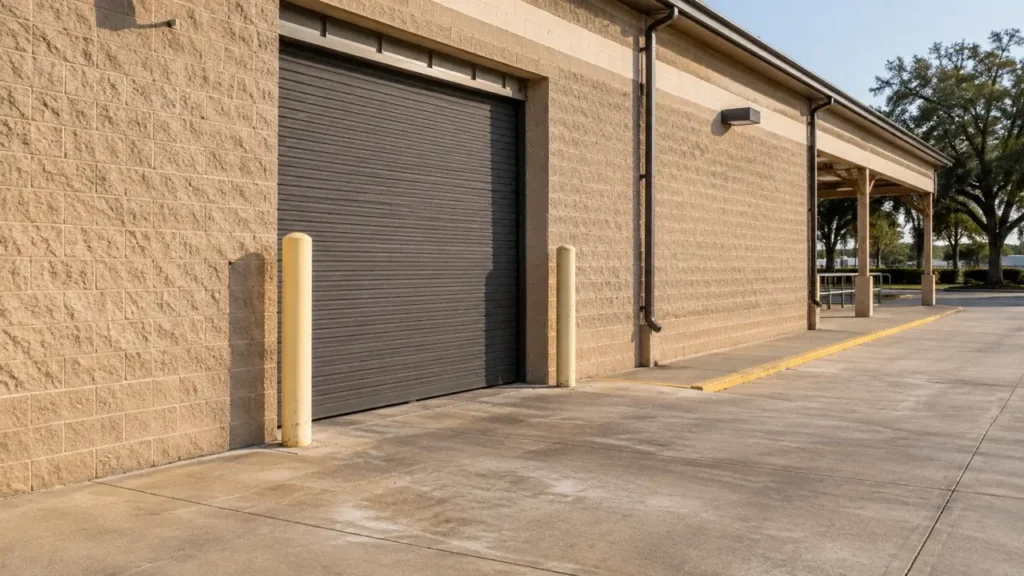
Supplier deliveries can reach a different elevation from customer collection. Photograph the receiving doorway, the pavement immediately outside it and the connection to the normal drive aisle. Explain any delivery already expected during the period being considered. That receiving-side overview can show why a small apron is important to the business even when a larger part of the property looks empty in a photograph.
If receiving and customer collection share the same approach, describe the overlap directly. Do not present them as independent routes if the business cannot actually use them separately. The operator should identify the arrangement it can provide and the person who can confirm it. The estimate can then distinguish authorized building and pavement washing from an unresolved property-access question. This is a practical discussion about a defined exterior area, not a promise that a busy loading operation can be kept running in any proposed work window.
Order the priorities around authority and availability
A manager may control the sales entrance without having authority over the full warehouse roof, an adjoining building or a shared drive. Identify who can approve each requested area. There is no need to guess what a lease or property arrangement permits. The proposal can separate the merchant's own authorized request from additional work requiring a landlord, site owner or neighboring business to be involved.
List immediate priorities separately from optional elevations. For example, the office entrance may be the current concern while the warehouse side is an additional area for review. Keep roof, wall and pavement boundaries recognizable so condition, permission and access can be discussed independently. Published opening hours are only a starting point for scheduling. Add normal staff arrival, stock receipts and collection patterns if they affect the time being considered, and identify the contact who will confirm the agreed arrangement.
Send a building-focused request with current photographs
Begin with the property address and the person coordinating the request. Add a full-building overview, the sales-counter approach, the collection side and the receiving doorway. Label the photographs by area and include closer views of the particular exterior concerns. Show current storage restrictions and known damage as well as the buildup that first prompted the inquiry. Ground-level photographs are more useful than climbing for a different view or sending an unrelated example building.
Then explain which surfaces you want priced and which are only being discussed. CoKo’s can use those notes to review a defined commercial washing scope and any remaining access questions. Text photographs first when convenient, or use the commercial project-details route to organize the property information together. The request concerns suitable building and pavement surfaces. It does not imply that stock, machinery or every structure on the site is included, or that all materials can receive the same washing approach.
A practical start.
Three useful steps.
Show the surfaces
Send wide photos and close views. Label the buildings and the areas that matter now.
Set the boundaries
Explain materials, access, preparation and the work window your property can support.
Review the scope
Confirm included surfaces, responsibilities and the next step before scheduling.
Lumber Yard Store Building Exterior Washing.
Your questions, answered.
Your next exterior project.
Start with a clearer scope.
Text your address and the priority exterior photos. For a larger project, send the full property details.
Send your address. Show us what needs cleaning.
Text your address, a wide photo and a close-up of the buildup. We’ll review the surfaces and discuss your cleaning options.
Text photos for an estimate Start an online quoteCoKo’s Pressure Washing · (504) 296-9696