
Commercial exteriors · Greater New Orleans
Laundromat exterior washing.
Keep arrivals in the plan.
Roof, wall and outdoor pavement washing scoped around your customer entrance. Text current property photos and operating hours.
Your property. Your priorities. A clearly defined scope.
Review the roof, canopy and wall as separate surfaces
A laundromat’s exterior serves customers carrying baskets, attendants moving supplies and delivery drivers sharing a small property. Washing that exterior needs a more precise request than “clean the whole store.” CoKo’s reviews laundromat roof, wall and suitable hard-surface washing in Greater New Orleans and the Westbank. Start with the address, current exterior photos and the areas you want considered. The washing scope concerns the building and outdoor surfaces. Laundry equipment, interior sanitation, dryer exhaust systems and repairs require their own appropriate providers. A useful plan identifies the entrance customers actually use, the condition of the pavement and the operating restrictions before a work window is discussed.
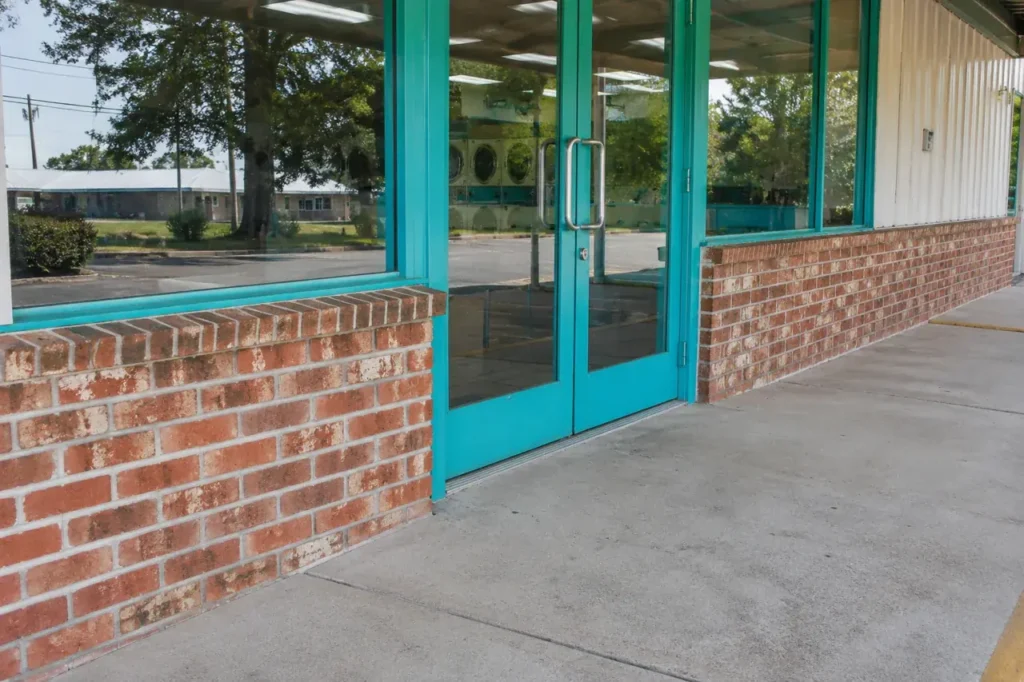
A laundromat can have painted block walls, a brick storefront, a metal canopy and more than one roof material on the same building. Each should be identified separately in the request. Tell us whether the roof is part of the project or whether your concern is limited to the visible fascia and canopy faces. Ground-level photographs can show roof edges and general staining without asking anyone to climb onto the building for an estimate.
Existing condition affects what can be considered. Photograph flaking paint, open mortar joints, deteriorated trim and areas where earlier repairs changed the finish. A cleaning request is not a repair assessment, and washing cannot replace a missing coating or close an opening. Soft washing or another controlled approach may be considered for suitable exterior materials after review. The method should follow the actual surface and condition rather than treating every wall as a concrete apron. State which surfaces matter most so the estimate can distinguish essential work from an optional additional area.
Separate exterior washing from laundry-system maintenance
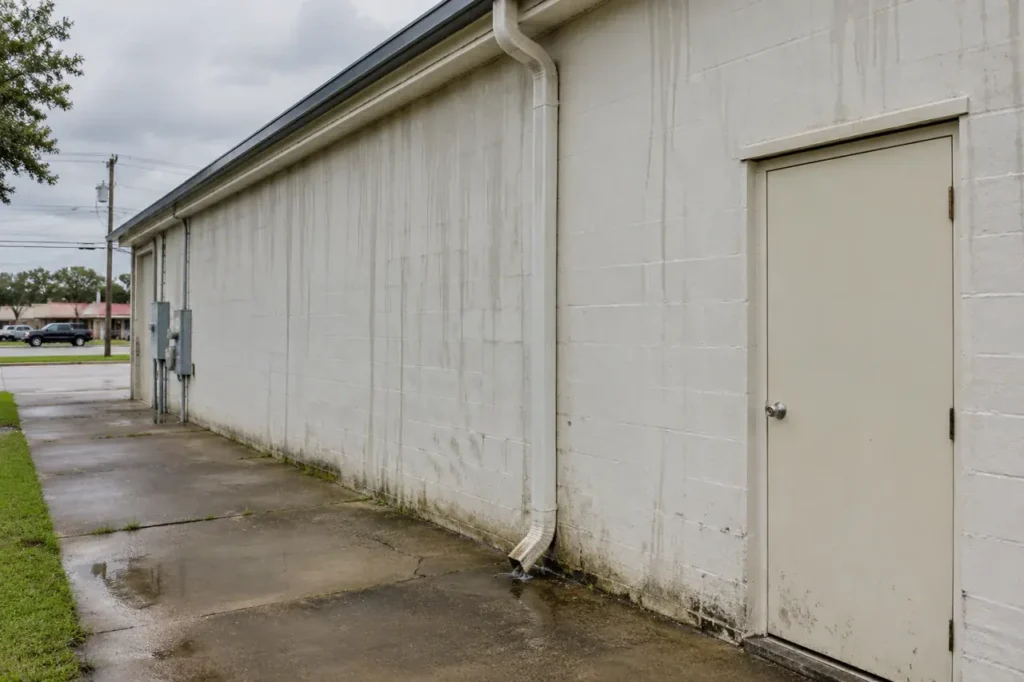
Laundromats have equipment that makes the exterior look more complicated than an ordinary storefront. A side wall may carry exhaust outlets, utility cabinets, conduits, service doors or piping. Include these in the photographs so the review can identify restrictions, but do not assume their presence makes them part of the washing service. Exterior appearance work should not become an informal request to clean inside a dryer vent, treat machinery or investigate a gas or electrical problem.
Tell CoKo’s about loose covers, damaged doors, missing seals and existing leaks before scheduling. The owner should arrange the appropriate repair or equipment service where needed. Keeping those tasks separate avoids a scope that promises an operational result from a surface-cleaning visit. Photographs should also show the relationship between the requested wall and nearby equipment. A close view of staining helps explain the concern; a wider view explains why access may be limited or why part of that wall needs to be excluded from the estimate.
Start with the customer route, not the parking-lot total
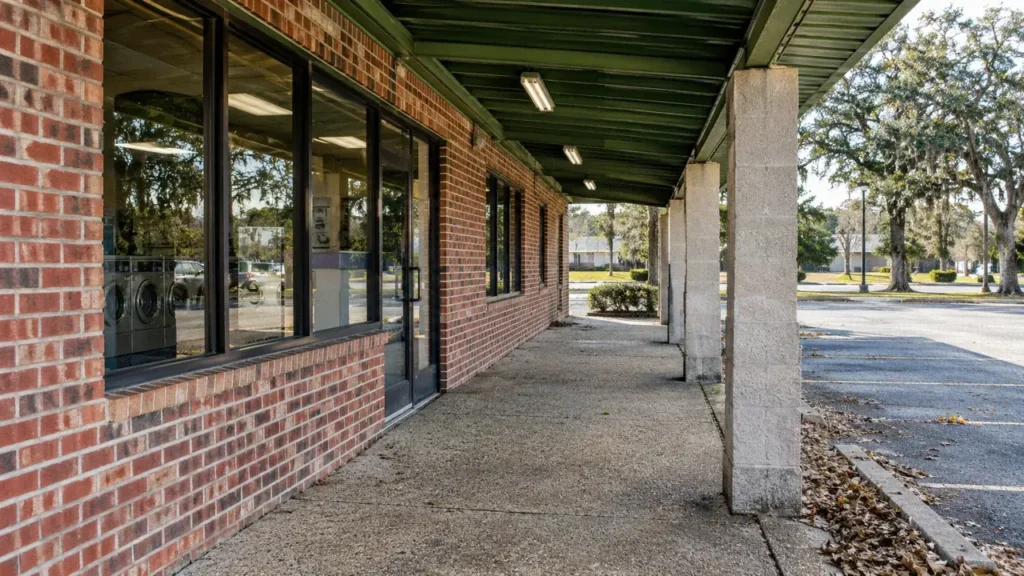
Walk the route from a normal parking space to the entrance while remaining on safe ground. A customer may cross a curb ramp, turn around a column and wait near a door while carrying a full basket. Photograph that complete route rather than only the darkest concrete patch. Include changes in level, pavement joints and any narrow section where two people cannot comfortably pass. Those details help distinguish the surface to be washed from the access that must remain available.
List the portions owned or controlled by the laundromat. In a shopping center, the front sidewalk, parking spaces and drive aisle may have different approval requirements. A tenant’s request does not automatically authorize work on the common property. Identify the landlord or manager who can approve those areas. If you want only the customer apron considered, say where it begins and ends. A defined boundary supports a useful estimate and makes it easier to communicate which part of the property will be affected on the day of work.
Describe pavement condition before choosing a cleaning result
The customer apron may contain ordinary tracked soil, shaded organic buildup, rust-colored marks from metal objects or older stains near a service door. These conditions do not all respond in the same way. Send a close photo and a wider location photo for each concern. Explain whether the mark is recent, whether you know its source and whether the pavement has previously been coated. There is no need to diagnose the material from a photograph or promise a uniform final color before the condition is reviewed.
Concrete joints, patched sections and worn surface areas should remain visible in the estimate photos. Cleaning can reveal differences that were already present; it does not restore worn concrete to a new slab. If you are also arranging pavement repairs or repainting, tell us the intended sequence. Heated pressure washing may be discussed where it suits the specific residue and surface, but heat is not an automatic answer for every stain. A clear proposal should identify what is included and any limits on appearance improvement rather than guaranteeing that every mark will disappear.
Move baskets, mats and displays through a clear responsibility list
Outdoor objects can hide the edge of the washing area or block a useful setup space. List benches, portable signs, trash cans, entry mats and vending equipment in your photos. Identify which items staff can move and which are fixed, connected, heavy or controlled by another company. Do not assume a washing crew will disconnect equipment, move a loaded machine or handle items that the owner has not authorized. If something cannot be moved, describe the access that remains around it.
Preparation should be specific enough that staff can carry it out without guessing. Agree on where movable items will wait, who will put them back and which entrance must remain clear. Keep customers’ personal belongings and laundry outside the work area. A service-side storage pile also needs its own decision; washing around it is different from clearing it. These practical details can be included in the written scope or preparation note. They make the job easier to coordinate and reduce the chance of arriving to find the requested pavement covered by objects that were never discussed.
Have the property photos?
Let’s define the next step.
Send the address, requested surfaces and the contact who can confirm access.
Plan around customer use and an actual operating window
Some laundromats open early, close late or remain accessible throughout the day. A quiet-looking photograph does not establish that the property can be closed for washing. Describe the busiest arrival periods, whether an attendant is present and who can make operating decisions. If the building has only one public entrance, that restriction belongs in the first request. Do not suggest that customers simply step around active work or use a staff-only door that has not been approved for public access.
Discuss whether the requested areas can be separated into workable sections. That depends on the layout and cannot be assumed for every narrow storefront. A proposed time is a starting point until access, lighting, vehicle movements and site requirements have been reviewed. The manager should also decide how customers will learn about any temporary restriction. Where a tenant shares the sidewalk with another business, coordination needs to include that neighbor’s access. A workable schedule protects the purpose of the visit: improving the exterior without creating unnecessary confusion at a busy entrance.
Include site water questions and the neighboring property
A pavement photo alone does not explain where water collects or how the area connects to nearby property. Show visible drains, low spots, landscaping and changes between the tenant apron and a common drive aisle. Tell us about known ponding or an outlet that does not work as expected. These observations support site review; they are not instructions to send wash water toward a particular drain. The required handling arrangement must be established for the actual site before work proceeds.
Identify the water connection you believe may be available and who controls it. Availability, authorization and practical access need confirmation rather than being inferred from a hose visible in an old photograph. If another tenant uses the same service corridor, mention their delivery access and any shared equipment. Where the requested surfaces are close to parked vehicles or an adjacent entrance, include that relationship in the overview. A proposal can then define the relevant boundaries and responsibilities. CoKo’s does not promise drainage repair, waste transport or unrestricted washing around operational equipment as part of a routine exterior request.
Build a repeatable scope for the next maintenance visit
After the initial scope is clear, keep a simple property record that can be used for future requests. Save the address, the approved surface list, dated overview photos and the contact who controls access. Record exclusions as carefully as included work. “Front apron and canopy faces” is more useful than “same as last time” when staffing changes or a new manager takes over. The record should also note any repairs completed since the earlier visit because a changed finish may need a different review.
Choose future review timing from observed condition and business activity rather than assuming every laundromat needs the same interval. Photograph the entrance after busy seasons, nearby construction or a change in parking use, and send the current condition when requesting another estimate. For properties that share a landlord, label each building and its own access restrictions. Start by texting CoKo’s the exterior photos and the priority areas, or use the commercial project-details form. A defined laundromat washing scope connects roof and wall appearance, pavement condition and customer access without turning exterior washing into a promise to service the laundry operation itself.
A practical start.
Three useful steps.
Show the surfaces
Send wide photos and close views. Label the buildings and the areas that matter now.
Set the boundaries
Explain materials, access, preparation and the work window your property can support.
Review the scope
Confirm included surfaces, responsibilities and the next step before scheduling.
Laundromat Exterior Washing.
Your questions, answered.
Your next exterior project.
Start with a clearer scope.
Text your address and the priority exterior photos. For a larger project, send the full property details.
Send your address. Show us what needs cleaning.
Text your address, a wide photo and a close-up of the buildup. We’ll review the surfaces and discuss your cleaning options.
Text photos for an estimate Start an online quoteCoKo’s Pressure Washing · (504) 296-9696

