
Commercial exteriors · Greater New Orleans
Parking stairwell washing.
Steps, landings and the route between them.
Text the stair towers, requested levels and surface details. We’ll review the washing area with the parking facility’s access plan.
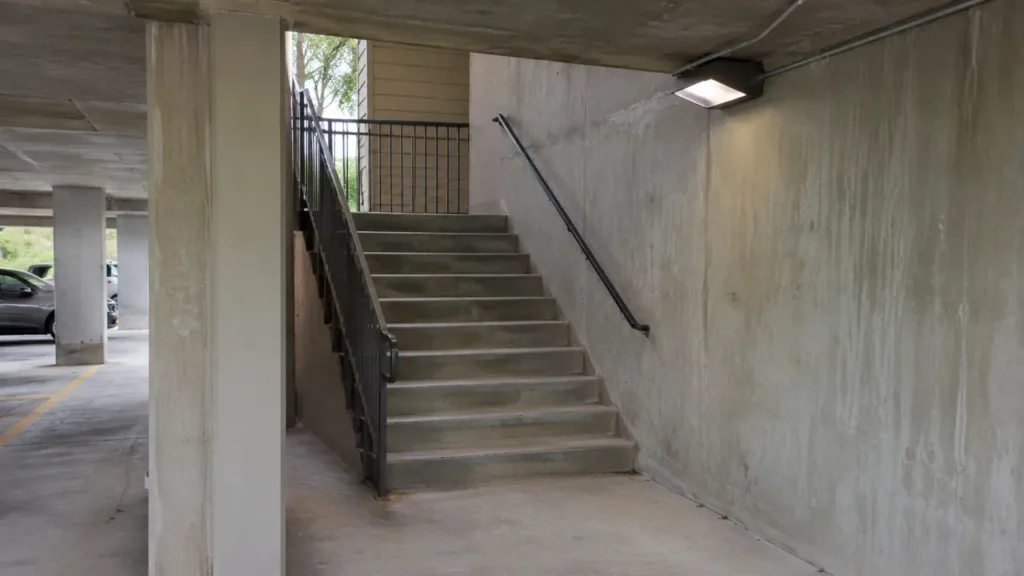
Your property. Your priorities. A clearly defined scope.
Label every tower, floor and entry point
Parking deck stairwell washing concerns a connected route through a building, not simply a stack of concrete steps. Landings, stair flights, walls, handrails and the pavement at the exits can belong to different parts of the requested work. CoKo’s reviews exterior parking stairwell washing in Greater New Orleans and the Westbank with those components identified by tower and level. Start with the actual stair locations and the surfaces that need attention. The parking operator should explain how the requested area can be made available and which routes remain in use, so the washing scope can be reviewed alongside the facility’s operating plan.
Use the stairwell names or numbers shown in the parking facility. Identify the lowest and highest requested levels, intermediate landings and the exits that connect to surrounding buildings or sidewalks. A photograph from one landing may not show whether the stair continues below the garage entrance or opens into a separately managed building. Include an overview of each requested tower and close views that locate the concern on the correct level.
List flights, landings, wall sections, rails and exit pavement separately. State whether the inquiry covers one stairwell, several selected towers or matching areas across the deck. A floor count alone does not describe the full washable area or the access conditions. CoKo’s can review a more useful request when the manager labels the components and boundaries rather than assuming every stair tower follows an identical layout. Keep enclosed interior areas distinct from the exterior or open-sided washing scope being discussed.
Label a stair tower consistently from the garage entrance through each landing. For example, the operator can distinguish the tower beside the cashier area from one serving a rear exit, then identify requested levels within that tower. Use the same labels on condition photos and the component schedule. This makes an estimate easier to review when several towers look alike and gives the operator a precise way to explain a level that cannot be released during the proposed working window.
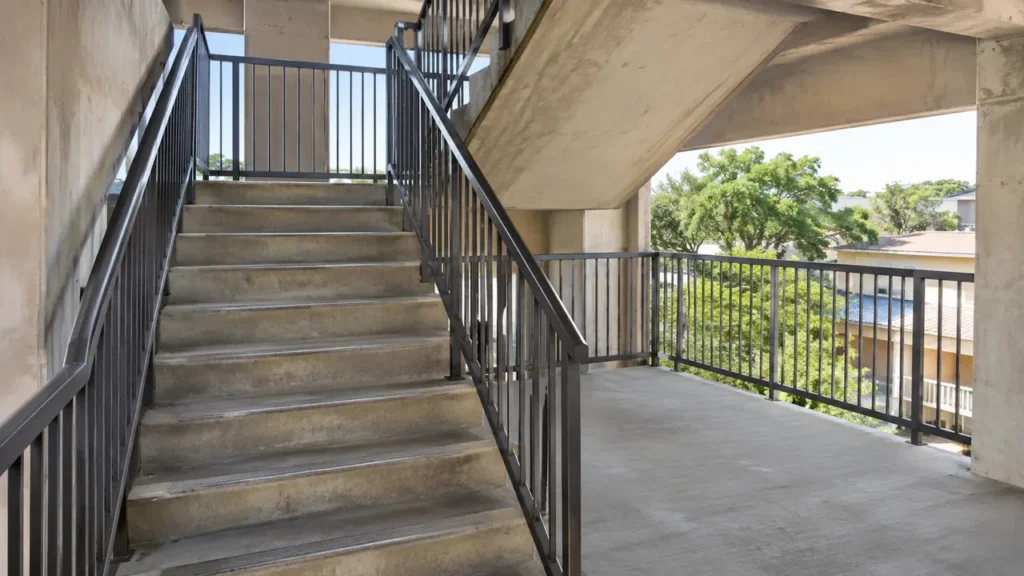
Distinguish concrete, coatings and rail finishes
Show the finish on the treads and landings, along with any coating or resurfacing information the operator holds. Some stair areas have exposed concrete while others have painted or coated surfaces. Railings, wall finishes and metal components may have different maintenance requirements from the floor. Photograph changes in material at the doorway and at each level rather than treating the stairwell as one continuous concrete surface.
Identify worn coatings, loose rail components, damaged edges and known water-entry concerns. Washing does not repair those defects or certify the condition of the stair structure. The proposed cleaning approach needs review against the actual material and finish, including any restrictions supplied by the owner or product provider. Where an area has recently been repaired or coated, explain the work and provide relevant care requirements. A close photograph can help locate visible buildup, but it should not replace known product information with a guess about the treatment.
Have the operator define the available access arrangement
A parking stairwell can serve several destinations, including occupied offices, street exits and different parts of the garage. Show which doors and landings connect to those destinations. Identify the parking or building contact responsible for approving temporary access arrangements. The washing contractor should not assume a stairwell can be closed simply because another tower is visible elsewhere in the deck.
The facility must determine an appropriate operating and access plan before the proposed work depends on releasing a particular route. Describe the confirmed boundaries and the person who can answer questions about them; avoid sending security codes or private access credentials in an estimate request. If the operator cannot make a selected flight or landing available, leave it pending or discuss a revised phase. A scope based on a real release arrangement is more useful than a schedule that treats every stairwell as an optional pedestrian shortcut.
Explain the parking calendar and nearby movement
Describe when the garage is busiest and which activities affect the requested towers. Office arrivals, event parking, hotel use and routine deliveries can create different patterns within the same facility. Include the preparation period and the time when the operator can confirm the area is ready. A garage described as quiet at night may still have occupied levels or a stair route serving another building.
Name the contact responsible for communicating the agreed work area to relevant building or parking staff. When several towers are involved, identify which can be coordinated together and which require their own windows. Explain any repairs, lighting work or painting planned at the same landings. Those projects may change access even when the surrounding parking spaces are open. The proposed washing phase should be tied to recognizable towers and levels, with a clear way to communicate changes before equipment is brought to the site.
Review water movement from level to level
Show the relationship between upper landings, lower flights and the exit areas below. Include visible drains and the surrounding pavement in the photographs so the site contact can explain the facility’s washing-water requirements. A grated opening does not establish an approved destination, and an open stair edge does not mean water can be allowed to fall onto an occupied level or neighboring property.
Identify doors, electrical fixtures and stored items beside or beneath the requested area. Provide the water connection offered for review and any restrictions on where equipment may be positioned. If a drain is damaged or a landing already has a water-management concern, report it as an existing condition. The washing proposal should distinguish the agreed cleaning from drainage repairs or changes to the building. These details are especially important when the requested levels overlap with a pedestrian exit that the operator intends to keep available.
Have the property photos?
Let’s define the next step.
Send the address, requested surfaces and the contact who can confirm access.
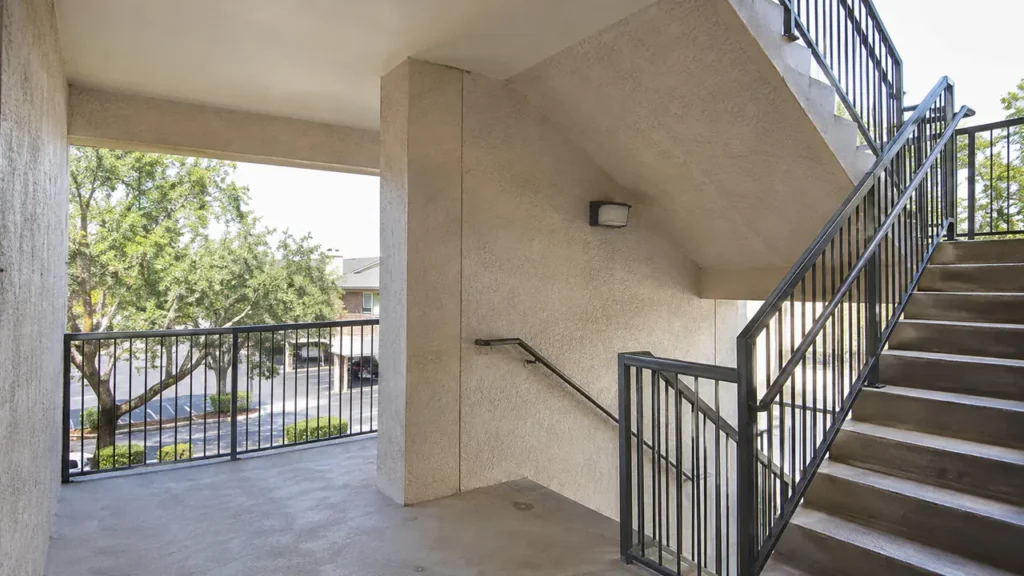
Separate routine washing from concentrated stain work
Photograph ordinary dirt and surface buildup separately from concentrated spills, rust-colored marks, gum or worn finishes. Identify the landings or flights where those concerns occur and explain which are priorities. A small recurring mark at one doorway may need different review from broad buildup across several open levels. The appearance of a stain alone does not establish its cause or guarantee that it can be completely removed.
Ask the quote to distinguish general stairwell washing from any separately assessed stain work. Unknown substances or conditions outside routine exterior cleaning should remain pending for the responsible facility contact to address. CoKo’s does not assume hazardous-material cleanup within a stairwell-washing price. A clear description lets the operator compare the same intended work across proposals without treating a clean-looking landing, an old coating and a damaged concrete edge as problems that one washing step will resolve equally.
Define preparation and the completion handoff
List the items the operator will remove or relocate from the requested landings and entrances. Temporary signs, stored supplies, loose trash and other obstructions should have assigned responsibilities rather than being left for the washing visit to resolve. Fixed fixtures and items that must remain should be visible in the estimate photographs. Moving heavy equipment, repairing doors or dismantling rails is not automatically included in a surface-cleaning scope.
Agree who will confirm readiness and who will receive the completed phase. The operator’s reopening and inspection responsibilities should remain clear; washing does not establish that a stairwell meets every building or access requirement. For multiple towers, use a level-by-level list so a section that was unavailable is not mistaken for completed work. Record additions or changes before treating them as included. A straightforward handoff is particularly useful when the parking operator, property manager and tenant security staff are different organizations.
Build a stairwell quote request that can be checked
Text the address, tower labels and overall views of the requested stairs. Add close photos of treads, landing finishes, wall buildup and particular marks, then show the exits and surrounding pavement. State the number of flights or landings if known, but leave uncertain measurements labeled as estimates. Safe photographs from ordinary permitted positions are sufficient to begin; there is no need to climb a rail or enter a restricted service space.
Include the operator’s authorized contact, available work window, water arrangement and the access boundaries it can confirm. For a large deck, use the commercial project form to keep tower and level references together. Review the written scope against that list, including the components, preparation responsibilities and areas awaiting further information. CoKo’s can then discuss suitable exterior stairwell washing on the basis of a recognizable route through the property rather than a general instruction to wash all the stairs.
A practical start.
Three useful steps.
Show the surfaces
Send wide photos and close views. Label the buildings and the areas that matter now.
Set the boundaries
Explain materials, access, preparation and the work window your property can support.
Review the scope
Confirm included surfaces, responsibilities and the next step before scheduling.
Parking Deck Stairwell Washing.
Your questions, answered.
Your next exterior project.
Start with a clearer scope.
Text your address and the priority exterior photos. For a larger project, send the full property details.
Send your address. Show us what needs cleaning.
Text your address, a wide photo and a close-up of the buildup. We’ll review the surfaces and discuss your cleaning options.
Text photos for an estimate Start an online quoteCoKo’s Pressure Washing · (504) 296-9696