
Commercial exteriors · Greater New Orleans
Car rental property washing.
Arrivals. Returns. A clearer plan.
Roofs, office exteriors and suitable return-lane paving, with customer routes considered together. Send branch photos and the available work zones.
Your property. Your priorities. A clearly defined scope.
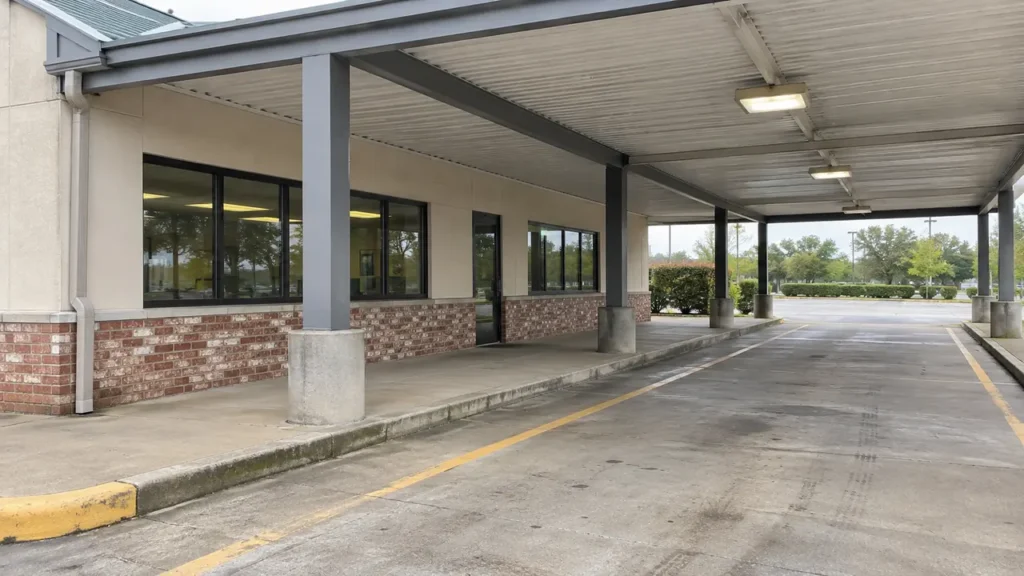
Follow the customer route through the branch
Customers arriving for a vehicle and customers returning one can meet at the same small rental property. The office, canopy, walking route and return-lane paving need a plan that fits that movement. CoKo’s reviews suitable building exteriors and exterior surfaces for Greater New Orleans and Westbank car-rental locations. Send the branch address, priority photos and the available contact. Keep washing the property separate from washing the vehicles in the fleet.
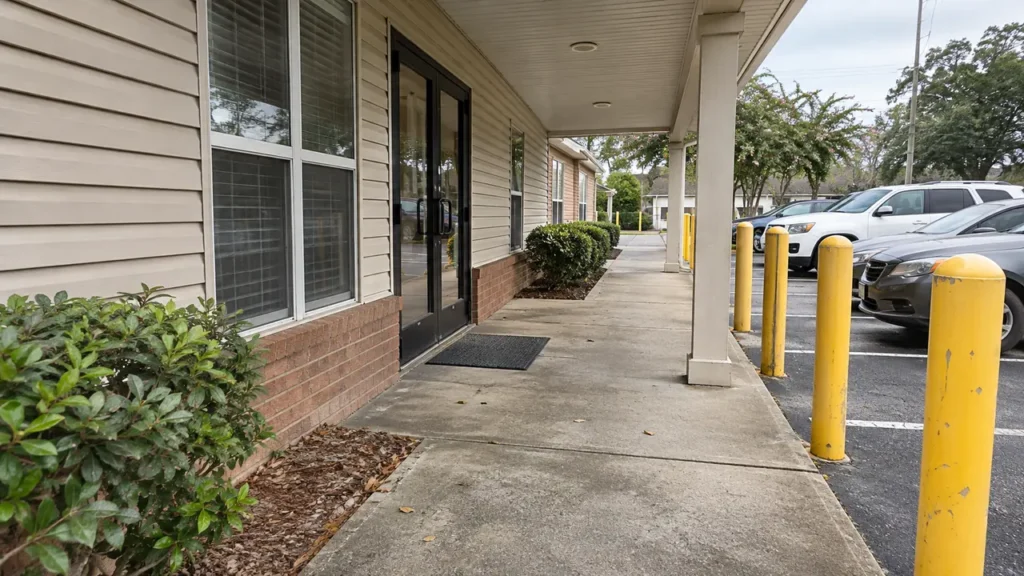
Photograph the approach from parking to the rental counter and the route customers use after collecting keys. Include the entrance, canopy posts, sidewalk, steps or ramp and the points where people meet vehicle lanes. A branch may have a small customer entrance with a very different condition from the return area beside it. Label those surfaces instead of describing the property as one parking lot that needs a single type of pressure washing.
Think about arrivals with luggage and people unfamiliar with the layout. Explain where customers normally wait, how they reach their assigned vehicle and which route the branch needs to keep available. Include fixed bollards, curbs and signs in the photos without assuming they can move. A focused entrance project can be reviewed while the branch considers other maintenance needs. Clear context helps define a useful first scope without including every parking space or vehicle-processing area at the location.
Separate the fleet from the building surfaces
This page concerns the rental property itself: suitable roof sections, opaque walls, canopies and exterior paving. Fleet vehicles, personal cars, vehicle interiors and branch vehicle-preparation services are separate from that request. Identify parked vehicles and the areas staff use for turnaround work. Their presence in a scope photo does not automatically make them part of an exterior-washing proposal or establish permission to move them.
The branch should decide which spaces can be cleared and who can relocate vehicles. If a return lane or wall approach must remain occupied, show that boundary before a method or work window is discussed. A useful zone list might include the counter entrance, the side elevation and one section of return-lane concrete. Keep vehicle-cleaning requests on a separate list. That allows the manager to compare the property proposal clearly without mixing it with the branch’s normal fleet preparation or rental operations.
Match office roofs, walls and canopies to their materials
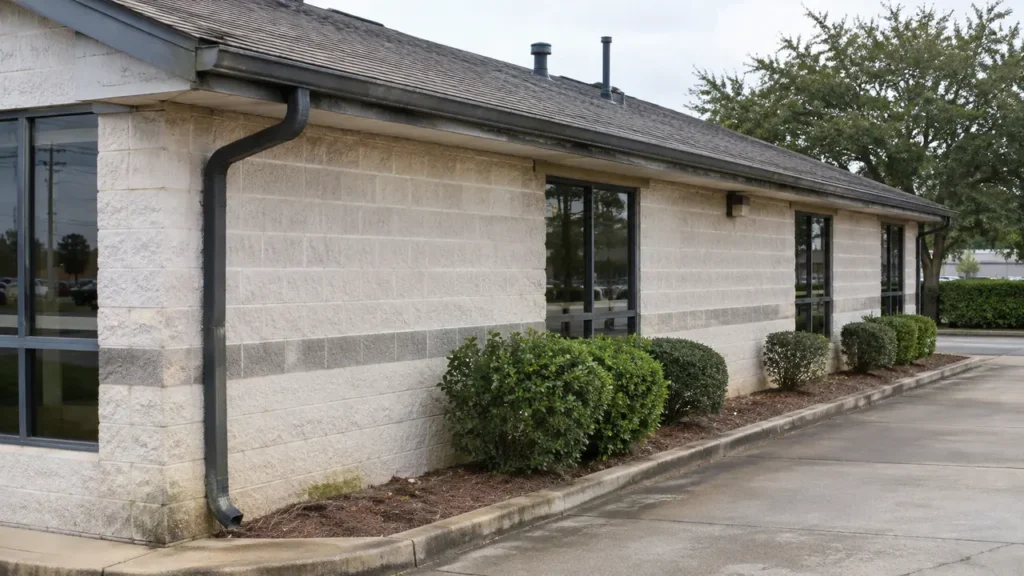
Car-rental branches can occupy small standalone offices, shared retail buildings or larger return facilities. Identify the roof and wall materials if known, and photograph each requested section. Include existing leaks, loose trim, damaged finishes and previous repairs. For canopies, show support posts, the underside only from a normal permitted viewpoint and the areas below. A wide ground-level photo is a useful start without asking anyone to climb or enter a restricted location for more detail.
The washing approach should follow the actual material and condition. Painted siding, masonry, coated metal and delicate trim do not automatically need the same treatment. Soft washing, pressure and heat should be considered where suitable for the specific surface. Washing also does not repair a worn coating, damaged joint or leaking canopy. A proposal with separate roof, wall and paving boundaries gives the branch a clearer decision than an undefined instruction to make everything outside look new.
Give return lanes and pickup spaces separate windows
Describe when the branch expects customer arrivals, vehicle returns and delivery movements. Advertised counter hours do not necessarily describe the activity around a return lane or a key-drop area. Identify the contact who can release the requested section and explain any route that must stay usable. A quiet lane in a photograph is helpful context, but it is not enough to assume the same space will remain available for a proposed visit.
Where the property can support phases, label them in branch terms: front approach, covered return section or side walkway. State how customers and staff would reach the areas they still need and who will communicate the arrangement. A defined plan is more useful than a broad promise to work around all operations. If reservations, parking or returns change the layout, review the affected zone before proceeding with that part of the scope rather than relying on the original photograph as a permanent access plan.
Review concrete, markings and coatings honestly
Show the material and condition of each paved area requested. Include cracks, repairs, painted arrows or space markings and any coating the branch knows about. Explain whether the concern is shaded growth, tracked dirt or a particular stain. These are different conditions and can lead to different discussions about the suitable method and expected result. A parking area with old repairs should not be described as though washing will create one completely uniform surface.
Tire marks, oil staining, wear and damaged concrete may remain visible after ordinary washing. Photograph those details separately and ask how they affect the proposal. Heat can be discussed for suitable hard surfaces, but it is not an automatic answer for every entrance, canopy post or coated return zone. A clear written scope explains what is intended for each section and separates general surface cleaning from repair, repainting, specialist stain work or vehicle-preparation tasks that have not been included.
Have the property photos?
Let’s define the next step.
Send the address, requested surfaces and the contact who can confirm access.
Include the route to water and the branch’s drainage requirements
Identify the water connection offered for the project and show where washing equipment could stand. A compact rental branch may have limited space once parked vehicles, customer routes and returns are considered. Include gates, narrow side passages and the places where hoses would meet a normal walking or vehicle route. Photos looking along those paths help establish the actual available approach more clearly than a measurement of the overall lot.
Show drainage direction and describe the property’s requirements for handling water from the proposed task. A visible drain does not settle that question by itself. If the branch shares paving or drainage with another tenant, identify the property contact responsible for those arrangements. Keep decisions about technical equipment and sensitive connections with the authorized staff. Initial messages can describe the constraints without sending private gate codes, customer information or rental records that are unrelated to reviewing the exterior surfaces.
Coordinate preparation with fleet and property contacts
The branch manager may control parked vehicles while a landlord controls the canopy, facade or common pavement. Explain that division when requesting the proposal. Identify who can authorize the surfaces, move portable signs or cones and confirm that a proposed work section is clear. An agreement with one person should not be treated as permission for a shared area that another contact controls. Clear preparation responsibilities help make even a small entrance project easier to arrange.
Keep the photos and zone list current. A change in fleet allocation or customer parking can alter the route beside a wall or through a return section. Mark the difference and discuss how it affects the proposed task. If the branch wants future exterior maintenance, retain the original surface list as a reference while checking condition and access again. The same building address may have a different vehicle layout, tenant arrangement or operating window by the time the next project is considered.
Send a scope that supports a clear branch decision
Provide the location, requested roof or wall sections, paving zones, material details if known and current photos. Include the preferred timing and the person coordinating access. For a company with several branches, label each location separately rather than assuming one branch’s roof material and parking arrangement describe them all. A useful proposal identifies the work included, the preparation expected and any conditions still needing confirmation before the scope can be scheduled.
Text the priority exterior photos to CoKo’s or use the detailed commercial project form for a larger facility request. Start with the entrance or return section that matters now. There is no need to wait for every measurement or include the whole vehicle lot in the first conversation. Keeping fleet washing separate gives the property request a practical boundary and makes later phases easier to review as the branch’s building condition, customer movement and available working space change.
A practical start.
Three useful steps.
Show the surfaces
Send wide photos and close views. Label the buildings and the areas that matter now.
Set the boundaries
Explain materials, access, preparation and the work window your property can support.
Review the scope
Confirm included surfaces, responsibilities and the next step before scheduling.
Car Rental Facility Exterior Washing.
Your questions, answered.
Your next exterior project.
Start with a clearer scope.
Text your address and the priority exterior photos. For a larger project, send the full property details.
Send your address. Show us what needs cleaning.
Text your address, a wide photo and a close-up of the buildup. We’ll review the surfaces and discuss your cleaning options.
Text photos for an estimate Start an online quoteCoKo’s Pressure Washing · (504) 296-9696