
Commercial exteriors · Greater New Orleans
Commercial bakery exterior washing.
Ready for the next arrival.
Review roofs, walls and suitable exterior approaches around your bakery’s operating schedule. Text photos, priority areas and the authorized site contact.
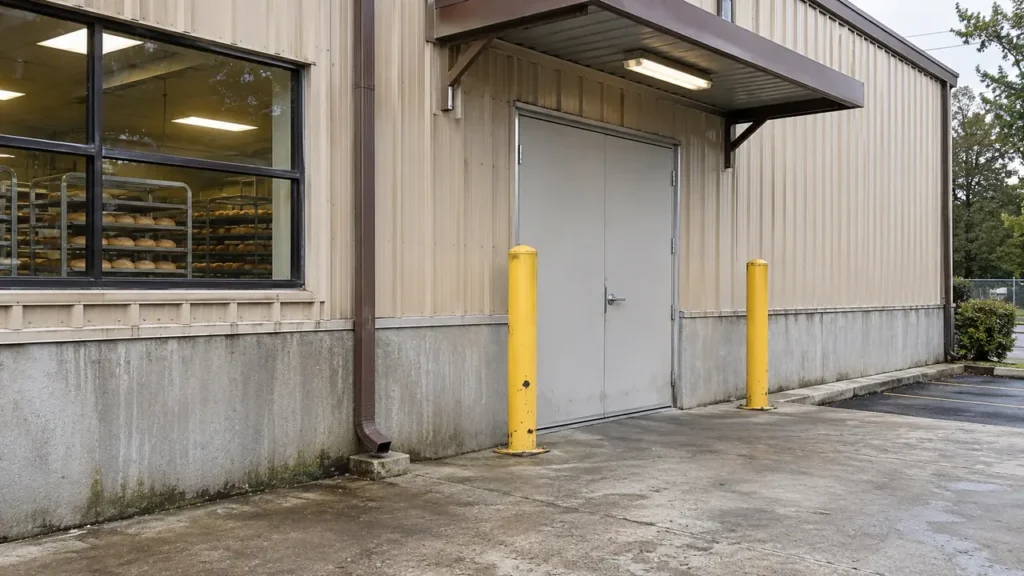
Your property. Your priorities. A clearly defined scope.
Start with the way people and deliveries arrive
The property around a commercial bakery works early and changes quickly. Staff arrivals, ingredient deliveries, dispatch and customer access can overlap before a typical office opens. CoKo’s reviews suitable roofs, building exteriors and exterior paving around Greater New Orleans and the Westbank. Send photos of the requested surfaces and describe the available work zones. Keep exterior property washing distinct from food production, internal sanitation and the bakery’s product-handling responsibilities.
Identify the staff entrance, dispatch door, receiving approach and any customer-facing storefront. Photograph the routes from parking and the areas where vehicles stop. These can be different parts of the property even when the building is small. A shaded employee entrance may have organic buildup while a delivery apron has tracked dirt and visible wear. Label the actual surface concerns instead of asking for the entire bakery exterior to receive one unspecified treatment.
Explain which entrance matters most and which route the business needs to keep available. A wholesale bakery may prioritize staff and dispatch movement, while a property with a retail counter may have a separate public approach. Include canopy posts, railings, ramps and nearby fixed items in the photos. A focused entrance-and-wall request can be reviewed without bundling every loading area and roof section into the same project before the bakery has decided what it can make available.
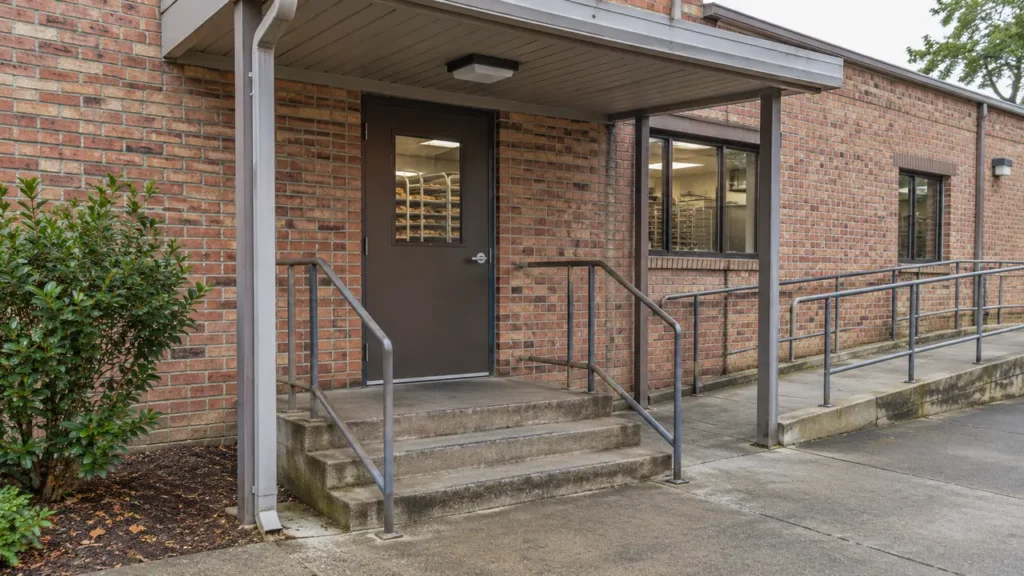
Keep production and food-handling areas separate
The bakery should identify where product, ingredients, packaging and mobile production items are normally located near the proposed exterior zone. State what the bakery can move or protect and who will handle that preparation. A building-washing request does not include permission to relocate trays, enter ingredient storage or wash internal production surfaces. Those responsibilities need to remain clear before an exterior approach or working sequence is discussed.
Doors and loading openings deserve specific attention. Tell the reviewer whether an opening serves receiving, dispatch or staff access and how the bakery plans to release the area. Do not describe an exterior apron in a way that assumes an open doorway or exposed product is part of the task. A useful proposal defines the property surface requested and the preparation expected from the operator. That helps property and production staff review the same work without confusing external maintenance with a food-safety or sanitation service.
Match the building review to roofs and finishes
A bakery can combine a brick storefront, a coated-metal production addition and several canopy sections. Show the full building and then each requested roof or elevation. Include the material if known, previous repairs, loose finishes and existing leaks or water-entry concerns. Wide ground-level roof views can start the conversation; no one needs to climb or enter an unavailable area simply to improve an estimate photograph.
Soft washing, pressure and heat should follow the actual surface and condition. A commercial address does not mean high pressure belongs on every wall or roof. Describe the buildup and the improvement you want, while recognizing that weathered paint, damaged panels and failed coatings are separate conditions. Washing does not replace those repairs. Keeping materials distinct lets the proposal consider a suitable wall or roof section without making a broad promise about every finish around the bakery building.
Give dispatch and receiving their own work zones
Ask the bakery team which doors and aprons are used for ingredients, finished orders and empty returns. A lane that looks quiet during a midday visit may be essential during early dispatch. Include truck movements, parking and the route staff use between the building and vehicles. Mark the proposed washing section on a wide image so the work boundary is clear to the people who will need to release it.
If the business can make areas available in phases, name them using familiar site terms. The front approach and a rear wall may be separate tasks from the dispatch apron. Identify the person who confirms readiness and communicates changes to staff. A realistic sequence should reflect the bakery’s actual activities rather than a general suggestion to work outside opening hours. Production, receiving and dispatch can continue at times that a customer-facing schedule does not show.
Review exterior concrete without promising a new surface
Photograph the paving condition, including cracks, patches, painted markings and any known coating. Explain whether the request concerns shaded growth, tracked material or a particular stain. These conditions can need different review. Loose material that the bakery can clear should be identified separately from buildup attached to a surface. Avoid assuming that an ordinary washing proposal includes handling unknown residue or disposing of materials from the bakery’s operation.
Heat may be discussed for suitable hard surfaces, but it is not a blanket requirement for every bakery approach. The method and expected result should be tied to the actual material and condition. Cleaning can leave existing discoloration, coating wear or repair marks visible. A written zone list makes these limits easier to understand: the visitor entrance, staff path and heavier-use loading apron can each have a clear intended scope instead of one promise that all exterior concrete will look identical afterward.
Have the property photos?
Let’s define the next step.
Send the address, requested surfaces and the contact who can confirm access.
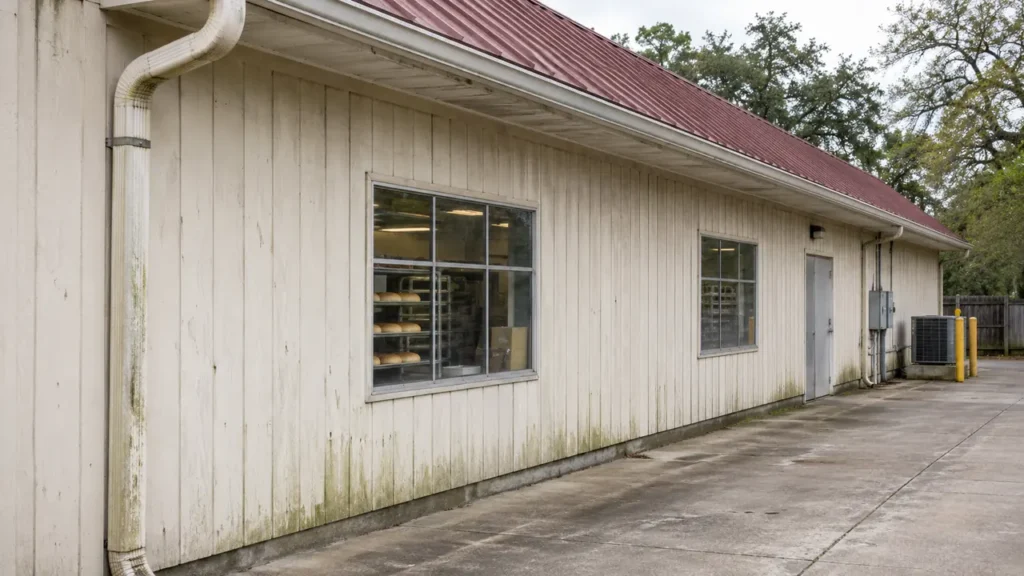
Include water access and the surrounding property
Identify the water connection offered for the project and show where washing equipment could stand. Include gates, parked vehicles, narrow passages and any route staff need to keep open. The space beside a production building can be more constrained than it appears from the street. A photograph looking along that route helps explain access and working room more clearly than a close-up of a wall stain on its own.
Show drainage direction and explain the facility’s requirements for handling water from the proposed washing task. An exterior drain is a point to review, not automatic permission for disposal. Identify any neighboring premises, shared pavement or property boundary that affects the request. Keep decisions about production services, connections and restricted areas with the bakery’s responsible personnel. Initial messages can describe those constraints without including private codes or operational details unrelated to the exterior surfaces being considered.
Make preparation useful for an early-working team
Agree who can move portable signs, carts, exterior storage and vehicles, and which items must remain in place. Note any doorway that cannot be taken out of use during a dispatch window. The bakery team should identify responsibilities before a proposed work date rather than expecting the person arriving to decide what can be moved. Clear preparation makes it easier to review a manageable project without adding confusion to an already busy shift.
Update the photos when the arrangement changes. A seasonal order pattern, temporary stock area or different delivery vehicle can alter the available route. Use the original zone names to identify what has changed and discuss the effect on that part of the scope. The same record can support later maintenance conversations, but the material condition and access still need fresh review. A familiar building does not guarantee that its receiving and dispatch areas will operate the same way on each visit.
Ask for a property proposal everyone can review
Send the address, priority surfaces, building materials if known, current photos and timing restrictions together. Identify the contact who controls access and whether a landlord approves exterior work. A useful proposal names the roofs, walls or paved approaches included, the preparation the bakery will provide and any unresolved condition that needs attention before scheduling. Keep internal cleaning, food-handling tasks and specialist production work outside the exterior request unless separately defined.
Text the main surface photos to CoKo’s or use the detailed commercial project form when several doors, buildings or operating windows need explanation. It is fine to start with the customer entrance or one visible elevation. A focused request can give the business a clearer decision than waiting for an undefined whole-property project. Keep the agreed surface list for future discussions, reviewing what matters now and what the bakery can make available rather than assuming an old quote describes every later maintenance need.
A practical start.
Three useful steps.
Show the surfaces
Send wide photos and close views. Label the buildings and the areas that matter now.
Set the boundaries
Explain materials, access, preparation and the work window your property can support.
Review the scope
Confirm included surfaces, responsibilities and the next step before scheduling.
Commercial Bakery Exterior Washing.
Your questions, answered.
Your next exterior project.
Start with a clearer scope.
Text your address and the priority exterior photos. For a larger project, send the full property details.
Send your address. Show us what needs cleaning.
Text your address, a wide photo and a close-up of the buildup. We’ll review the surfaces and discuss your cleaning options.
Text photos for an estimate Start an online quoteCoKo’s Pressure Washing · (504) 296-9696