
Commercial exteriors · Greater New Orleans
Equipment rental yard washing.
Keep pickup moving.
Roofs, building exteriors and suitable hard surfaces for your rental property. Text branch photos and the areas that matter first.
Your property. Your priorities. A clearly defined scope.
Start at the rental counter and customer approach
A rental property has two kinds of traffic to think about: people looking for equipment and equipment moving through the yard. CoKo’s reviews roofs, building exteriors and suitable ground surfaces as separate parts of that operation. Send photos of the counter building, pickup area and return route so the washing request fits the way your branch actually works. Greater New Orleans and Westbank locations can start with one priority area instead of an all-or-nothing yard project.
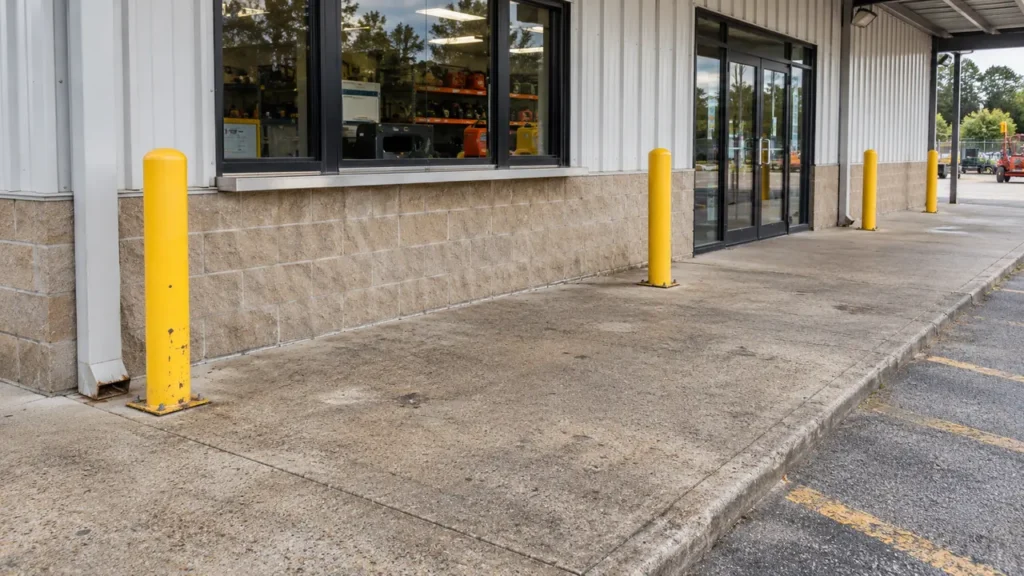
The storefront sets the tone before a customer reaches the counter. Photograph the entrance from the parking area, then show the siding, canopy posts, door surrounds and concrete immediately outside it. A shaded approach can develop organic buildup while a busy pickup apron collects a different mix of tracked material. Those surfaces should have their own descriptions instead of one instruction to pressure wash the premises. Include any awning, painted trim or older repairs that affect the request.
Think about the entire customer route. Someone collecting a small tool may walk directly from a personal vehicle, while someone collecting a trailer needs space to stop and connect it. Mark the walking route and explain where customers normally wait. That information helps define a work zone the branch can actually release. Text the widest useful photo first; close views of one stain make more sense when the building and access are already clear.
Separate the property from the rental equipment
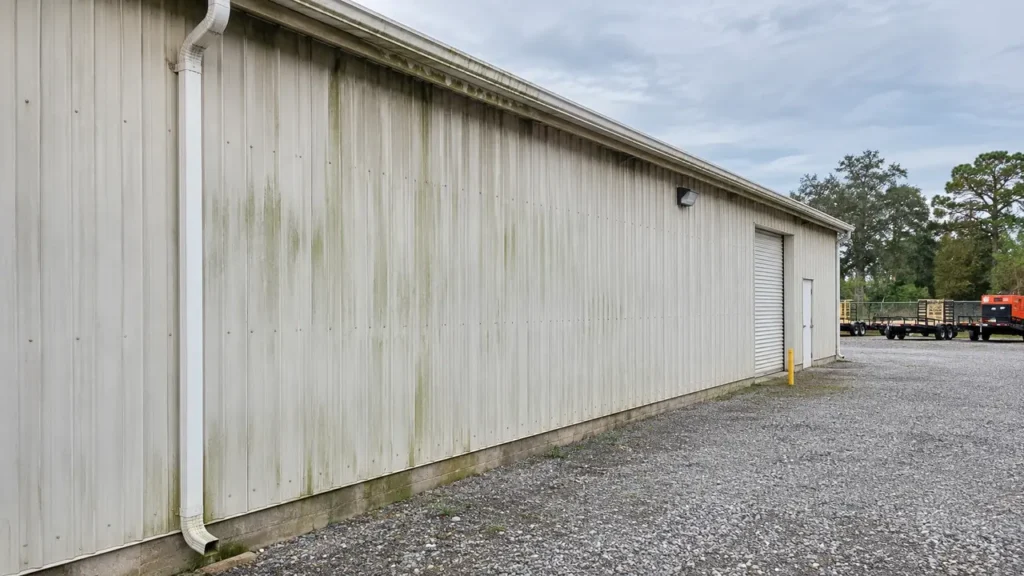
This request concerns the property surfaces around the business. List the office roof, warehouse wall, canopy or concrete area individually. Rental machines, trailers, attachment inventories and customer vehicles need separate instructions and a separately agreed scope. Their presence in a yard photograph does not make them part of a building-washing proposal. A branch manager should identify what can be moved and which areas are available without disrupting reservations or returns.
A useful zone list might read counter entrance, west warehouse wall and the concrete pickup apron. Add a second list for items that must stay outside the work area, such as reserved equipment, charging locations or an occupied service bay. Keep movement of those items with the branch’s authorized personnel. This makes the proposal easier to review internally and prevents a simple exterior-maintenance request from turning into an undefined equipment-cleaning job after arrival.
Give metal roofs and coated walls their own review
Rental yards often combine a low office with a taller storage or service building. The roof materials, wall coatings and access can differ even when both buildings share the same address. Show the roof from ordinary ground-level viewpoints and identify known leaks, loose panels or previous coating work. Include gutters and the areas below the eaves in the photos. Nobody needs to climb the roof to start an estimate conversation.
For siding, take one full elevation and a closer photo of the buildup. Painted metal, masonry and decorative storefront finishes should not automatically receive the same treatment. Soft washing, pressure or heat needs to follow the actual surface and condition. Washing can improve removable buildup but does not replace panel repairs or renew a failed coating. If one elevation is the immediate priority, ask for that section to be considered separately from the rest of the building.
Map the pickup lane before setting a work window
The most convenient time for customers may be the least convenient time for washing a pickup lane. Explain when the first reservations leave, when contractors tend to return equipment and whether delivery trucks use the same gate. A quiet-looking lane can still be the only route to a reserved machine. Show turning space, gate width and the branch’s designated pedestrian route in the initial photos rather than discovering the conflict during scheduling.
If the branch can release sections, identify them by names staff already use. One side of the pickup apron might be available while the counter entrance remains active. A plan should make clear who confirms that each section is ready and how staff will direct customers around it. Avoid choosing a work window solely because the shop doors are closed; equipment collection, maintenance or deliveries may continue outside advertised counter hours.
Review concrete by condition and actual use
Concrete at a rental yard may include lightly used visitor paths, heavily traveled trailer approaches and older patched service aprons. Give each area a separate photo and mention coatings, cracks, paint or surface repairs. Distinguish loose debris that branch staff can remove from buildup attached to the surface. Include approximate dimensions when already available, but a labeled photograph is usually a better starting point than an unsupported total square-foot figure.
Tell us which results matter most: a better customer approach, removal of shaded organic buildup or attention to a heavily used section. Oil, rust, worn paint and damaged concrete are different conditions, and they may remain visible after ordinary washing. Heat can be discussed for suitable hard surfaces without assuming it belongs everywhere. A defined request allows the proposal to explain methods and limitations by zone instead of suggesting one treatment will make an entire working yard look new.
Have the property photos?
Let’s define the next step.
Send the address, requested surfaces and the contact who can confirm access.
Include water access and the route equipment can use
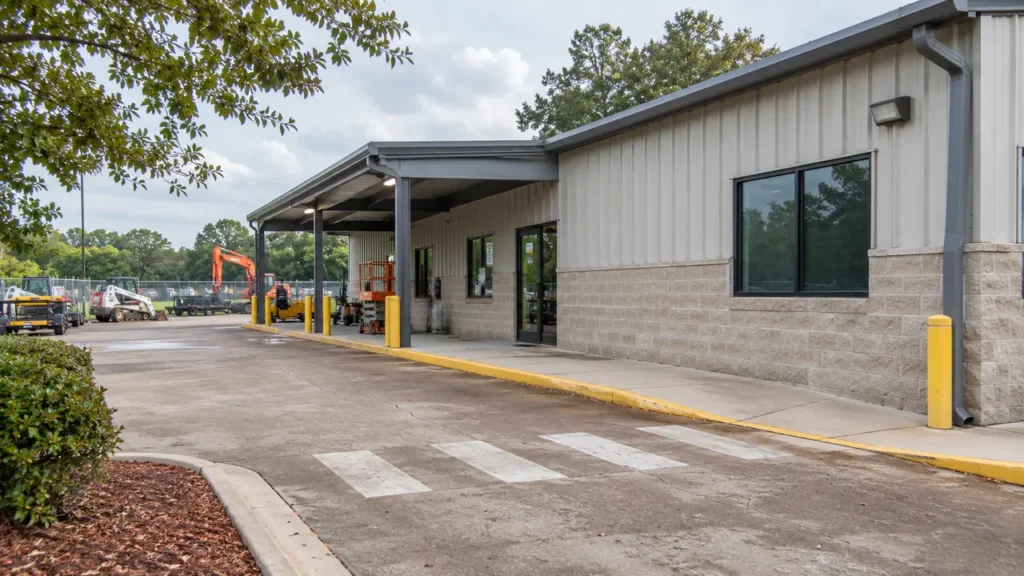
Show the water connection the branch is prepared to make available and describe any limits on its use. Include where washing equipment could be positioned without blocking a gate, pedestrian route or equipment handoff. A long narrow side passage is different from an open concrete apron. Photos of the route between those places help establish whether the requested area can be reached sensibly while the rental operation is in use.
Also identify drainage directions, nearby storage and locations the site manager wants protected. Wash-water handling needs to be considered for the actual surface and material being removed; a visible drain alone does not establish an acceptable disposal route. Share the branch’s requirements early and involve the responsible property contact where necessary. Access details should describe the constraints without including private gate codes or sensitive instructions in the first public inquiry.
Make preparation responsibilities easy to assign
A branch can prepare more effectively when each responsibility has a name beside it. Explain who can move stock, release a parking section, deal with loose debris and confirm that a bay is clear. Point out equipment that cannot be relocated because it is reserved, connected or waiting for collection. These details help identify realistic washing boundaries and reduce the chance of staff discovering a blocked route when a customer arrives for a booking.
An area that changes overnight needs a fresh check near the agreed work date. A clear apron in Monday’s photograph might hold returned equipment later in the week. Keep the original zone list, update the pictures when necessary and let the authorized contact confirm the final arrangement. If access changes, discuss the effect on that section’s scope and timing. The goal is a practical property-maintenance plan that branch staff can support, not extra coordination work left unexplained.
Compare a written scope against the same zone list
Send the address, building names, requested surfaces, photos and preferred timing together. For a multi-branch company, identify the actual location and the person who can approve on-site arrangements. The written proposal should identify included roofs, walls or paving, the preparation expected from the branch and any conditions needing confirmation. Keep equipment washing and specialist stain requests separate so the people comparing proposals are reviewing the same work.
Start with the area that matters now. A focused entrance-and-wall project can be more useful than delaying every improvement while a full-yard plan is assembled. Text the photos to CoKo’s or use the detailed commercial project form when there are several buildings and restrictions to explain. Keep the scope for future maintenance discussions, while reviewing current condition and access again each time. The property may be familiar, but the equipment layout and branch schedule will keep changing.
For approval, keep the surface list beside the branch’s actual reservation and return plan. A manager should be able to point to each requested section on the photos and identify who will release it. That simple check is especially useful when one person requests the quote and another person coordinates equipment movements on the day.
A practical start.
Three useful steps.
Show the surfaces
Send wide photos and close views. Label the buildings and the areas that matter now.
Set the boundaries
Explain materials, access, preparation and the work window your property can support.
Review the scope
Confirm included surfaces, responsibilities and the next step before scheduling.
Equipment Rental Yard Exterior Washing.
Your questions, answered.
Your next exterior project.
Start with a clearer scope.
Text your address and the priority exterior photos. For a larger project, send the full property details.
Send your address. Show us what needs cleaning.
Text your address, a wide photo and a close-up of the buildup. We’ll review the surfaces and discuss your cleaning options.
Text photos for an estimate Start an online quoteCoKo’s Pressure Washing · (504) 296-9696