
Telecom · Cable offices · Building exteriors
Telecom facility washing.
Keep the building scope clear.
Roof, wall and agreed hard-surface washing for telecom retail offices, cable-company buildings and service properties around Greater New Orleans and the Westbank. Start with the address, exterior photos and the contact who controls the site. Keep technical equipment and restricted areas outside the washing request.
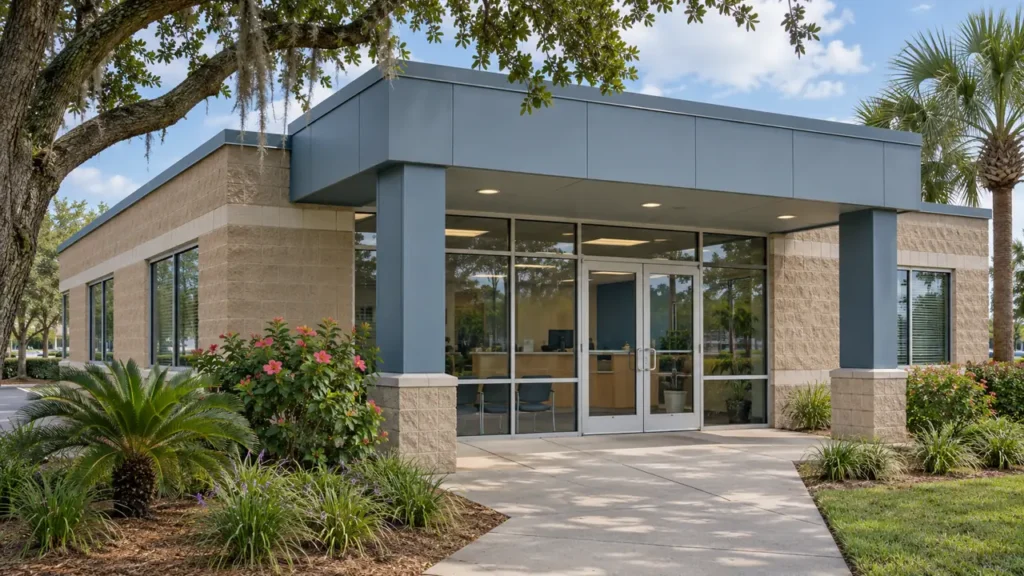
Your building. Your site contact. A defined exterior scope.
One request for the building exterior
A telecom property can combine a customer counter, administrative offices, dispatch doors and spaces that the public never enters. A useful washing proposal begins by separating those functions. The front entrance might need attention before customers arrive, while a service-side wall may only be available during a window approved by the property contact. Treating the whole parcel as one open work area makes that distinction disappear.
Send a simple building list with the surfaces you actually want reviewed. Include roof material when known, wall finishes, entrance canopies, pedestrian approaches and suitable concrete. Mark anything that is outside the request. A photograph of the entire elevation helps connect the close-up stain to the doors, landscaping and equipment around it. CoKo’s can then discuss the requested exterior work without assuming every object visible in the picture belongs in the scope.
Start with roofs, then work down the elevation
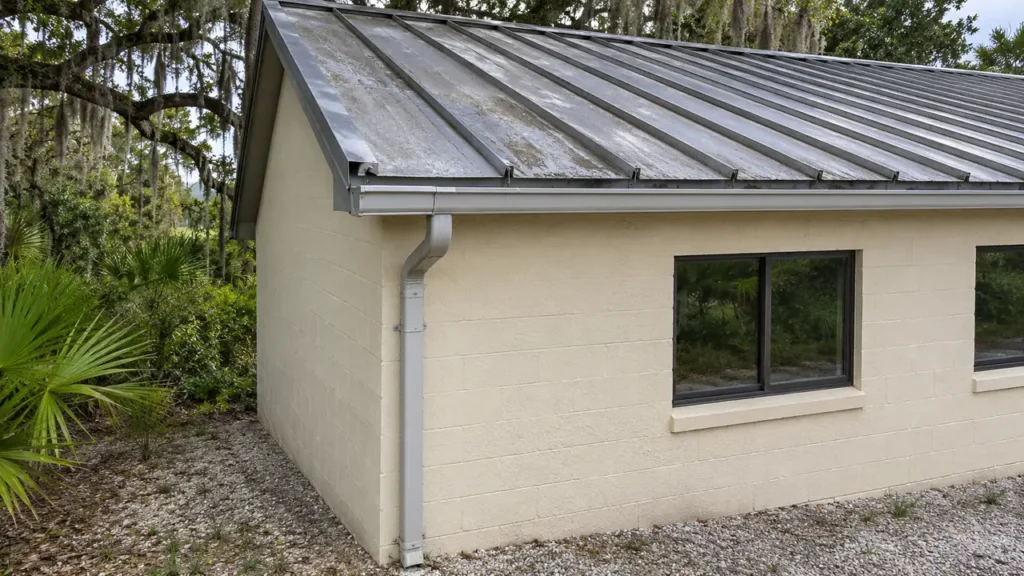
A roof request needs more than a ground-level picture of a dark edge. Identify the roof section, approximate height and any access information the facility already has. A low office roof and a roof above a restricted operations room can require very different planning even when their finishes look similar. Share existing condition concerns, prior leaks or coating information before a method is selected.
Roof washing is considered around the material, condition and available access. Ground photographs do not establish that walking on the roof is appropriate. Do not assume a ladder position or an equipment route is available merely because there is pavement below it. If roof-mounted equipment, antenna access or a controlled roof zone affects the request, the facility’s authorized contact must define the boundary before that part of the work proceeds.
Match wall washing to the actual finish
Masonry, painted block, metal panels, siding and trim should be identified separately. A wall that appears uniform from the road may have several repairs, coatings or sealants around windows and service penetrations. Include photographs of flaking paint, open joints, loose trim or areas where water has entered before. Those details help distinguish a washing request from a repair problem that needs another trade.
Soft washing may be considered where a lower-pressure approach suits the surface and condition. More pressure is not the default answer to every dark patch. Method, products and protection arrangements belong in the reviewed scope, rather than being guessed from the business category. A finish that cannot be identified, or an elevation crowded with sensitive components, may need further information or a narrower washing boundary before a proposal is practical.
Keep customer arrivals easy to understand
At a customer-facing telecom office, the approach to the door is part of the project. Photograph the canopy, walking route, curb transitions and the space where people wait or turn toward the entrance. Explain whether the site expects deliveries, customers with equipment returns or regular service appointments during the proposed work period. An apparently quiet entrance can still be the only usable customer route.
Discuss a defined work zone and an agreed alternative route with the property contact. Exterior washing should be planned around the way the building operates, including any directions staff need to give visitors. Do not promise a universal drying time or immediate reopening from photographs. Surface condition, weather and the work performed affect the handover. The facility should know which route is available and who will confirm the next area is ready.
Separate service access from the washing surface
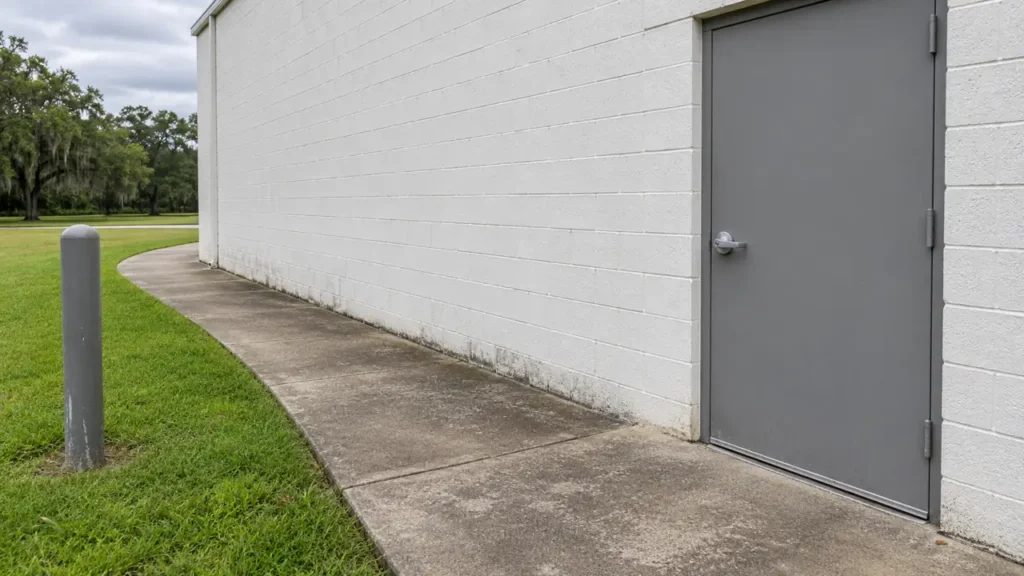
A rear approach may serve technicians, receiving staff or a building contractor even when it is not a public entrance. List doors, gates and access paths that must remain available. Explain whether vehicles return throughout the day or use a scheduled dispatch window. CoKo’s needs that operating picture to discuss practical work areas; a clean-looking pavement diagram alone cannot show how the site is used.
Keep vehicles, loose stock and customer equipment out of the assumed surface list. A proposal for agreed concrete or exterior walls does not automatically include washing a service truck, opening a cabinet or moving equipment. The facility contact should identify what can be relocated, who will handle it and what must remain untouched. Clear exclusions make the proposal easier to compare and reduce the chance that a photograph is mistaken for permission to clean everything in it.
Technical equipment stays under operator control
Telecom properties can contain systems that require their own procedures and authorized personnel. CoKo’s exterior-building request is not a request to clean antennas, radio equipment, cable cabinets, network hardware, generator components or live electrical apparatus. Do not treat an unmarked fence or a closed door as evidence that an area is suitable for washing. The operator must identify permitted routes and excluded zones.
Where an antenna-related access restriction applies, follow the operator’s established site process before discussing that location as a washing work area. AT&T’s published RF safety guidance, for example, tells workers to respect posted controls and restricted areas. That guidance is a reason to ask the authorized operator, not a substitute for site-specific approval or evidence that CoKo’s holds specialist RF qualifications. If the necessary access or separation cannot be established, leave that area outside the proposed exterior scope.
Operator resource: AT&T’s RF safety guidance. Site-specific restrictions remain under the authorized operator’s control.
Have the exterior photos?
Let’s define the next step.
Send the address, requested surfaces and authorized site contact.
Review hard surfaces and heated washing individually
Concrete approaches and suitable service-side hard surfaces can be reviewed alongside the building. Show the material, the type of buildup and the surrounding drainage or landscaping. Include coated areas, patched sections and joints in the photographs. A roof-and-wall proposal should not quietly become an entire parking-area project because a large paved area happens to be visible from the entrance.
Heated pressure or power washing may be considered for an appropriate hard-surface problem after the material and conditions are reviewed. Heat is a method choice, not a reason to use the same approach on glass, paint, seals or equipment. Agree on the limits of the treated area and the site arrangements first. Identify drainage, water supply and any facility requirements during scoping; do not assume wash water can be directed wherever a drain or low point appears in a photograph.
Make a multi-building proposal comparable
A company may manage a retail office, an administrative building and a separate operations property. Use a building schedule instead of combining them under one vague total. Give each location or structure a label, then list roof sections, elevations and hard surfaces requested under that label. Add the site contact and access window that apply to that building, especially when different managers control different parts of the property.
Ask for included areas and exclusions to be recognizable in the final scope. Note whether a particular elevation is an optional item, whether a roof section needs more information and whether an entrance must be handled separately. This is useful even for a single address with several buildings. The goal is a request the decision-maker can review against the photographs, without mistaking an unresolved access question for a confirmed washing commitment.
Send a short photo set that answers real questions
Begin with a wide photograph of each requested building and one image of every important surface. Add close-ups only where they explain a stain, finish issue, penetration or access concern. Include the entrance route, likely equipment approach and any boundary the facility wants respected. Avoid sending sensitive diagrams, access credentials or internal network information through a public quote request. Exterior scoping rarely needs those details.
Text CoKo’s the address, building count and the type of work you want considered. Mention whether the contact is the property owner, tenant, facilities manager or another authorized representative. If you prefer the written commercial form, use the project-details route and describe the exterior scope there. A short, organized request is more useful than a long equipment inventory that does not say which roofs, walls or concrete areas need attention.
Agree on the next step before a work date
After the initial photographs, the next step depends on what is clear and what remains unresolved. Some requests need additional measurements or finish information. Others need a site discussion about access, preparation or the sequence around customers and service vehicles. A preliminary conversation is not a completed survey, and an estimated area does not establish a final price or method without the relevant conditions being reviewed.
Before scheduling, confirm the surfaces included, the excluded equipment and zones, the person controlling access and the preparations assigned to the facility. Review any remaining questions about utilities, water handling and work windows. Keep the written scope with the building list so the same request can be recognized on the workday. Start with Greater New Orleans and Westbank exterior photos; any additional location or unusual access requirement is reviewed individually.
Telecom exterior washing.
Your questions, answered.
Clear surfaces.
A clearer commercial request.
Start with Greater New Orleans and Westbank building photos, the address and the work you want reviewed.
Send your address. Show us what needs cleaning.
Text your address, a wide photo and a close-up of the buildup. We’ll review the surfaces and discuss your cleaning options.
Text photos for an estimate Start an online quoteCoKo’s Pressure Washing · (504) 296-9696

